WASHINGTON — The infrastructure bill signed into law in November opens the door for the possibility of more rail funding than Amtrak and states sponsoring intercity passenger service have ever received at one time.
The challenge now will be to get money out that door and spend it wisely.
How much funding?
More than $66 billion of rail-related funding over a five-year period is locked in, with an additional $36 billion “authorized” under the companion Surface Transportation Investment Act, which can be appropriated from discretionary funds. But good luck with that.
Amtrak usually gets about $2 billion each year for capital and operations. That includes infrastructure spending, which explains why there is such a huge backlog of Northeast Corridor bridge and tunnel projects. The largest one-shot infusion previously was $8 billion doled out by the Federal Railroad Administration in 2009’s American Recovery and Reinvestment Act.
”Guaranteed” Infrastructure Act funds are divided this way:
— $22 billion directly to Amtrak. That includes $16 billion directed to national network state-of-good-repair capital projects and rolling stock, including making stations compliant with Americans with Disability Act regulations. A $50 million annual carve-out would pay operating costs necessary to restart passenger service on discontinued routes, with the federal government paying a declining scale from 90% to 30% of total costs over the first six years service is restored. Another $6 billion is for Northeast Corridor infrastructure investment purposes.
— $36 billion in FRA Federal-State competitive partnership grants. Of this, $24 billion is for Northeast Corridor investment in accordance with the Northeast Corridor Commission’s 15-year “Connect 2035” blueprint for improvements. Some $12 billion is to improve or add corridors outside the NEC, sponsored by states or regional commissions. High-speed rail systems are eligible to apply, but an additional $10 billion directed solely at those projects is tied up in stalled “Build Back Better” legislation.
— $8 billion for other competitive grants. This includes $5 billion for Consolidated Rail Infrastructure and Safety Improvement (CRISI) grants and $3 billion for highway grade crossing elimination and public safety
The legislation also doubles private activity bond authority from $15 billion to $30 billion, and sets aside $250 million for the U.S. Department of Transportation to pay up to 10% of the credit risk premium, with a $20 million cap on Railroad Rehabilitation and Improvement Financing loans. These changes could help solve financial logjams at companies ranging from short lines to Brightline and Texas Central.
The priority challenge
Distribution of two-thirds of the funding, $44 billion over 5 years, depends on grant parameters to be established by the Federal Railroad Administration. This is a huge undertaking that requires additional analytical personnel to determine why one proposal should be prioritized over another. The agency had trouble rising to the occasion in 2009, but now at least has that experience to draw on.
While the FRA has been given 180 days from Nov. 15 to outline these criteria, it did issue a “Notice of Funding Opportunity” on Dec, 7 for Federal-State Partnership for State of Good Repair Grants totaling $198 million authorized in 2021. The federal contribution is capped at 80%, but selection preference will be given to applications, due March 7, 2022, that propose a 50% or less share of project costs. This could provide a template for how the $44 billion will be awarded.
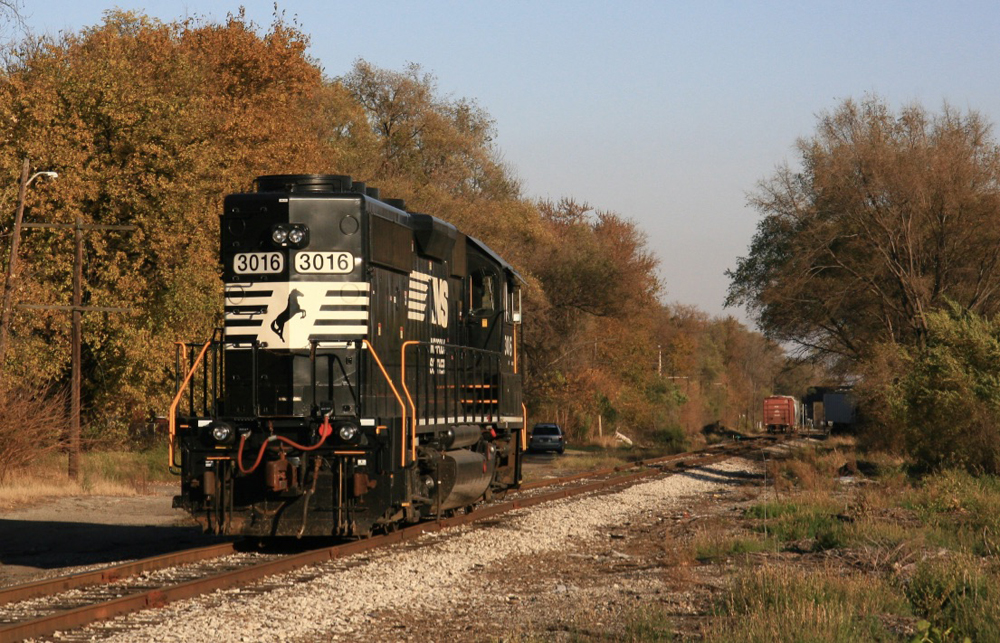
A significant hurdle, however, is that grants for projects of national importance will still require a state or regional commission to apply for and sponsor them. Many states may choose to forego the rail investment opportunity because it is a one-shot deal, as opposed to ongoing funding for highway projects. This happened in 2009 when Florida, Wisconsin, and Ohio turned back expansion funds the FRA had designated.
States that haven’t yet made specific rail investment plans will likely be at a significant disadvantage compared with those that have the next phase of long-term projects ready to go. North Carolina and Virginia have been working on restoring the ex-Seaboard “S” line between Raleigh, N.C., and Richmond, Va., since 1997. California developed a state rail plan and has a mechanism, like Virginia, to fund a local match.
But because the FRA and Michigan’s Department of Transportation couldn’t identify a funding stream to build a separate passenger rail right-of-way around the southern tip of Lake Michigan, the agencies pulled the plug in 2018 rather than advance the plan to the Final Environmental Impact Statement phase. If that hadn’t happened, a major national network bottleneck could now be on its way to elimination.
State buy-in needed
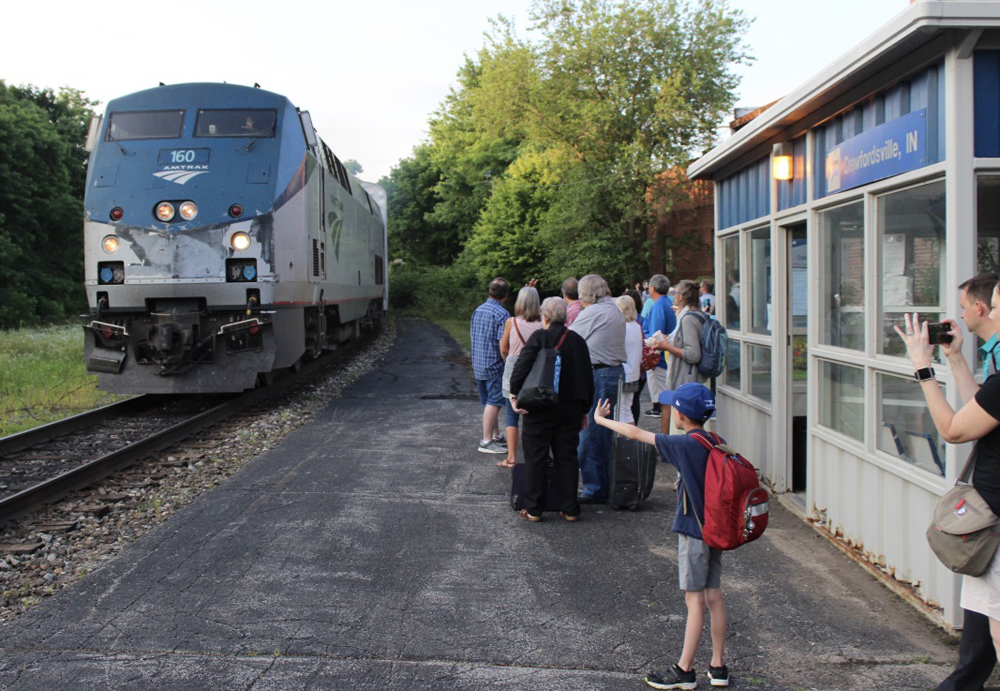
Will states step up? Many have DOTs that lack sufficient in-house grant writing or rail engineering expertise, so will have to hire outside consultants. Early this year, Indiana’s Republican-majority legislature killed an attempt to form a rail commission that could have managed the process. In 2019, the state’s governor cut $3 million in annual operations funding, thus eliminating the Indianapolis-Chicago Hoosier State.
Withdrawn funding struck again in Missouri, which will lose one St. Louis-Kansas City Missouri River Runner round trip on Jan. 3, 2022, because the money ran out. The state, like Indiana, could apply for infrastructure improvements benefitting passenger trains and host-railroad freight traffic, but would the FRA make those awards when ongoing operating support might be shaky?
There is no question the new funding offers the promise that many worthy projects will get funded. Yet requiring buy-in by states, and layering investment on top of the Passenger Rail Investment and Improvement Act framework, will be a challenge the FRA will have to account for when it begins awarding the money.
Additional News Wire reading:
“Northeast Corridor Commission releases $117 billion infrastructure plan,” July 14, 2021.
“News and analysis: State budget cap threatens second Missouri River Runner round-trip,” Oct. 21, 2021
“Infrastructure bill addresses Amtrak priorities, congressional requirements,” Nov. 8, 2021.
“Not just Amtrak: Infrastructure bill boosts freight projects, too,” Nov. 8, 2021.
Coming Dec. 31: News Wire’s No. 1 story of 2021.
Previously:
News Wire Top 10: The runners up.
Top 10, No. 9 (tie): The STB and Wall Street.
Top 10, No. 9 (tie): Amtrak sidelines equipment, turns away revenue.
Top 10, No. 8: Climate challenges.
Top 10, No. 7: Railroad crew shortages.
Top 10, No. 6: Battery-electric and hydrogen locomotives.
Top 10, No. 5: Amtrak spars with CSX, NS over Gulf Coast service.
Top 10, No. 4: East Broad Top’s revival continues.
Top 10, No. 3: A snarled supply chain.
Share this article