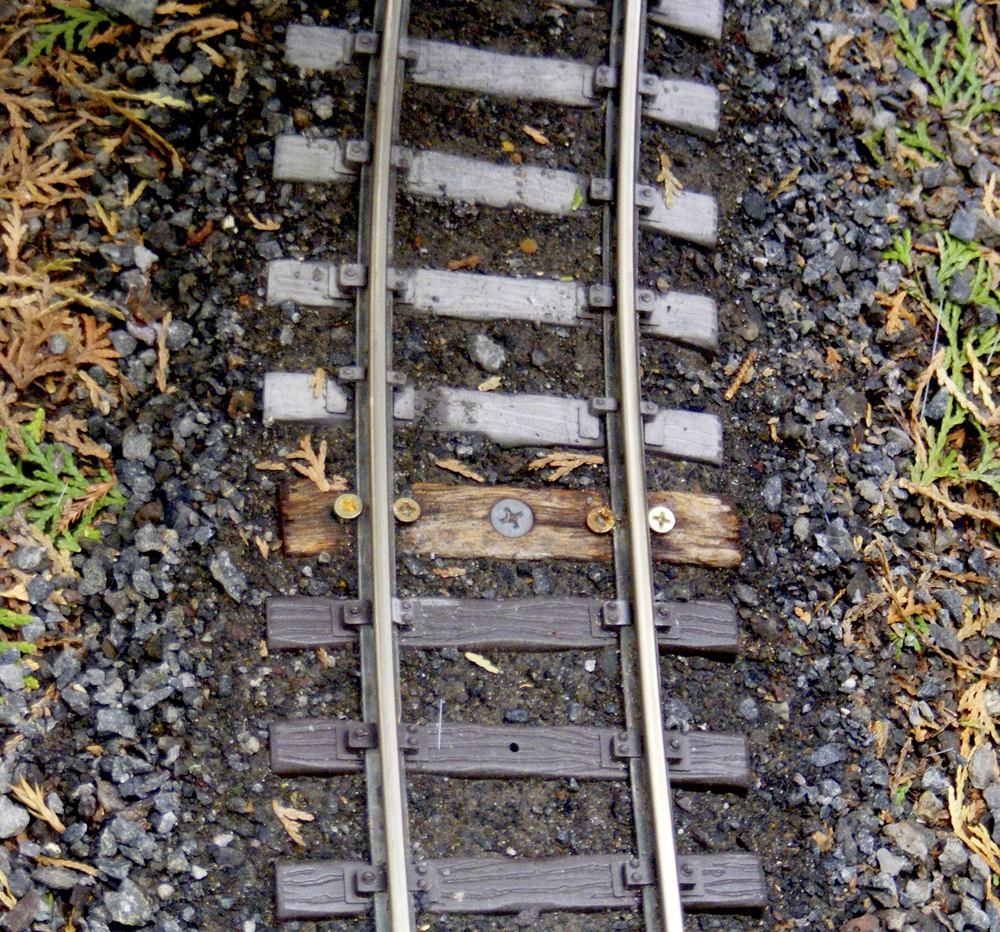
Five track and roadbed tips Smoother soldered rail joints I had a problem getting smooth solder joints when soldering together 5′ rails. I took an 8′ 2 x 4 and cut a groove down the middle of one side, just wide enough to hold the rail. Then I cut a wide notch in the 2 […]
Read More…
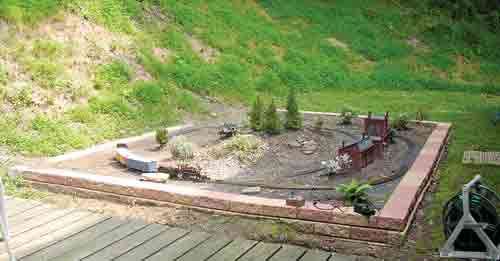
Hardscaping, the subset of landscaping that includes outdoor paths, walls, and other things not made from plant or soil matter, can enhance the setting of many garden railways. Railway sites are also easier to maintain if they are elevated. I recently built a retaining wall for my railroad, the JS&A. The wall defines the railway […]
Read More…
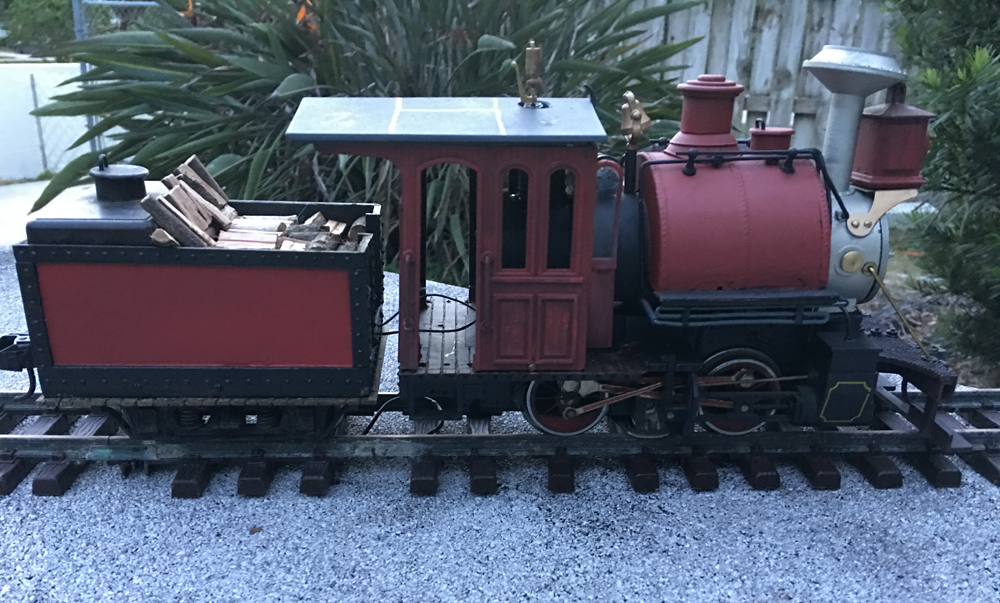
Kitbash a saddle tank engine: I uncovered an old Lionel large scale 0-6-0 with outside drive gears that I had kitbashed several years ago. It had a neat cab and unusual stack, which was a little bent due to a smoke unit overheating. The drive system was so poor that I had to undo one of the driver […]
Read More…
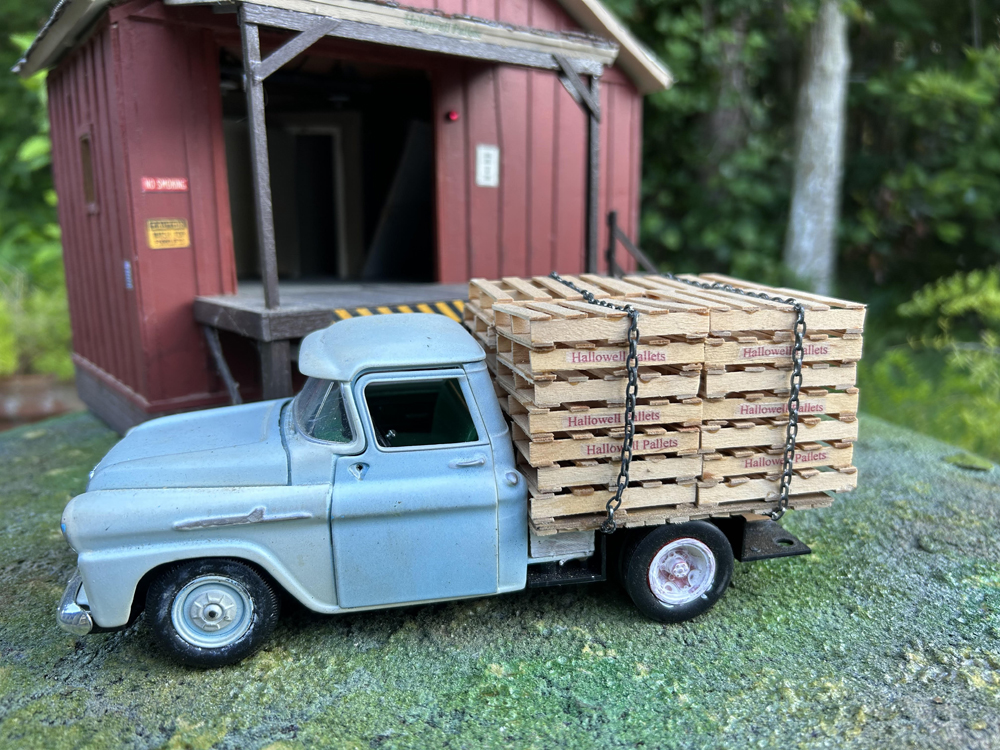
Modify die-cast vehicles for large scale: Most modelers use 1:24 scale die cast cars and trucks out of the box on their railroads, and there is nothing wrong with that. The models are well made and painted in real life colors. I have more than 100 of them that I haven’t changed. But sometimes, it’s […]
Read More…
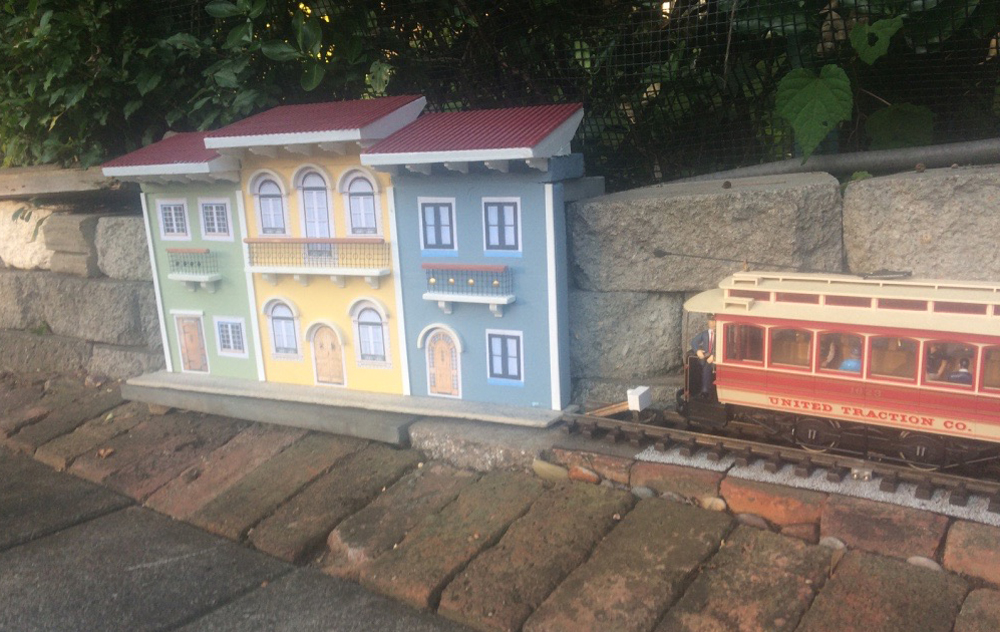
My railroad is located in the last 12 feet at the end of my backyard and occupies an area about 12’ x 43’, with no hope for expansion. Although I’m generally happy with the 120’ of track in a folded dog bone configuration, I’m always looking for ways to add more track without making it […]
Read More…
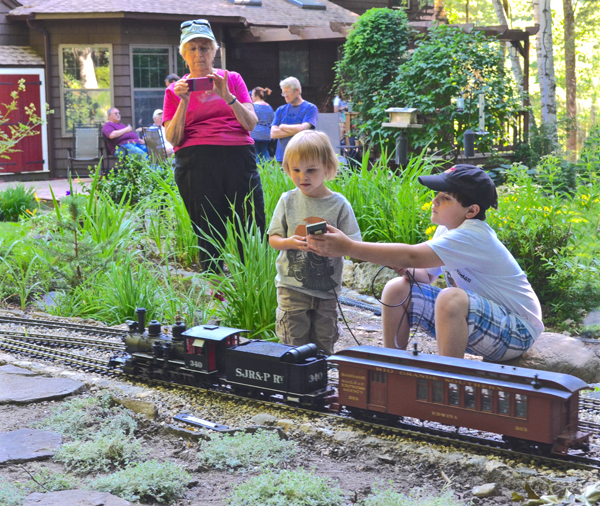
Kid-friendly garden railroading: We all know that garden railroading is a magical hobby, one that we enjoy sharing with other adult enthusiasts. But have you considered inviting a child to share in the fascination? Kids of any age (and adults too) aren’t given to stand by and idly observe a garden railway. Rather, most would […]
Read More…
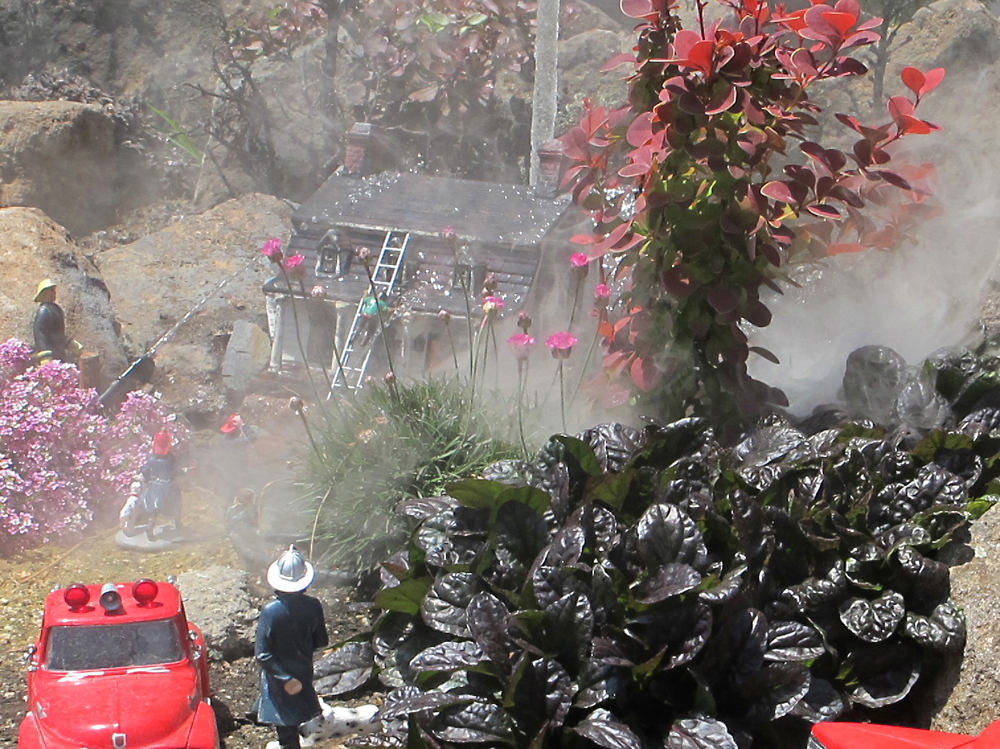
Adding water and smoke to an O scale garden railway While picking up my supply of filtered water, I was “amazed and mystified” by the counter display—a faucet floating in mid air, spouting a stream of water that never quite filled a bucket. When the owner showed me the clear plastic tube that had been […]
Read More…
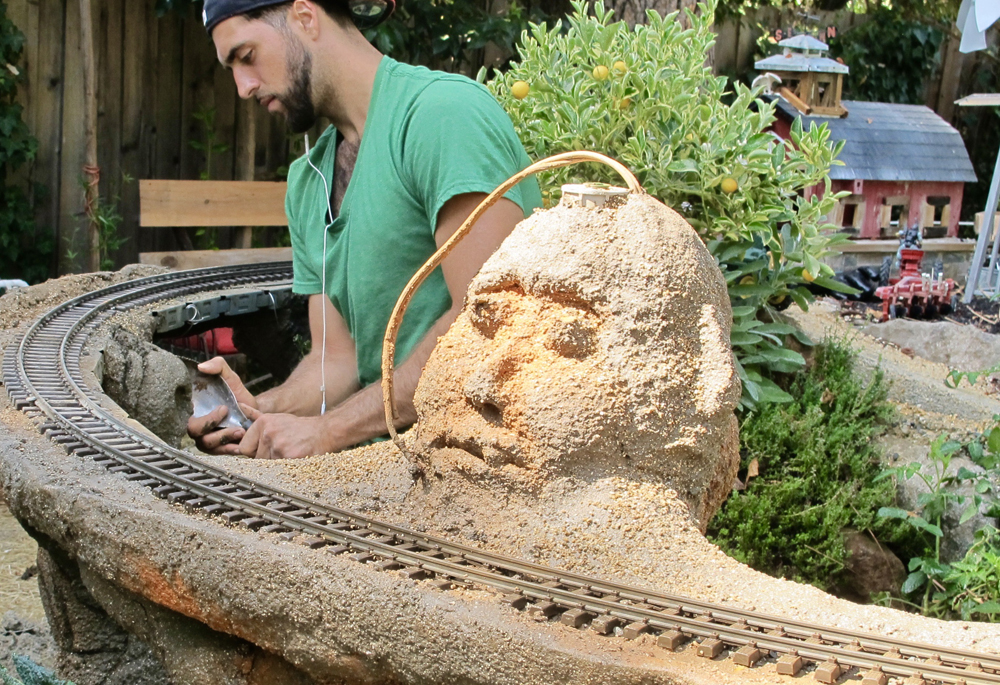
Hypertufa recipe and techniques How have you made structures and walls with hypertufa or similar cement products? Two reports show four different applications for hypertufa. Ray Turner shows a picture of his helix mountain still unpainted for us to study; the final photo shows a magnificently finished set of bridges spanning the cement-product valley backdropped […]
Read More…
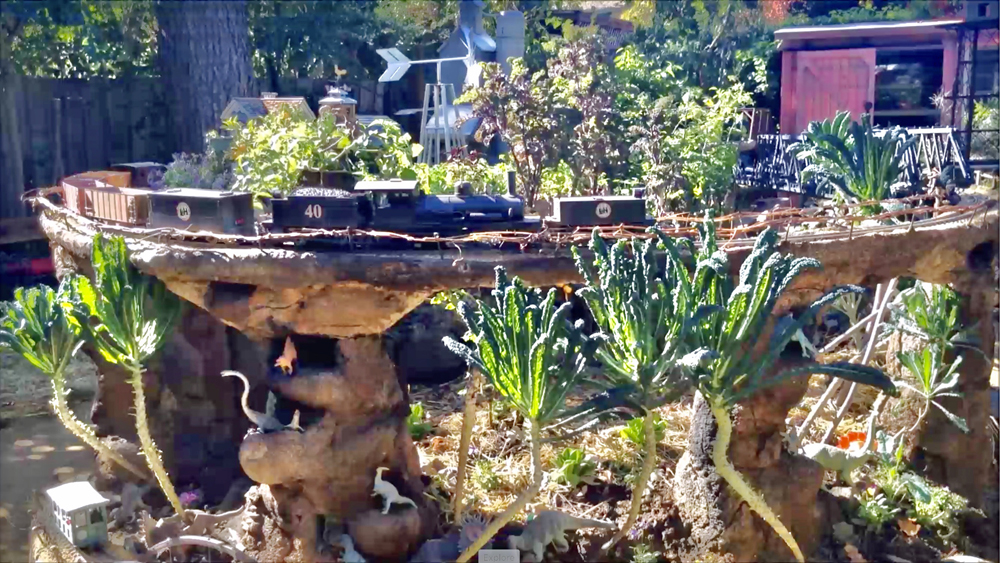
In my last column for Garden Railways (Tunneling through tough times), I mentioned learning more about making handmade hardscape using hypertufa “in the next issue.” Little did I know how much would change in the next couple of years—the print GR is no longer produced and Trains.com has been revamped. I’m finally ready to showcase […]
Read More…
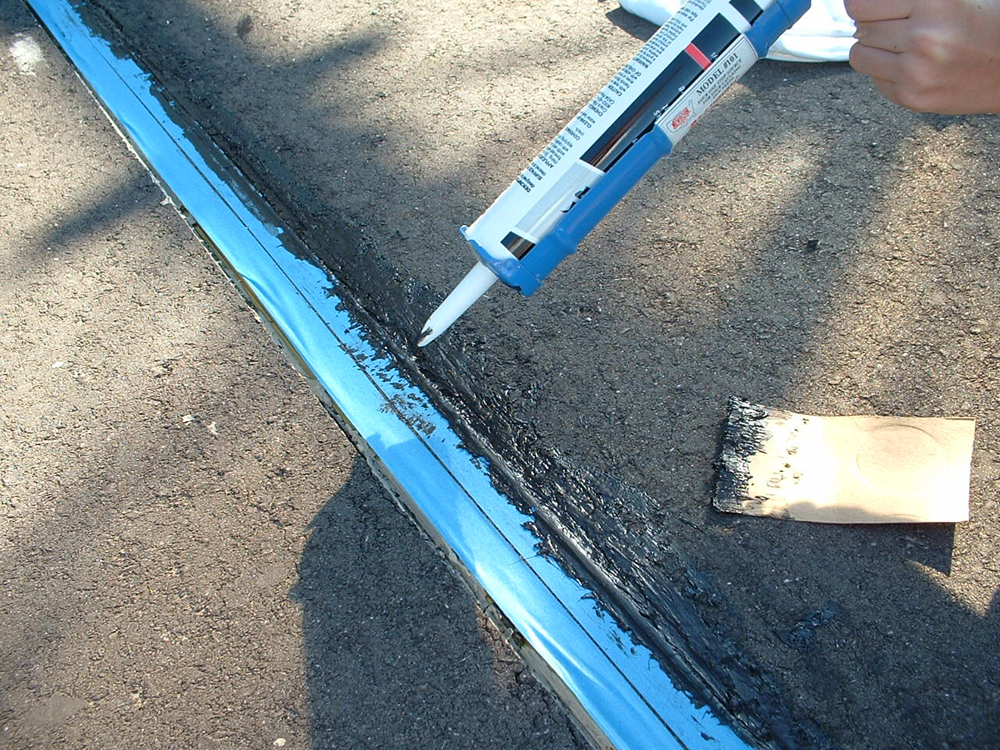
Grade crossing for a garden railway: I founded the Motorcycle and Model Railroad Museum of Wisconsin, a non-profit corporation that allows others to enjoy model trains and growing vintage motorcycles, in 2002. These, along with a 3,000 square foot HO scale model railroad layout, will be the centerpiece of this Green Bay area attraction. Having […]
Read More…
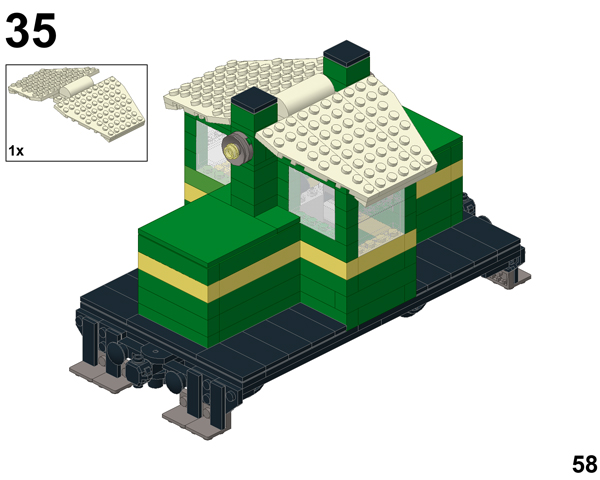
Lego Trains for Large Scale Rails In the Summer 2019 issue, Gary Raymond shares how he modified Lego trains to run on gauge-1 track. Here, Ben Lake has shown the steps to build a Mack diesel using Lego parts. Download the PDF below and share what you build with us! […]
Read More…
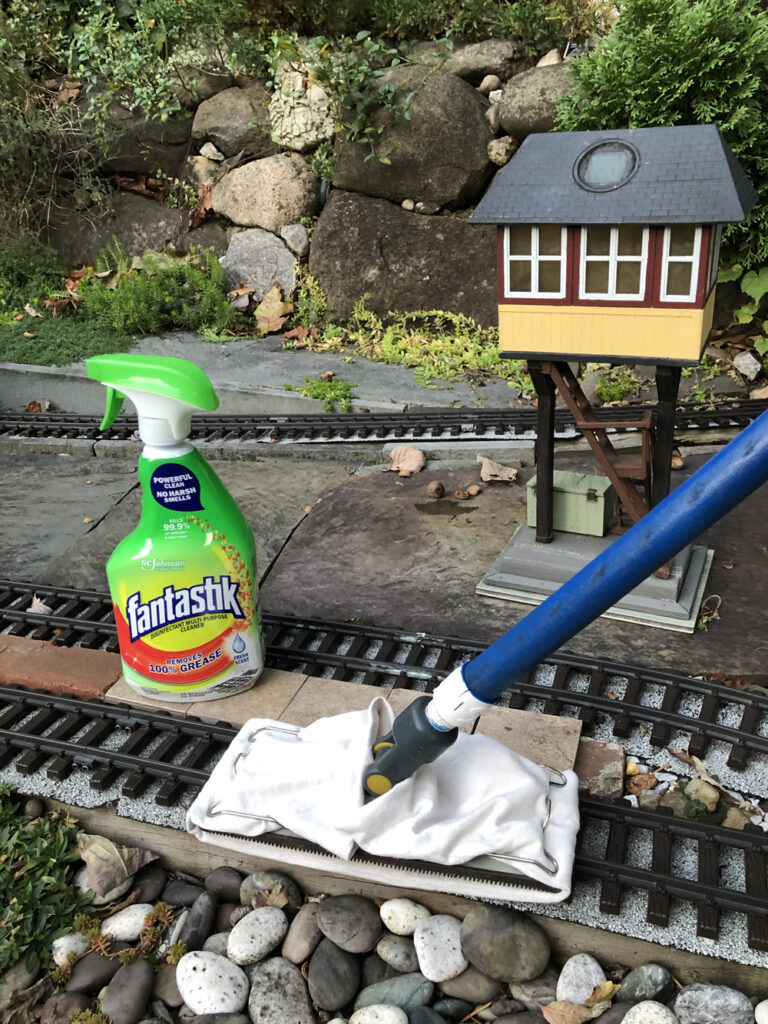
Clean track and repel critters: I’ve been running my garden railway for about nine years. While operations have been successful, I’ve had to deal with two recurring challenges that seem to affect other large-scale operators as well, namely connectivity and Mother Nature. Connectivity issues usually means either bad joint connections between pieces of track or […]
Read More…