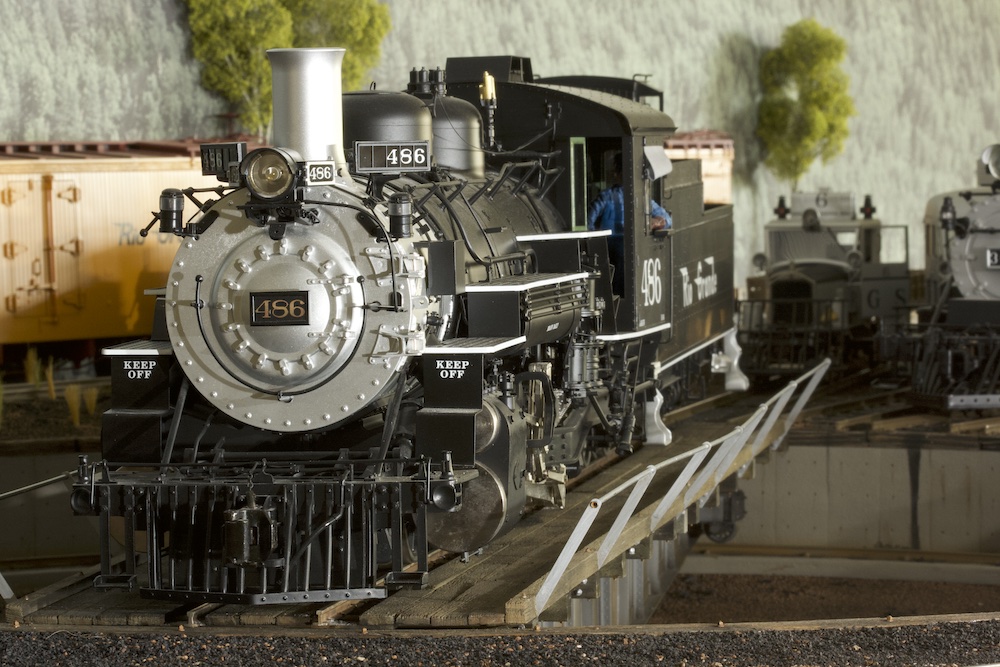
Steam locomotive manufacturers and aftermarket sound companies have come a long way in producing realistic sound, to a point. These systems usually have a single speaker mounted face down in the floor of the tender. Projecting sound downward and bouncing it off the track and ballast results in heightened bass and low definition between the […]
Read More…
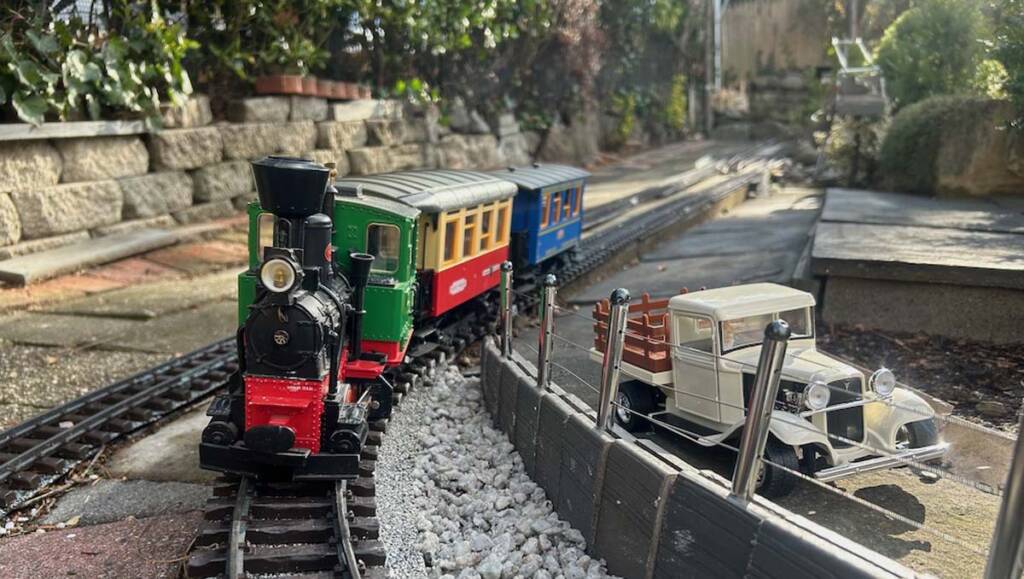
In 2016, to separate the road and the track, I built a retaining wall and safety fence around one of the curves in my railway. I used pieces of treated wood to represent concrete blocks, and 3” wide strips from white plastic-coated wire baskets to serve as the fence (August 2016 Garden Railways). After eight […]
Read More…
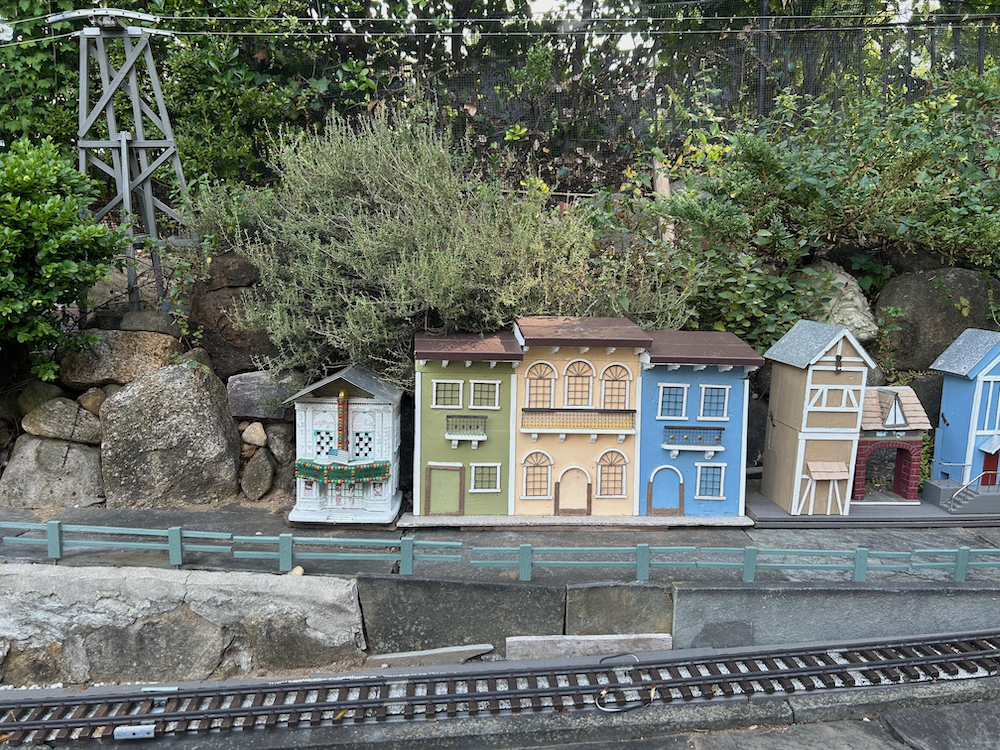
I live in the northeast region of the United States, where winters are harsh. Ice, snow storms, and heavy dampness attack structures left outdoors on the railway. While the track remains in place, I put away most of my structures during winter. I cannot put away a couple of wooden rail bumps, the fence around […]
Read More…
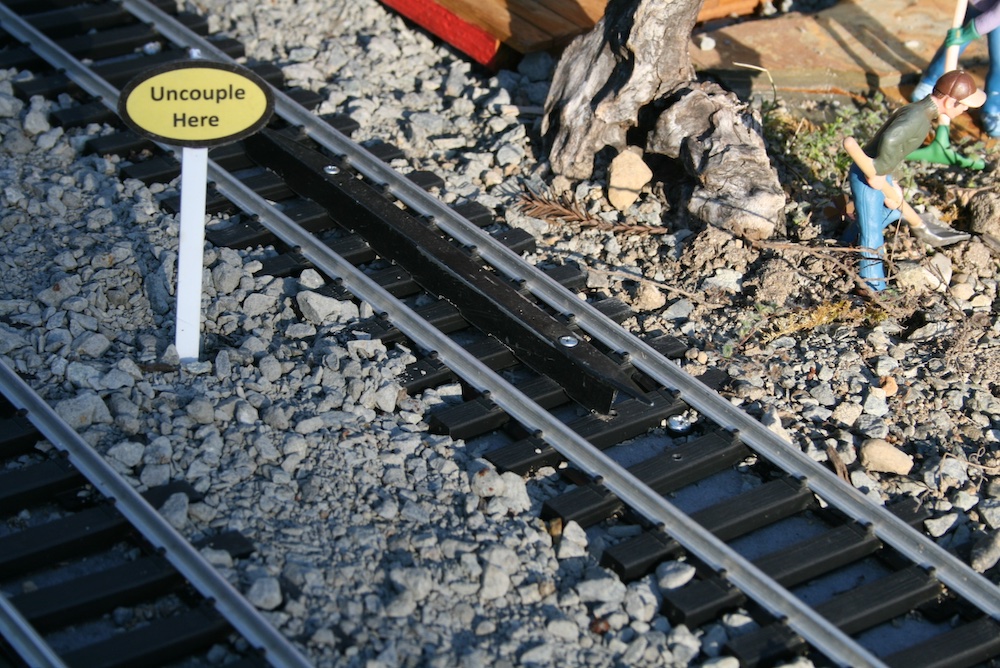
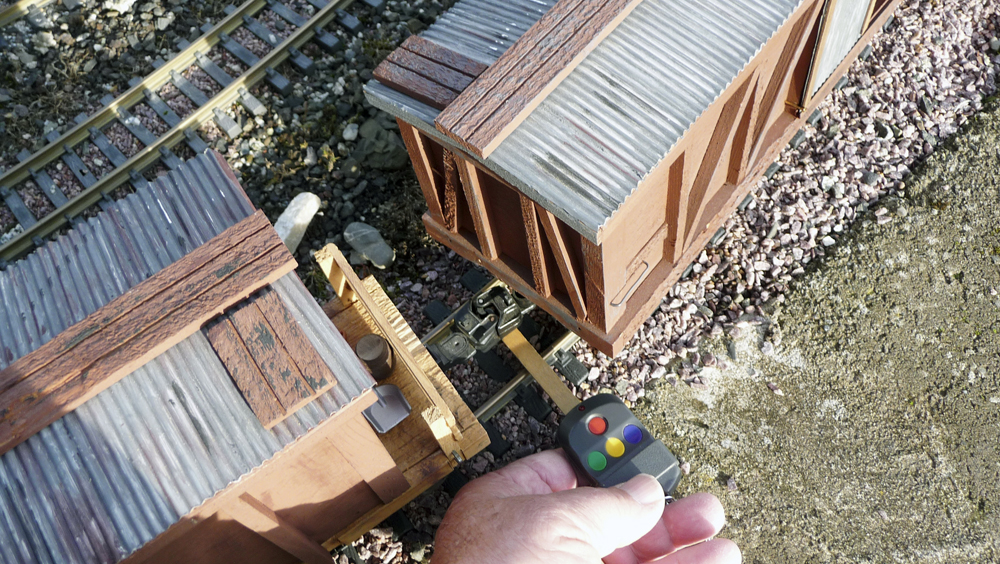
I wanted a reliable uncoupling method for my G-scale body mount Kadee couplers, with no moving parts or power requirements. I initially tried Kadee’s magnetic uncoupling system but found it wasn’t a perfect setup. It required the couplers be stopped precisely over the short magnet, and side-to-side movement of the cars due to slop in […]
Read More…
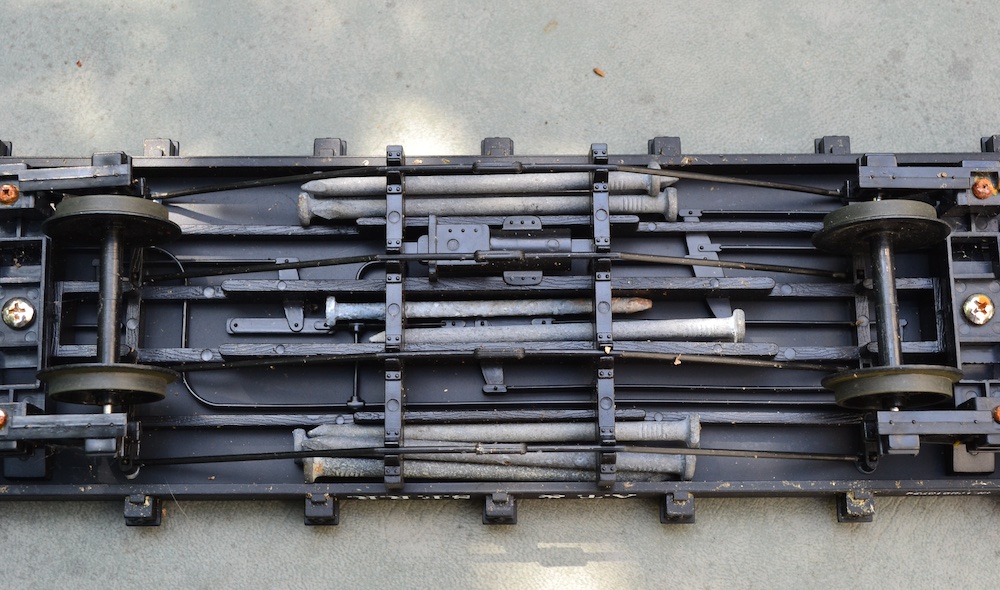
Easily add weight to flatcar I have a basic flatcar that was giving me problems. The trouble with flatcars is they don’t weigh that much and derail easier than other cars. One solution is to install metal wheels, but I didn’t want the expense plus by leaving the car outdoors I was worried about rust. […]
Read More…

Make building signs from polyester labels: In our hobby, the little things can make a big difference. When adding buildings to our railroads, it’s details like signs that help us determine if it’s the local drug store or the donut shop. Signs also clue us in to what era the railroad is set in. I […]
Read More…
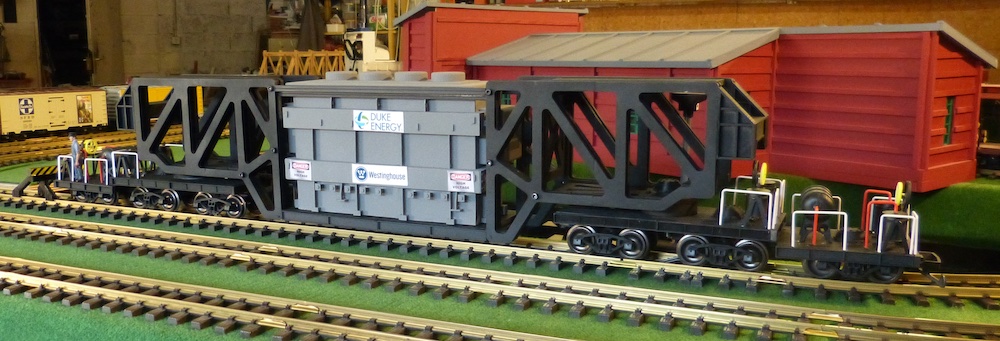
Railroads carry a multitude of loads, from passengers, livestock, and a variety of other goods. I decided to build a high-power transformer and the car designed to carry it—the Schnabel car. The Schnabel car is designed to carry heavy or oversized loads. The construction of this car involves two friends and 3-D printing. One hobbyist […]
Read More…
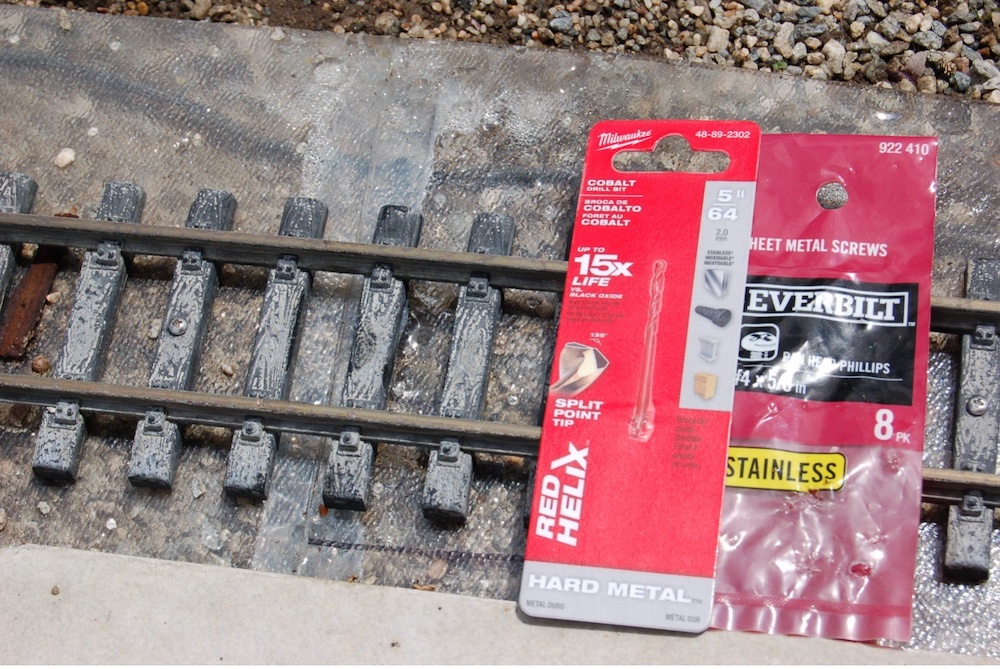
“Don’t sweat the small stuff!” That’s easy to say when you are running small equipment on your rails. Your diminutive LGB Stainz and two-axle freight/passenger coaches with hook-and-loop couplers can track over pretty much whatever you throw at them. But what of us who like to run the big stuff? Heavyweights, streamliners, and extended freight […]
Read More…
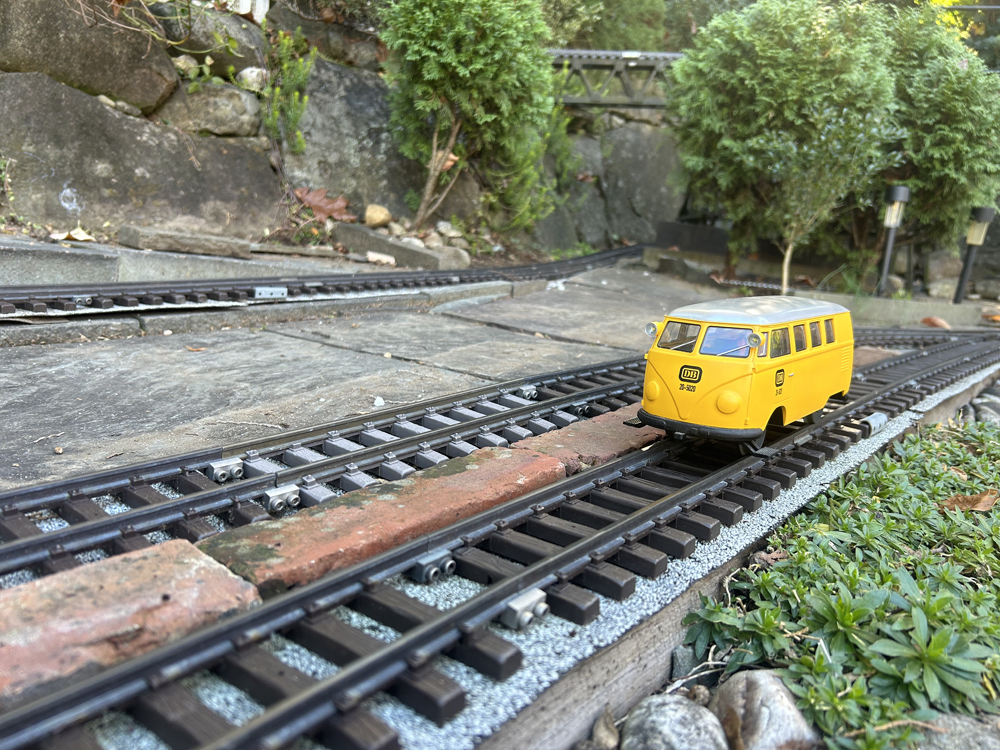
In my January 3, 2022, Garden Railways article, I detailed how I used landscaping timbers as the roadbed for my garden railway. The railway was built in the summer of 2013. Now, 11 years later, after successfully operating trains without any track or roadbed problems, I’m ready to do a much-needed maintenance service of this […]
Read More…
Fake steam gauges I’ve made my own fake gauges before I thought of this. I found some pictures of gauges by doing an Internet image search. I then sized them to fit my old kitbashed Pacific’s backhead, which I plan to use in a Challenger. I put shiny, clear tape over them to give the […]
Read More…
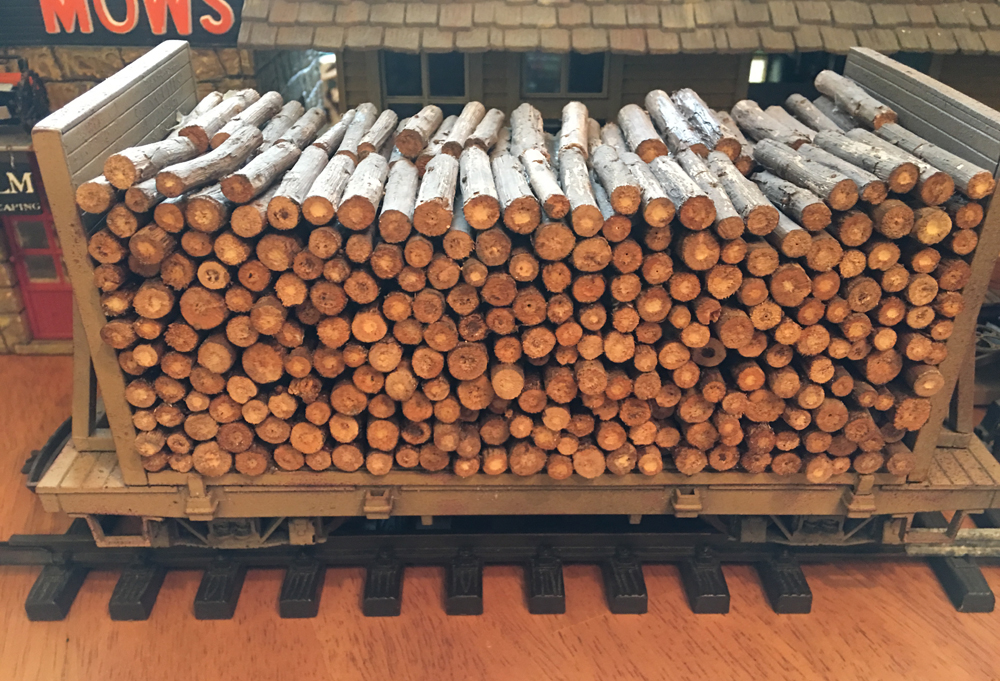
Since I own the P.T. Tubifo Lumber Co. engine for my railroads’ lumber company, I thought I’d add a pulpwood car for it to haul. I started the project with Kalamazoo flatcar and added bulkheads made from Evergreen styrene. During my work travels, I saw some weeds on the side of the road and initially […]
Read More…
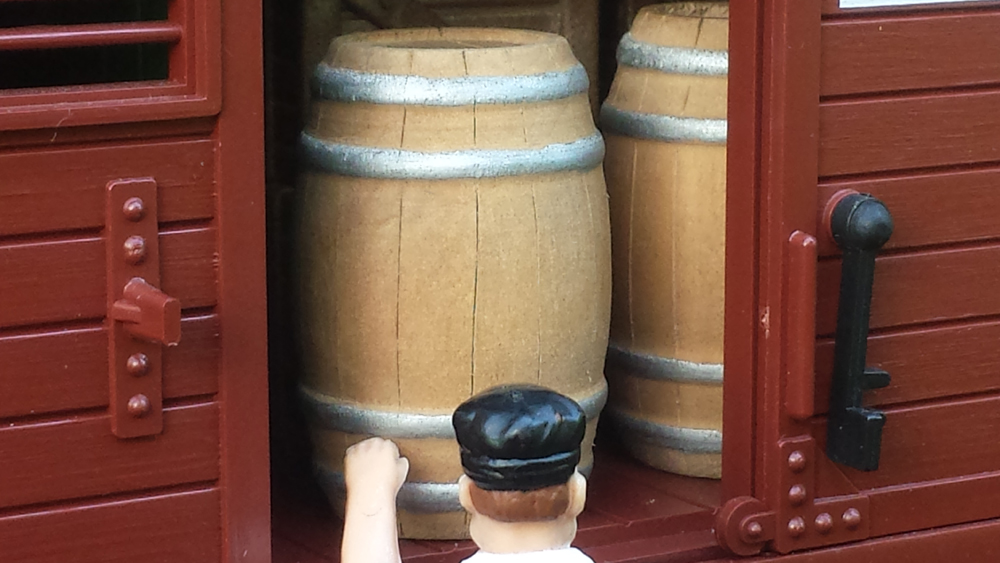
While searching for barrels to use on my railroad, I noticed wood turnings marketed as “pickle barrels” in a Michaels craft store. They are made by Lara’s Crafts and are turned Baltic birch in the general shape of a barrel with hoops. While unbecoming in their present state, they offered good modeling potential, so I […]
Read More…