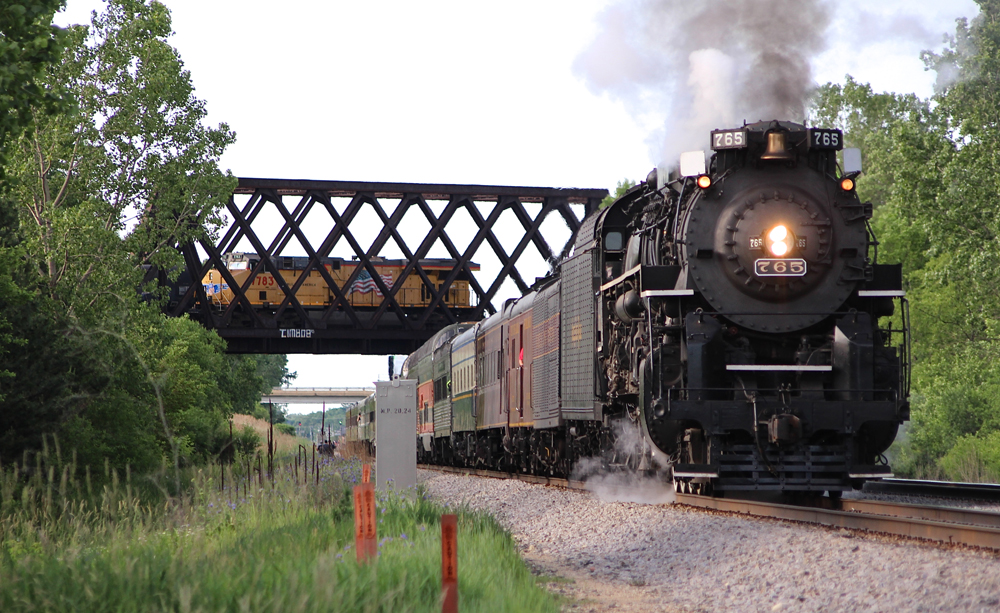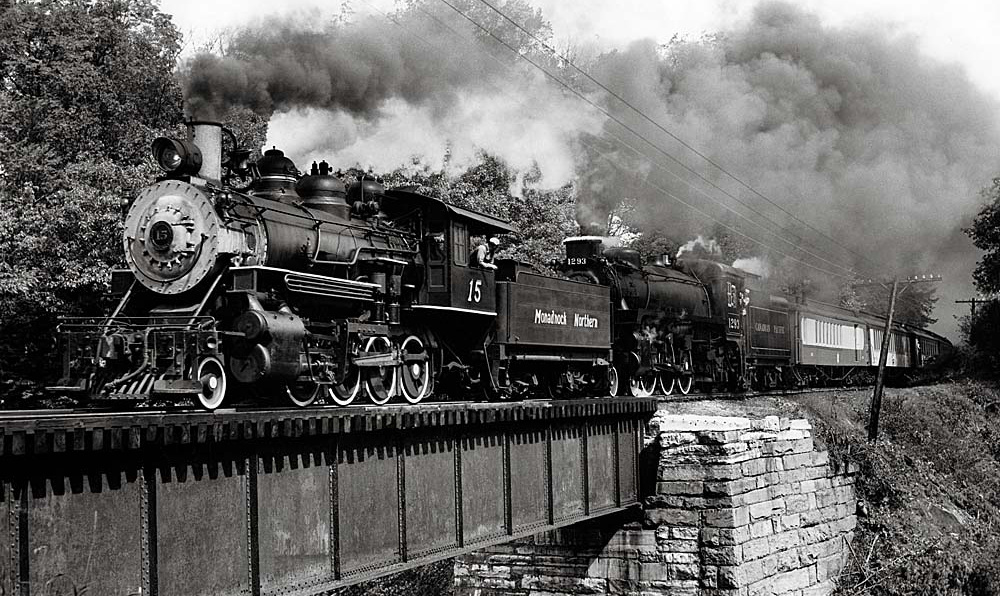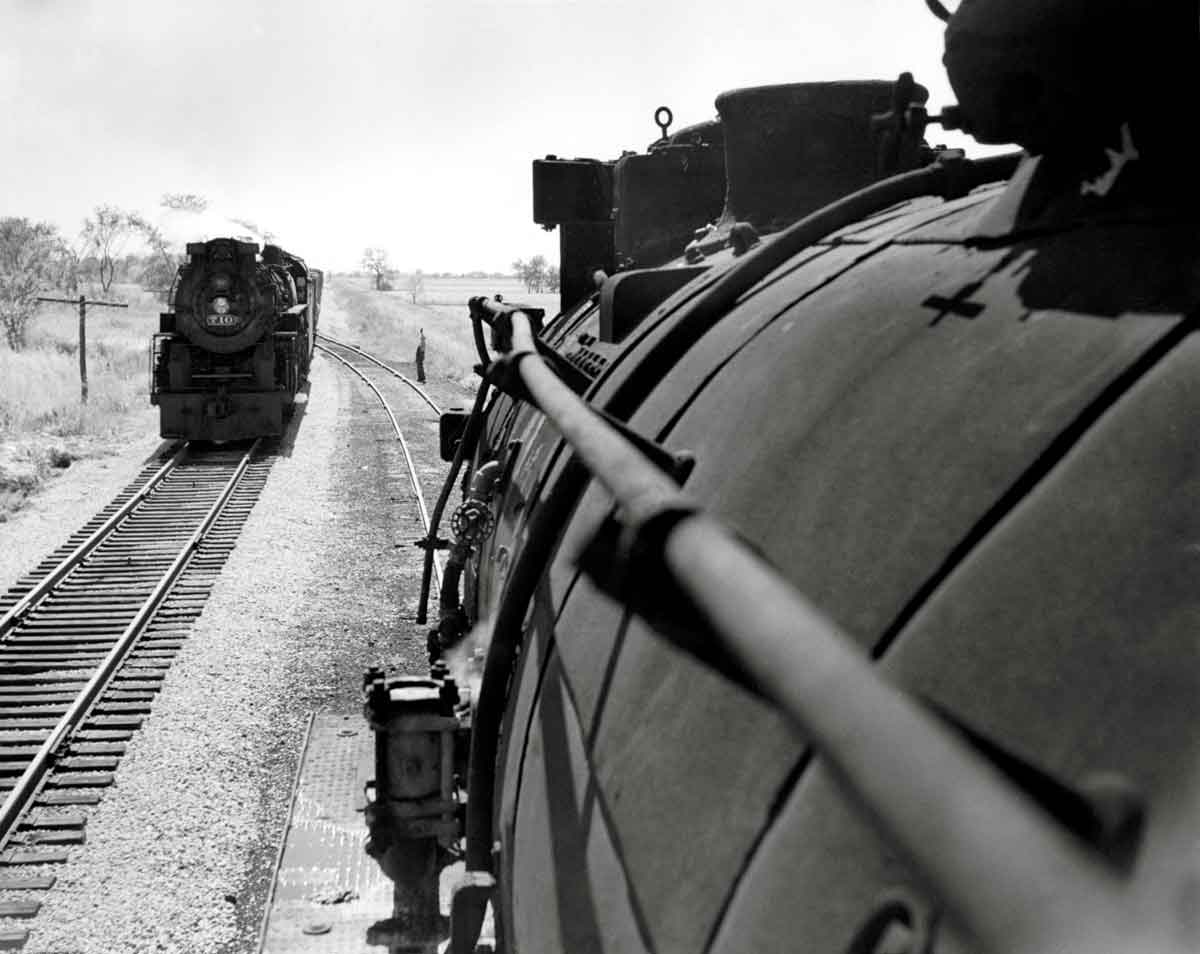
It isn’t much of a stretch to proclaim the 2-8-4 Berkshire-type steam locomotive as the “poster child” of the Super Power era of steam locomotives. “Berkshire,” “Kanawha,” “Big Emma” — regardless of what they were called, the wheel configuration helped advance steam technology through size, speed, and power.
The development of the Berkshire all started with the Mikado. Rising alongside the dawn of the 20th Century, the 2-8-2 configuration was a versatile machine that bridged the gap to the age of Super Power. The secret to its success was increasing the firebox’s size, specifically the width, to increase the rate of combustion and ultimately the steam pressure needed within the boiler for increased horsepower. The firebox was then repositioned right behind the last drivers, with a two-wheel trailing truck supporting the weight.
Heading into the 1920s, the Mikados could no longer keep up with heavier freight traffic at higher speeds. Even after “super powering” New York Central‘s 2-8-2, H-10 No. 8000 in 1922, Lima Locomotive Works and its design director, William E. Woodard, were not satisfied that demands for speed and power were being met.
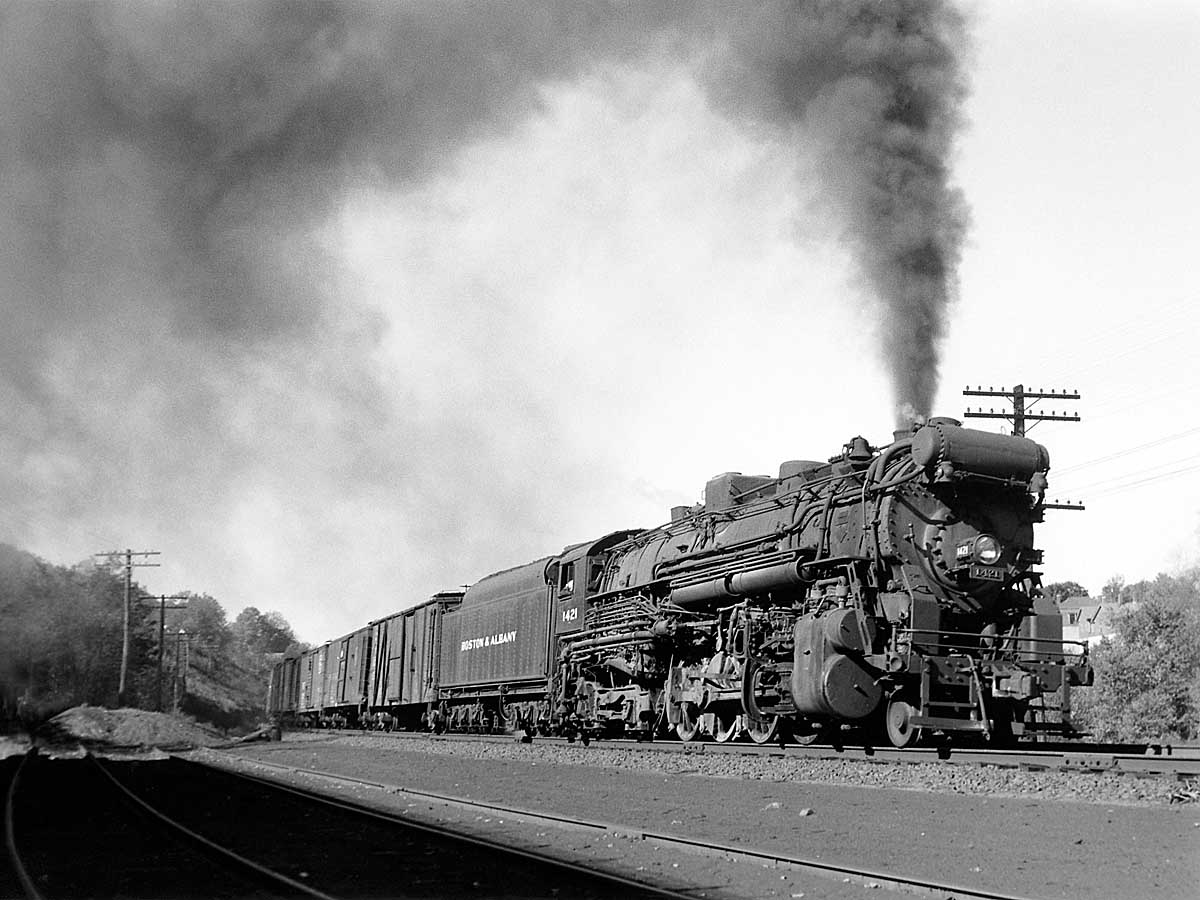
Much like the Mikado concept, Woodard decided to increase the firebox size while adding an additional wheel set to the trailing truck. The result would be the first 2-8-4 ever built. The class A-1 demonstrator, No. 1 was constructed in 1925 with 28×30-inch cylinders, 63-inch drivers, and an operating pressure of 240 psi. A feedwater heater, superheaters, lightweight rods, and a booster engine added to the trailing truck would enhance the locomotive’s efficiency and performance.
And it performed well along the NYC’s subsidiary Boston & Albany between March 28 and April 15, 1925. Able to haul 2,500 tons unassisted over the 1.5% grade on the railroad’s Albany Division, the successful test through the Berkshire Hills led to a celebrated nickname for the 2-8-4 configuration: Berkshire.
The B&A wasted no time, ordering 55 Berkshires based on the A-1 demonstrator from Lima. The Illinois Central (51 plus the demonstrator), Chicago & North Western (12), Boston & Maine (25), Missouri Pacific (30), and the Toronto, Hamilton & Buffalo (2) would follow suit. The Atchison, Topeka & Santa Fe Railway would also have its share of the Berkshire pie in 1927 (15), albeit coming from the Baldwin Locomotive Works.
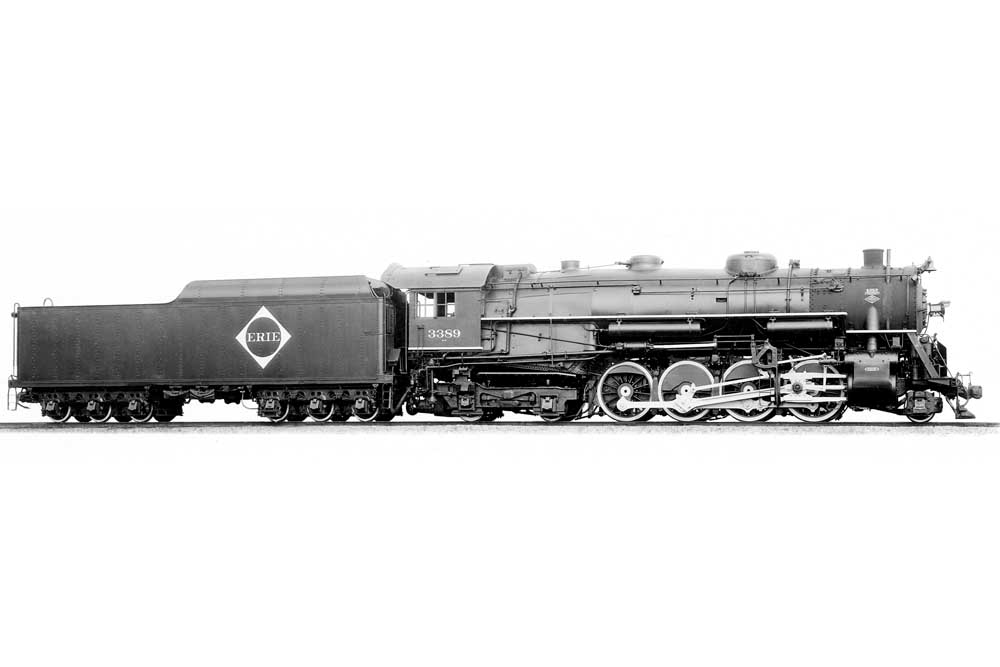
The 2-8-4 Berkshire would be notably etched into history alongside a pair of Cleveland brothers named Oris P. and Mantis J. Van Sweringen. They controlled numerous railroads, including: New York, Chicago & St. Louis (Nickel Plate Road), Erie, Chesapeake & Ohio, Pere Marquette, Missouri Pacific, Texas & Pacific, and the Denver & Rio Grande Western. Out of this conglomerate came the Advisory Mechanical Committee (AMC), established in 1929 as a mechanical dream team for the shared development and construction of locomotives for the Van Sweringen railroads.
The Erie was the first to take the 2-8-4 concept to new heights with 105 ordered between 1927 and 1929. Unlike the A-1, these Berkshires — the largest and most powerful — boasted a larger boiler, 70-inch drivers, larger cylinders, and a full-length frame. Further design refinements, including reducing the drivers to 69 inches and adding Delta-type trailing trucks from the C&O T-1 2-10-4, resulted in the iconic Van Sweringen Berkshire design built by both Lima and the American Locomotive Co. These Super Power locomotives could handle fast freight on the Midwest flats or keep the coal trains moving through the Appalachian Mountains.
The Nickel Plate Road famously rostered 80 Van Sweringen Berkshires between 1934 and 1949. Other railroads followed, including: Pere Marquette (39), Wheeling & Lake Erie (32), Chesapeake & Ohio (90), Virginian (5), and Richmond, Fredericksburg & Potomac (10). Minor modifications were expected for each road: PM locomotives had larger cylinders, W&LE were lighter, the C&O Kanawhas were heavier and copied from the Virginian, and the RF&P had different domes and cabs.
Other railroads would roll out their own version of the Berkshire with some adaptation from previous designs. The Detroit, Toledo & Ironton commissioned six locomotives with similarities drawn from Nickel Plate versions, though with 63-inch drivers; five for the Norfolk Southern Railway were more like Mikados due to lighter weight; and seven boosterless Berkshires for the Pittsburgh & Lake Erie were among the last steam locomotives built by Alco in 1948.
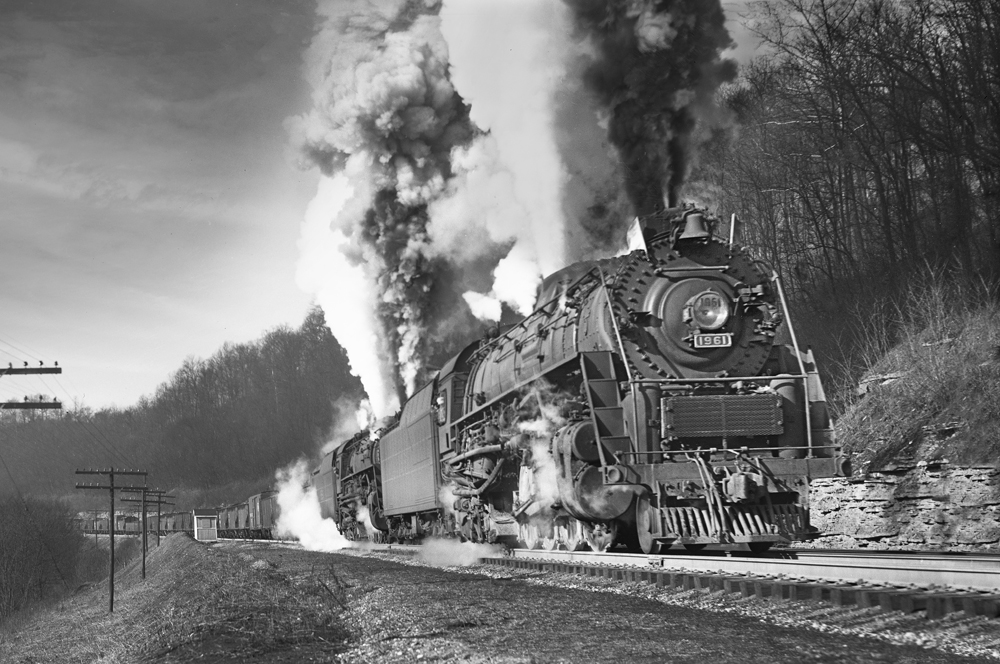
The most expensive 2-8-4s were the Louisville & Nashville’s Big Emma M-1s. A total of 42 locomotives were built: 20 from Baldwin in 1942 and 1944, and 22 from Lima in 1949. The Van Sweringen design was adopted and enhanced with modern features such as roller bearings on all axles, cast-steel frames, and Hanna H-4 stokers. In the last batch, each locomotive cost $268,464, according to L&N historian Ron Flanary.
The final 2-8-4 Berkshire, Nickel Plate Road No. 779, was built in 1949. Among the companies building Berkshires — Lima, Alco, and Baldwin — a total of 611 were built (130 were rostered by the Van Sweringen’s template); they were successful right up to the end of steam in the United States.
Several railroads, notably the NKP and Chesapeake & Ohio, spared a good majority of their 2-8-4s from scrapping as part of the preservation efforts. Two have managed to make their way into the mainline steam excursion world and still operate today: Nickel Plate Road No. 765 and Pere Marquette No. 1225.