
Glossary of steam locomotive terms
CS1-L1111_31

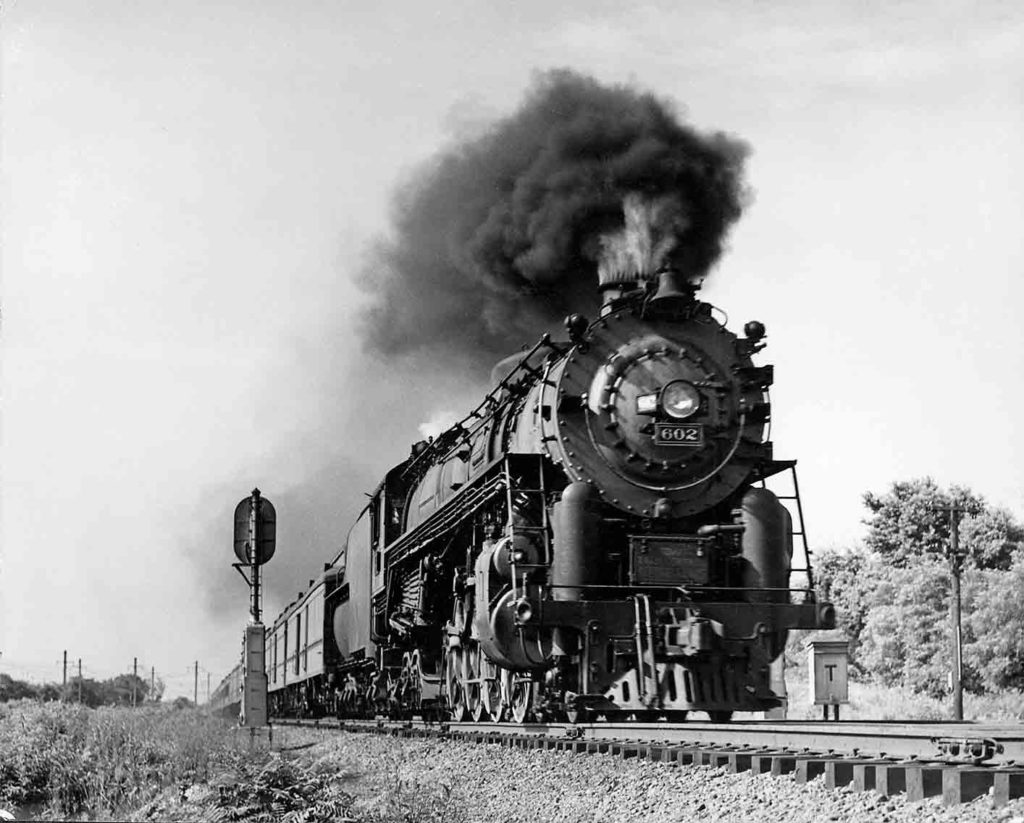
Richmond, Fredericksburg & Potomac 4-8-4 No. 602, named Governor Thomas Jefferson, rushes an 18-car passenger train toward Washington, D.C., near Four Mile Run, Va., in June 1940. C. W. Whitbeck Back pressure Back pressure is caused by the resistance of the exhaust steam exiting the cylinders. Overcoming this resistance represents negative work done by the […]

Read More…

K-28 Mikados: An engineman’s view

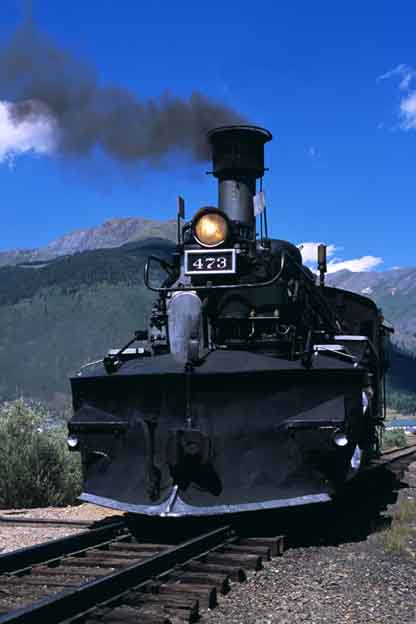
Durango & Silverton crew favorite 473 turns a photographers’ special on the Silverton wye during Railfest in August 2009. Her big plow was useful in fighting snow four months later. Robert S. McGonigal Durango & Silverton Narrow Gauge Railroad engineer Jarrette Ireland assesses the K-28 Mikados:There are many reasons why I personally enjoy the K-28’s, […]

Read More…

Last Class 1 steam runs: Why isn’t my favorite railroad covered?

Lloyd Stagner’s book AMERICAN STEAM FINALE, 1954-1970 (South Platte Press, 2001; www.southplattepress.com) is the definitive resource on the end of steam on U.S. Class 1’s and short lines. In “Just Who Was First to Dieselize,” in Diesel Victory (2006), we mentioned 17 U.S. Class 1 railroads that dieselized early. To qualify for the list, the […]

Read More…

Steam locomotive profile: 0-4-0

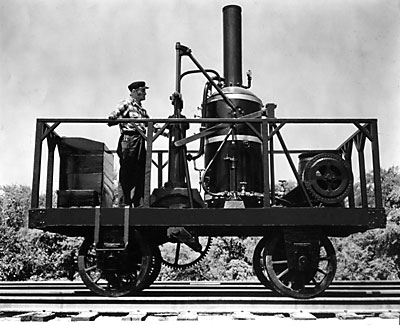
Baltimore & Ohio 0-4-0 Tom Thumb

Baltimore & Ohio constructed this replica of the 0-4-0 Tom Thumb, its first steam locomotive. The original Tom Thumb was built in New York by inventor Peter Cooper, and made a successful first trip on August 25, 1830, when it pushed an open car hauling 18 passengers from Baltimore to Ellicott’s Mills. Early four-coupled locomotives […]

Read More…

Steam locomotive profile: 0-8-0

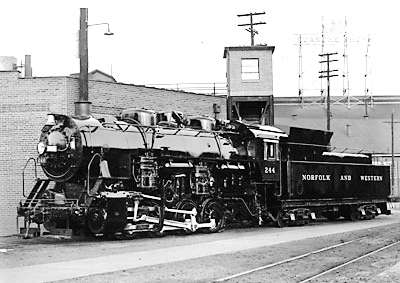
Norfolk & Western 0-8-0 switcher No. 244

Norfolk & Western 0-8-0 switcher No. 244 holds the distinction of being the last U.S. reciprocating steam locomotive built for an American Class 1 railroad. It was the final steam engine to emerge from N&W’s Roanoke Shops, delivered to the railroad in December 1953. Norfolk & Western The first 0-8-0 was built in 1844 by […]

Read More…

Steam locomotive profile: 0-10-0

Duluth, Missabe & Northern 0-10-0 switcher

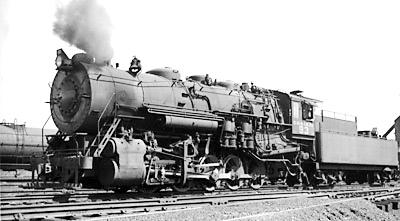
One of Duluth, Missabe & Northern’s mammoth 352,000-pound 0-10-0 switchers works the yard at Proctor, Minn., on September 15, 1951. J. C. Seacrest collection The first 0-10-0 was built in 1905 at Alco’s Brooks Locomotive Works as a hump engine for the New York Central. Over the next five years, New York Central took delivery […]

Read More…

Steam locomotive profile: 2-6-0 Mogul

Canadian National 2-6-0 Mogul no. 86

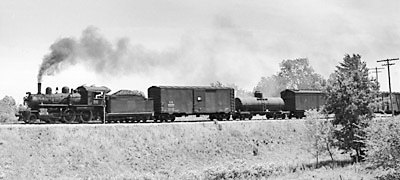
Canadian National kept its fleet of Moguls in service the longest, until 1959. No. 86 was built in 1910 by the Canadian Locomotive Co. as Grand Trunk No. 1006, and renumbered twice, before it was photographed leading a mixed train through Ontario in July 1957. Herbert Harwood, Jr. The 2-6-0 was an outgrowth of the […]

Read More…

Steam locomotive profile: 2-8-0 Consolidation

Delaware & Hudson 2-8-0 Consolidation

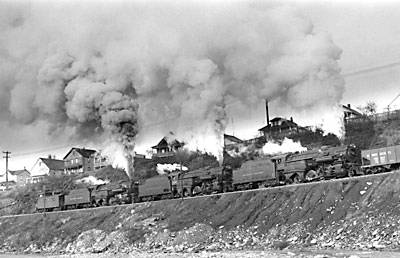
On October 19, 1951, three Delaware & Hudson 2-8-0s shove a heavy freight out of Carbondale, Pa. Robert F. Collins The first 2-8-0 was delivered to the Lehigh Valley in 1866 for operation over the mountain grades of the railroad’s Mount Carmel Branch in Pennsylvania. The locomotive was built by Baldwin, but had been designed […]

Read More…

Steam locomotive profile: 2-8-2 Mikado

Northern Pacific 2-8-2 Mikado No. 1843

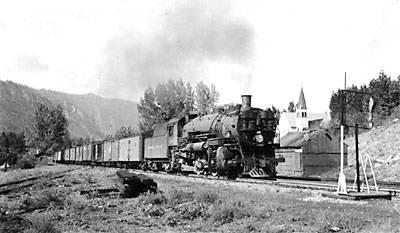
Northern Pacific’s last batch of 2-8-2s came from Alco in 1923. One member of the class, No. 1843, blasts through Thompson Falls, Mont., with a 73-car freight train on September 22, 1940. J. W. Maxwell The first true North American 2-8-2s were built by Alco for the Northern Pacific in 1904. (Experimental locomotives with the […]

Read More…

Steam locomotive profile: 2-8-4 Berkshire

Nickel Plate 2-8-4 Berkshire No. 802

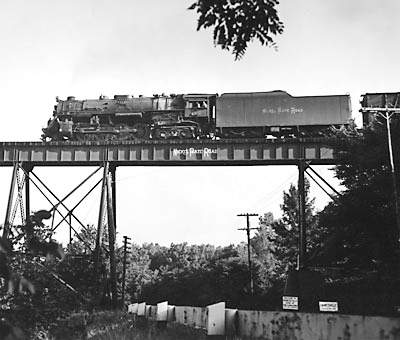
One of Nickel Plate’s handsome Berkshires leads a westward freight across the Grand River bridge in Painesville, Ohio. No. 802 was originally built for the Wheeling & Lake Erie in 1937, then went to work for the Nickel Plate Road in 1949 when the NKP leased the W&LE. John A. Rehor During the 1920s, America’s […]

Read More…