
Heaviest 4-6-4 Hudsons: Chesapeake & Ohio’s L2a
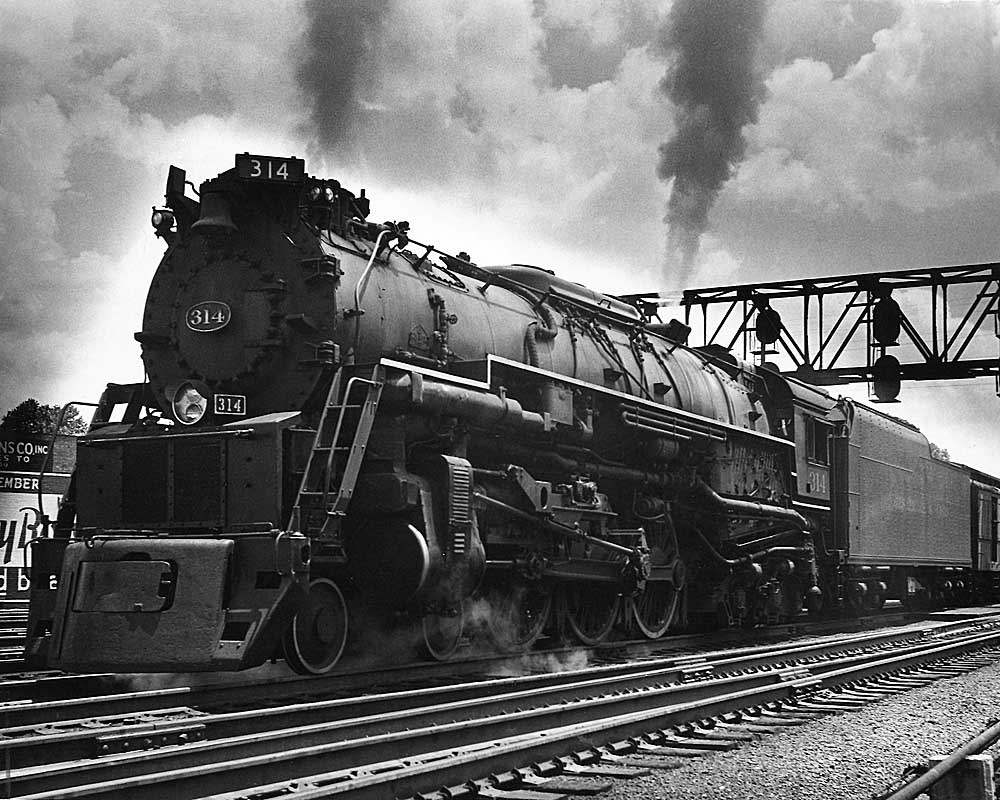
Heaviest 4-6-4 Hudson steam locomotive under signal bridge

Ask someone to associate a railroad with the heaviest 4-6-4 Hudsons and they’ll likely guess “New York Central.” After all, it was NYC and its supplier, American Locomotive Co., that first developed the 4-6-4 in 1927, and it was NYC that gave the engine its famous name: Hudson, named for the river the Central’s main […]

Read More…

William N. Deramus III and Deramus red locomotives

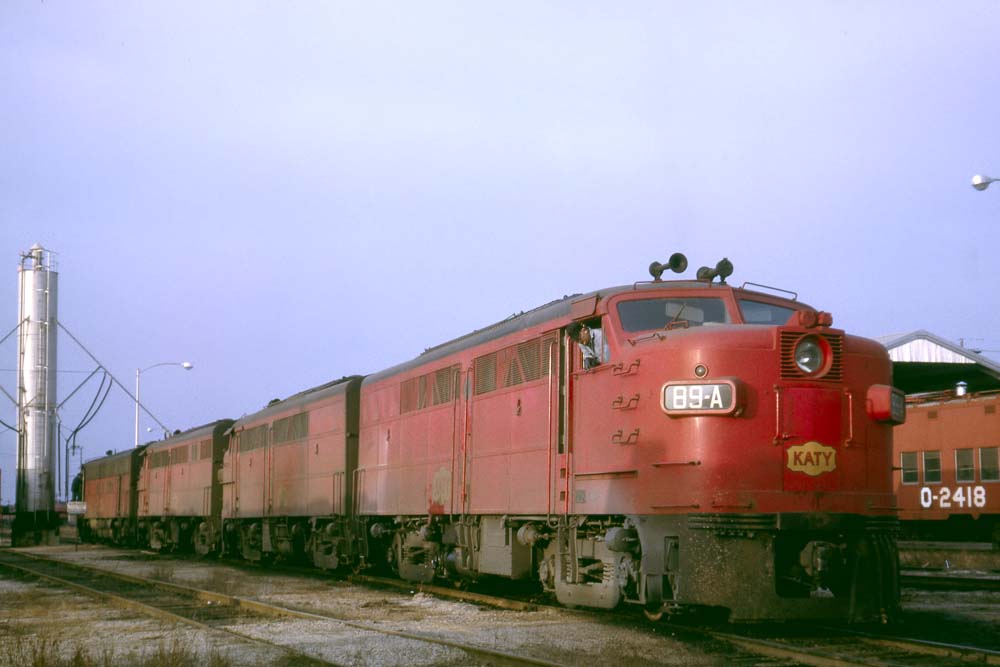
Red-and-white diesel locomotives by shop facility

The three railroads that shared Deramus red locomotives also shared the leadership of William N. Deramus III. He began working on the Wabash in 1939 and served in the U.S. Army Transportation Corps in British India before becoming general manager of the Kansas City Southern after the war. He died Nov. 15, 1989, at age […]

Read More…

Meridian & Bigbee Railroad history

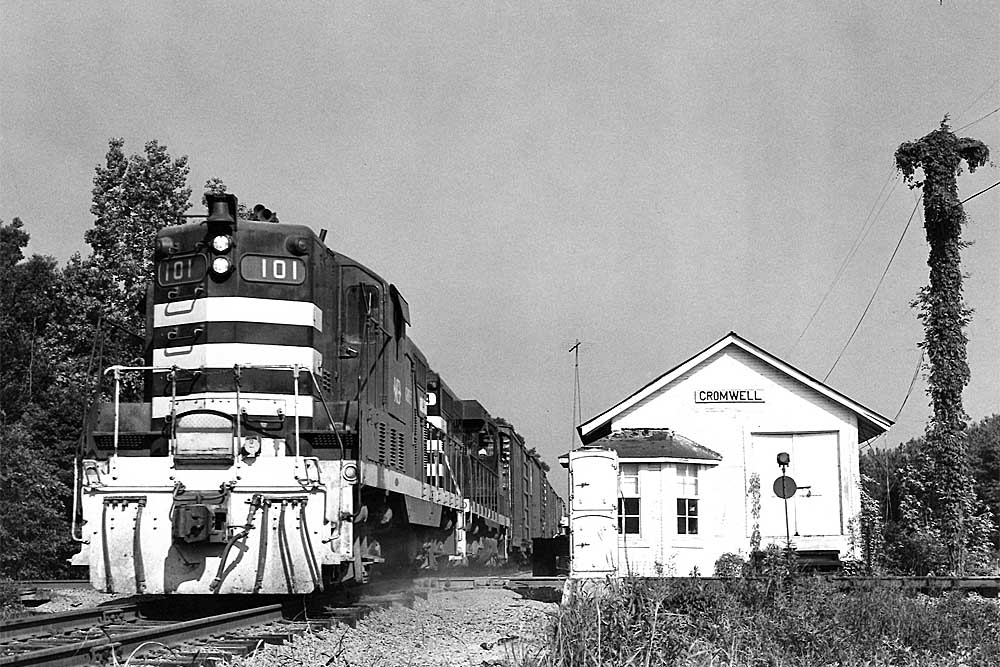
Black Meridian & Bigbee Railroad diesel locomotive passing small wooden station

The Meridian & Bigbee Railroad “possessed all the credentials required for admittance to the Typical Southern Short Line Club,” wrote J. Parker Lamb in Trains’ July 1959 issue. Those included secondhand steam locomotives, a leisurely schedule, and insufficient revenue tonnage. Yet, the road was able to overcome those deficiencies to become a sought-after bridge route […]

Read More…

N scale decoder woes

Nscaledecoderwoes1

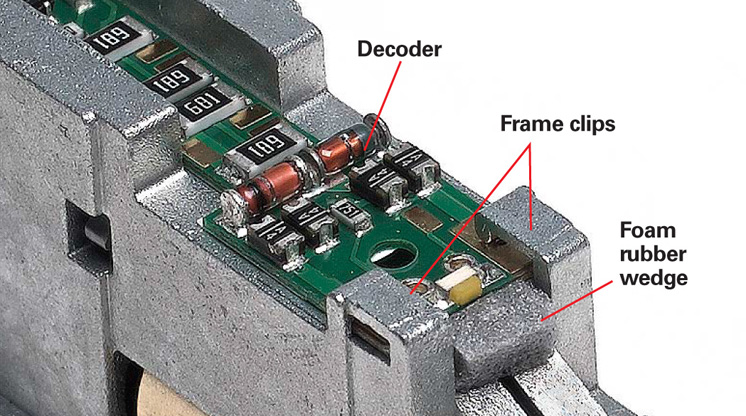
N scale decoder woes: This month I’m going to vent about a round of recent frustrations dealing with N scale Digital Command Control (DCC) decoder installations. The villain of the story will be the Internet, but in an unexpected twist of plot, that same villain shall emerge as the hero. The moral is that the […]

Read More…

Lessons learned on the helix

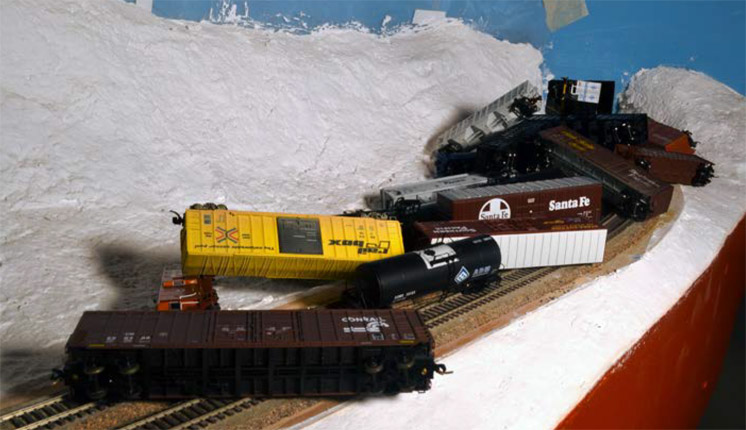
AnunexpecteduncouplinginsidethehelixonJimsNscaleTehachapiPasslayoutresultedinapileupmuchlikethisoneNowthankstobodymountedcouplerstheresneverbeenanotherrunawayonthehelix

Lessons learned on the helix: Whether we’re talking about a model railroad or the real thing, it’s a lot harder to run trains in the mountains than on the flatlands. Every mechanical aspect of operation becomes far more critical. It may prove embarrassing when a car derails on a flat railroad, but usu­ally no harm […]

Read More…

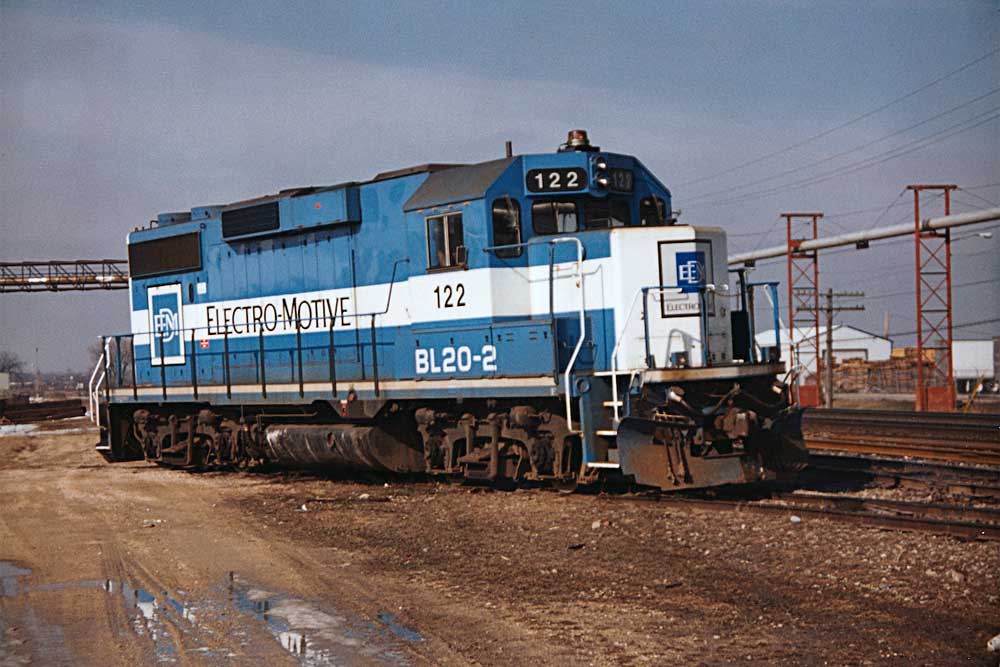
EMD BL20-2 locomotive: a great idea that went nowhere

Blue-and-white EMD BL20-2 locomotive standing in yard

The EMD BL20-2 locomotive had to be an engineer’s brainchild to improve the company’s share of the locomotive market. Just look at the concept. It was brilliant.     Perceived as a win-win for both the manufacturer and railroad, EMD would remanufacture older, high-mileage GP9s with new guts at a cost far less than paying […]

Read More…

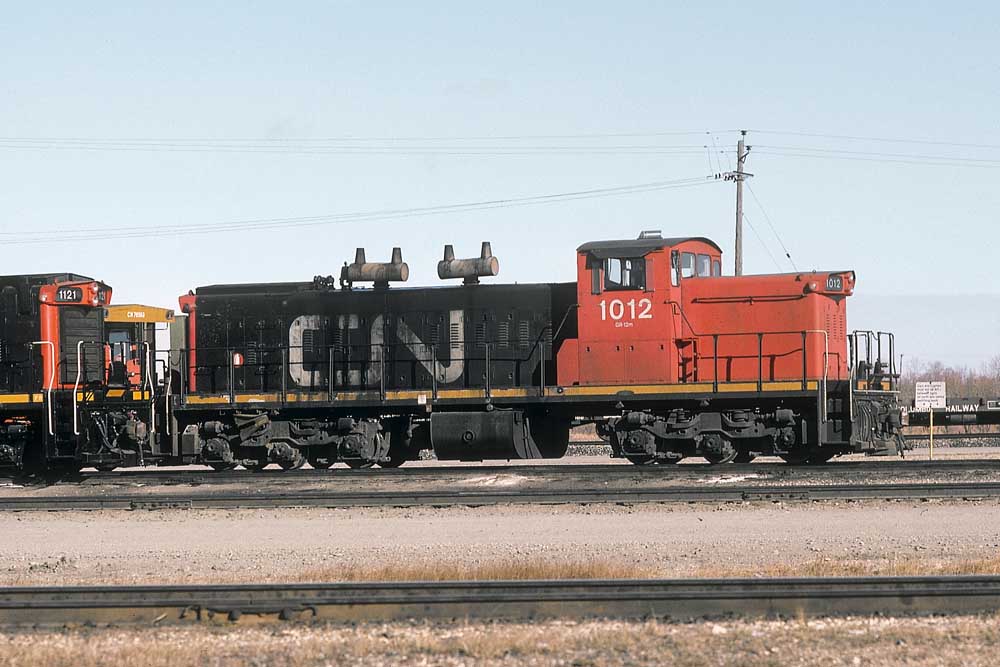
Canada’s GMD1 diesel locomotive

GMD1 diesel locomotive with passenger train and banner on nose

Canada’s GMD1 diesel locomotive was the first to be completely designed by General Motors Diesel Ltd., Electro-Motive’s subsidiary at London, Ontario. GMD built 101 copies in two variants between 1958 and 1960. The locomotive was powered by a 12-cylinder, non-turbocharged 567 prime mover producing 1,200 hp. A news brief in Trains’ July 1959 issue called […]

Read More…

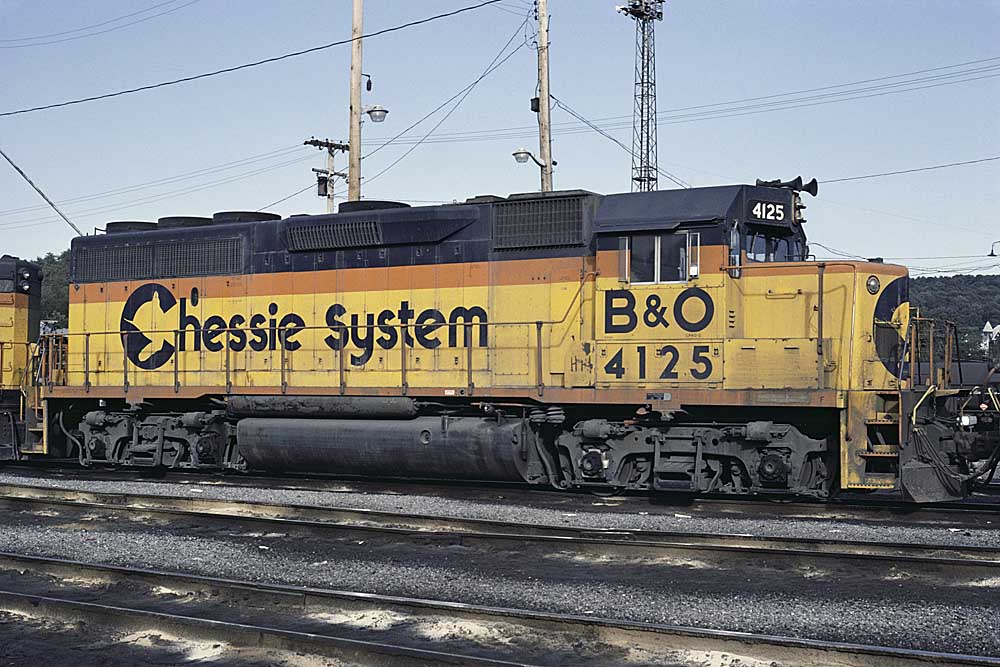
Best-selling Dash-2 EMD diesel locomotives

Three-quarter view of eight-wheel EMD diesel locomotive

The best-selling Dash-2 EMD diesel locomotives will come as no surprise to diesel locomotive fans.   By the late 1960s, the horsepower race had quieted, with 3,000-hp locomotives becoming the norm for fast freight (EMD’s GP40 and SD40, GE’s U30B and U30C) and 2,000 for local service (EMD’s GP38). EMD had successfully introduced a new, […]

Read More…

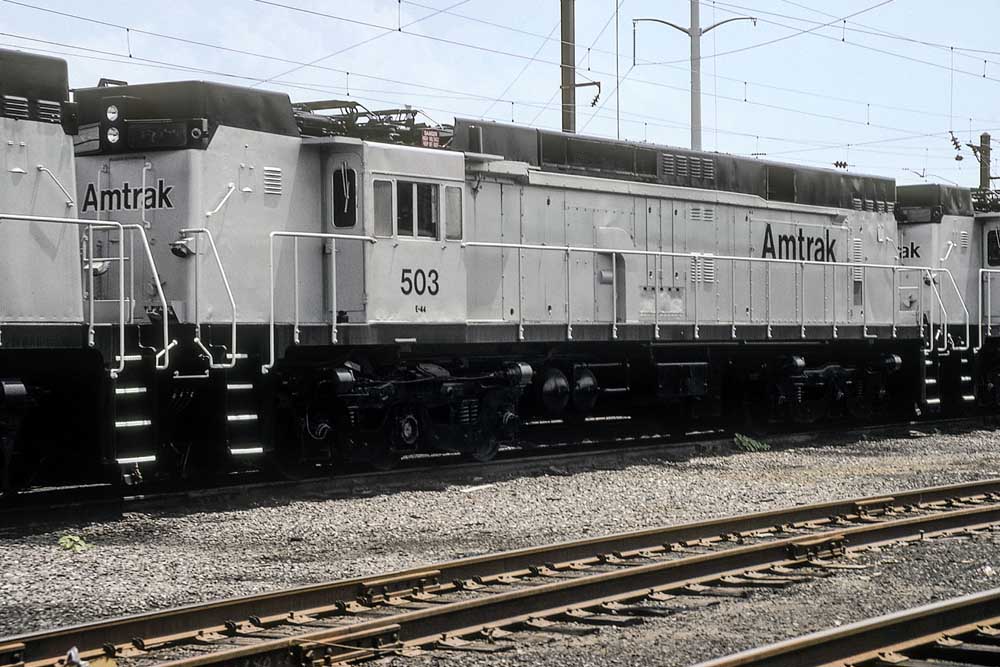
Amtrak E44 electric locomotives

Silver-and-black Amtrak E44 electric locomotives stored in a line

Amtrak E44 electric locomotives are eight roster oddities that likely never turned a wheel in revenue service for the passenger carrier.     The Pennsylvania Railroad acquired 66 of the 5,000-hp, six-axle E44 electric locomotives from General Electric, Nos. 4400-4465. Built at Erie, Pa., between 1960 and 1963 the motors were 69-feet, 6-inches long and […]

Read More…

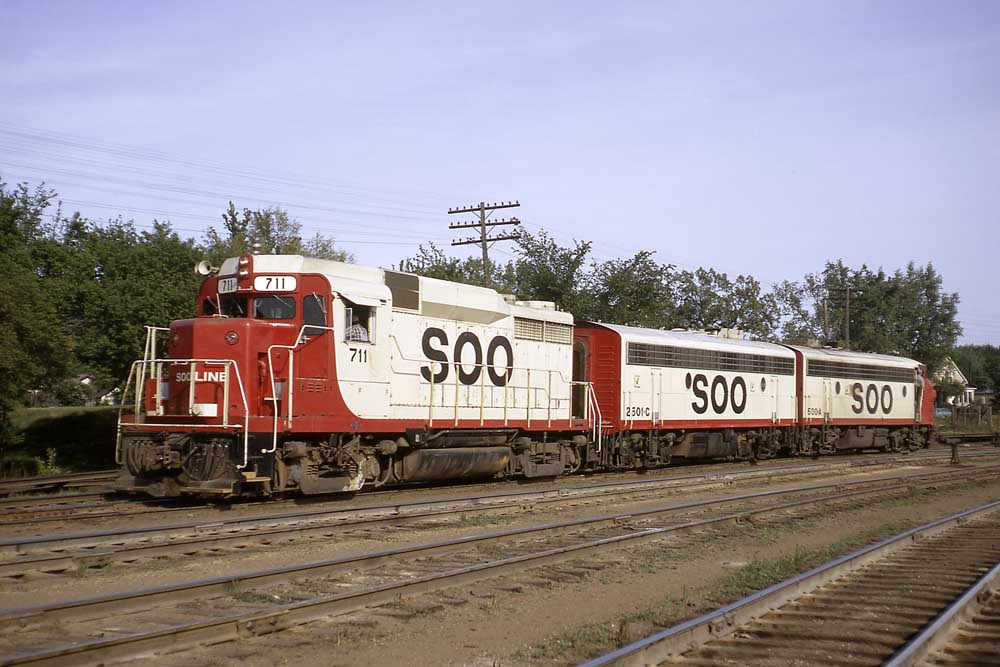
Soo Line diesel locomotives remembered

Three red-and-white Soo Line diesel locomotives

Soo Line diesel locomotives came from four builders and sported two distinctive paint schemes.     The Minneapolis, St. Paul & Sault Ste. Marie had long been known by its nickname, the Soo Line. The railroad adopted that name officially in 1961 when it merged the Wisconsin Central and Duluth, South Shore & Atlantic, both […]

Read More…

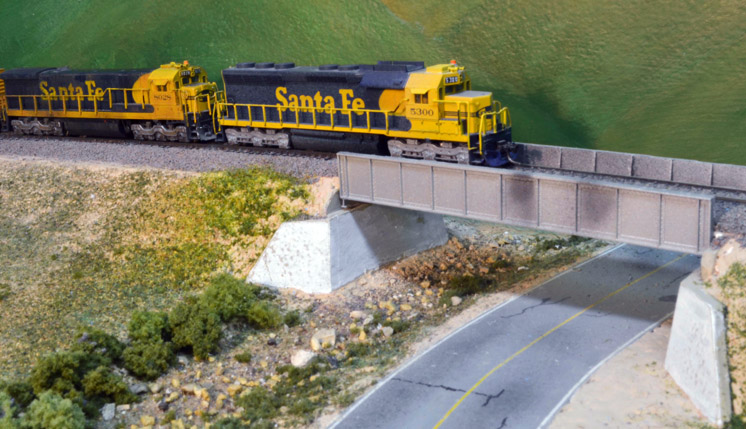
Modeling plate girder bridges

ModelingplategirderbridgesinNscale

Modeling plate girder bridges: The most commonly found type of railroad bridge in the country has to be the good old plate girder. You see them everywhere. They’re simple, inexpensive, and can handle spans up to about 100 feet. (The longer the span, the deeper the sideplates on the bridge.) As long as there are […]

Read More…

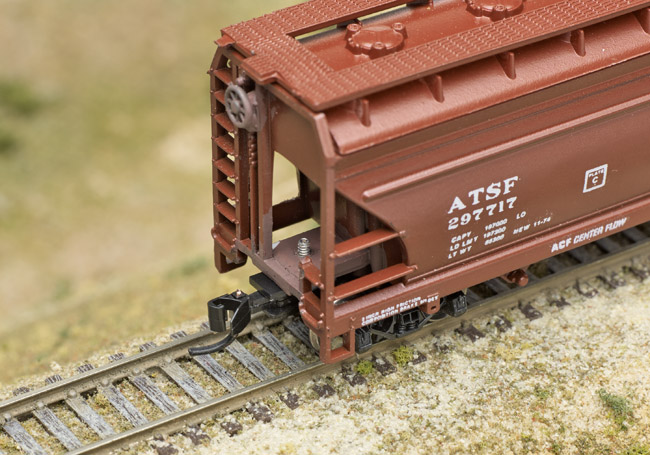
Tips for body mounting couplers

ThisAtlascoveredhopperwasmanufacturedintheearly90sandcamewithtruckmountedRapidostylecouplersBodymountingMicroTrainscouplersimprovedbothitslooksandperformance

Tips for body mounting couplers: “Oh, no,” I can hear you saying, “He’s off on couplers again.” Well, sorry, I am, and perhaps not for the last time. Almost all N scale rolling stock until recently has come with truck-mounted couplers. It’s true that cars so equipped can handle tighter curves, but it’s also true […]

Read More…