
Lehigh Valley Railroad remembered
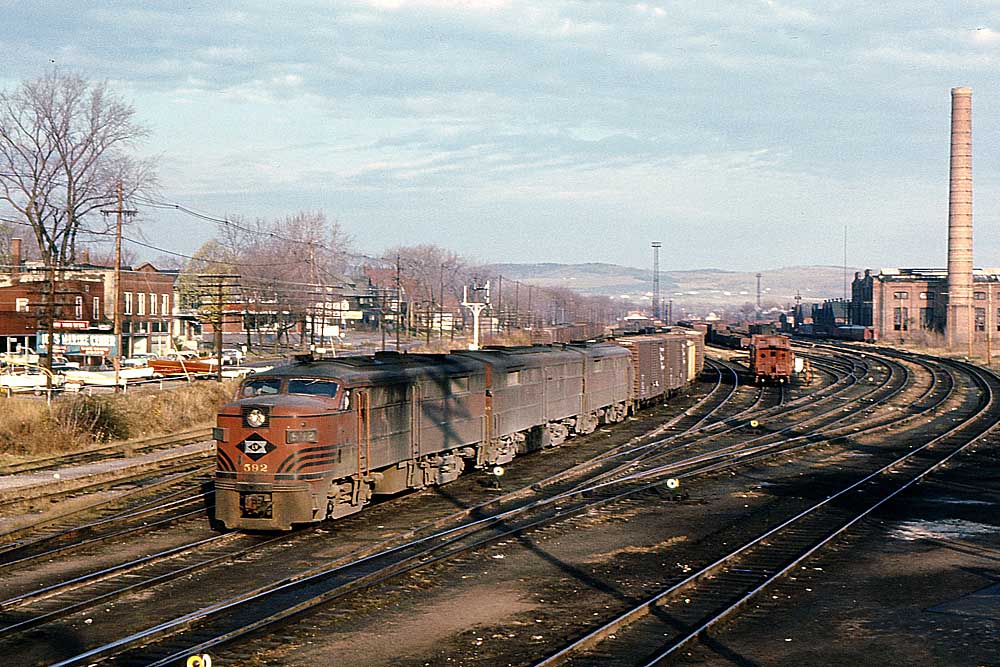
Streamlined red Lehigh Valley Railroad diesel locomotives pull freight train through curve in city

Without an ampersand, directional vector, or superlative in its title, the Lehigh Valley Railroad was of understated geographical reach. Its 440-mile New York-Buffalo line was slightly longer than competing routes of the Erie, New York Central, and Lackawanna, but shorter than the Pennsylvania’s. LV’s earliest component dated to 1836, but “the Valley” owed its existence […]

Read More…

North Shore passenger service photo gallery

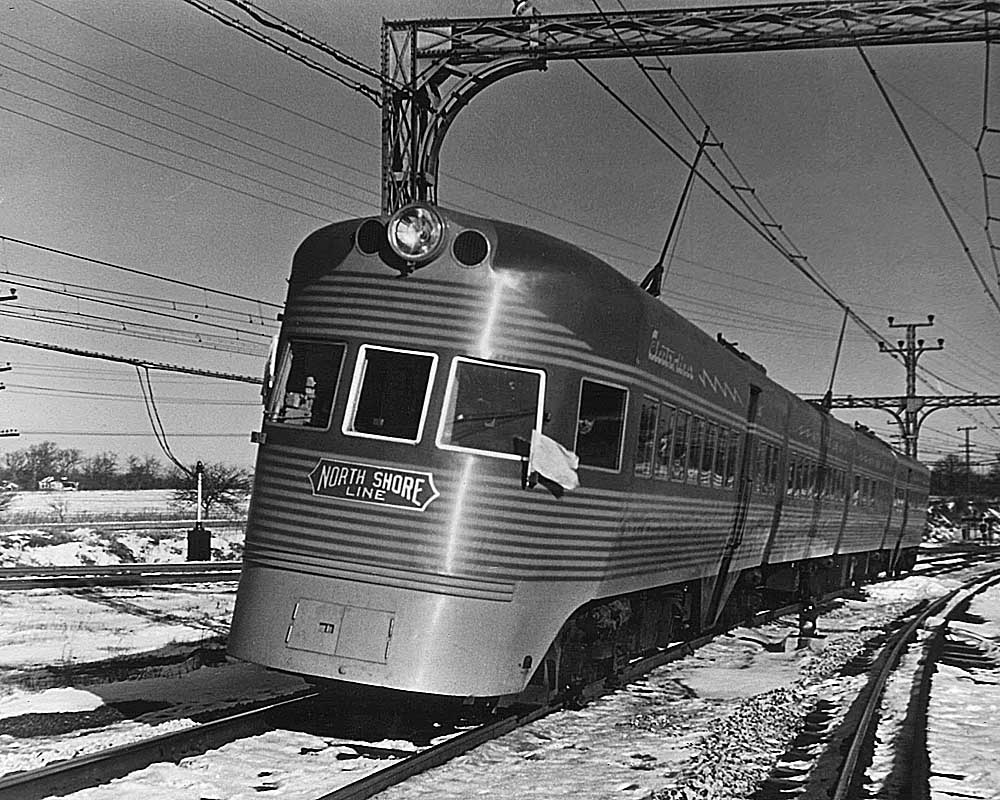
Streamlined Chicago North Shore & Milwaukee equipment under catenary

Enjoy this North Shore passenger service photo gallery selected from among the Chicago, North Shore & Milwaukee Railroad files in Kalmbach Media‘s David P. Moran Library. This gallery celebrates the history, heritage, and Electro-glamour that was the high-speed North Shore interurban railroad. This North Shore passenger service photo gallery was first published in August 2015. […]

Read More…

Chicago North Shore & Milwaukee remembered

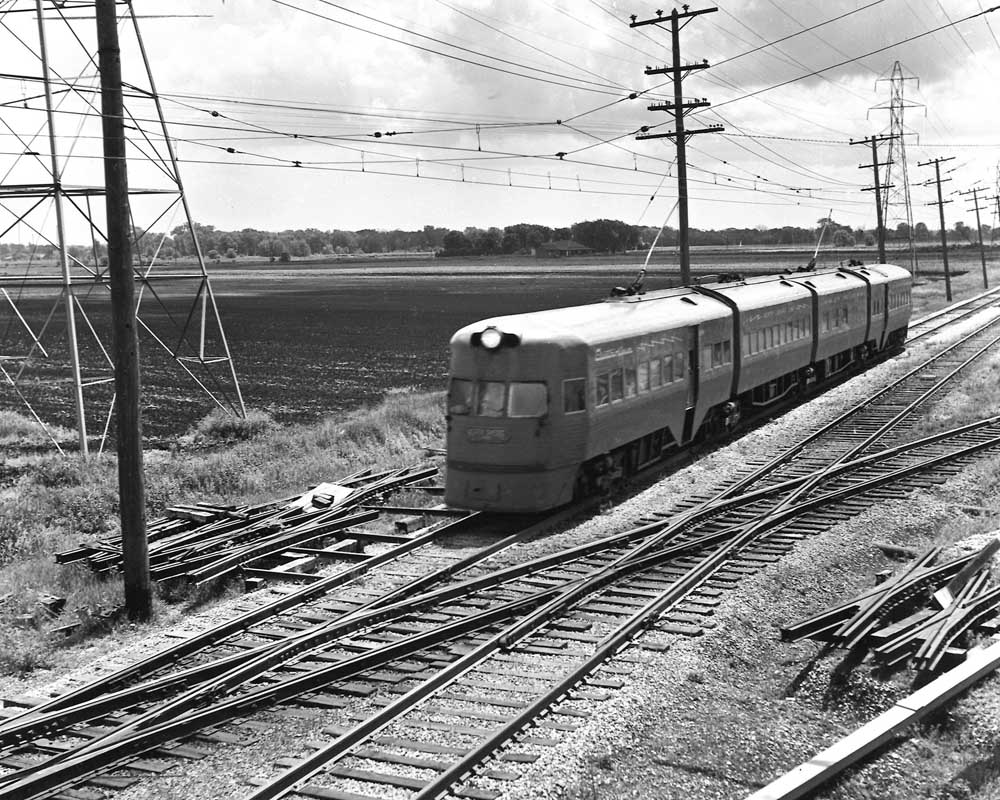
Streamlined electric passenger train crossing railroad tracks at grade during Chicago North Shore & Milwaukee history

Chicago North Shore & Milwaukee history is tied to the transit needs of Chicago and Milwaukee. In 1891 the Waukegan & North Shore Rapid Transit Co. was incorporated — a trolley line for the city of Waukegan, Ill., on the shore of Lake Michigan, 36 miles north of Chicago. In 1897, by which time it […]

Read More…

The Morrison-Knudsen MK5000C – a leader that got left behind

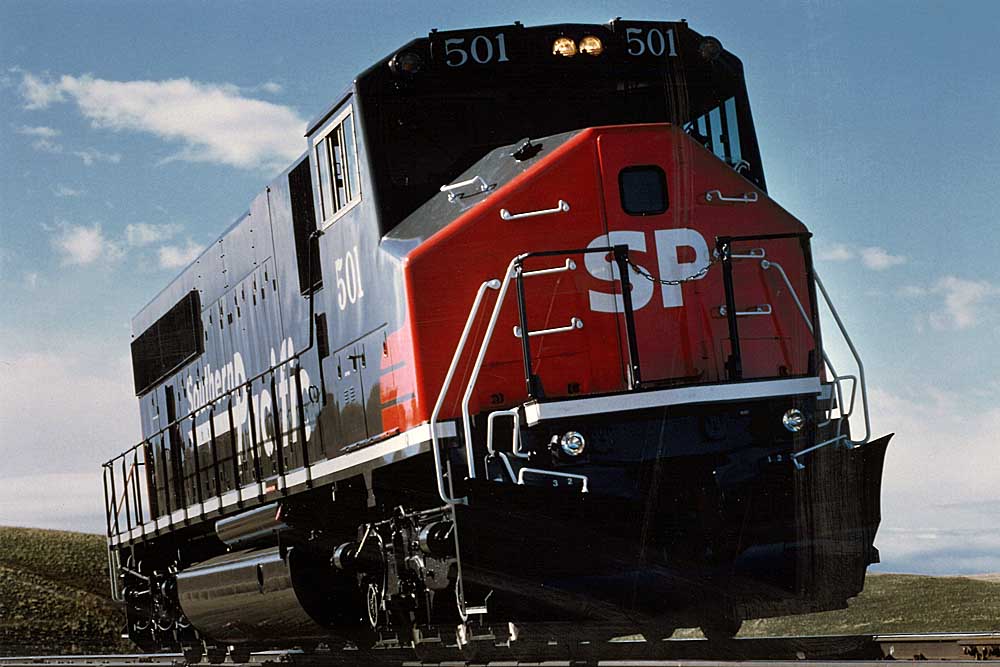
Photo of the Morrison-Knudsen MK5000C locomotive in red and gray paint

The Morrison-Knudsen MK5000C was but a footnote to 1990s locomotive history.     It kind of resembled an EMD six-axle road switcher. Or maybe a GE/Wabtec unit. But the cab didn’t quite seem to fit either one. It looked brutish, well-defined, powerful, and ready to pull as many cars as you could couple to it. […]

Read More…

Best-selling Alco diesel locomotives

Black end-cab switching locomotive in profile

The best-selling Alco diesel locomotives came from the switcher, cab unit, and road switcher product lines. The American Locomotive Co. was North America’s second-largest manufacturer of steam locomotives. The company began making the transition to internal combustion early, building diesel locomotives in the 1920s while continuing to build steam locomotives (which it did until 1948). […]

Read More…

Biggest 4-6-2 Pacific: Omaha Road’s E-3 class

Three-quarter rear view of biggest 4-6-2 Pacific steam locomotive

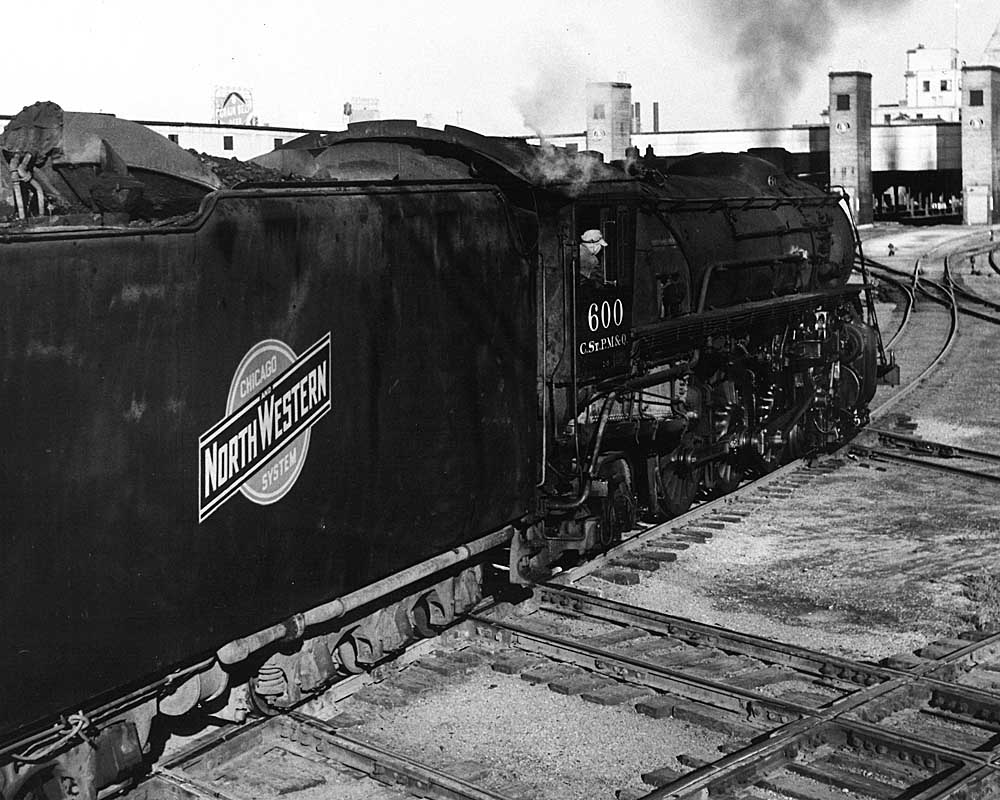
The biggest 4-6-2 Pacific came from a surprisingly small railroad.     Any history of the American steam locomotive must save some superlatives for the 4-6-2 Pacific. The wheel arrangement allowed a wide variety of design and performance, such that approximately 6,000 were manufactured in the first half of the 20th century, all in the […]

Read More…

Chicago North Shore & Milwaukee equipment remembered

Streamlined Chicago North Shore & Milwaukee equipment under catenary

Chicago North Shore & Milwaukee equipment set it apart from other electric interurban lines. Please enjoy this photo gallery selected from files in Kalmbach Media‘s David P. Morgan Library.     Each month since October 2019, Classic Trains editors have selected one Fallen Flag to honor. A Fallen Flag is a railroad whose name and heritage have succumbed […]

Read More…

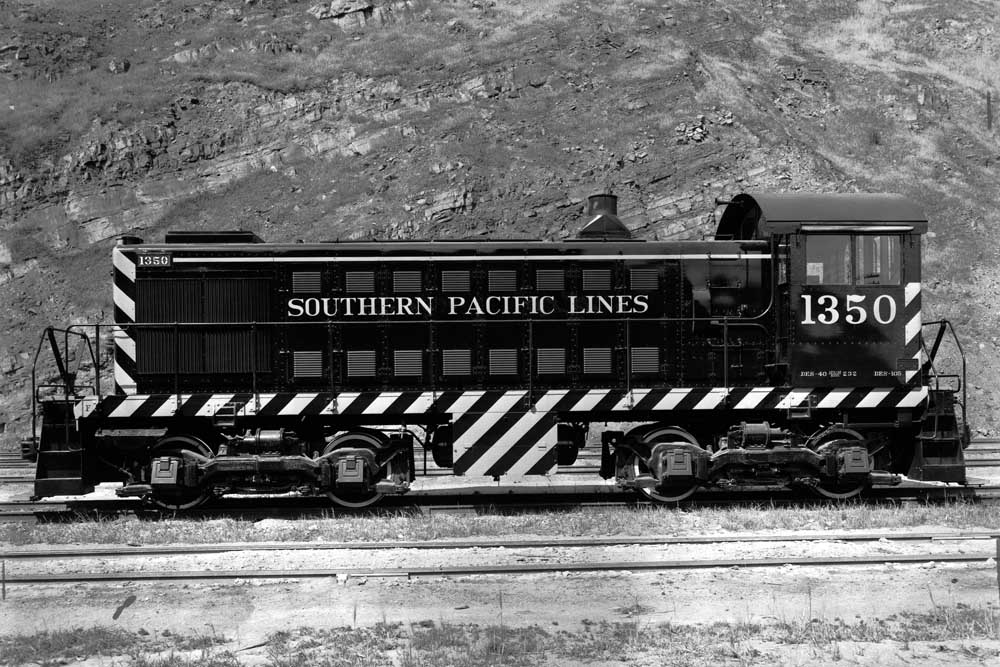
Alco S5 locomotive — a Diesel That Didn’t

End cab Alco S5 locomotive in train yard in front of light tower

Similar to the EMD RS1325, the Alco S5 locomotive is one of those locomotive designs that seemed like a good idea at the time, was engineered well, ran well, but almost no one wanted to purchase.     The manufacturer needed to update its aging lineup of 660-hp S3 and 1,000-hp S4 end cab switchers […]

Read More…

Best-selling first-generation Electro-Motive diesel locomotives

Diesel locomotive with handrails in yard without train was among best-selling Electro-Motive diesel locomotives

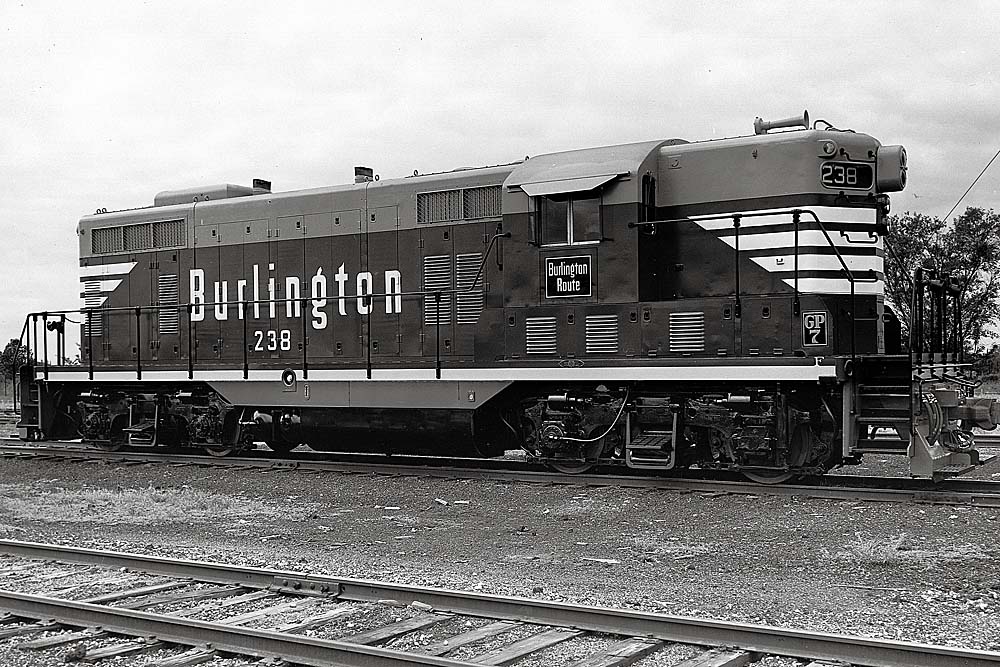
The best-selling first-generation Electro-Motive diesel locomotives came from the switcher, cab unit, and road switcher product lines. The company that would dominate locomotive construction from the 1940s through the 1970s had humble beginnings, contracting the construction of motor cars at other companies’ plants in the 1920s. The Electro-Motive Corp. was purchased by General Motors in […]

Read More…

The Missouri-Kansas-Texas logo’s heritage

Woman with hand outstretched next to Missouri-Kansas-Texas logo

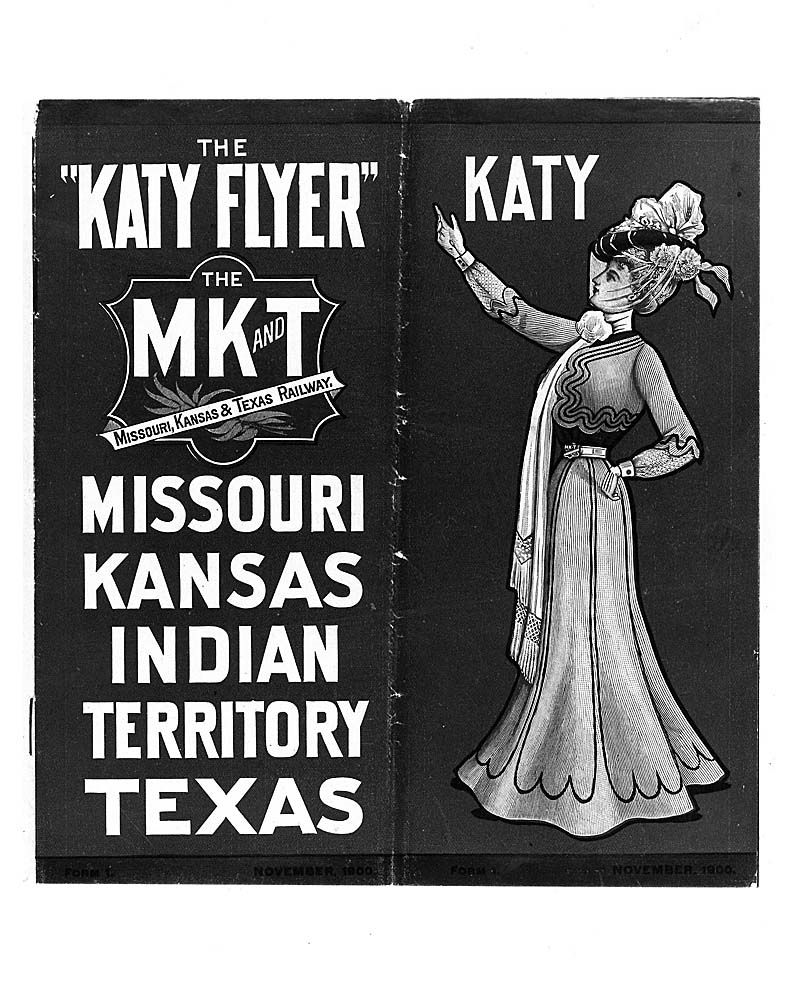
Missouri-Kansas-Texas logo underwent subtle changes throughout the railroad’s history. But its origin is more interesting than these iterative changes. In his history of the Katy, J. Parker Lamb mentions the different incarnations of Katy’s corporate herald over the years, but where did the road’s uniquely shaped emblem come from? According to Freeman Hubbard in his […]

Read More…

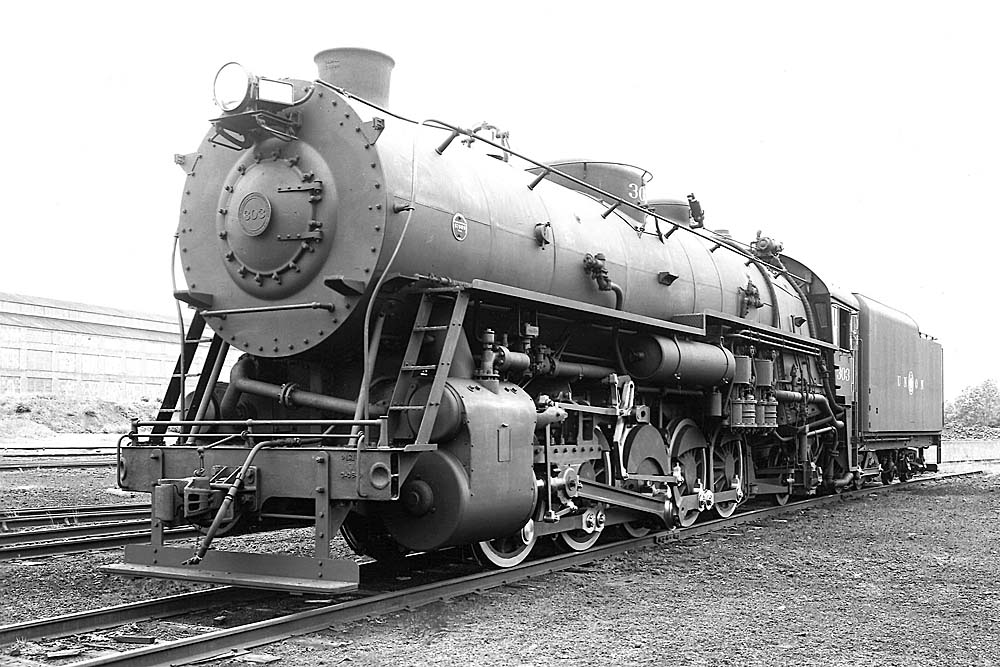
Biggest steam switcher: Union Railroad’s 0-10-2

Three quarter view of front of biggest steam switcher locomotive in yard

The biggest steam switcher stood head and shoulders above the rest.     In the steam era, switch engines came in basically three sizes: 0-4-0, 0-6-0, and 0-8-0. They ranged from diminutive shop switchers — typically 0-4-0s, pretty much a pre-1900 machine — to huge switchers such as Indiana Harbor Belt’s three U-4a class 0-8-0s […]

Read More…

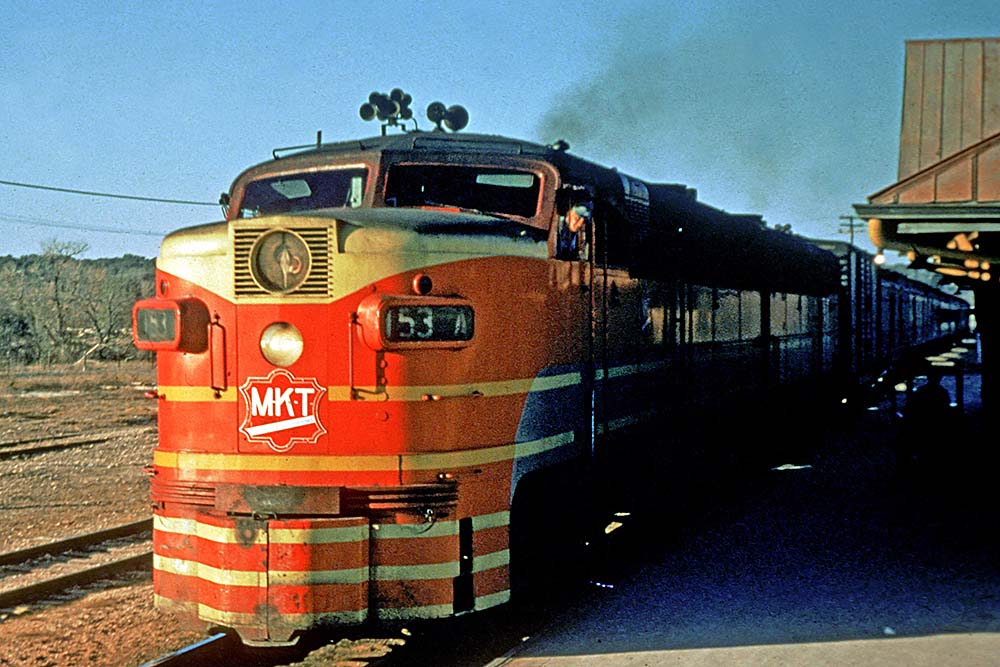
Missouri-Kansas-Texas Railroad remembered

Red-and-yellow Missouri-Kansas-Texas Railroad diesel locomotive on passenger train in station

The Missouri-Kansas-Texas Railroad is perhaps best summed up by two words: deterioration and reconstruction. Seldom has a railroad managed to survive the number of disasters, both natural and contrived, that befell the Katy. Its 1865 charter was for the Union Pacific Southern Branch. Although it connected with the Kansas Pacific (merged by UP in 1880) […]

Read More…