
How do I make vertical track easements?
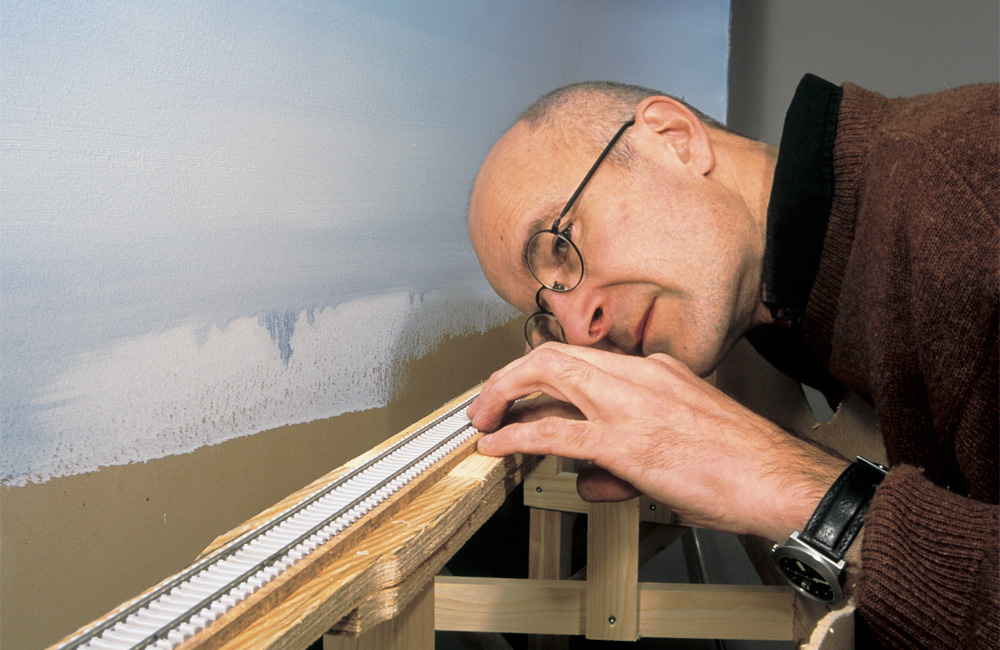
A man lowers his head to track level to check a model railroad track for straightness

Q: What is the rule of thumb for the transition from a grade back to level when laying track? — Carl Angdahl A: Gradual transitions between track grades, called vertical track easements, can help prevent problems on your model railroad. If a train suddenly goes from a steep grade to flat track or vice-versa, couplers […]

Read More…

From starter train set to layout

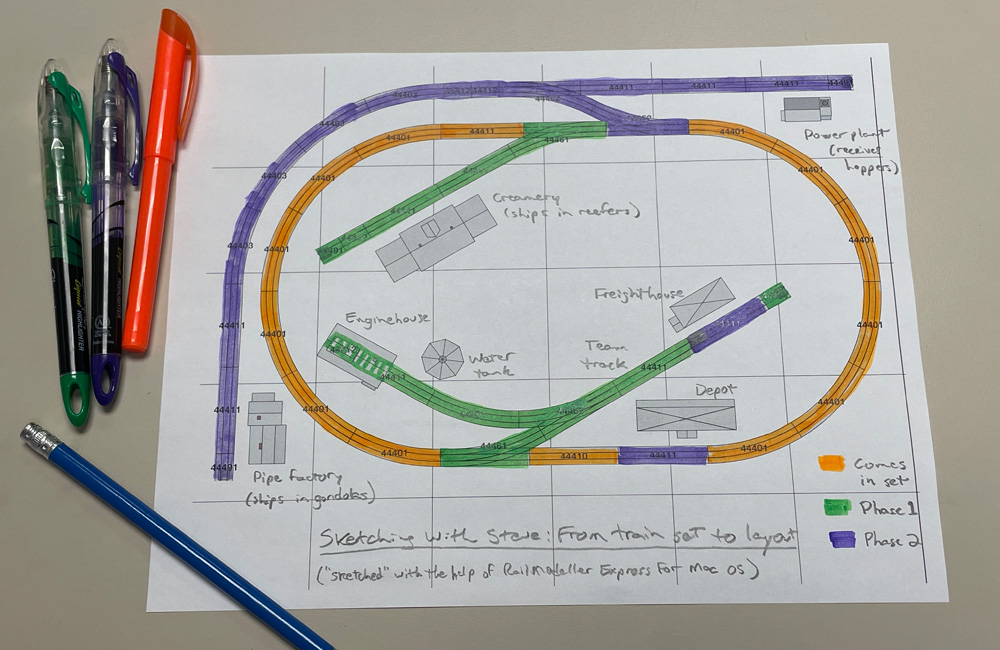
A printout of a simple HO scale 4x8 track plan, highlighted in three colors

Many model railroaders get their start during the holiday season, with a train set either wrapped in colorful paper or already set up and circling under the tree on Christmas morning. But after a while, even a starry-eyed kid can get bored watching that train go around and around in an endless loop. It would […]

Read More…

Learning to use a track template

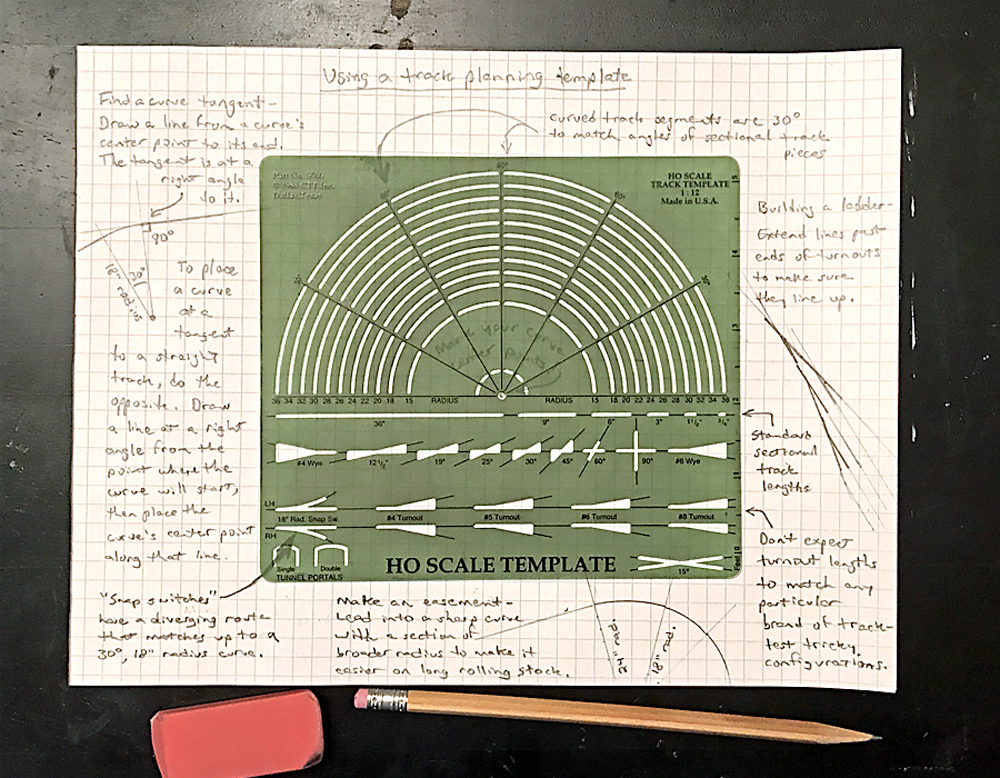
A translucent green track-planning stencil is surrounded by notes and diagrams

Sketching with Steve Introduction to track templates Learning to use a track template was among the first tasks I gave myself as a model railroader. You may have seen one of them hanging next to the register in your local hobby shop. Perhaps, in these days of point-and-click track-planning software, you thought it was a […]

Read More…

T-TRAK Project Part 4: Wiring for modules

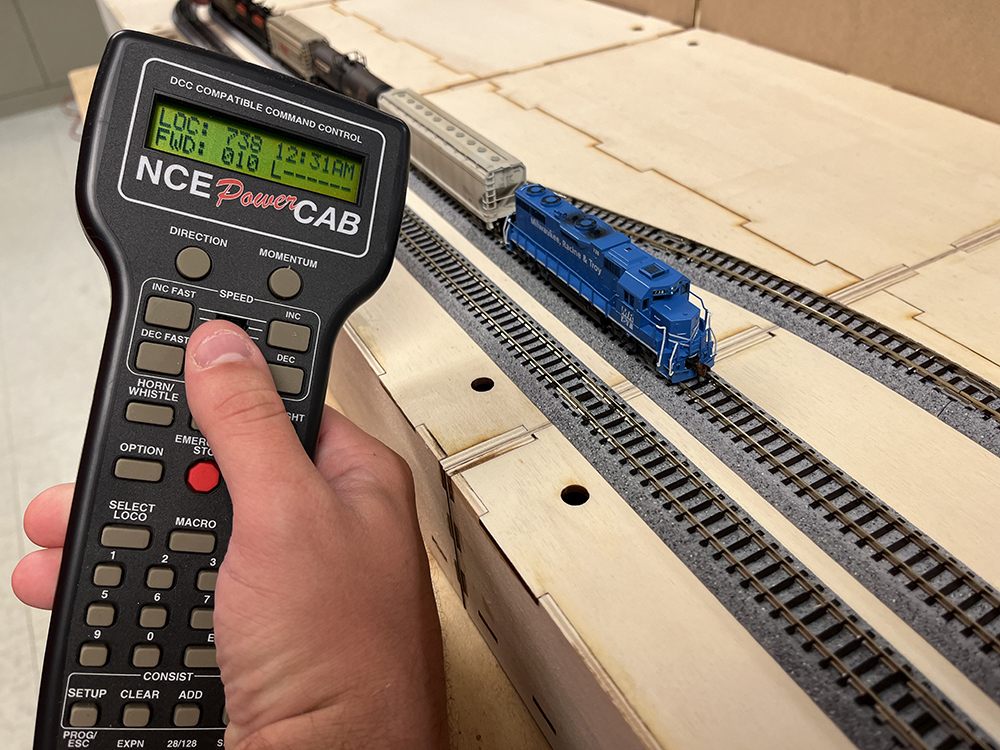
Hand holding black and gray remote control with green lighted screen with blue and gray model train on silver, gray, and black model train track.

Modelers David Popp, Brian Schmidt, and Bryson Sleppy install the wiring power bus and Digital Command Control system on their modular T-TRAK N scale layout. T-TRAK is a modular N scale railroading system that uses foot-wide boxes plugged together to build tabletop layouts. In this fourth installment, the trio demonstrates how to build a portable […]

Read More…

Have layout, will travel – portable model train layouts

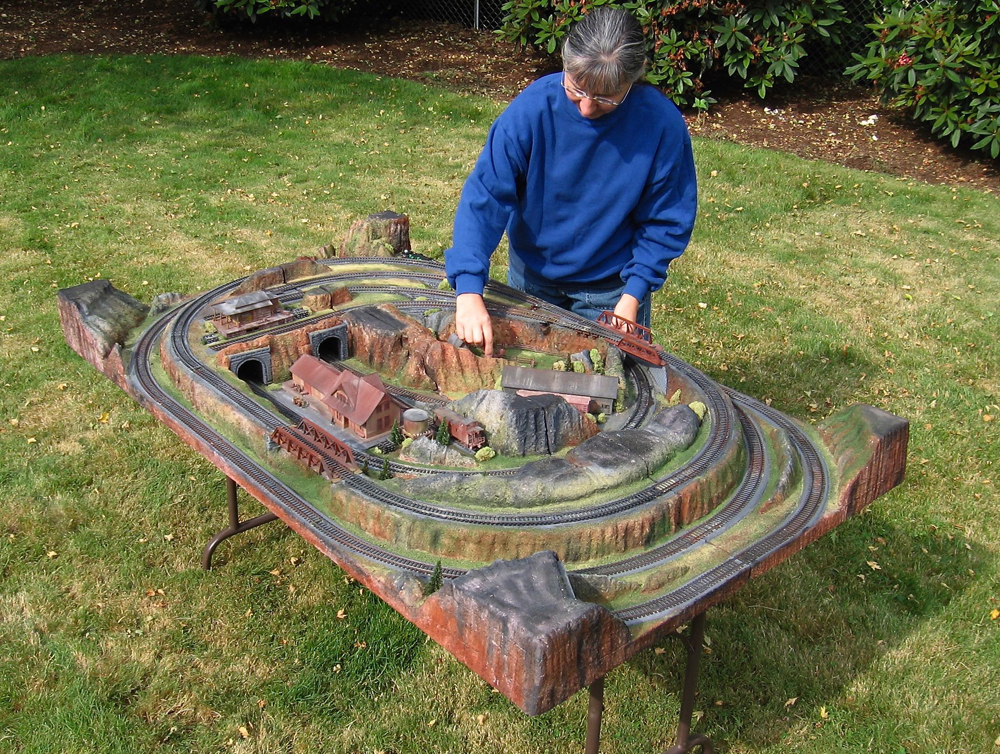
A man sits next to a nearly finished train layout outside.

Like several other model railroaders, I lost my “right” to more layout right-of-way within our house several decades ago. Nevertheless, building a layout is perhaps the most enjoyable aspect of the hobby for me. Despite having two operating model railroads in the house, I still wanted to build more. At train shows I noticed many […]

Read More…

Wondering where to build a model railroad?

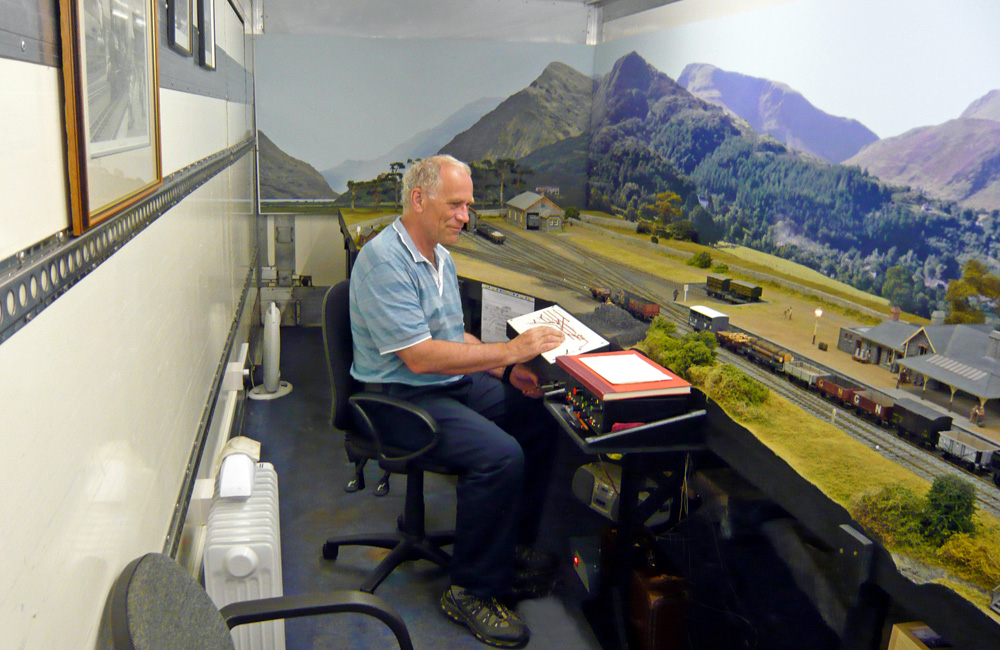
A seated man operates a model railroad in a long, narrow space

If you’re like many model railroaders, your first train was set up on the kitchen table, on a 4 x 8-foot sheet of plywood in the basement, or maybe on the floor around the Christmas tree. But when you’re ready for your first permanent layout, you have to decide where to build a model railroad. […]

Read More…

T-TRAK Project Part 3: Laying Kato Unitrack

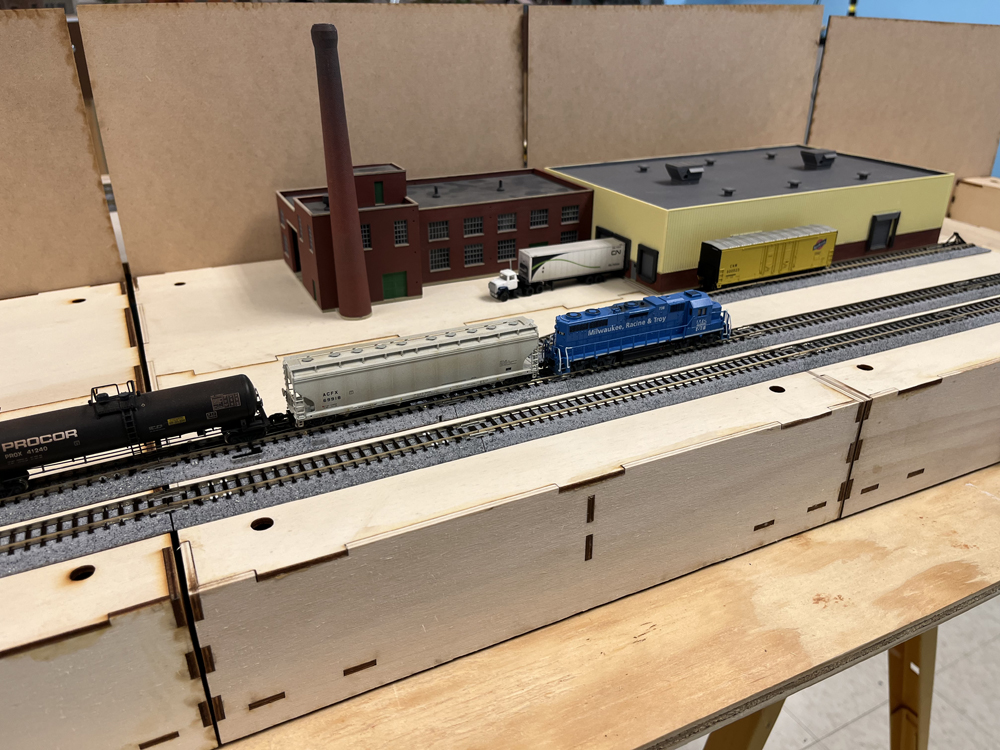
Tan wooden boxes with gray plastic model train track sections attached to the tops. Includes a black, gray, and blue small model train, as well as a brown and yellow miniature building.

Modelers David Popp, Brian Schmidt, and Bryson Sleppy add Kato Unitrack to their modular T-TRAK N scale layout. T-TRAK is a modular N scale railroading system that uses foot-wide boxes plugged together to build tabletop layouts. In this third installment, the trio demonstrates how to build, wire, and install the Kato N scale Unitrack to […]

Read More…

T-TRAK Project Part 2: Building modules

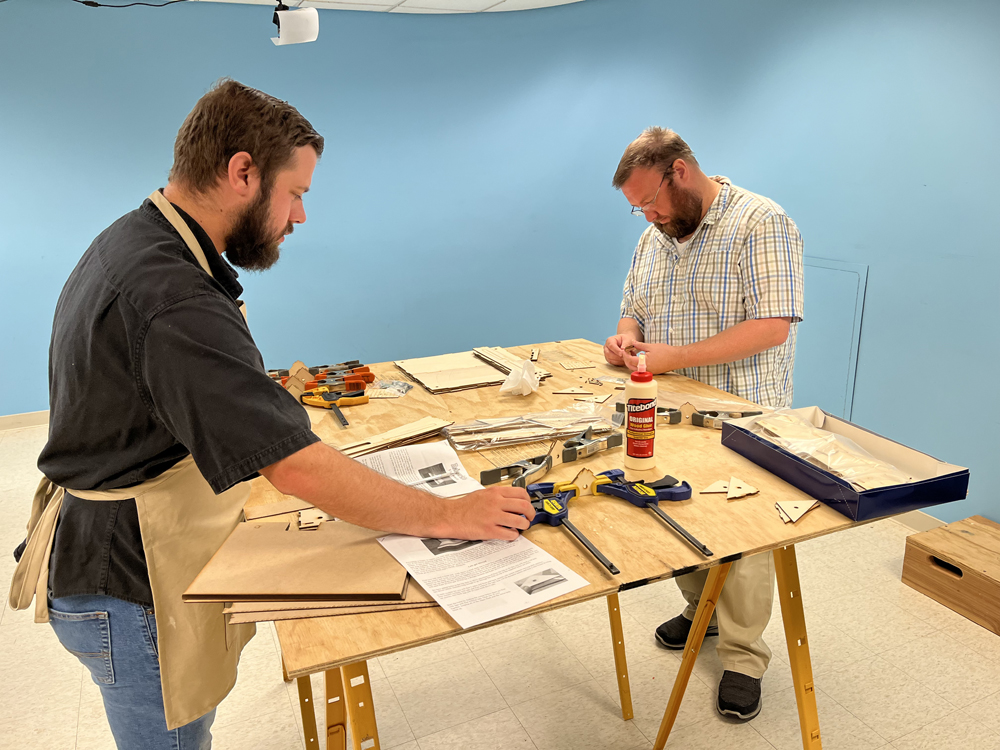
Two men with beards working at make-shift workbench set up on yellow sawhorses using assorted hand tools and clamps to build small brown wood boxes.

Modelers David Popp, Brian Schmidt, and Bryson Sleppy continue their series of projects to build a modular T-Trak N scale layout. T-Trak is a modular N scale railroading system that uses foot-wide boxes that can be plugged together to build tabletop layouts. In this second installment, the team demonstrates how to build RS Laser Kit […]

Read More…

An L shaped N scale track plan, the Copper Mountain & Western

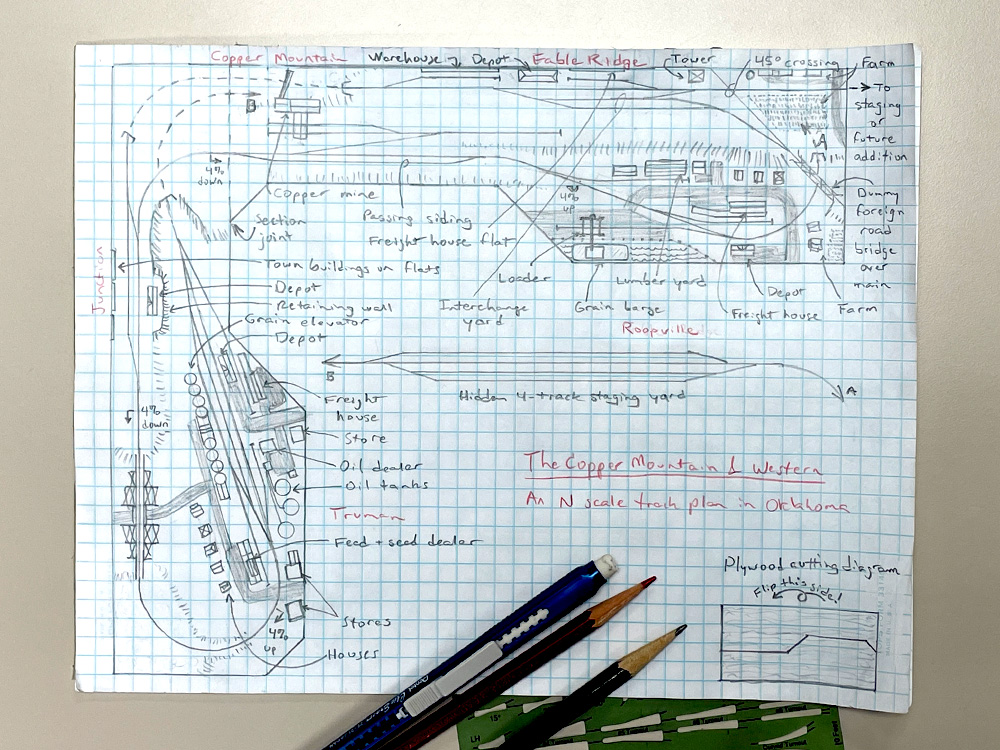
A sketch of an L shaped N scale track plan on graph paper with many text labels

This started out as an attempt to draw a simple L shaped N scale track plan and came out one of the most involved sketches I’ve ever drawn. In August 2008’s Model Railroader I wrote an article called “Three track plans for one sheet of plywood.” (All three of those plans are available on Trains.com.) […]

Read More…

Modeling a Maine short line: the Belfast & Moosehead Lake

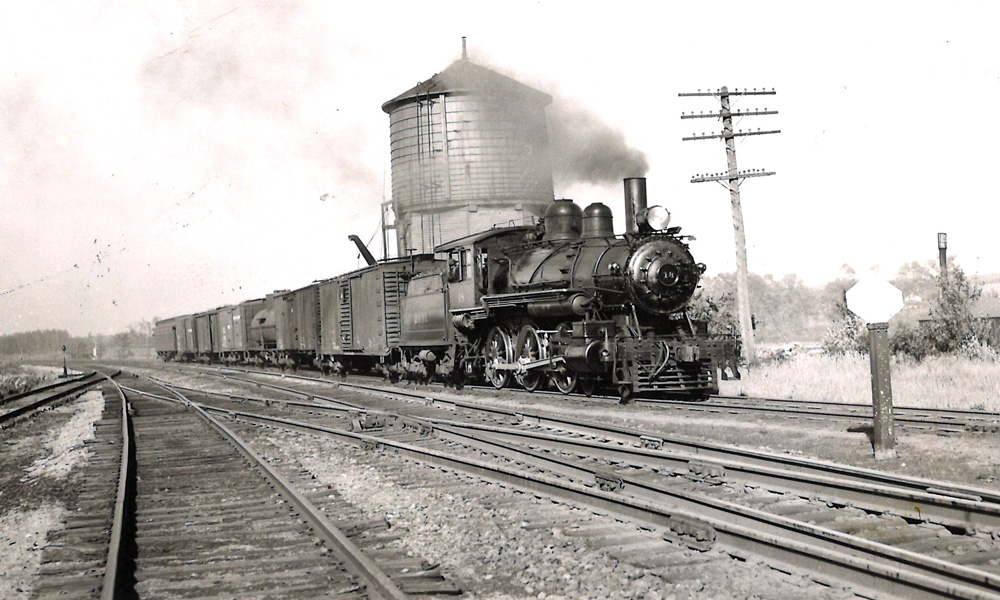
A steam locomotive backs its freight train toward a trackside water tank

Q: I’m interested in modeling a Maine short line in HO scale. What can you tell me about the Belfast & Moosehead Lake RR in the steam era? – Joel Norman A: The Belfast & Moosehead Lake looks like a great subject for someone interested in modeling a Maine short line, especially if you’re intrigued […]

Read More…

Four types of track for model railroads

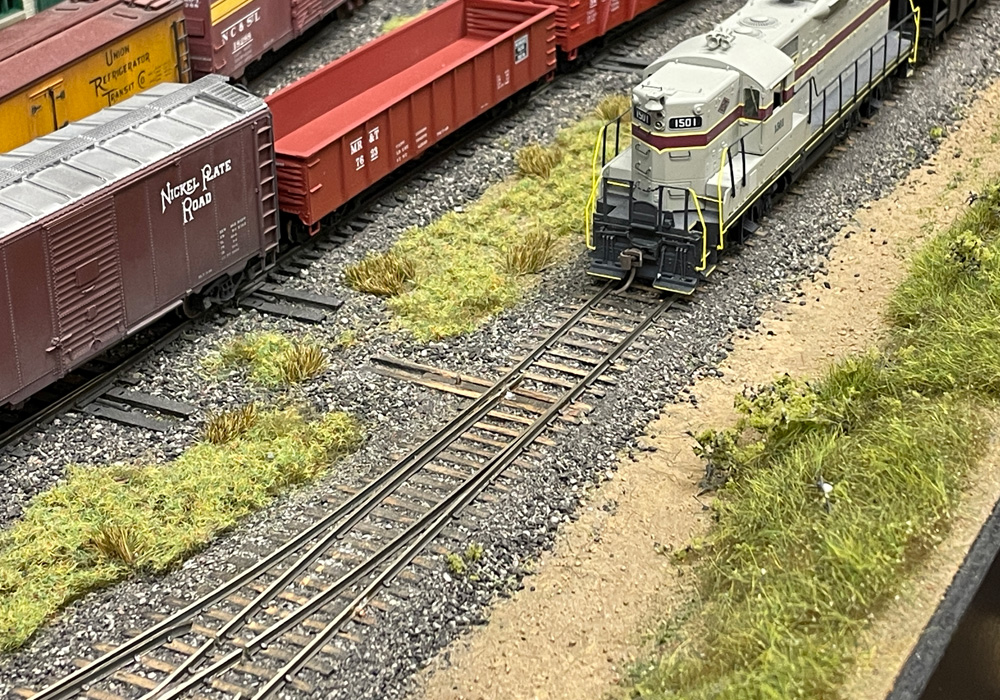
A light gray locomotive approaches a turnout on a scenicked HO scale layout

When you’re building a layout, there are four kinds of track for model railroads you can choose from. Those four are sectional track, sectional track with attached roadbed, flextrack, and hand-laid track. Each has its advantages and drawbacks. Luckily, you can mix and match the different types on the same layout to take advantage of […]

Read More…

Planning an N scale layout on a door

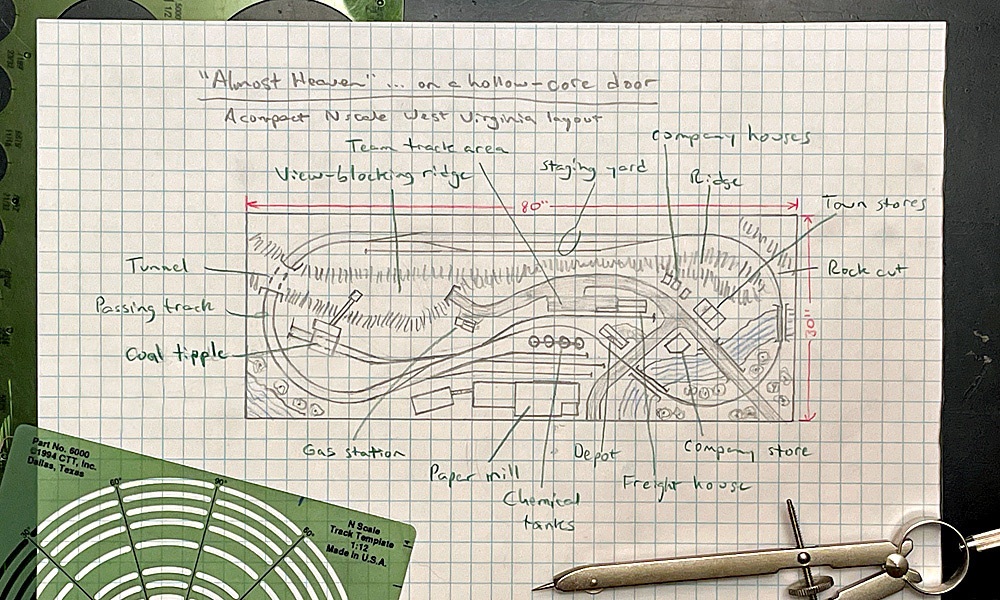
A pencil-on-graph-paper track plan of an N scale layout on a door

An N scale layout on a door is to that scale what a 4 x 8-foot table is to HO: a popular and convenient platform on which to build a compact layout. And for good reason. A hollow-core door is a lightweight, rigid surface, easy to handle and build on, and not too expensive. It’s […]

Read More…