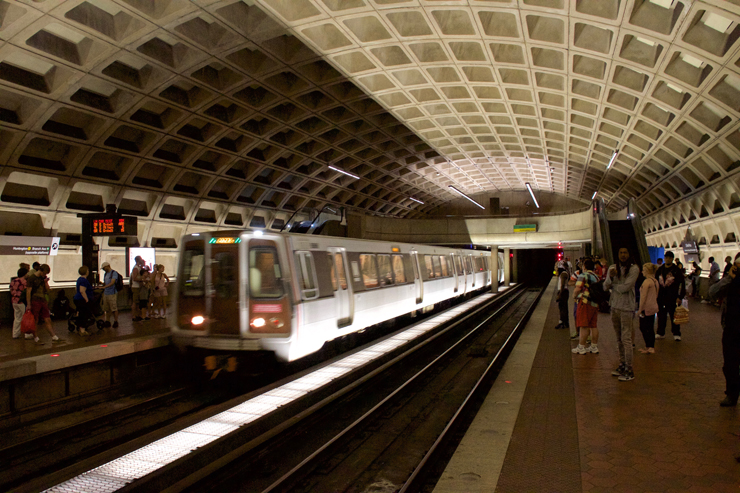
WASHINGTON — The DC Metrorail system will seek to return to automated train operation, discontinued after a fatal train collision in 2009, according to a presentation to the Washington Metropolitan Area Transit Authority board on Monday.
The website DCist reports the presentation calls for the Red Line to be returned to Automatic Train Operation in spring 2023, with the rest of the system to follow by the end of the year. Officials say the switch back to the system — which was part of the original Metrorail design — would make for smoother rides and would eliminate most issues with trains overrunning station platforms or passing red signals, which are caused by human error
Metro stopped using the ATO system after the June 22, 2009 collision between two trains on an elevated portion of the Red Line near the Fort Totten station that killed nine people and sent another 52 to local hospitals for treatment. The National Transportation Safety Board’s accident report found a failure of a track circuit caused the ATO system to stop detecting one train and therefore allowed a second train to proceed at speed, colliding with the first train. It also found a lengthy list of contributing factors including WMATA’s “failure to effectively maintain and monitor the performance of the ATO system.” Even though the system itself was not at fault, it was disabled and has remained that way.
But Randy Clarke, who became Metro’s general manager in June has called for the return of ATO, saying at a November board meeting that the Metrorail system is “the only transit property in the world that has regressed from the technology we started with.” That will require the approval of the independent Washington Metrorail Safety Commission.
Metro and the commission have had a sometimes contentious relationship — as illustrated by the recent need for Virginia’s U.S. senators to intervene in a dispute over a plan to return Metrorail’s 7000-series cars to work [see “DC Metro, safety commission reach agreement …,” Trains News Wire, Oct. 26, 2022]. And the commission has issued two reports critical of issues regarding the ATO system — one earlier this year regarding failure to maintain the control rooms that are part of the ATO system [see “Safety commission orders Metrorail to address control-room issues,” News Wire, Aug. 5, 2022], and a 2021 audit of the Automatic Train Control system that said the transit agency “is not following several safety-related processes” and included 16 findings requiring corrective action.
But Metro says it has made significant changes since 2009, would retrain operators, and would seek engineering and peer-review help from other systems before restoring automated operation. Initially, it would aim to keep an in-cab operator who would close doors manually so passengers don’t get caught in closing doors; eventually, its target would be fully autonomous operation.
Share this article