WASHINGTON — DC Metrorail has begun replacing the wheels on all its 7000-series railcars, the latest step in the long-running effort to fully return the newest cars in the Metrorail fleet to service in the wake of problems that have limited their availability for more than two years.
The Washington Metropolitan Area Transit Authority said in a Monday, Dec. 4, press release that the wheels will be replaced under new, higher standards that will restore regular maintenance intervals and gradually return more of the Kawasaki-built railcars to operation. The first cars serviced under the new program entered service on Monday. The agency had announced the multi-year, $55 million program earlier this year [see “DC Metro plan to repair wheels …,” Trains News Wire, March 1, 2023].
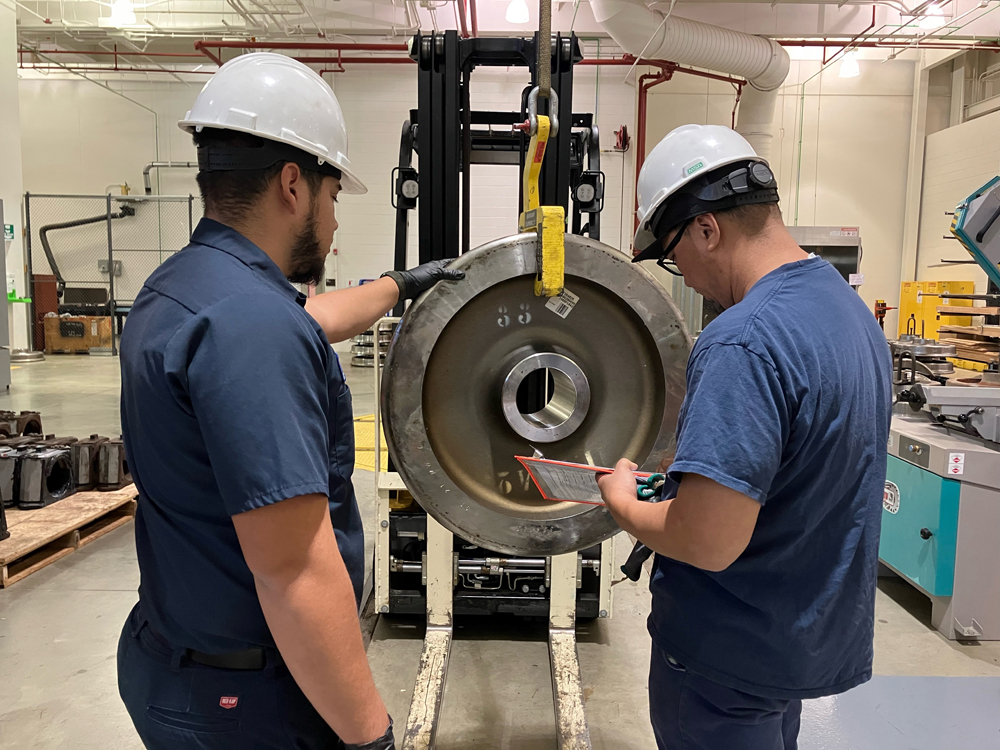
The process requires 72 hours of work for each pair of railcars, WMATA said, with the wheel assembly removed, wheels removed from the truck, and new wheels with a tighter fit installed with increased force onto the axle before the wheelset is reassembled. Once the wheels are pressed, railcars undergo up to 30 hours of inspections before entering passenger service. Video of the process is available in this social media post.
The problem is meant to address the problem with wheels shifting slightly on their axles that played a part in the Oct. 12, 2021, derailment of a Metrorail train in Arlington, Va., and led to the 7000-series railcars being removed from service. Without those 748 railcars, which make up the bulk of the Metrorail fleet, Metrorail service has long faced reduced frequencies as the agency had to rely on a smaller pool of older equipment [see “DC Metrorail service to be limited …,” News Wire, Oct. 18, 2021]. While some of the 7000-series cars have returned to service, they remain subject to more extensive inspections and maintenance.
WMATA said that once the wheel pressing process ramps up, it will be able to complete approximately 20 cars per month, meaning the entire process to return the cars to normal service will take several years.
Share this article