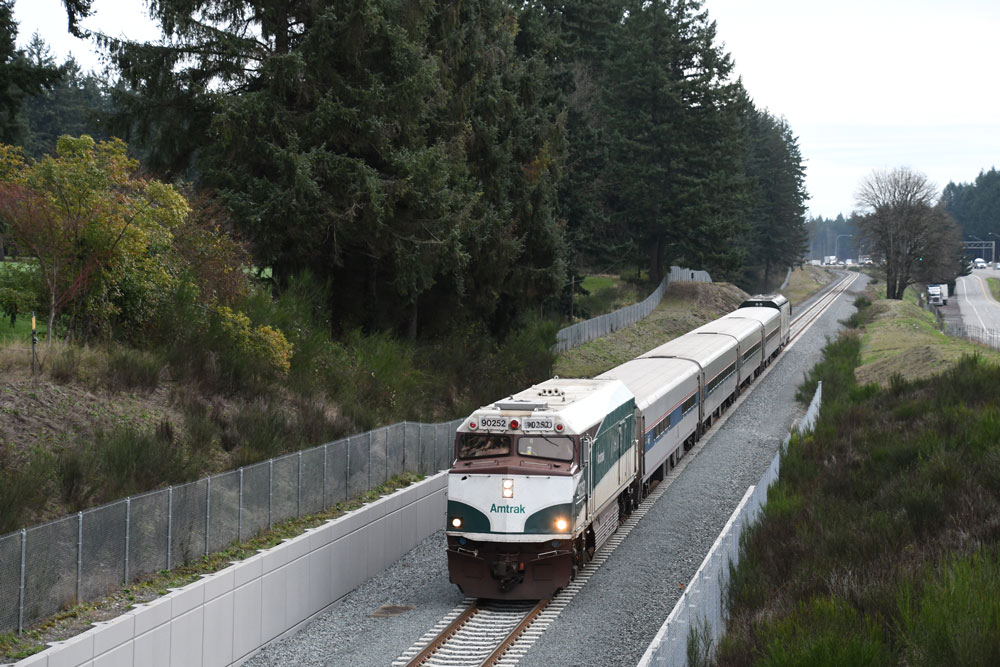
TACOMA, Wash. — One month shy of four years since a fatal derailment on the inaugural morning postponed their debut, Amtrak trains between Seattle and Portland, Ore., are using Sound Transit’s Lakewood Subdivision and a new station co-located with the agency’s commuter service.
Using the new route, funded with state and federal funds as part of capacity upgrades along BNSF Railway’s busy main line, eliminates potential delays caused by a single-track tunnel along Tacoma’s waterfront and moves the station to a location closer to downtown.
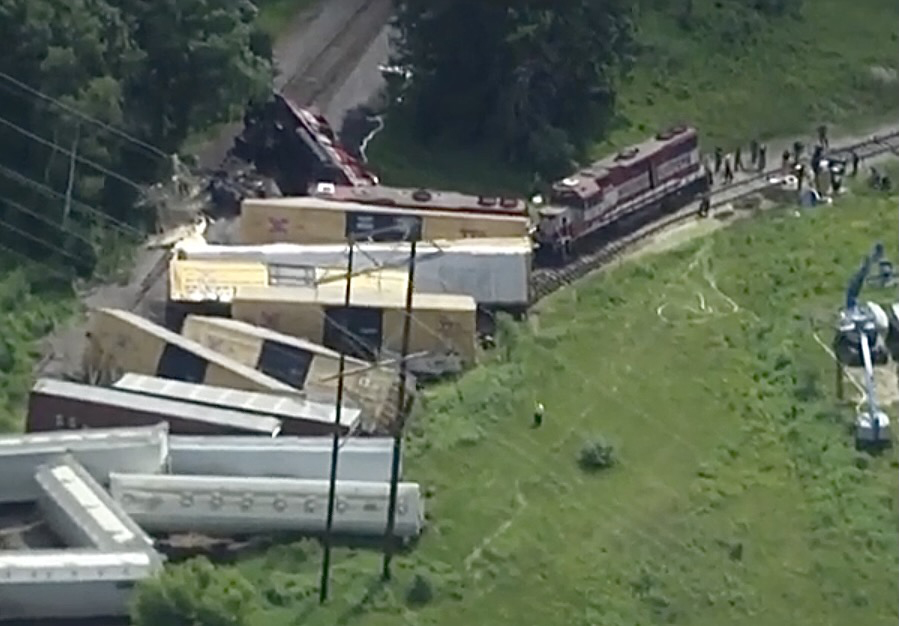
The National Transportation Safety Board ruled in May 2019 that inadequate training led to the high speed derailment of the first train to operate over the bypass on Dec. 18, 2017. The wreck killed 3 people and injured 65 others [See “National Transportation safety Board says multiple state and federal agencies failed in 2017 Washington State crash,” Trains News Wire May 21, 2019]. The first test runs after the accident took place in January 2021 [“Digest: Amtrak to run test trains on Point defiance Bypass,” January 8, 2021 News Wire.”]
In a statement released today, Sound Transit says, “Rather than permitting service on its tracks according to any predetermined schedule, [the agency] committed to approve resumed service only when compliance with stringently-imposed safety requirements were fully met and verified.”
The new restrictions include full implementation of positive train control, step-down restrictions programmed into the system from 79 to 50 to 30 mph leading to the curve where the derailment occurred, and a “focus zone where crews verbally note the step-down speeds to each other.” If PTC isn’t functioning, speeds are limited to 30 mph on Sound Transit-owned track.
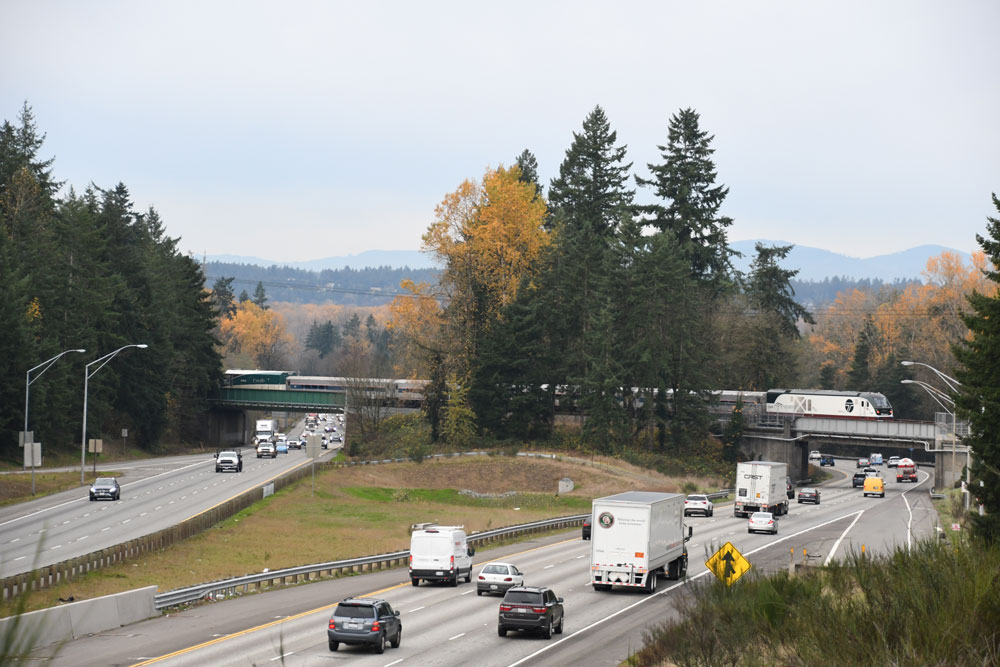
Although the more direct Lakewood Sub route was supposed to be appreciably faster, travel times on the new schedule have only been reduced from 5 to 10 minutes. However, congestion delays along the entire Seattle-Portland route have increased over the last several months; the first northbound Amtrak Cascades No. 500 arrived into the new Tacoma Dome station 20 minutes late.
The new timetable is available here on the Amtrak Cascades Corridor site.
On www.amtrak.com, this grid timetable can eventually be accessed by clicking through to “Pacific Northwest” and then “Amtrak Cascades” on “Destinations” tab, but the May 24 schedule was still posted as of midday Thursday. “Schedules” on the Amtrak site requires the user to input both origin and destination, yet only shows intermediate stops for one train at a time.
Share this article