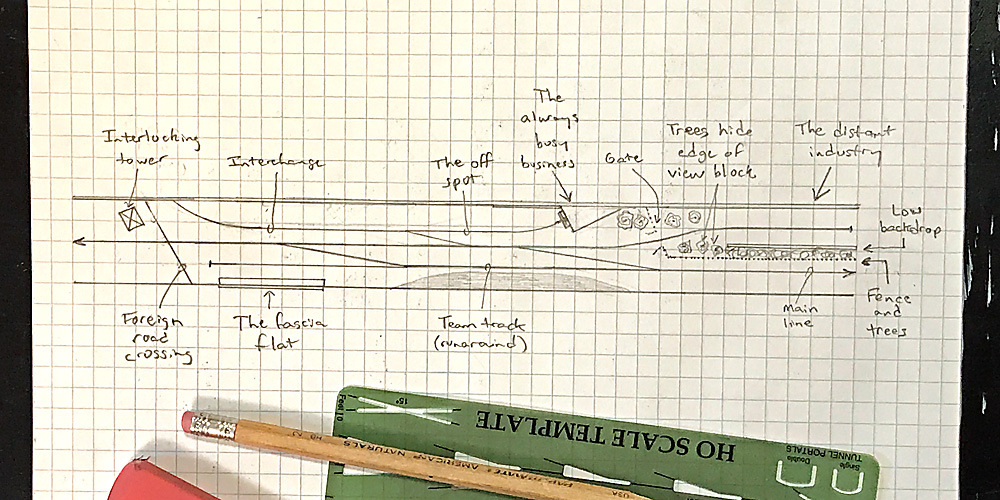

Sketching with Steve: Finding the best approach for a track plan
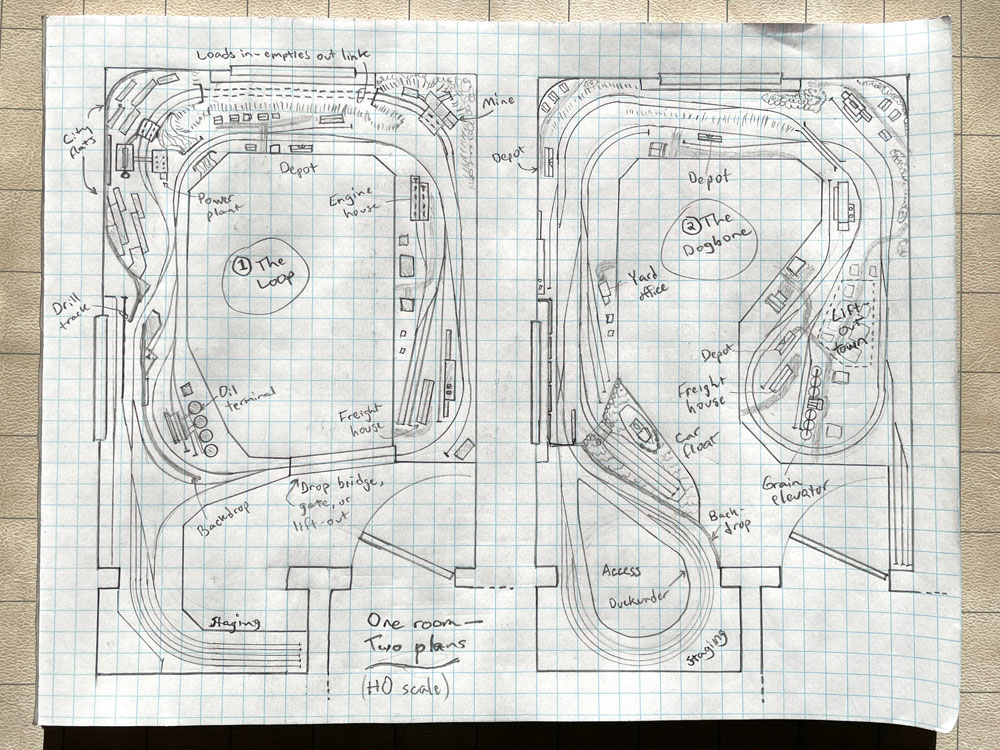
Pencil drawing of two track plans to fit a 9 x 12 spare bedroom

Finding the best approach for a track plan isn’t always easy. Even if you’re building your layout in a small room, you still have an almost infinite number of choices, decisions, and trade-offs to make. What scale? Around-the-room or island shape? Duckunder/gate or walk-in? Staging? And if so, what kind? To illustrate my thought process […]
Read More…

Sketching with Steve: What’s wrong with this picture?

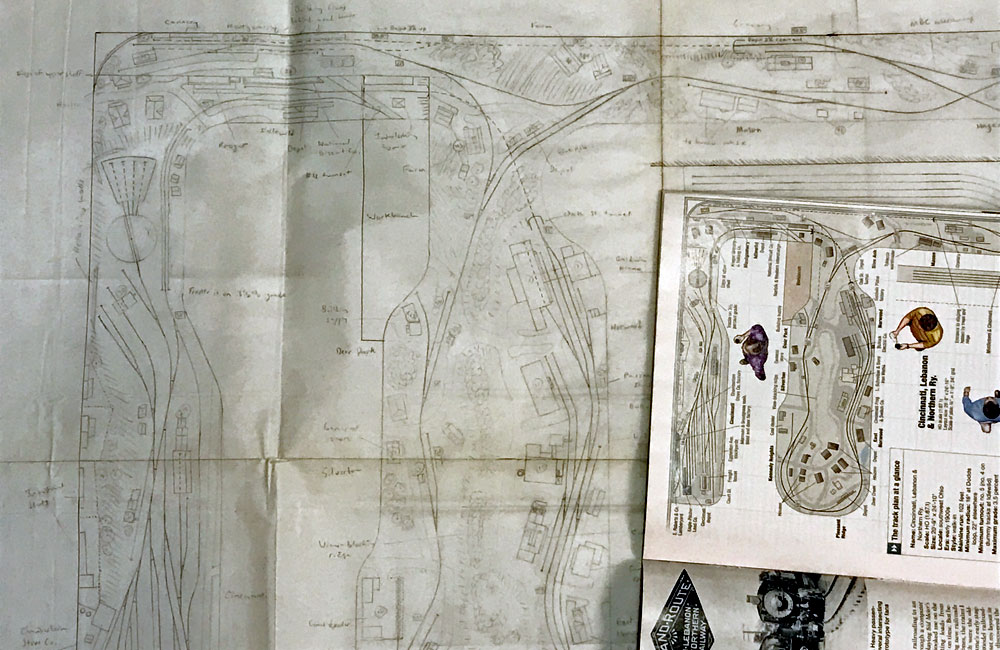
A magazine showing an HO scale track plan is lying open on a large paper drawing of the same plan

Today’s sketch was drawn long before Sketching with Steve was a gleam in anyone’s eye. It was 2008, and I’d been with Model Railroader less than a year. Finally, the resources to build my HO scale version of the Cincinnati, Lebanon & Northern Ry. in 1906 were within my reach! I drew this track plan […]

Read More…

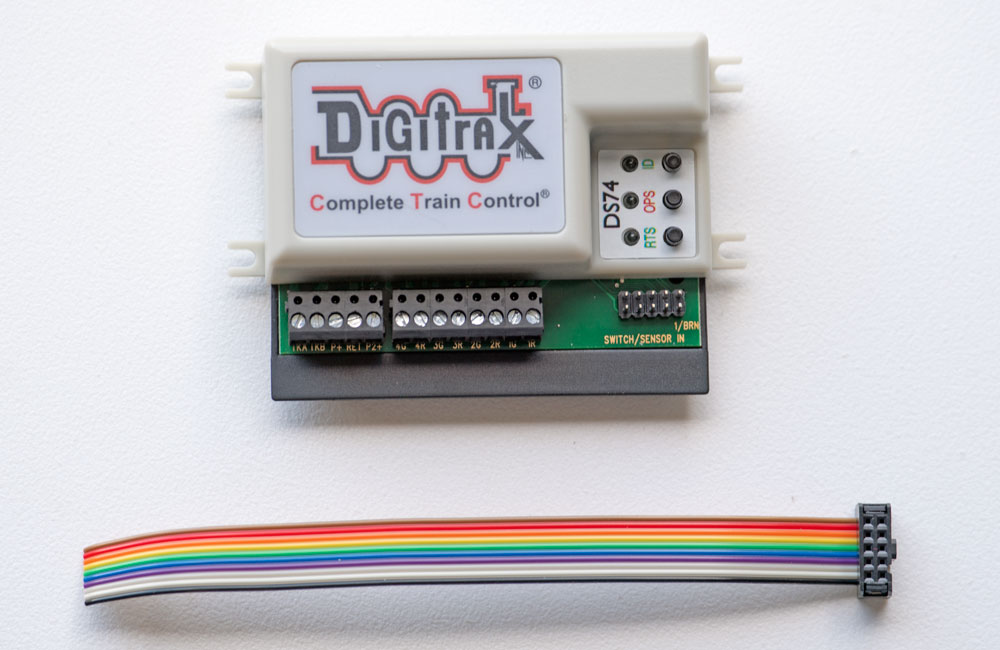
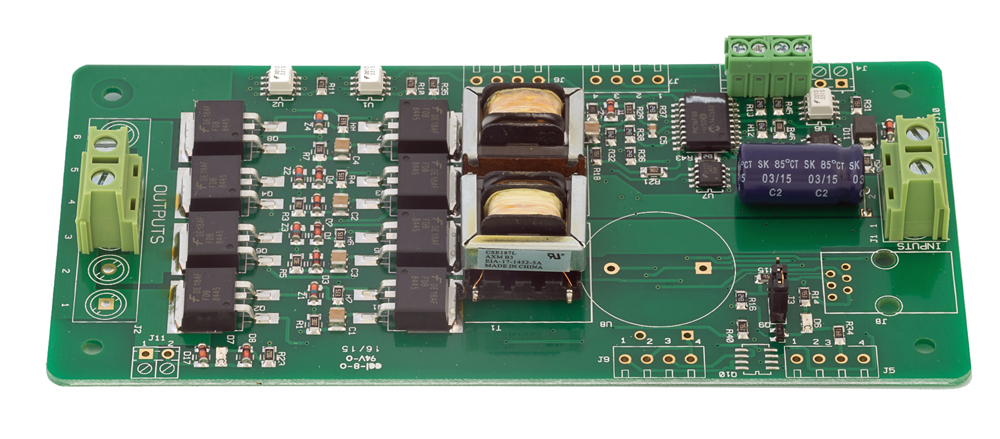
DCC Currents: Digitrax’s Quad Switch Stationary Decoder

The Digitrax Quad Switch Stationary Decoder with a ribbon cable

I’ve wired a number of control panels for clubs. Control panels stick out into aisles and therefore need to be rugged. Control panels also take a good amount of time to wire. If you make a change in your track, modifying the panel to reflect the change can be difficult. I’ve always liked being able […]

Read More…

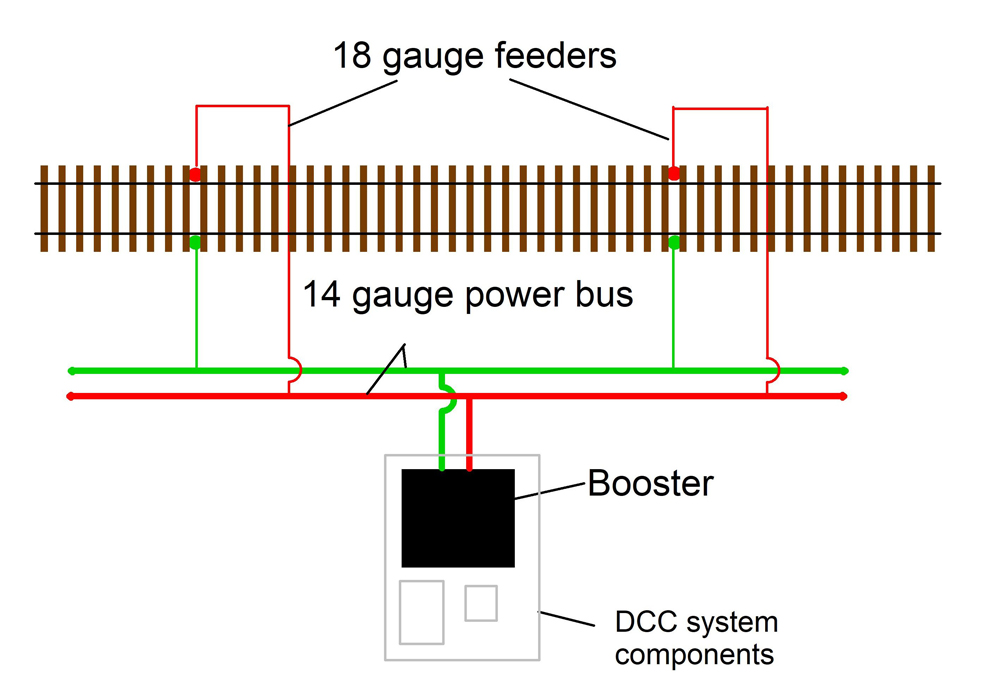
An introduction to track wiring basics

Diagram showing the path power takes from a booster, through a bus, and to the track.

There is probably no other aspect of our hobby that creates more anxiety and confusion for newcomers than wiring. When you’re starting at absolute ground zero on the learning curve it can be daunting at times. However, at the most basic level, what we’re trying to do is get electricity from a power source to […]

Read More…

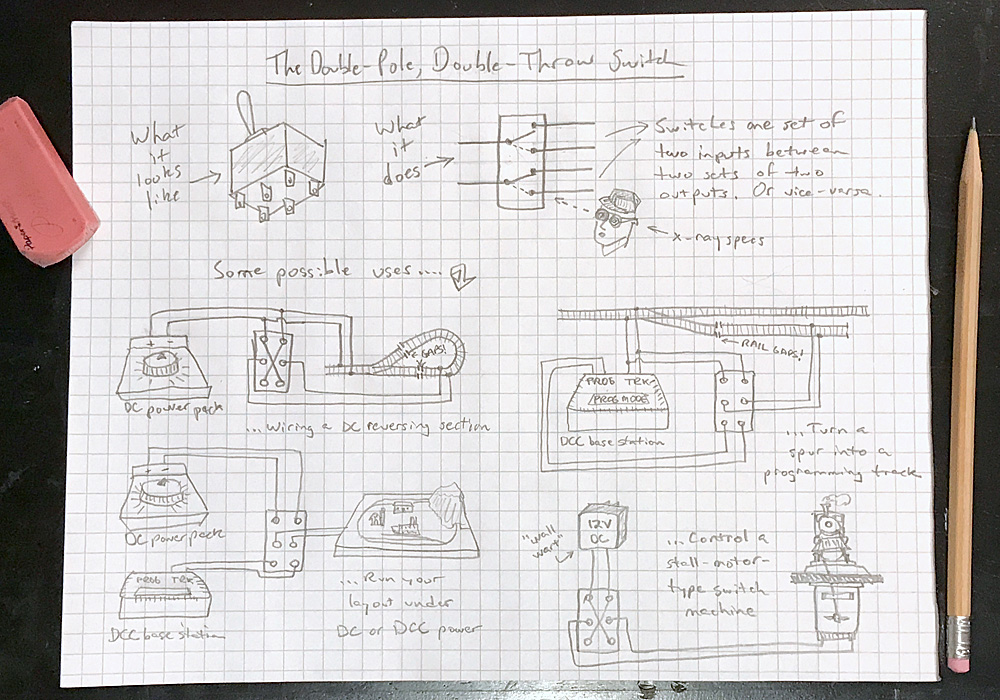
Sketching With Steve: Using DPDT switches

Pencil sketches on graph paper show four applications for double-pole double-throw switches

On a railroad, a switch usually refers to the moving parts of a turnout that routes a train between two possible routes. This time, though, we’re talking about an electrical switch: specifically, a double-pole double-throw switch (DPDT). It’s easy to understand a single-pole single-throw switch: it only has two states, open or closed, off or […]

Read More…

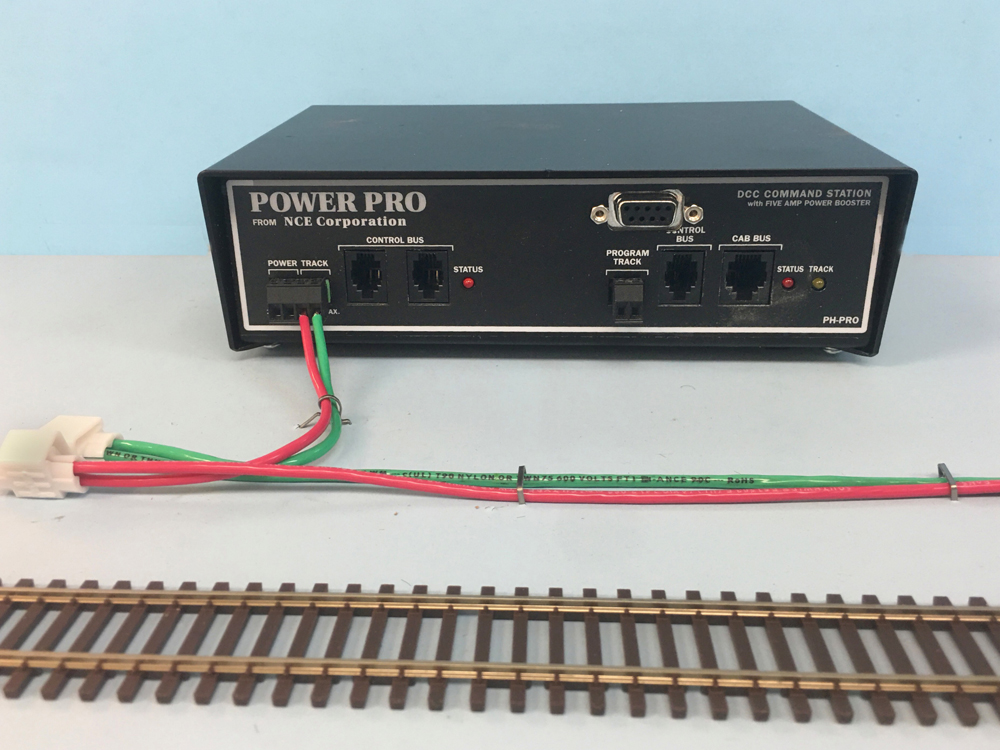
Track wiring for beginners

Pair of wires seen alongside track attached to a power bus.

Track wiring your model railroad layout can be daunting, especially for beginners to the hobby. In order to help those looking to start, here’s a review of the bare-bones basics of wiring your layout that will help you get your trains up and running as quickly as possible. Run the wire bus roughly beneath the […]

Read More…

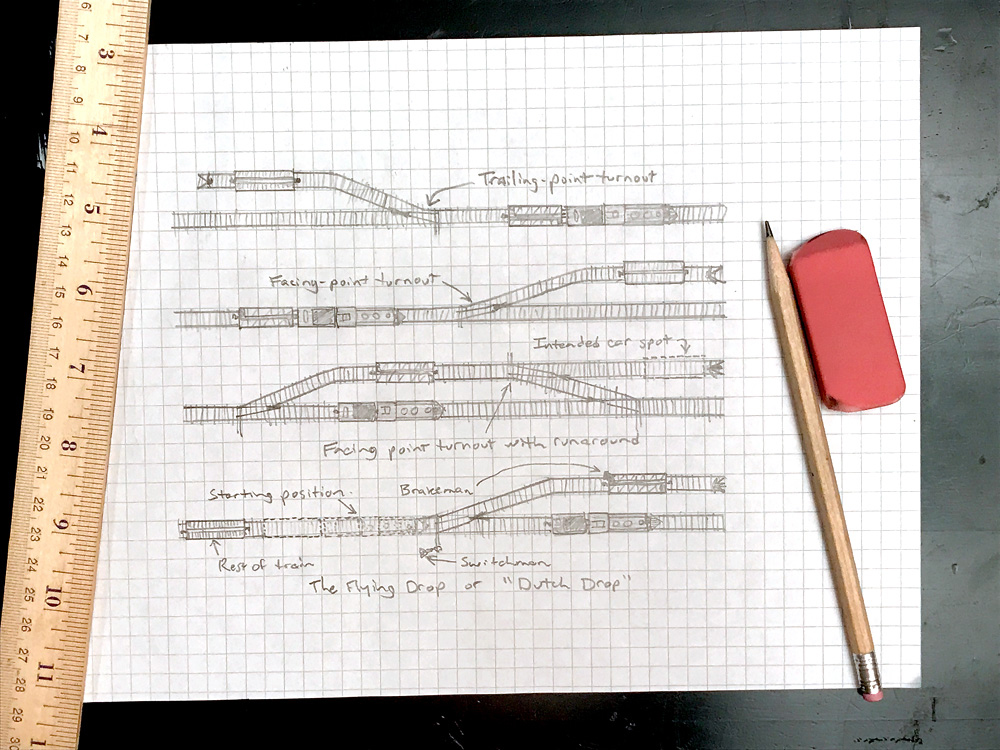
Sketching with Steve: Working facing-point and trailing-point turnouts

Several sketches of a short train on a track with different turnout configurations.

A turnout is where one track becomes two. The single track, where the movable point rails let a train choose between routes, is called the point end of the turnout. The two-track end, where the closure rails cross at the frog, is the frog end. And which end is which can make or break a […]

Read More…

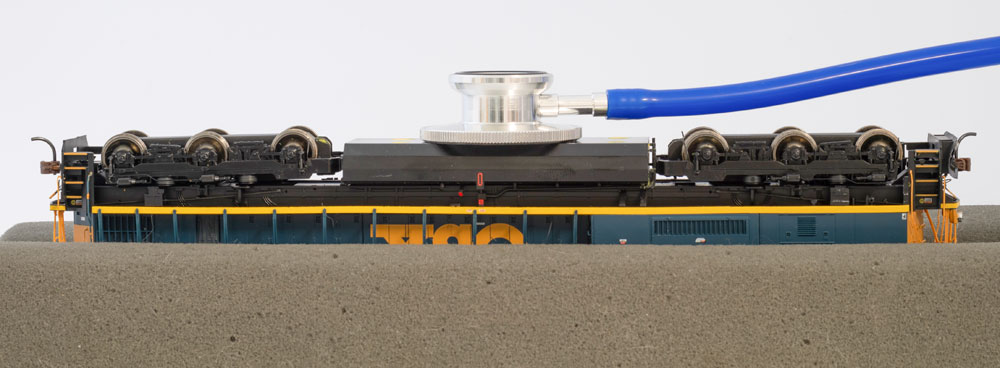
Resuscitating a lifeless locomotive

A stethoscope is used to listen to a model locomotive being held upside down in a foam cradle

Good news! If your lifeless locomotive has ever run under Digital Command Control (DCC), chances are good that you can get it running again without having to send it off for repair. The solution is easy, too! More good news! If you have a new steam locomotive that doesn’t run or only partially works, maybe […]

Read More…

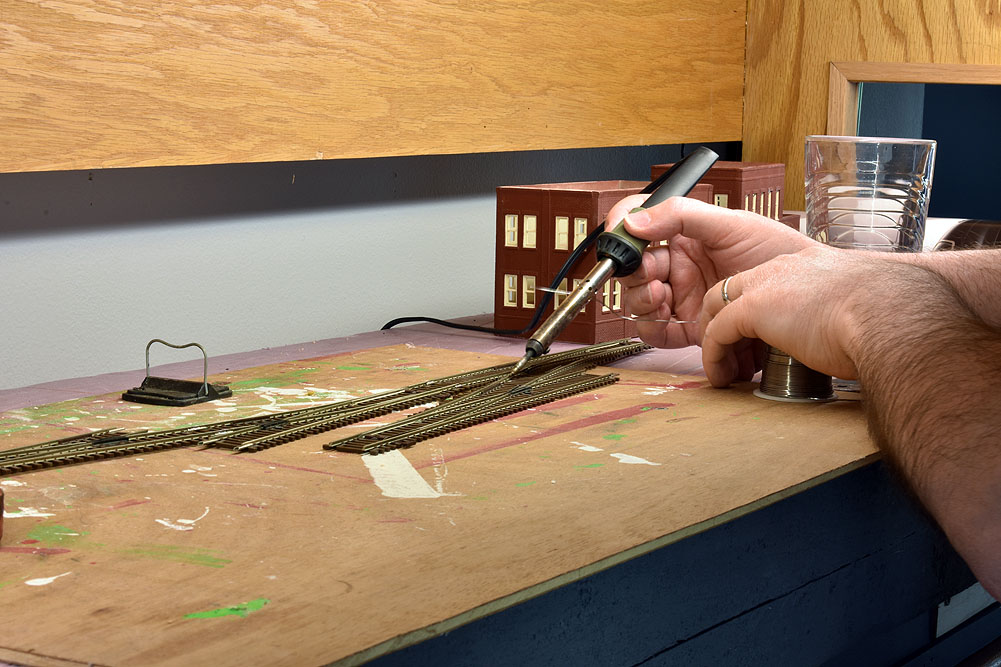
DCC wiring for a shelf layout

Track on board being soldered with pencil-type soldering iron

My little shelf layout is made from track and lumber salvaged from a small model railroad I was building in my apartment living room back in Pennsylvania before I moved to Wisconsin to work for Model Railroader. In my current living room, I only have room for a shelf layout, which is built into an […]

Read More…

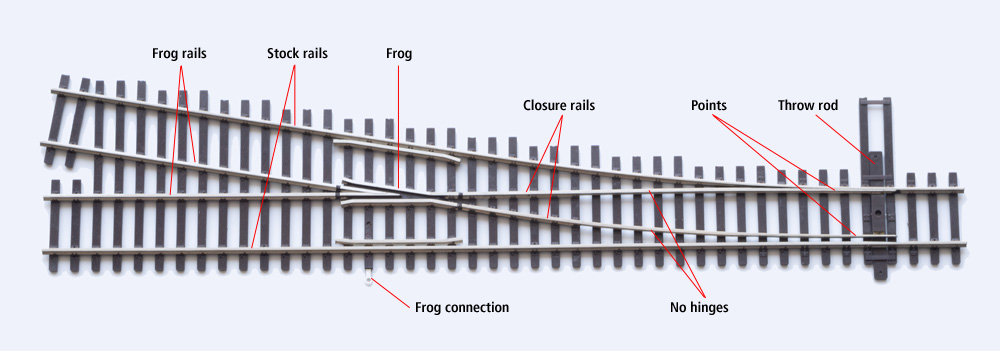
Walthers HO Scale turnouts debut with DCC friendly features

A Walthers HO scale turnout with parts labeled

HO Scale Walthers turnouts introduction Like their predecessors, the latest generation of turnouts is DCC friendly. Turnouts that are DCC friendly minimize the possibility of a short shutting down part of a model railroad due to metal wheels contacting adjacent rails that are at a different polarity. The new Walthers Track line turnouts are available […]

Read More…

Sketching with Steve: Big industries for small spaces

A sketch of a track plan for a one-foot-wide shelf shows several examples of compact industries.

Model railroaders who want to maximize their mainline runs often resort to narrow shelves that hug the walls and zigzag through the middle of the room on long peninsulas. The tradeoff with this kind of design is that the more shelves have to fit into a room, the narrower they have to be. This limits […]

Read More…

Advanced automatic reversing controllers

The PSX-ARFB

In the April 2021 issue of Model Railroader, I wrote about DCC reversing sections. I briefly touched on some automatic reversing section controllers (ARSC) that are available. This month I will focus on ARSCs that do more than just the basic reversing functions. Have no fear, because all ARSCs still work with as few as […]

Read More…