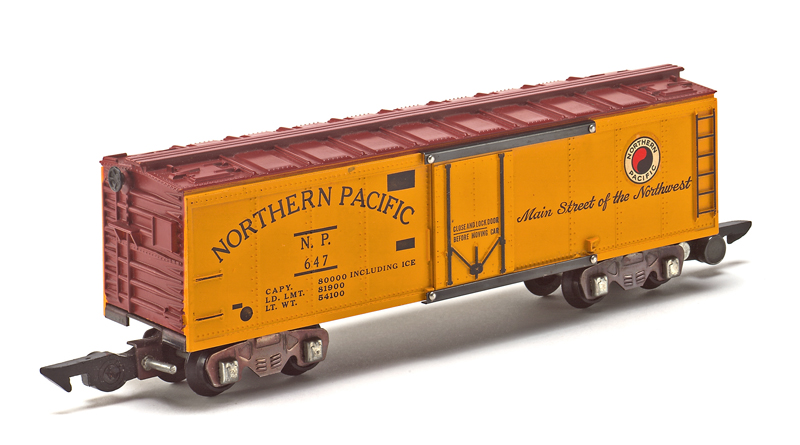
Glancing at the catalogs put out by the A.C. Gilbert Co. and the Lionel Corp. from 1952 or ’55 or ’58, you notice how similar the product lines were. Both Gilbert, which developed the American Flyer line of S gauge trains, and its rival marketed train sets at various price points to entice households with […]
Read More…
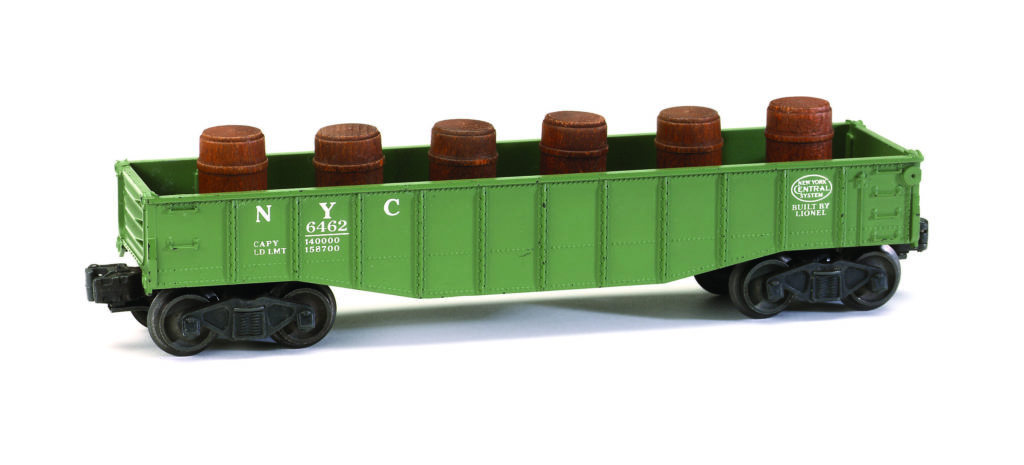
Knowledgeable hobbyists will likely tell you the line Lionel cataloged for 1954 represented the pinnacle of post-World War II production. In their opinion, the roster of steam and diesel locomotives, freight and passenger cars, and operating accessories was unsurpassed in terms of design, creativity, appearance, and operation. The No. 2219W five-car freight train headed by […]
Read More…
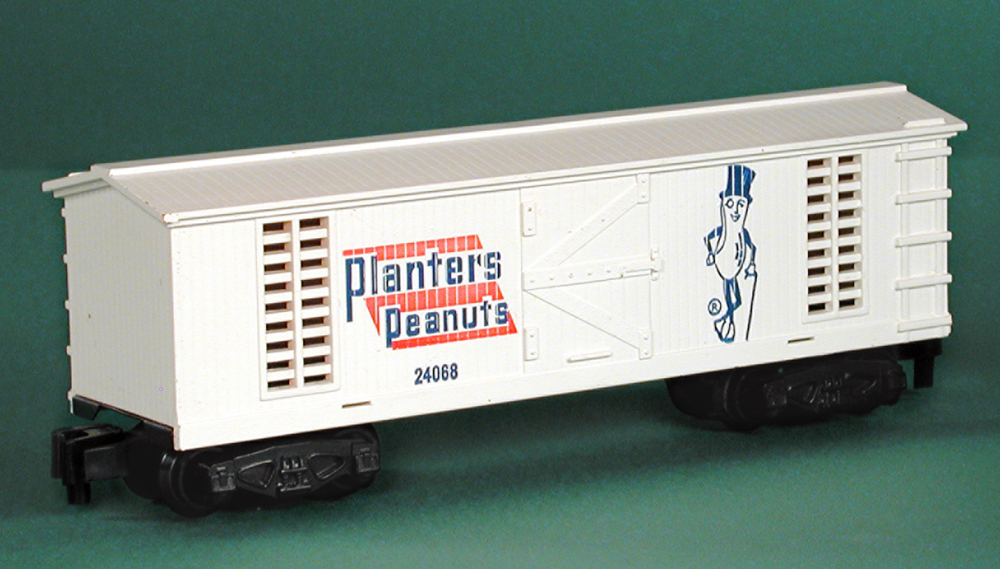
According to a document saved by Maury H. Romer, who supervised production of the postwar S gauge line, the A.C. Gilbert Co. intended to make a No. 24068 Mr. Peanut boxcar in 1962. It received a five-digit catalog number on Sept. 7, 1961. For unknown reasons, the project was abandoned after two prototypes were created. […]
Read More…
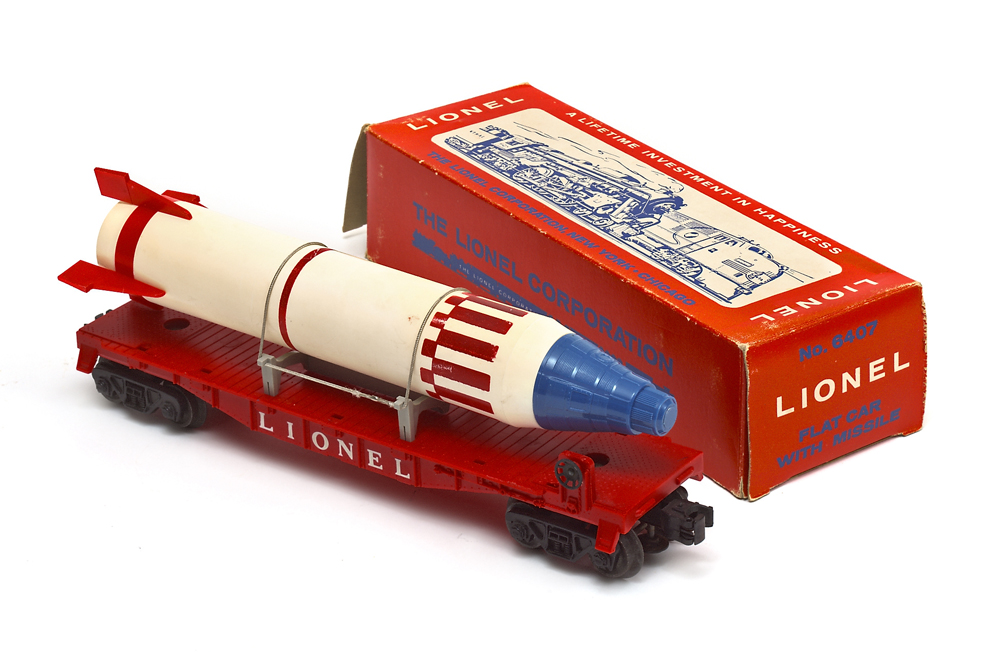
The Lionel No. 6407 flatcar with missile and removable Mercury capsule was cataloged for one year only, in 1963. It was offered as both a separate-sale item (priced at $4.95) and a component of two O-27 outfits: the Nos. 11341 Space Prober diesel freight set and 11385 Space Conqueror diesel freight set. Author John W. […]
Read More…
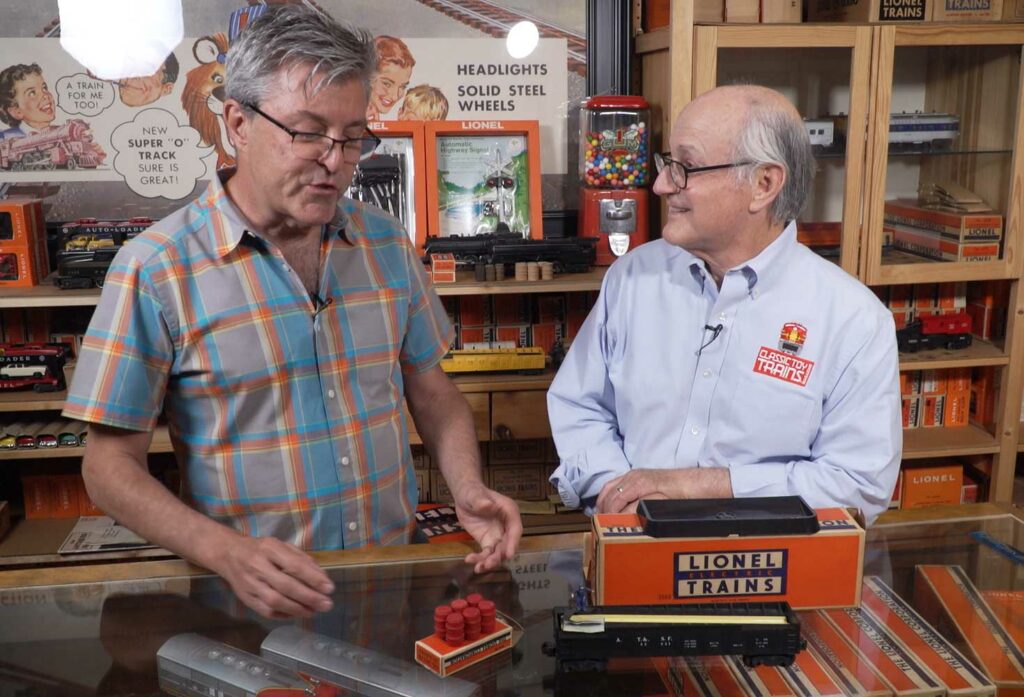
Transcripted from the CTT video series Truck’s Toy Trains. Trains.com members can watch it here. The Lionel Corp. released its first operating barrel car in 1954, which was two years after it brought out the No. 362 barrel loader. Contents of the box included the car and an insert that held a box of barrels […]
Read More…
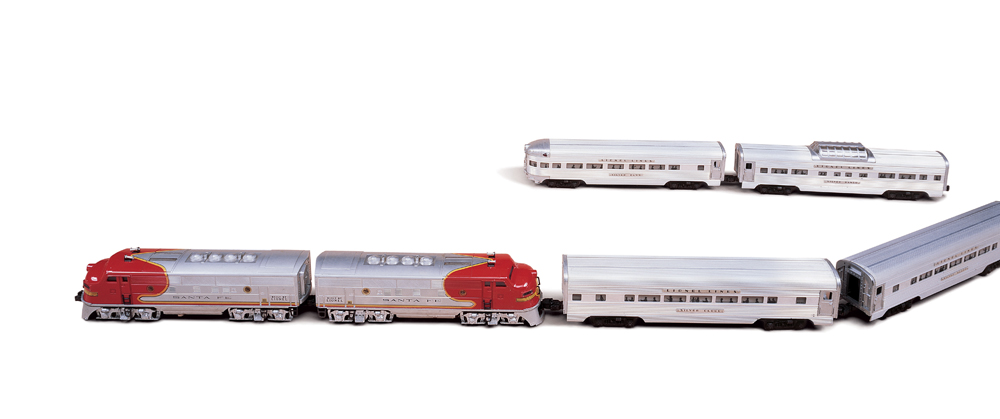
A Lionel Santa Fe passenger train outfit from 1952 is widely regarded as one of the best the company ever made. During the holiday season that year, the train maker introduced set No. 2190W, also known as the Super Speedliner, at the top of its O gauge lineup. That magnificent four-car passenger consist featured the […]
Read More…
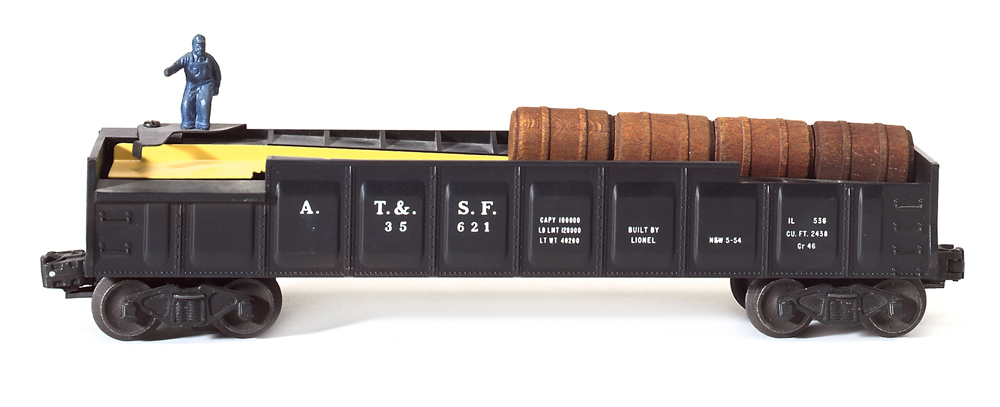
3562-1 Operating Barrel Car (cataloged 1954): $190 (excellent) $65 (good) The No. 3562-1, the first of Lionel’s four operating barrel cars, helped make 1954 one of the most significant years in the company’s history. The trains offered then contributed to a line that stood out by promising innovation and complexity. To understand where the 3562-1 […]
Read More…
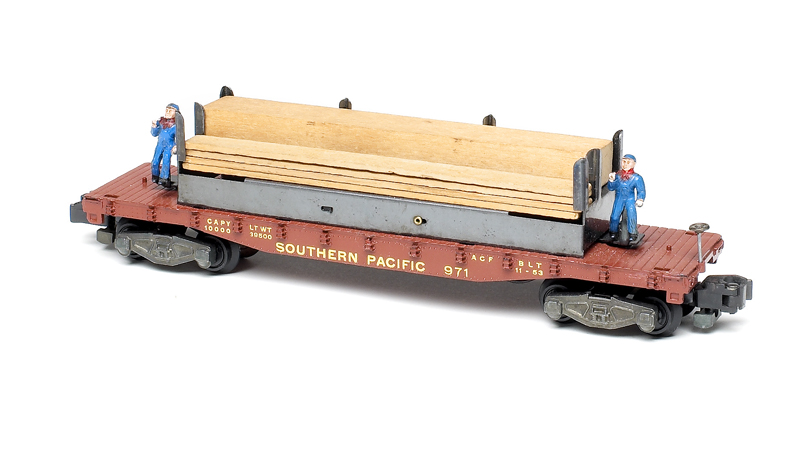
American Flyer No. 971 lumber unloading car So much of the joy that we hobbyists associate with toy trains comes from our love of illusion. Like children watching a magician, we suspend all belief and forget that electricity is responsible for moving our O or S gauge trains. Time after time we want to believe […]
Read More…
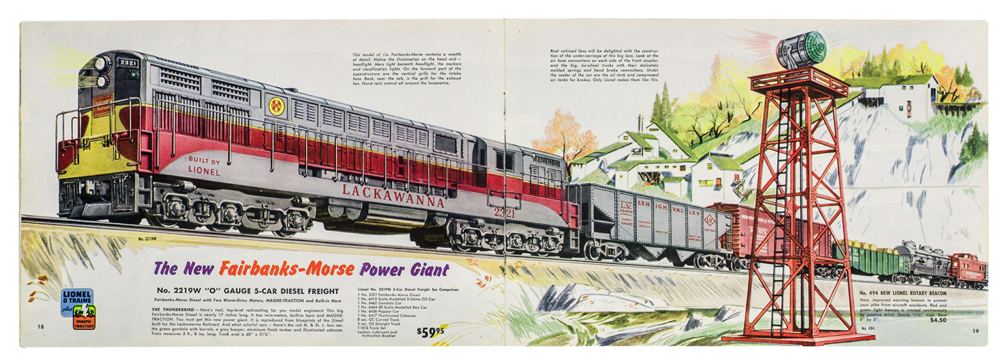
Lionel’s The Thunderbird toy train set features a Lackawanna locomotive and a Pennsylvania caboose. It’s obviously a toy train — with colorful cars that help it contribute to the pinnacle of Lionel’s post-World War II production. Lionel’s 1954 catalog that rosters The Thunderbird also features steam and diesel locomotives, freight and passenger cars, and operating […]
Read More…
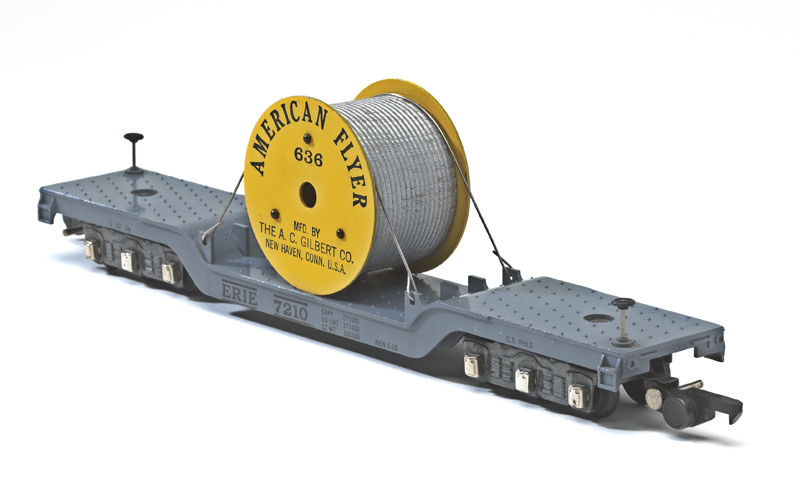
American Flyer No. 636 depressed-center flatcar with reel Even before World War II, the A.C. Gilbert Co. had experimented with loads for its flatcars. Of importance were the models with a small civilian or military vehicle, which could be unloaded via remote control. These models returned after the war. Lionel decided against competing with Gilbert […]
Read More…
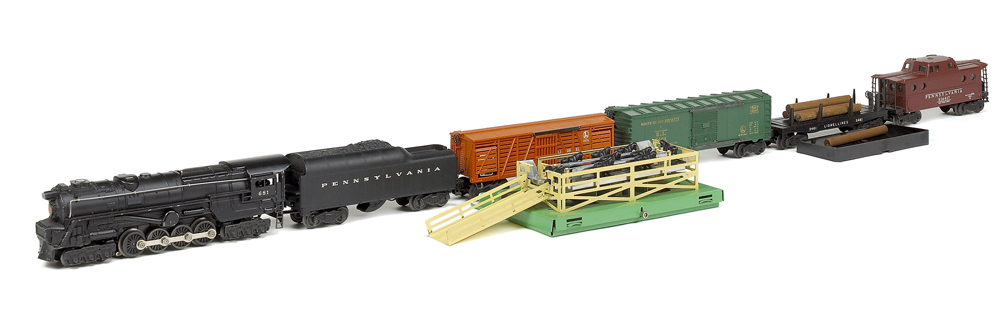
Thousands of different O and S gauge sets – cataloged and promotional – were developed between 1945 and 1969. Think of the one you received for your birthday or a holiday. Maybe you can say with pride it was Lionel’s No. 2211WS. An awesome responsibility From the time Lionel offered just one outfit for the […]
Read More…
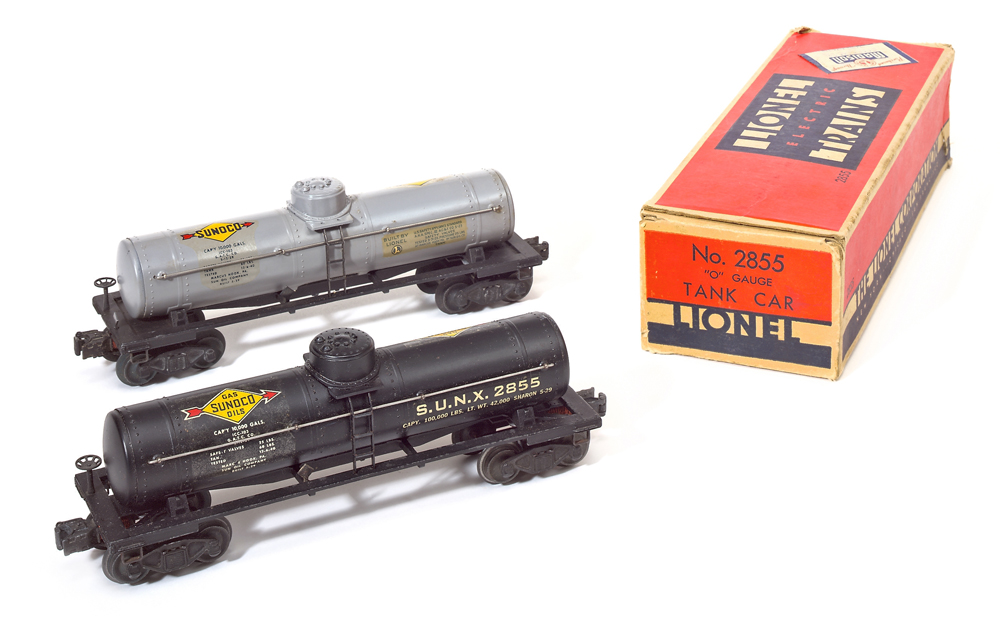
The near-scale single-dome tank cars were cataloged in 1946 and ’47. The No. 2855 Sunoco tankers offered no animation or action, except what kids might imagine. Then the great-looking and highly realistic models might be part of a fleet of oil cars hard at work in refineries located along the East Coast. The variations of […]
Read More…