





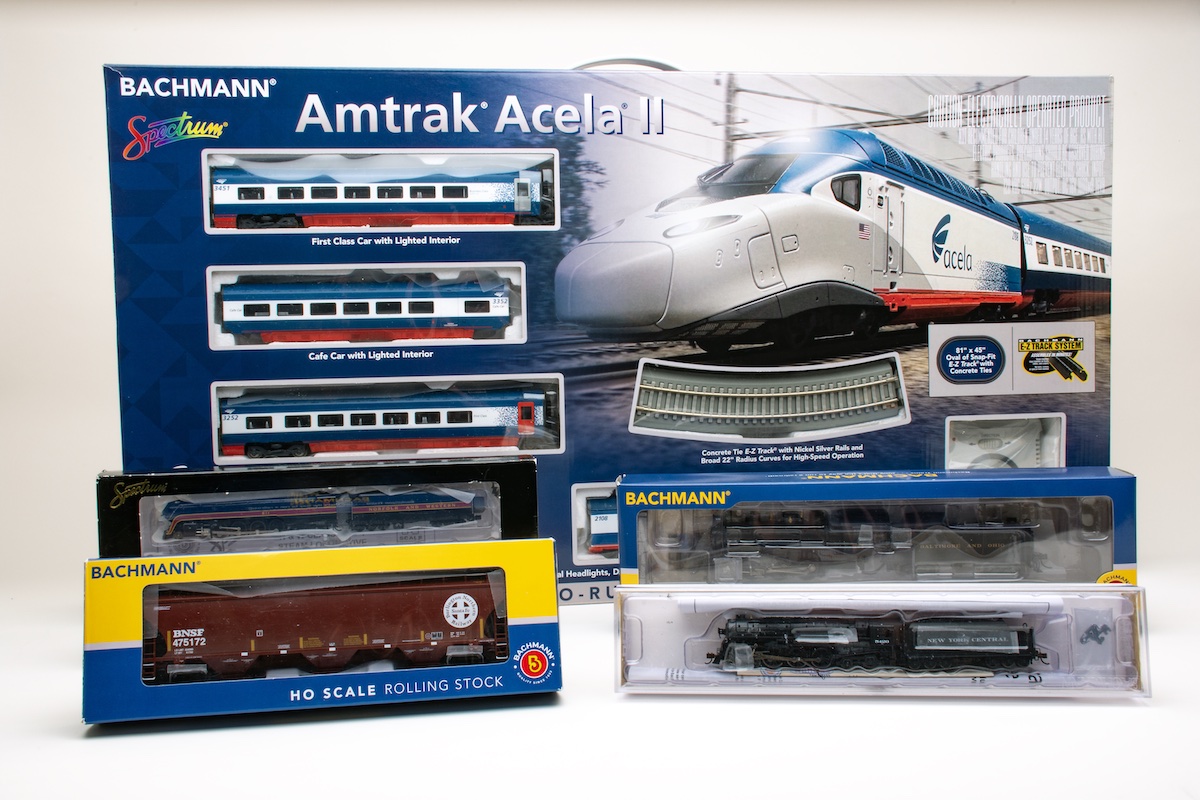
With its Bicentennial year just around the corner, Bachmann Industries is still kicking as the world’s largest distributor in the model railroad industry and hobby. Marketing and Licensing Manager Matt Stern and Product Development Manager Tyler Haney joined Model Railroader Editor Eric White and Trains.com Assistant Digital Editor Lucas Iverson to discuss more about the company’s past, present, and future that are full of challenges, yet exciting opportunities.

Q: How did Bachmann Industries get its start?
Matt: We’ve been around since 1833 and have been a Philadelphia company for basically the entire existence. Bachmann initially started as a novelty gift manufacturer, and transitioned to plastic sunglasses in the 20th century. It then started in the model railroading world with a brand that I’m sure most are familiar with, which is Plasticville building kits. It was started in 1947. In the 1960s, we expanded into actual trains themselves, and the rest is history.
Q: For those not familiar with the business, what are the types of products and services the company offers to new and returning customers?
Tyler: I think we always like to say that Bachmann offers something for everybody who’s into model trains. We’ve expanded now to cover five different scales: Our most popular is HO scale, then we have N, On30, Large scale, and our Williams O gauge line.
We offer a complete line of products for everybody, from those who are just getting started in the hobby to the seasoned and most skilled model railroaders out there. Our Spectrum line is our premium quality locomotives and rolling stock. We also have our scenery line, including Scenescapes scenery materials. The Plasticville USA line is still going strong today. Of course, we have our popular EZ Track system with the integrated roadbed in HO and N scale.
Then there are our strong and popular licensed products as well, most notably the Thomas and Friends range in HO, N, and large scale. We also have ongoing licenses with Amtrak, VIA Rail Canada, Ringling Brothers, Barnum and Bailey, Norman Rockwell, Scouting America, and the Elf on the Shelf.
Q: What’s been the common challenge in providing a mass volume of model railroading products, and how much of that is reflected in today’s world, especially surrounding developments in the United States tariffs throughout 2025?
Matt: The model railroading world has always been a changing world. It started out as a toy industry, and in the last 30 years or so, it’s really developed into more of a serious hobby. We were obviously known in the 1970s-’80s for ready-to-run train sets. But we’ve also adapted along with the industry and hobby to produce a very significant line of high-end, highly detailed models.
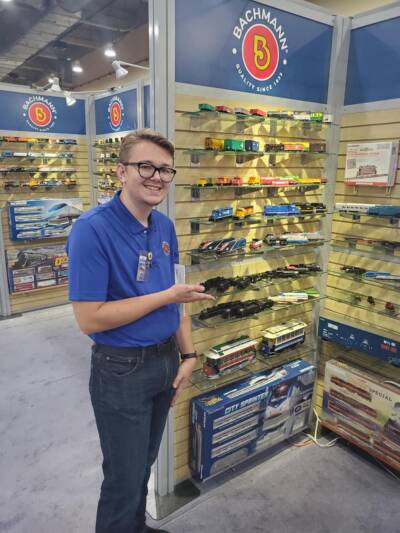
Tyler: To expand when speaking about the current global situation, especially with the tariffs, we’re in the same position as the majority of the industry where we do have our production overseas. It’s simply the most economical place to produce model trains at the standard of quality that modelers have come to expect.
When the tariffs were initially placed in April, we, along with everybody else, were figuring out how that was going to actively affect our line. It had a tangible impact immediately because when those tariffs first hit, we didn’t want to import at those rates. So, we put a hold on everything shipping out from our factory, and the factory told us, “If you’re not able to ship these products, we have to stop production because we can’t produce more than we can store in our warehouse before it gets shipped out.”
So all shipping, and then therefore all production, went on hold for six weeks. We were able to restart production once the tariffs were reduced. Of course, that did cause delays to a number of our projects as we had to rearrange our production schedule to make sure that the products that were most in demand would be able to make it in by the end of 2025. We’re still recovering from that going into 2026, but I think we’ll be back on schedule.
We did have to increase our prices. It’s an unfortunate situation, but it’s a case where prices have gone up across the industry. So I think people have come to expect it. It’s just a challenging situation that’s largely out of our control, but we’ve managed to come through so far.
Q: Could you provide a sneak peek into what’s coming down the line for upcoming products?
Tyler: So this is going to be a 2026 release, and it’s a brand new, HO-scale model. It’s our 1900s era, 68-foot passenger car. This, of course, is kind of an intermediary between the heavyweight era and our old-time, 19th-century equipment. So, it’s a little bit longer, wood construction, and getting towards when the railroads moved over to steel passenger cars.
We’ve gotten a lot of reference photographs and measurements at the Strasburg Rail Road. These models have a fully detailed interior with, of course, a wood-burning stove in the one end; open platforms; and an underbody with detailed truss rods. Of course, this design was not exclusive to Strasburg. We’ve got three other period-appropriate road names as well: Pennsylvania Railroad, New York Central & Hudson River, and Southern Pacific.

These have gotten a very positive reception. Filling a niche within the early 1900s, these cars would have been most used from about 1900-1920. Some railroads did use them all the way up until the 1950s, but they haven’t gotten as much attention from manufacturers compared to other eras. So, we think these are going to be a big success.
Matt: These are also cars that people can ride today on tourist railroads. There’s the appeal there with the Strasburg Railroad. The specific car style is also on the Santa Cruz, Big Trees & Pacific Railway in California. And there are a number of other railroads that operate very similar-looking cars.
Q: Are there plans to maybe bring back some of your classic models that Bachmann had made in the past in updated forms?
Matt: We obviously have a vast line of products that we’ve produced over the years. So, we got a lot of similar questions about bringing back products that we’ve had in the past. The best answer I can give is if we had it in the line before, there’s a good chance it may make a return at some point. When we look at bringing back older models, we would be doing upgrades to them to make sure that they meet both the mechanical and the detail levels that people are expecting out of our products today.
Q: What is Bachmann’s all-time, best-selling product?
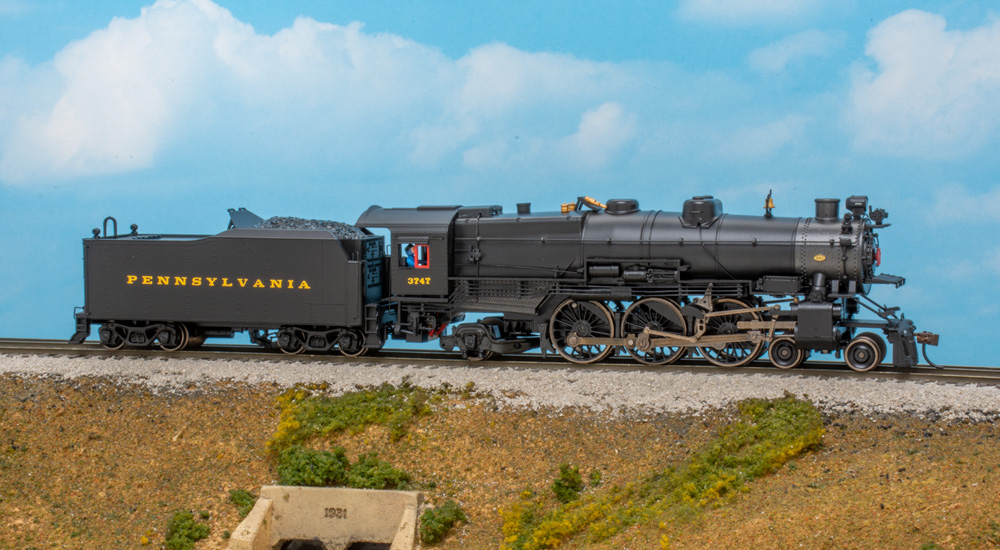
Tyler: I’ve certainly got my personal favorites. I really like the streamlined K4 4-6-2 that we’ve done in both HO and N scale. We also have the On30 Trench 2-6-2T locomotive from a few years back.
There are also a couple of locomotives that I think back on from the whole history of the company that have made a big impact both for us and for the hobby as a whole. When we had the Spectrum 2-8-0 consolidation come out, that was a major hit because it was just so versatile and could fit in with so many different prototypes. We also have all the Spectrum, Large scale locomotives: the Shay, Heisler, Climax, and the narrow gauge 2-6-0. All these locomotives raise the bar for what you can do with mass-produced model trains.
Matt: I think Bachmann was a pioneer when it came to transitioning from the mass-produced toy era to the model era with the Spectrum line back in the late ’80s. Talking about all-time, most popular products out there in the world, probably the GE 44-ton switcher and the Spectrum K4 (non-streamlined version), which were both early introductions. They’re also high up there in the list, especially as detailed as they were for the time.
Q: What do you wish our readers knew about Bachmann?
Tyler: I think most people are aware of, but not everybody is, is we’re proud of our history, but we’ve also evolved and adapted. I think some people have their perceptions of Bachmann from years back as just the toy train company. But we’ve come a long way since then.
We still do train sets, but even those we’ve raised the quality level on. You’ve got locomotives with all-wheel drive, the painting and the graphics have improved, and the motors have improved with no pancake motors. The biggest compliment we get a lot is when somebody comes up at a train show and says, “You know, Bachmann’s come a long way.” I guess we have, and it’s nice to hear that and be appreciated for that with many more years to go.
Q: What does the future hold for Bachmann Industries?
Matt: I think the bar has been raised with our latest products. We’re going to continue to raise the bar on detail and quality, and expand our range of products to meet that same level. There are always improvements and developments in the tech side of things with DCC. We’re always having discussions about how we can increase the interactivity of the models and bring new digital functionalities to layouts. That’s something we’re probably going to be looking at as we continue down the road.

Tariffs are a tax on the citizens and companies in the country that imposed the tariffs. Whether the importing company absorbs the cost of the tariff and accepts reduced profits or passes their cost on to the wholesalers, retailers, and consumers doesn’t change that tariffs are a tax. Anyone, including politicians (including you-know-who), that says they’re not a tax is lying to you or simply does not know what tariffs really are.
If importers stopped absorbing the cost and instead passed them on down the supply chain to consumers, maybe more people would finally understand what tariffs are and who they hurt.
This post is not about politics, it’s about basic economics, facts, and reality.
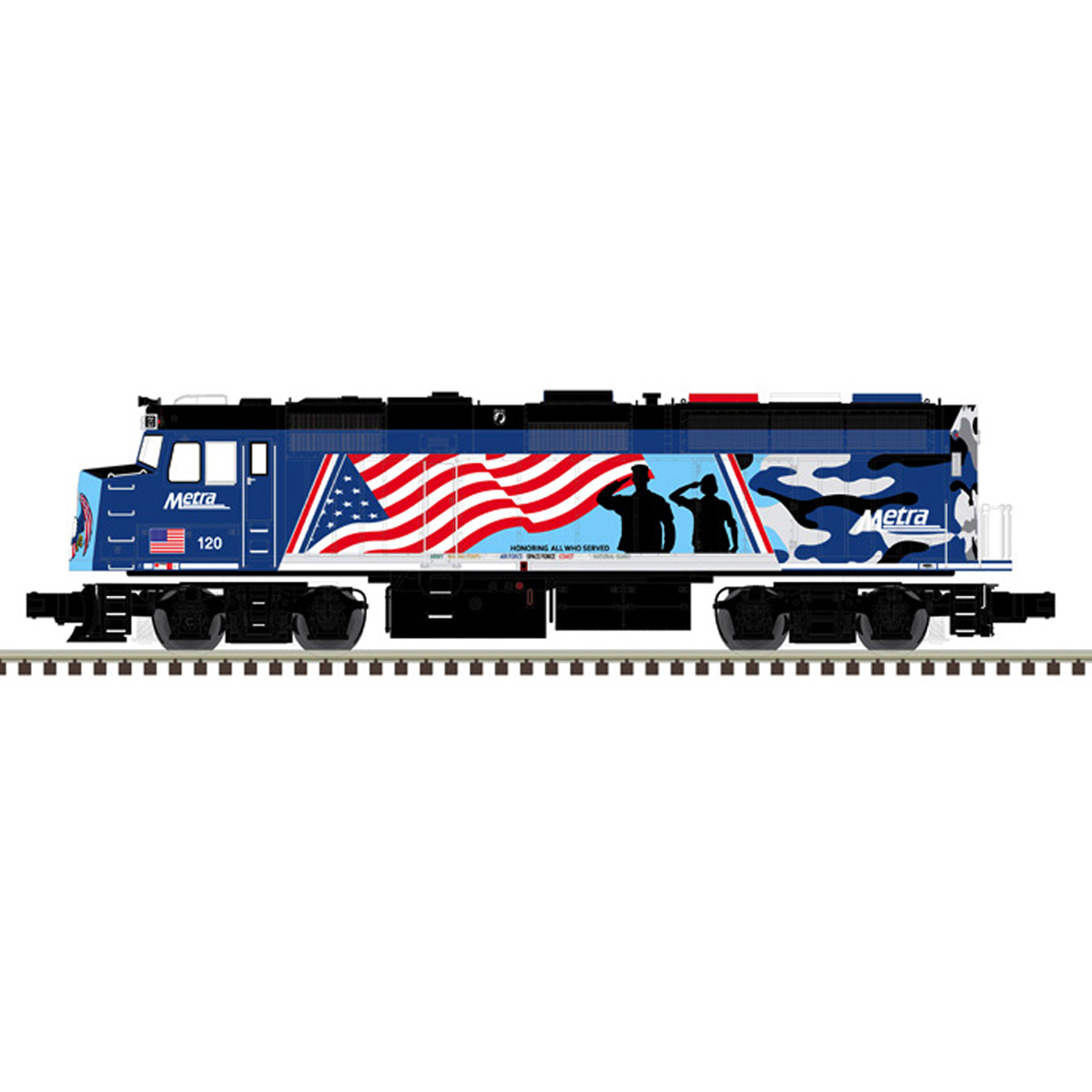
So…why did Bachmann completely decimate their O gauge offerings? It’s unbelievable sad that they killed Williams Electric trains. If they knew they weren’t going to offer O gauge trains, why buy out Williams to begin with?
I have found Bachman models to be reliable. I also admire them for providing us with some excellent UK models for those of us who are inclined to run a British model on our tracks now and then.