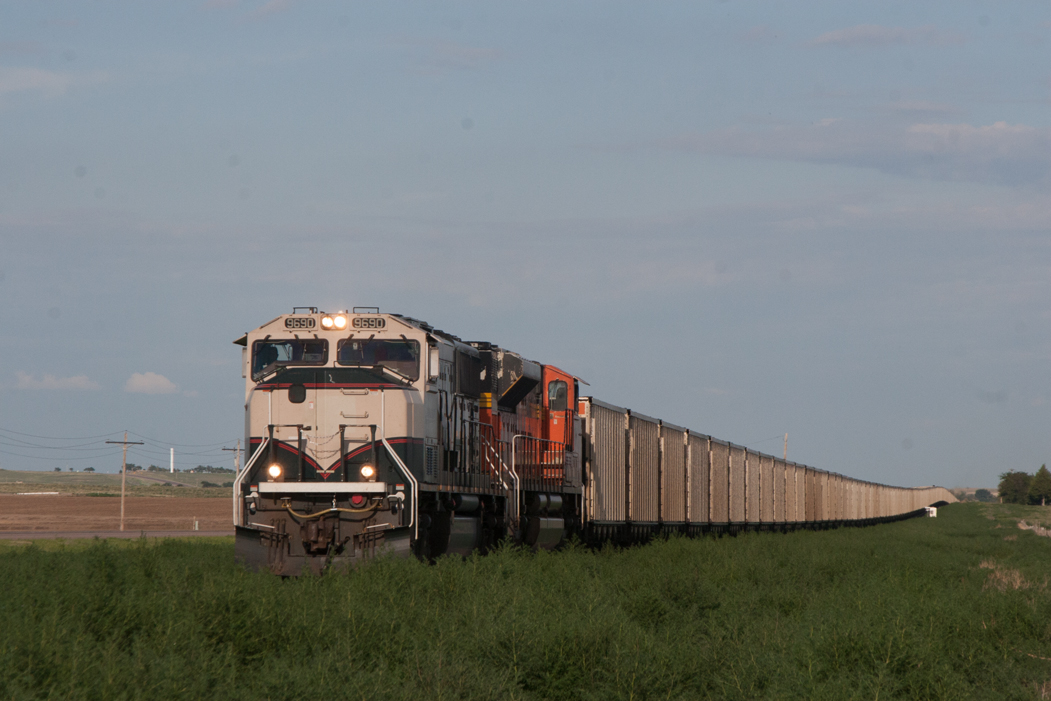
A 120-car BNSF empty coal train slinks west through a 30-mph speed restriction 10 miles east of Syracuse, Kan., on July 13. Once a raceway for the Super Chief and other streamliners, the Kansas portion of the line was downgraded under the current operating contract to 60 mph maximum passenger speeds with mostly bolted rail dating from the 1950s. But on this track, with signaling that allows 90 mph operation, there are now over 40 miles of 30 mph slow orders in the 100 miles between Garden City and Lamar, Colo.
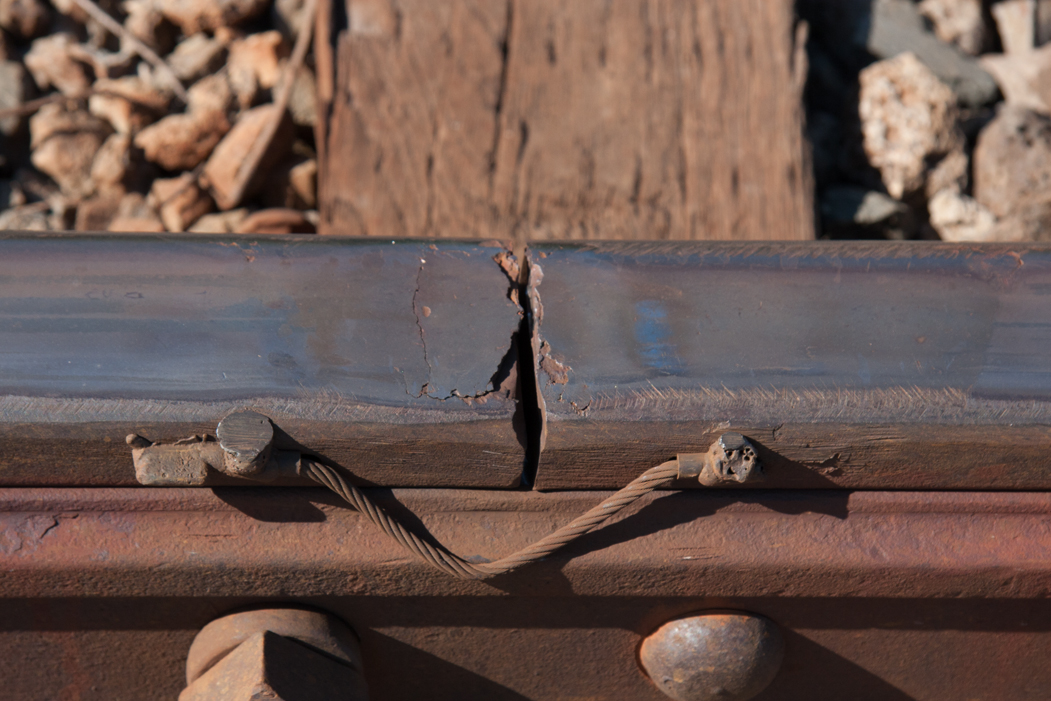
A close-up of rails at Milepost 365.1 (between Dodge City and Garden City) shows how the ends are battered at the joints, making a ride on the Chief across Kansas, Colorado and New Mexico a noisy experience. BNSF’s plan to restore track to 79 mph (Class 4) and agree to maintain it at that speed for 20 years calls for replacing this bolted rail with continuous welded rail. It will renew the ties and ballast if the states and Amtrak help pay for new rail.
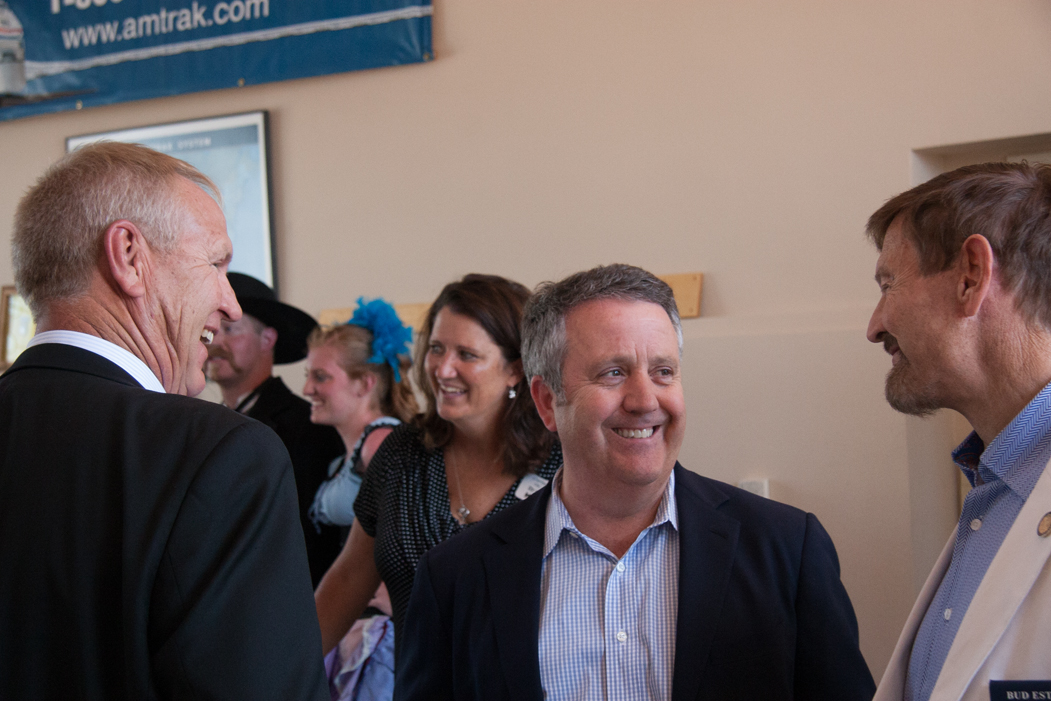
BNSF Executive Chairman Matt Rose talks about the initiative with community leaders at Dodge City. He told TRAINS he was optimistic that $9.5 million in matching funds which BNSF, Amtrak, on-line communities, and the Kansas DOT have pledged will help win a $15 million pending federal TIGER grant to help with the rehab, so any reroute on the Transcon through Amarillo, Tex., in 2016 when the current contract expires won’t be necessary.
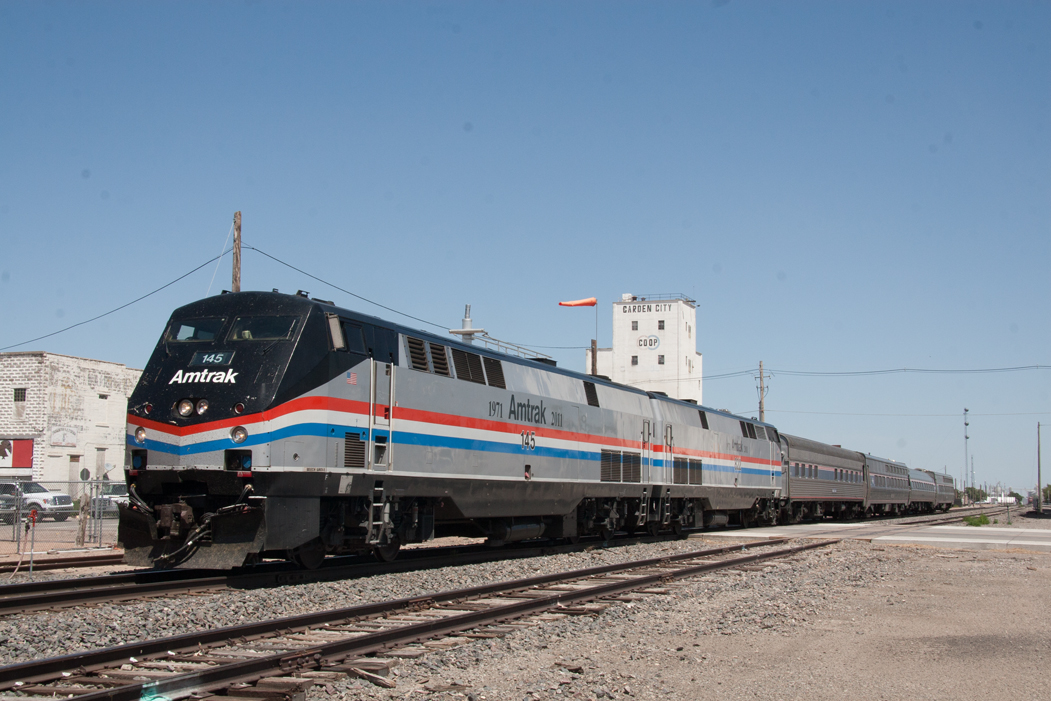
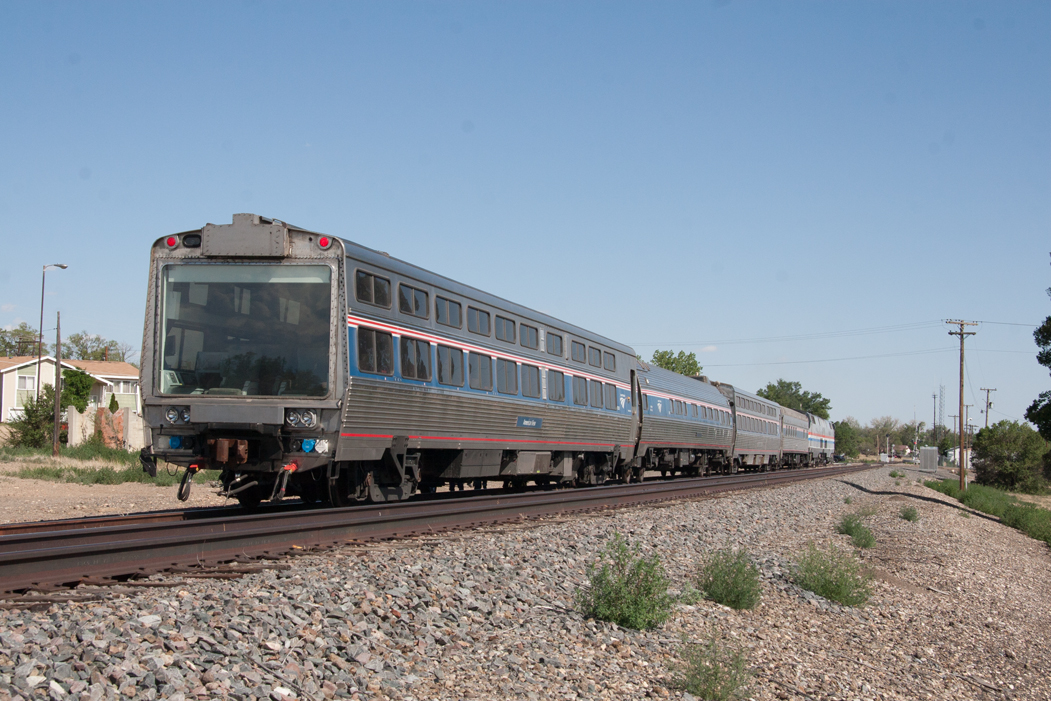
P42’s 145 and 822, painted in Amtrak’s Phase 3 scheme, pause with the special on July 11 at Garden City, while Joe Boardman and Kansas DOT Secretary Mike King talk with local officials and the media. Behind the locomotives are Heritage sleeper Pacific Cape, a Viewliner sleeper, office car Beech Grove, and theatre inspection car American View.
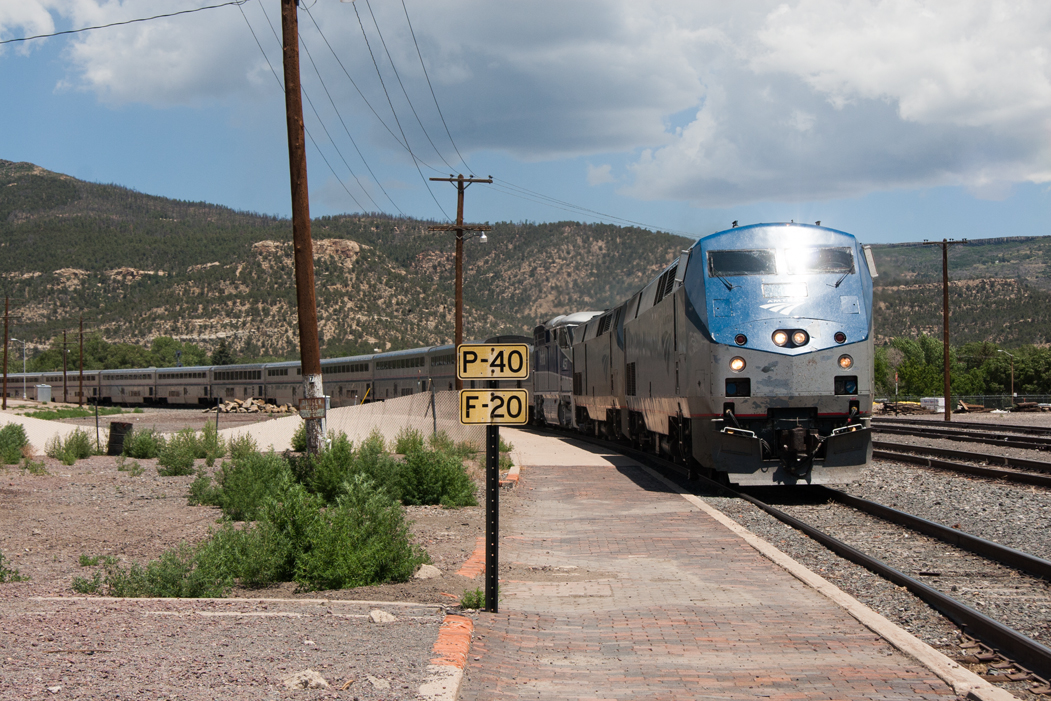
The westbound Southwest Chief arrives at Raton, N.M., where a sign displays a speed limit for freight trains that have been absent between Trinidad, Colo., and Lamy, N.M., for 5 years
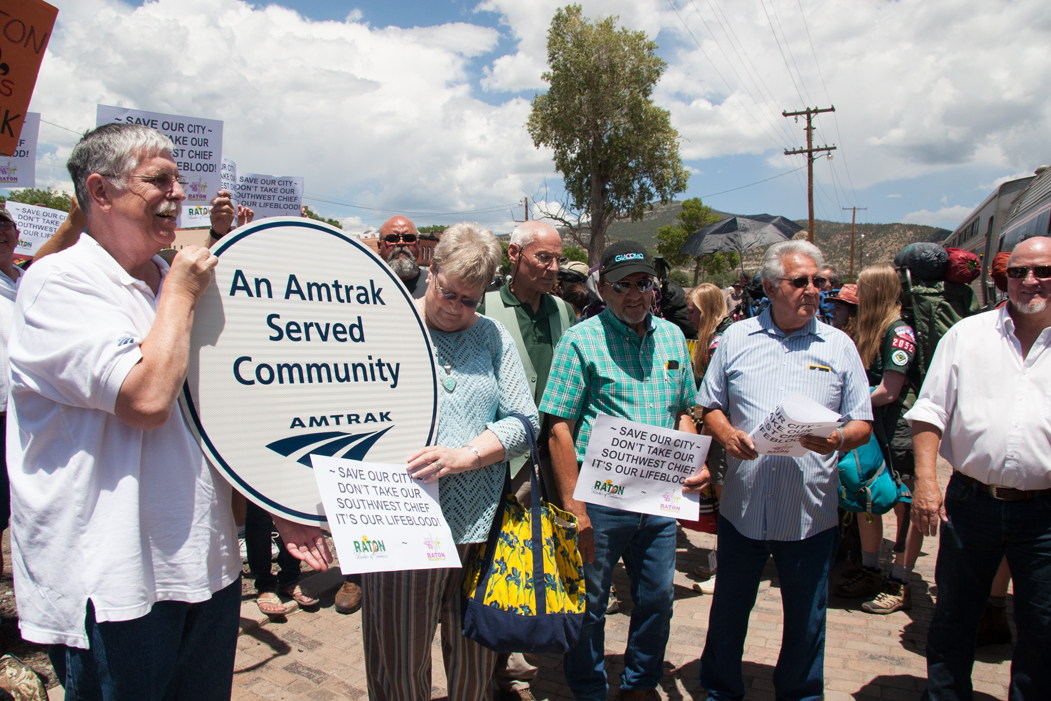
Almost 200 people turned out at Raton, N.M., to greet Amtrak president Joe Boardman, who presented them with a sign. The supporters’ signs say “Save our city. Don’t take our Southwest Chief. It’s our lifeblood.”
After Raton, the Amtrak special stopped on the passing track at Springer, N.M., while the group traveled by van to a lunch at Philmont Scout Ranch. Theatre inspection car American View was originally one of two prototype sleepers assembled from Budd Company stainless steel shells in 1987 at Beech Grove. Shop forces also did the renovation.
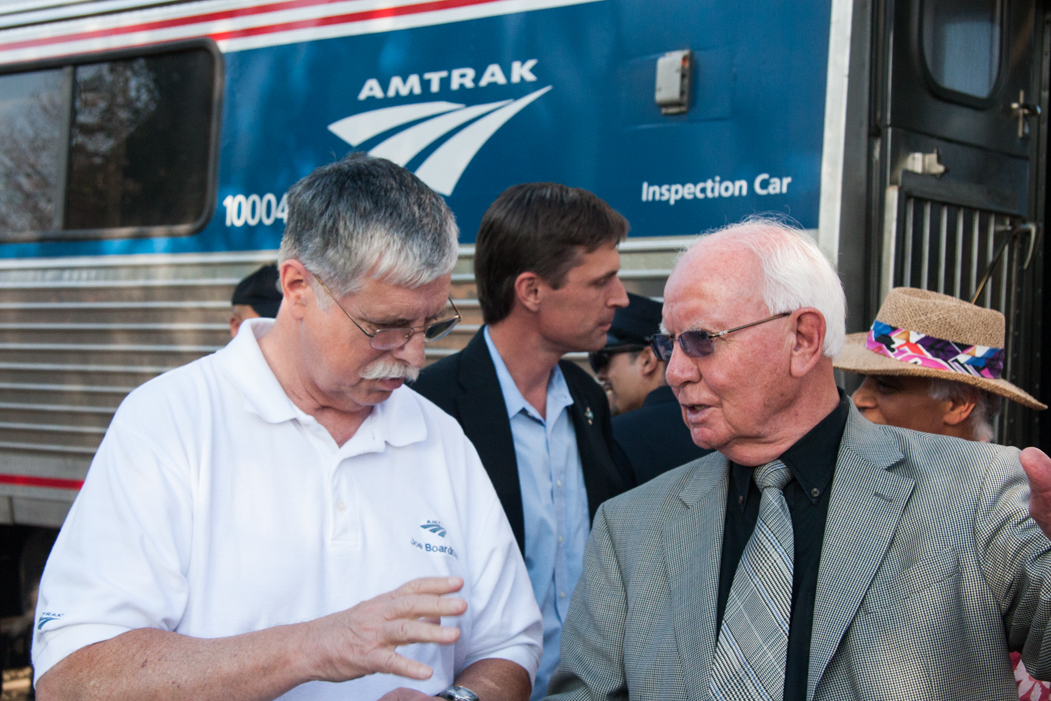
Amtrak president Joe Boardman confers with Las Vegas, N.M., mayor Alfonso Ortiz, Jr. In the background, New Mexico Sen. Martin Heinrich talks to another city official.
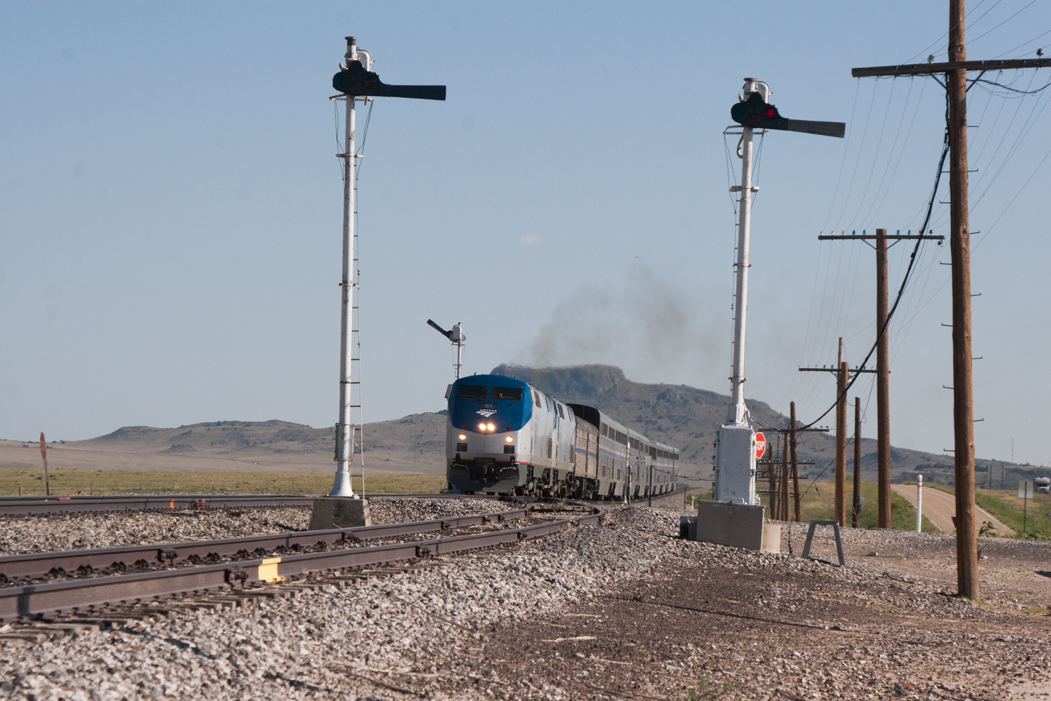
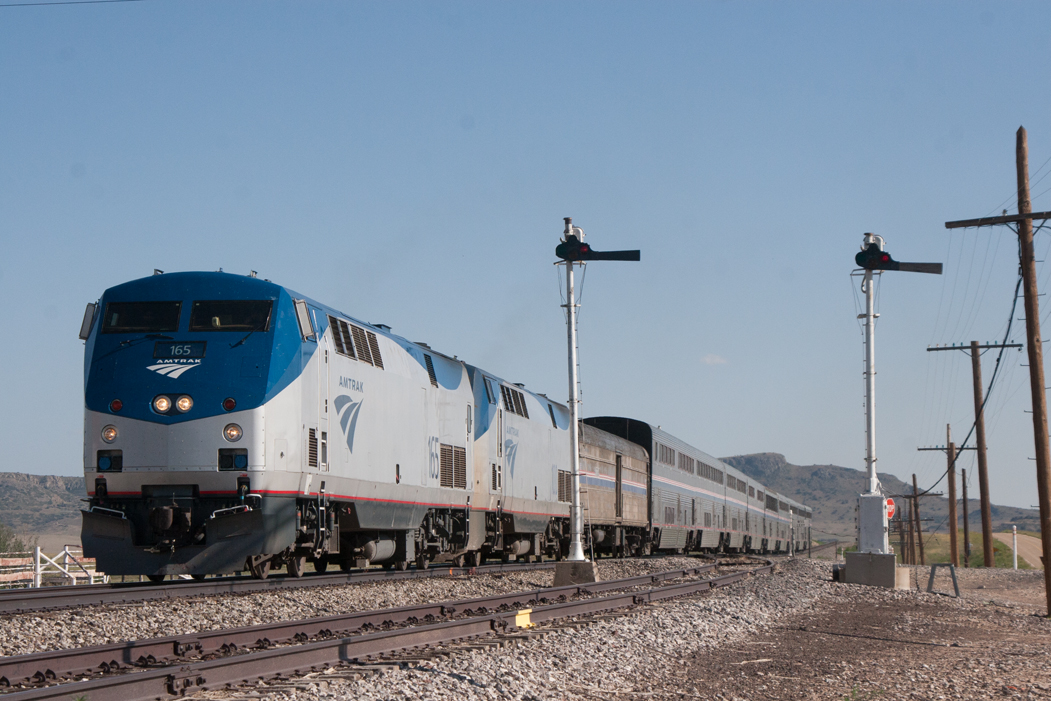
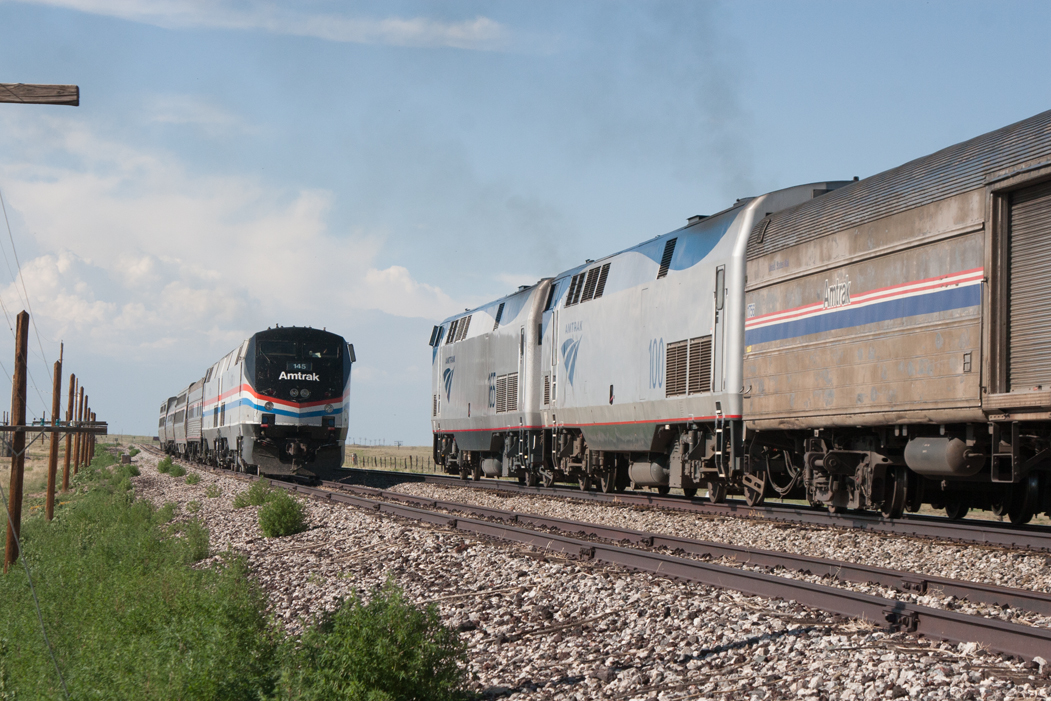
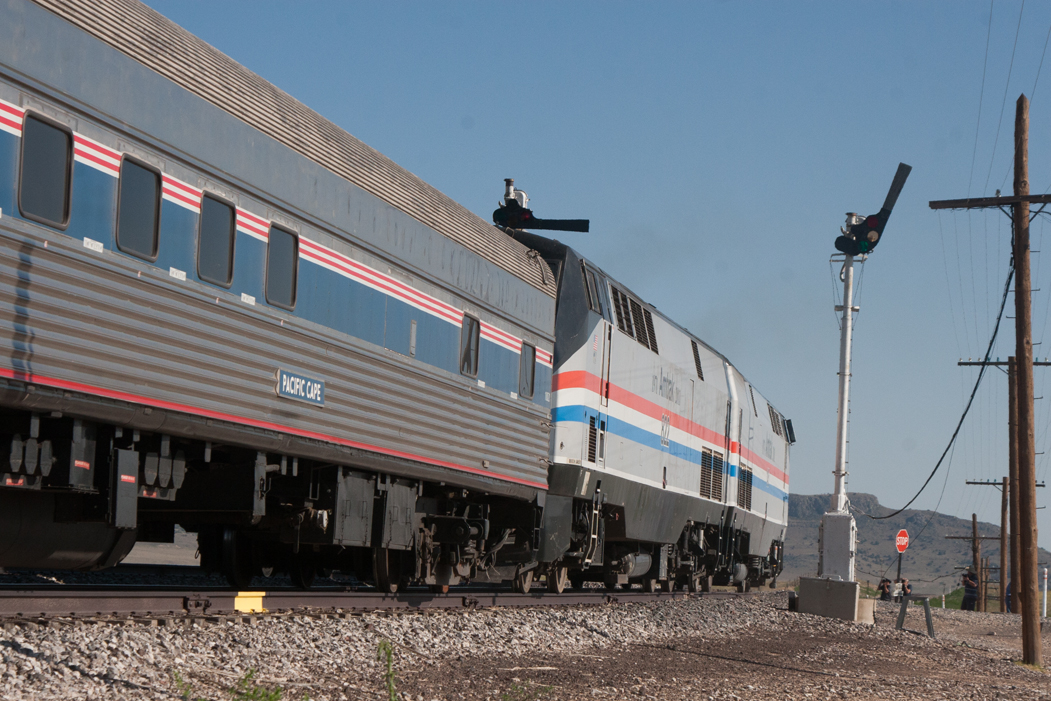
With Wagon Mound in the background, the eastbound Southwest Chief drops an aging semaphore signal as it arrives at Levy, N.M., for a meet with the Amtrak special.
With the Chief having passed, Amtrak’s inspection special takes the signal to return to the main line and head west.
On July 11 and 12, 2014, Amtrak President Joe Boardman hosted a four-car passenger extra between Kansas City, Mo., and Albuquerque, N.M., to give local and state stakeholders the opportunity to observe deteriorating track conditions along the Southwest Chief’s route, and to discuss infrastructure improvement funding with Amtrak operations and government affairs managers. BNSF Railway Executive Chairman Matt Rose was also aboard the first day between Topeka and Dodge City, Kan. After an overnight stop at La Junta, Colo., on the second day, U.S. Sen. Martin Heinrich (D—N.M.) and New Mexico Transportation Secretary Tom Church boarded the special in Raton, N.M. The train stopped on the passing track at Springer, N.M., for a side trip to the Philmont Scout Ranch near Cimarron, N.M.
Passenger correspondent Bob Johnston rode the Chief from Chicago to Garden City, Kan., on July 10, then shadowed the extra by car from Dodge City as it headed west to Las Vegas, N.M., over the next two days. His report, “Probing the Chief alternatives,” is on pages 20-21 of TRAINS’ October, 2014, issue. This photo gallery from the trip further illustrates what he saw along the way.