Lake Shore Limited dining car
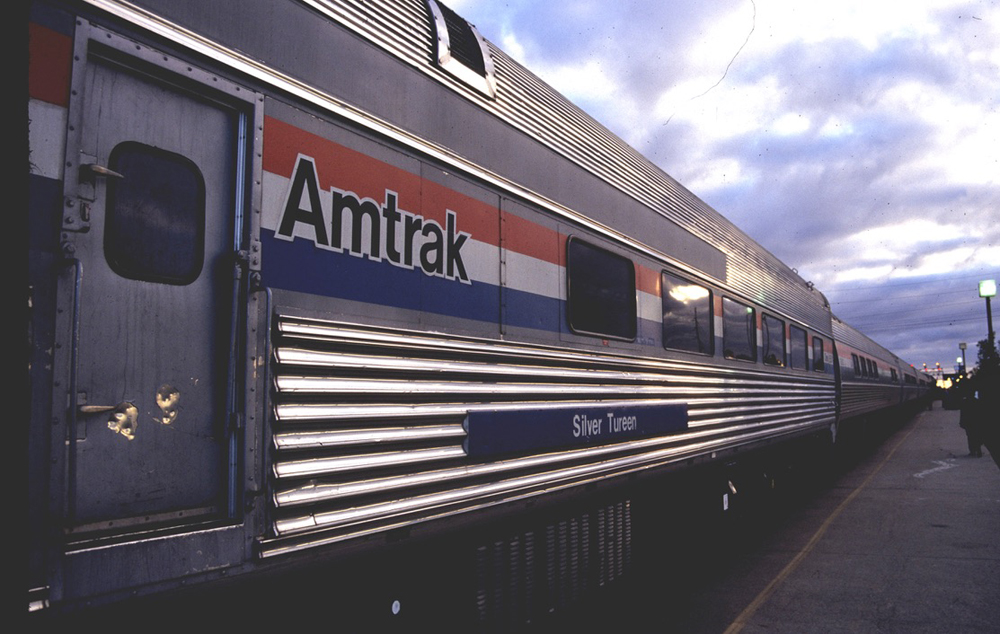
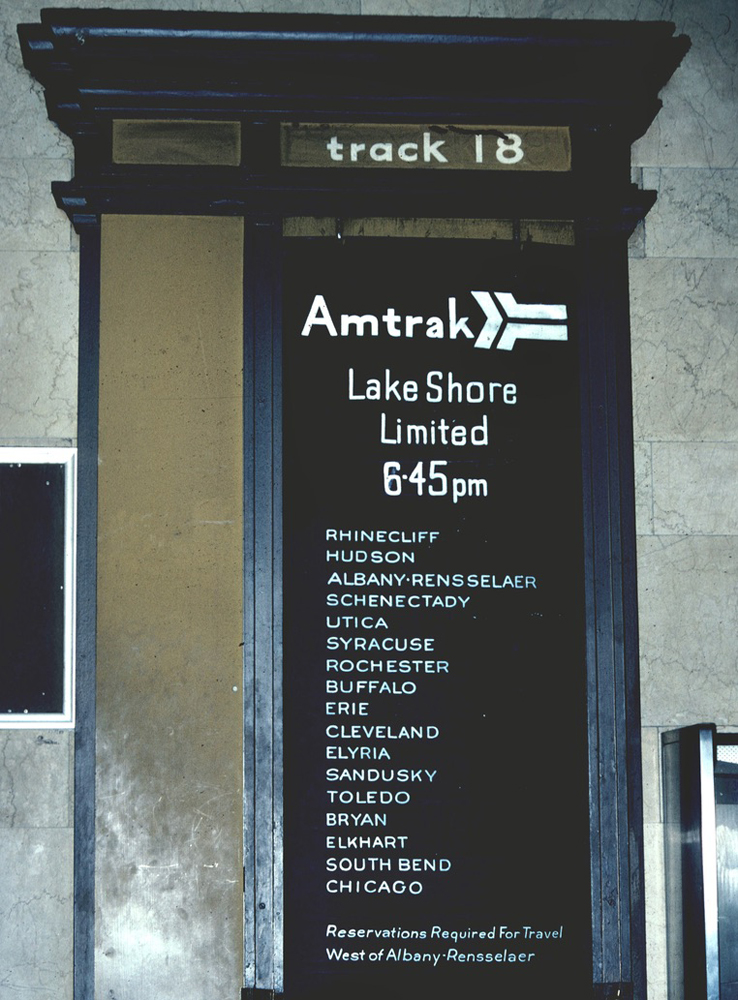
In profiling a train for Trains’ 1,000th issue whose New York and Boston sections average just under 1,000 miles, it isn’t possible to relate more than a fraction of what has made trips aboard the Lake Shore Limited so memorable through the years. [See “Lake Shore Limited: A Survivor,” Trains, February 2024]. But meals in its dining cars have certainly been a significant component.
Beginning in the early 1980s, I rode the train often when traveling from Chicago to ad sales strategy meetings in New York or at represented TV stations in Cleveland, Buffalo, Rochester, Albany, and Boston — with my employer picking up the tab! Company headquarters were on New York’s East Side and the hotel of choice, the Grand Hyatt, couldn’t have been more convenient with its direct passage to Grand Central Terminal when the Lake Shore called there.
Up from the depths
In many ways, the train has mirrored Amtrak’s undulating history, with dining service acting as a barometer of where things stood at any given moment. Among notable nadirs in early travels: a trip to Chicago in late 1981 during what was surely the company’s service low up to that point. Under severe Reagan Administration budget cuts mandating “break even” food service, tines of a plastic fork broke off on a tough steak plopped down unceremoniously by a sullen waiter who never bothered to take the plate off of her serving tray.
But the next year, W. Graham Claytor Jr. ascended to Amtrak’s helm. Coming from the Southern Railway, which maintained high onboard staffing and culinary standards while foregoing partnership with Amtrak for a decade, the strong-willed former U.S. Naval Secretary had definite ideas about what a proper passenger train should offer. The trusted leader successfully sold his vision to Congress, and meals improved markedly within a year after their inclusion in sleeping car fares.
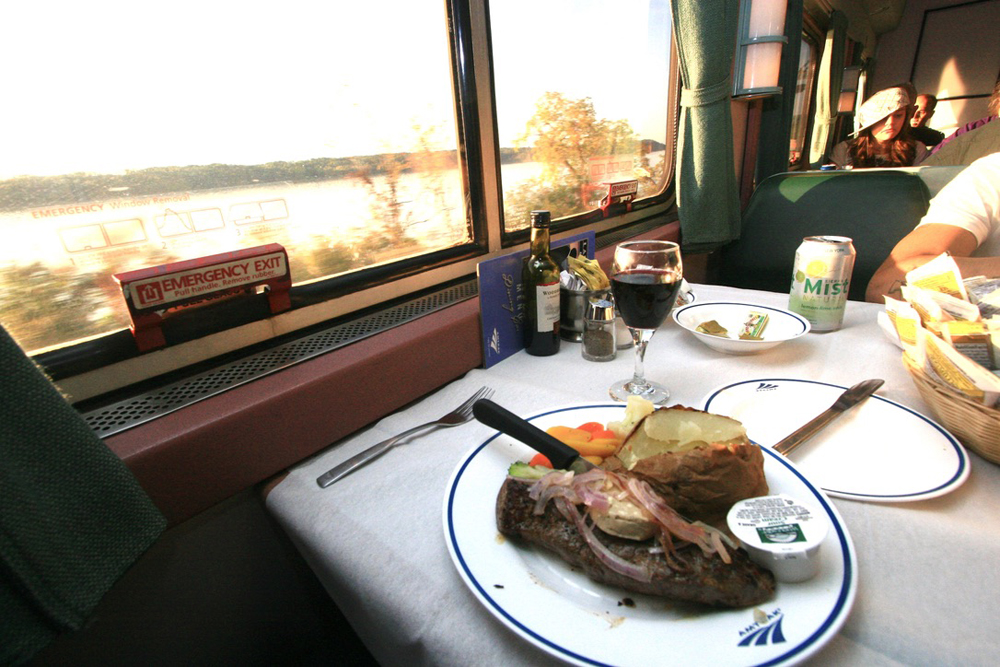
A good thing too, because enjoying a sumptuous dinner combined with Hudson River scenery became one of the Lake Shore Limited’s most endearing and appreciated qualities after all-day business sessions. I began carrying notebooks in 1987 and was sufficiently inspired to write the following in my roomette after enjoying a medium rare steak and baked potato on June 14, 1988:
“The sun’s red ball turned to magenta as it sank into the Hudson River haze. As we glided from salad through dessert, it took a full hour for the purple light to completely disappear. One of the best diner experiences ever.”
Somehow these Lake Shore journeys managed to elicit commentary on more than 50 trips in 38 notebooks over four decades. Along with notes about consists; faulty equipment; exemplary or nasty employees, and good and bad train handling by dispatchers, food impressions comprised a significant portion of the entries.
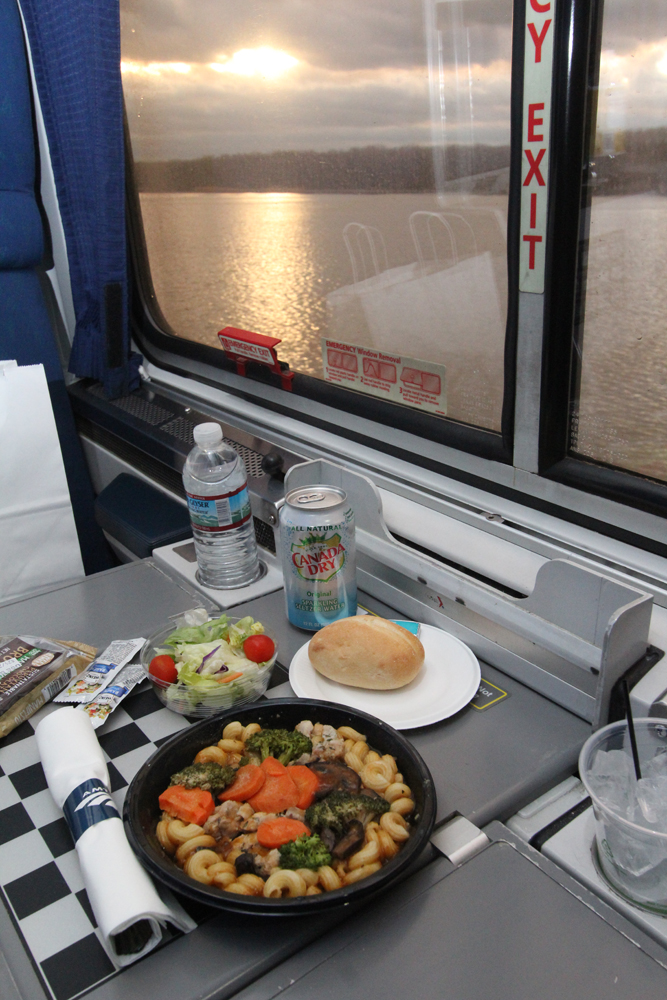
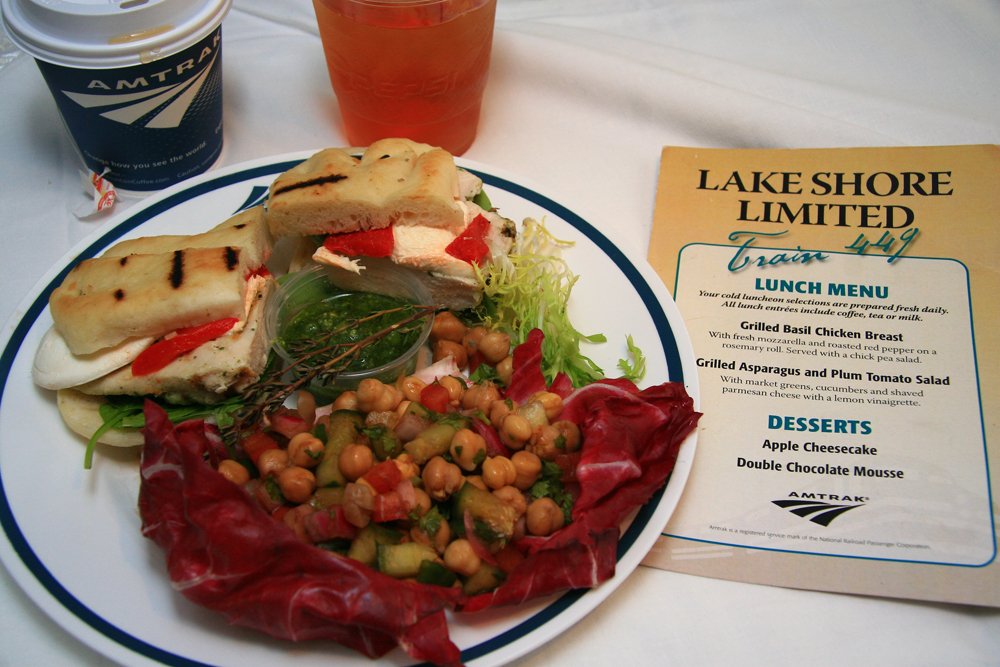
For instance, Boston-section meals were generally disappointing; they seemed to be grudgingly provided to sleeping-car passengers in an Amfleet cafe car with limited preparation capability. But credit where it is due: though not on the limited menu, the chicken breast sandwich with pesto and chickpea salad (below) served on westbound train No. 449 of July 21, 2009, was deemed “Good-cold-fresh.”
Reliving past glory
Riding the Lake Shore inspired observations largely because its heritage dining cars provided the symbiotic link to the streamliners for which they were born. Remember, western trains had been homogenized by Superliners since 1979, but Silver Tureen, built by Budd for the Burlington’s 1956 re-equipped Denver Zephyr, retained its original art deco styling, as noted in an Oct. 3, 1996 entry.
Other dining cars cycling through Lake Shore consists revealed recollections of the trains of which they had once been a part through window placement and the style of stainless steel fluting.
Some had undergone sterile remodeling, including fluorescent lighting, during conversions to head-end power in the early 1980s, but Amtrak subsequently made many cars more hospitable by installing modular kits designed by a Spanish company. The cozy interiors’ subdued lighting and modern appearance gave them a much-appreciated second life.
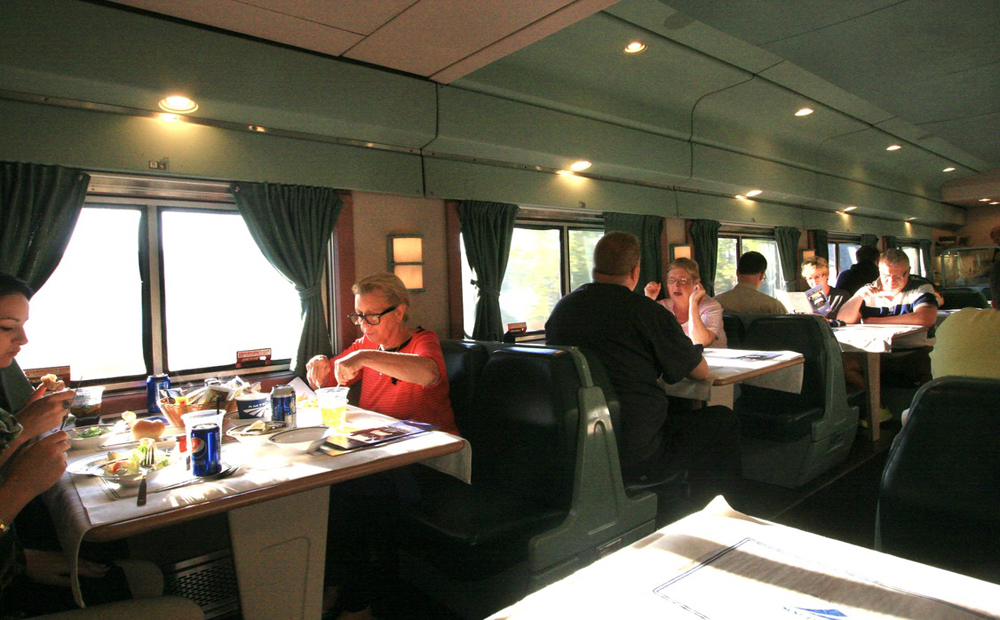
As heritage dining car ranks began thinning in 2016 with the impending (but considerably delayed) arrival of 25 Viewliner II diners, the Lake Shore was dealt Horizon and Amfleet II substitutes. Without a grill to cook it on, “Amtrak’s signature steak” thus became a “Fork Tender Beef Flatiron,” a pot roast-like main course noted on a June 20, 2017, westbound trip that nevertheless “requires a knife to cut.”
This downgrade paved the way for so-called “Flexible” meals and furloughing of dining car personnel [see “On the ‘Lake Shore Limited,’ a diner debut, and a flamboyant waiter.”] in May 2018 just as the new diners began arriving. Coach customers were banished to the Boston section’s cafe car (though no cafe runs with the New York City consist south of Albany-Rensselaer).
Sleeping-car patrons initially were told to line up at the kitchen door to receive a green bag containing what amounted to a cold gourmet picnic in a balsawood box from the lone “employee in charge” before taking it back to a table themselves.
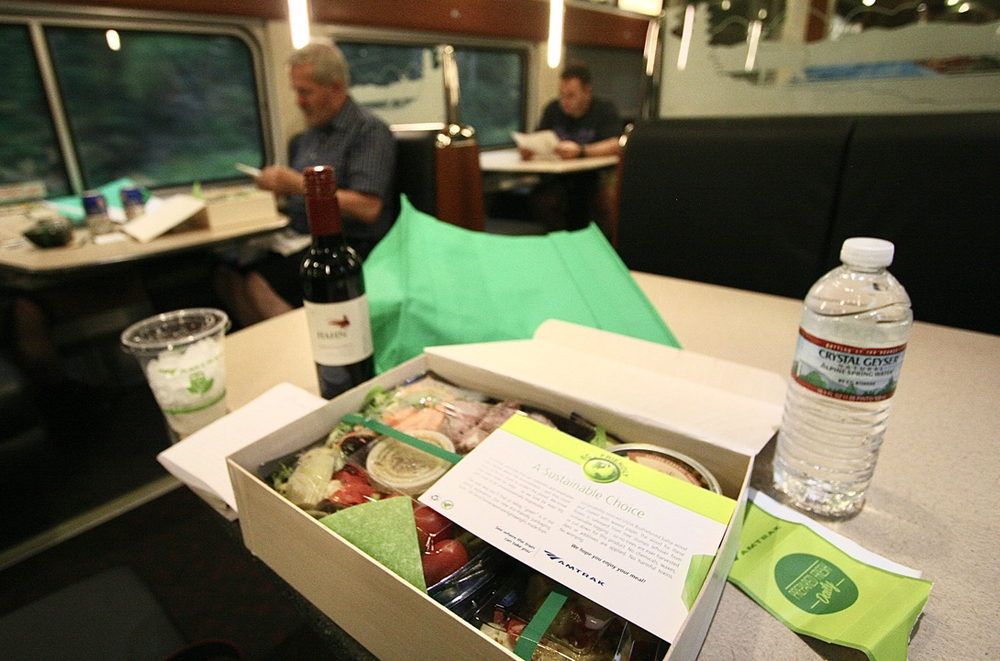
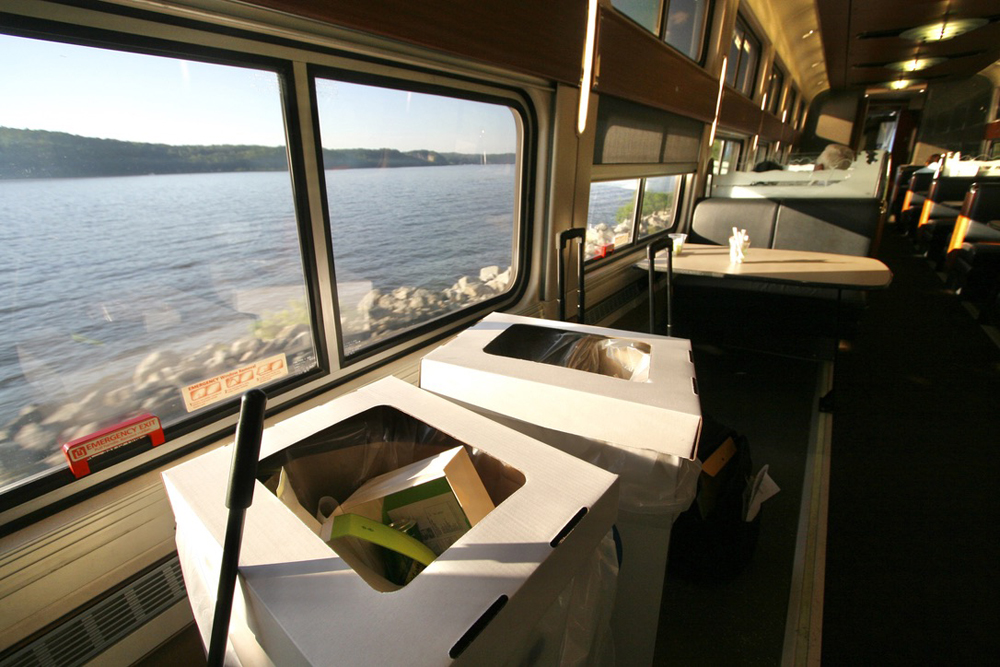
“When you get finished, there are garbage bins where you drop your trash; you get to keep the green bags, though,” the employee explained on the June 17, 2018, westbound Lake Shore. The bags and balsawood packaging are gone now, and meals in a bowl are served by an attendant, but trash boxes continue to enjoy an exalted position.
The next chapter of the Lake Shore Limited dining car saga has yet to be written, but perhaps Amtrak management will come up with a way to let everyone who rides the train enjoy one of its best selling points.