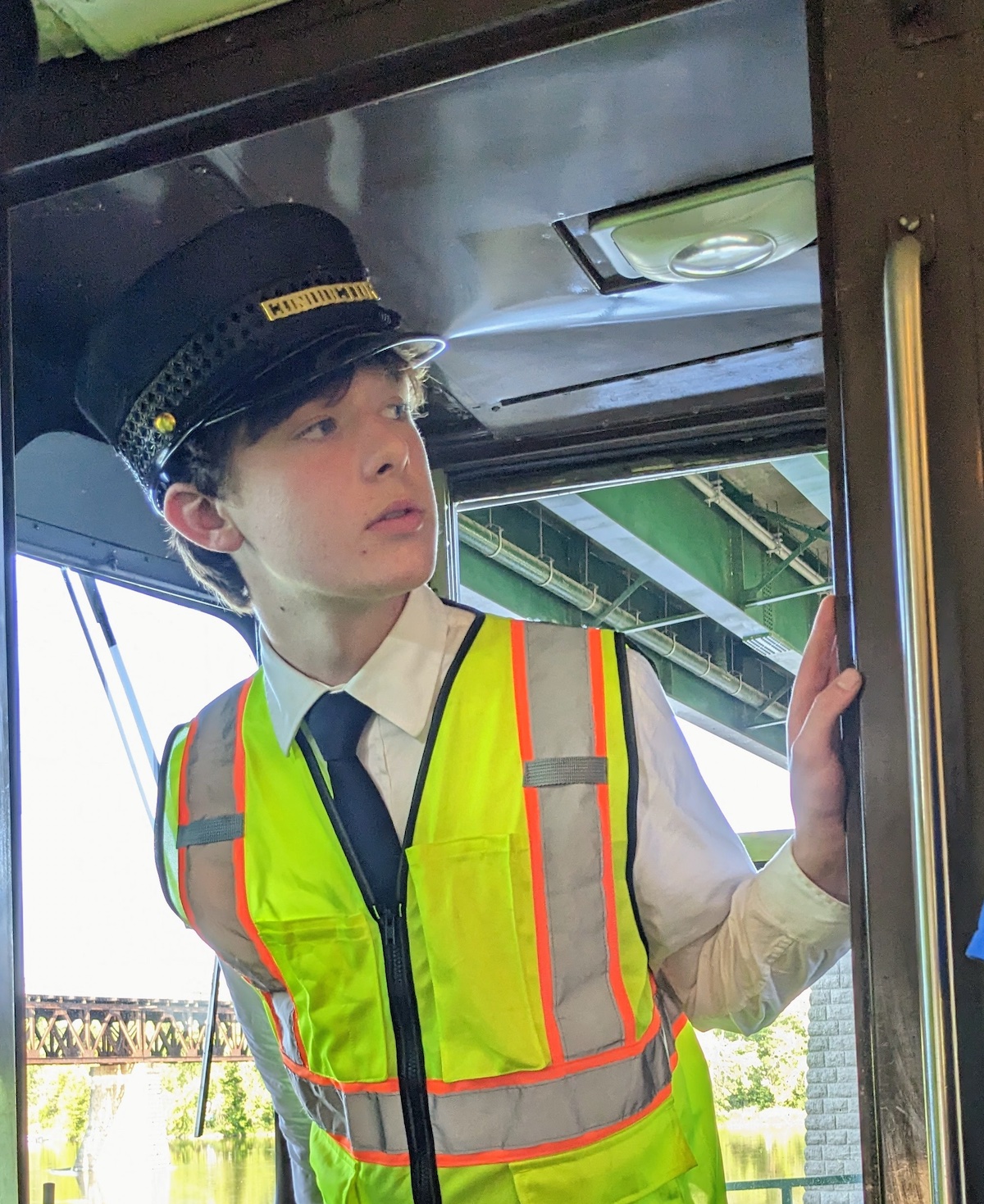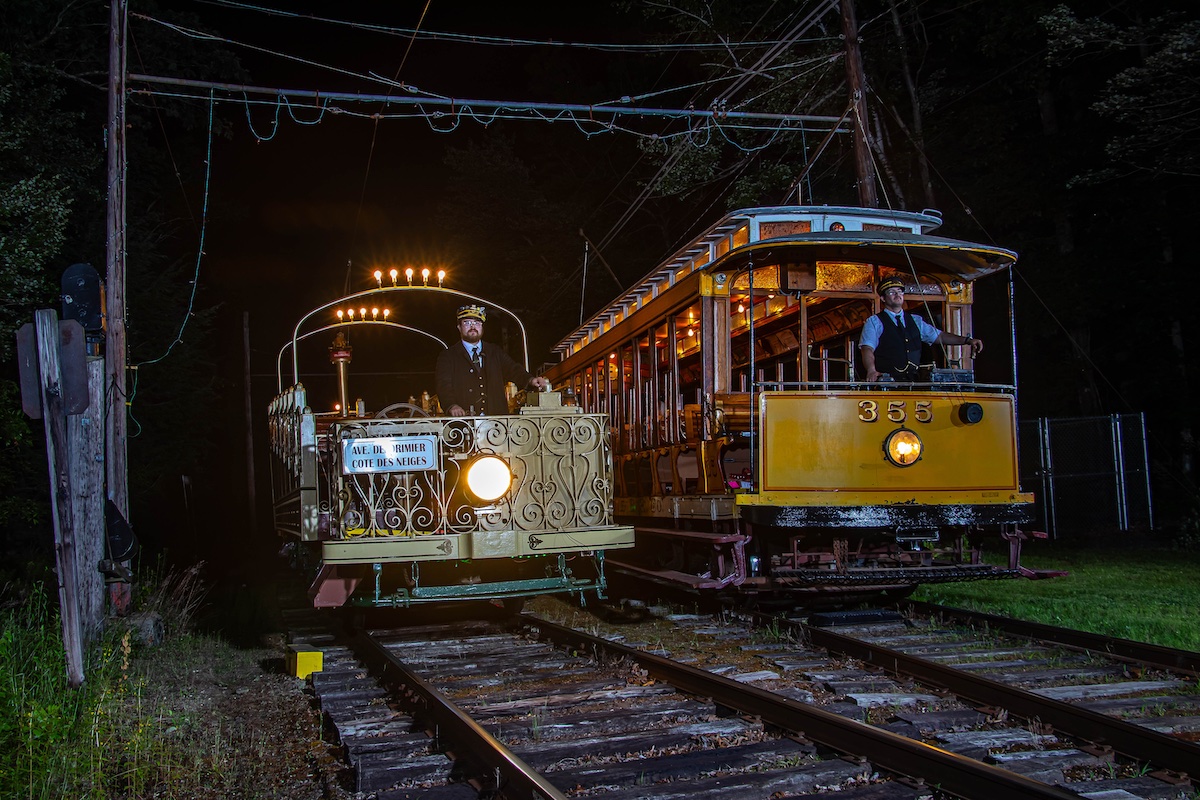
The preservation world is keeping 22-year-old Wil Gambardella busy. He splits his time as a volunteer at East Windsor’s Connecticut Trolley Museum and as paid staff at Essex Steam Train & Riverboat’s Valley Railroad. At the latter, which operates under the Connecticut Electric Railway Association, he serves in critical management roles, including the duties of Vice President. For Gambardella, these leadership roles aren’t just a privilege, they’re a responsibility, especially as he works to bridge the gap to the next generation of rail preservationists.
How did you get involved in rail preservation?
Wil Gambardella: It’s a little bit of a cliché, like a lot of people. Ever since I was a kid, I grew up watching all the TV shows, and even some of the old Pentrex DVDs that my parents had.
I then started going to the trolley museum. They had a program called the guest operator, and at the time, there was no age limit on that. So, my first time running a trolley car was at 8 years old under the watchful eye of their chief motorman at the time, who later became one of my mentors when I joined officially. The day I had the opportunity to join, I jumped on it.
The museum has a program called the Junior Motorman program, and when I started in 2016, you had to be 13 to join. I joined up, was put in an operations class, and was trained as a conductor. After turning 16, I started working in the shop as well as operations.
I was there pretty frequently. And because of that, I was able to work my way up the chain of command, if you will. Slowly, the museum had enough people who wanted to let the young crew start their management journeys. We started getting projects. At the time, my first management position was me in charge of the very program I started in the Junior Motorman program.
Once I became proficient in it, to a degree of proving yourself to the organization that you’re a mature and young adult, I slowly started getting opportunities. The Vice Presidency, specifically, is a voted position. So, I was voted onto the board three years ago, and then two years ago, (I was) voted in as our Vice President.
As a young preservationist, what have you found to be the most challenging aspects in the industry?
Wil Gambardella: This is my experience in a museum mentality, and I’ve seen it at several different tourist railroads as well. The problem is passing the torch. There is that old guard issue. At my organization, we formerly called it gatekeeping, where the old crowd didn’t want to hand over the reins. A lot of that, in my opinion, stems from people being scared of change. Over the years, at the trolley museum, we have progressed very far in getting away from that mentality.
When enough of us young people can come into the organization, ask the right questions, step up and show we aren’t just here to play with the equipment, but to take the lead on some projects, they’ll slowly allow us to climb the ranks. When a lot of young blood climbs the ranks either quickly or slowly over time, it naturally creates friction. Nobody wants to feel like they’re being pushed out or replaced. And that was never the goal or mentality.
However, it will always be, in my opinion, that in order for museums, tourist railroads and anything regarding preservation to survive, we need to get away from the gatekeeping and old-guard mentality, and into a mentality of teaching the next generation. Without the next generation, our organizations’ futures may not be as successful as we hope.
What’s been the most rewarding for you so far?
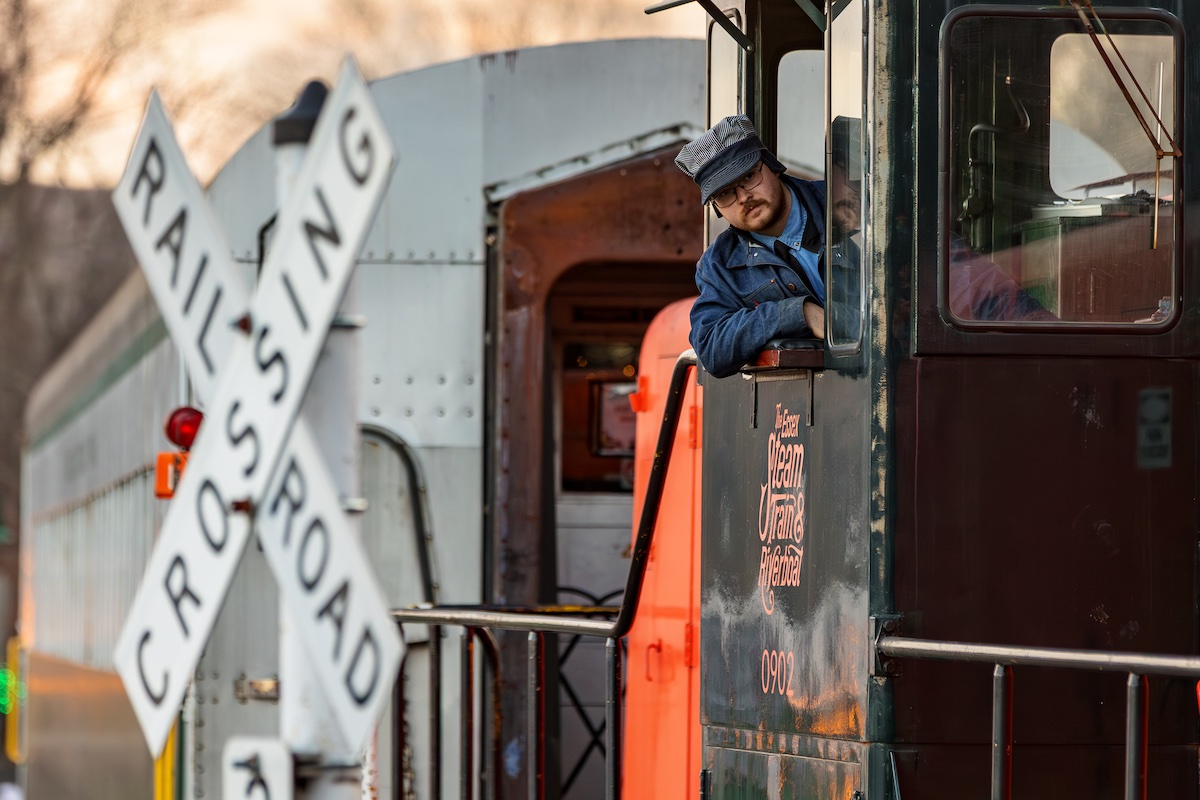
Wil Gambardella: You know, I always looked up to the train crew. When my parents would take me to one of these places, I would be awestruck by the conductors and enginemen. I knew in some capacity, I always wanted to be them and have that knowledge and mentality.
So I’d say the most rewarding experience I’ve had is the knowledge gained along the way. I’ve had a lot of phenomenal mentors at both the Trolley Museum and Essex who have taken me under their wing, along with some of my other young colleagues, and showed us what it really means to be a motorman, a conductor, an engineer, and to work in the shop. The knowledge I’ve gained allows me to give historical talks that, as a young individual, can better relate to everyone’s current reality for who we are in the modern world.
And everybody who’s worked in preservation operations has seen those kids, and how they look at you when you’re wearing denim or have the conductor’s cap. You see that look in their eyes that goes, “I want to be you. I aspire to reach the goal.” They become awestruck too. That’s one of my favorite parts as well is being able to see a young boy or girl say, “I want to be you when I grow up.” Eventually, they may become the next generation of preservationists of railroaders.
Where do you see rail preservation as it is today and what do you hope it’ll become for the future?
Wil Gambardella: I certainly don’t think it’s going anywhere. I see a lot of people saying, “Oh, historic operation preservation is going downhill! Gatekeeping is rampant!” People tend to pick it apart and have a lot of problems with it. I won’t deny that because I’ve experienced it myself. It does exist.
But in my experience, the men and women who restore and maintain the equipment are so incredibly dedicated, whether that be in a museum capacity or a for-profit tourist operation. They’re so dedicated to their craft, and the majority that I have met want to teach those skills.
That’s why I think rail preservation is not going anywhere. In fact, I think the industry is going to grow, and it’s just on us as a new generation to lay the foundation of the next generation after us so that the equipment built in 1910 can survive into 2110.
What advice would you give for any young person looking to get involved in the industry?
Wil Gambardella: My advice ends up being a little bit twofold.
One is to get involved. Never be afraid to throw your hat into the ring. Send that email to whoever runs the place and say, “I want to get involved.” It’s just about the willingness to take that first step. It’s also a willingness to want to do the job and a responsibility to do that job to the best of your ability.
The other side of that is being a sponge. There are a ton of great opportunities out there in these museums and railroads to learn there. Essex still has a lot of the “old guard” if you will, who are still more than happy to teach young enginemen and conductors on how it’s supposed to be done, and how to represent your craft and hone in on that trade. So, being able to listen to that constructive criticism and what people are going to talk to you about is critical.
The last thing I’ll say is it’s just the willingness to read and consume knowledge. My restoration journey started with the 1898 copy of “A Motorman and His Duties.” It’s where I was first introduced to motor theory and how motormen were supposed to operate the equipment in the early 1900s. Admittedly, it’s intimidating at that first glance. You have all these people who seem to know what they’re doing. You want to be a part of that, and you can be.