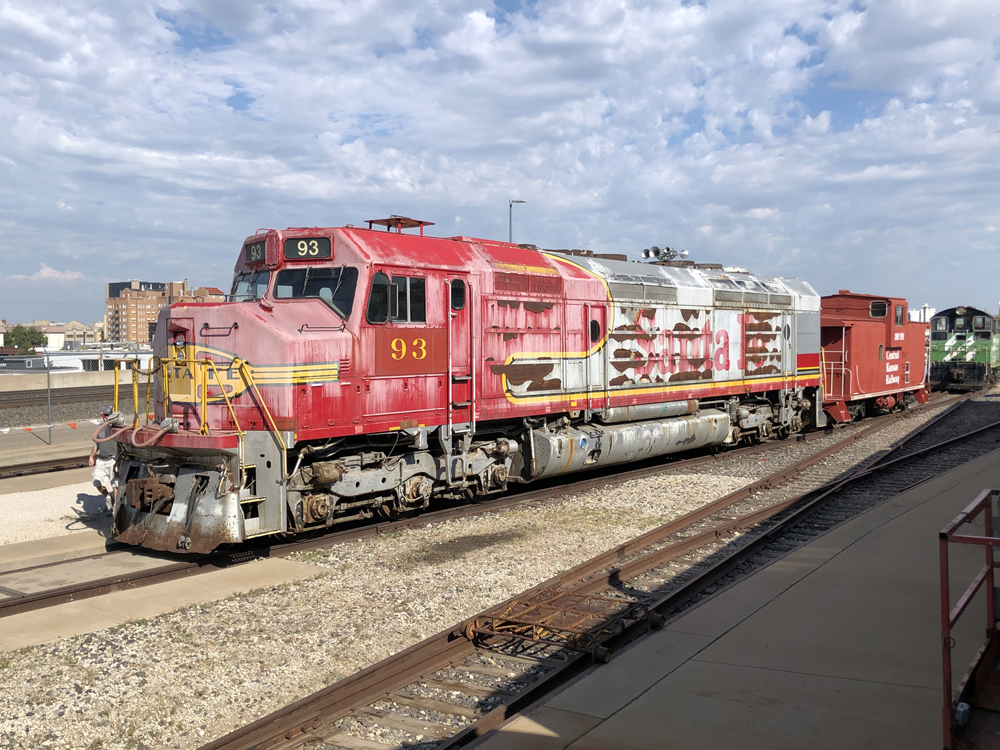
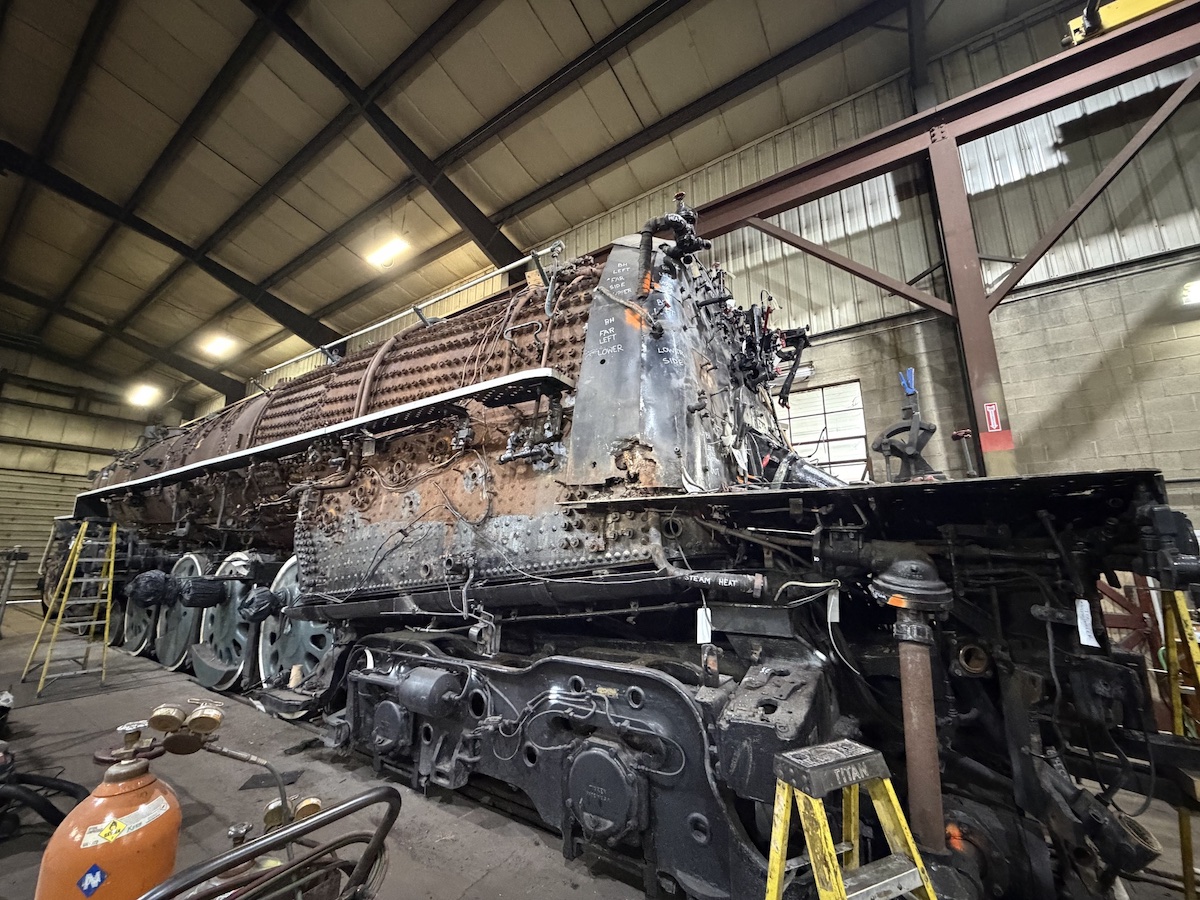
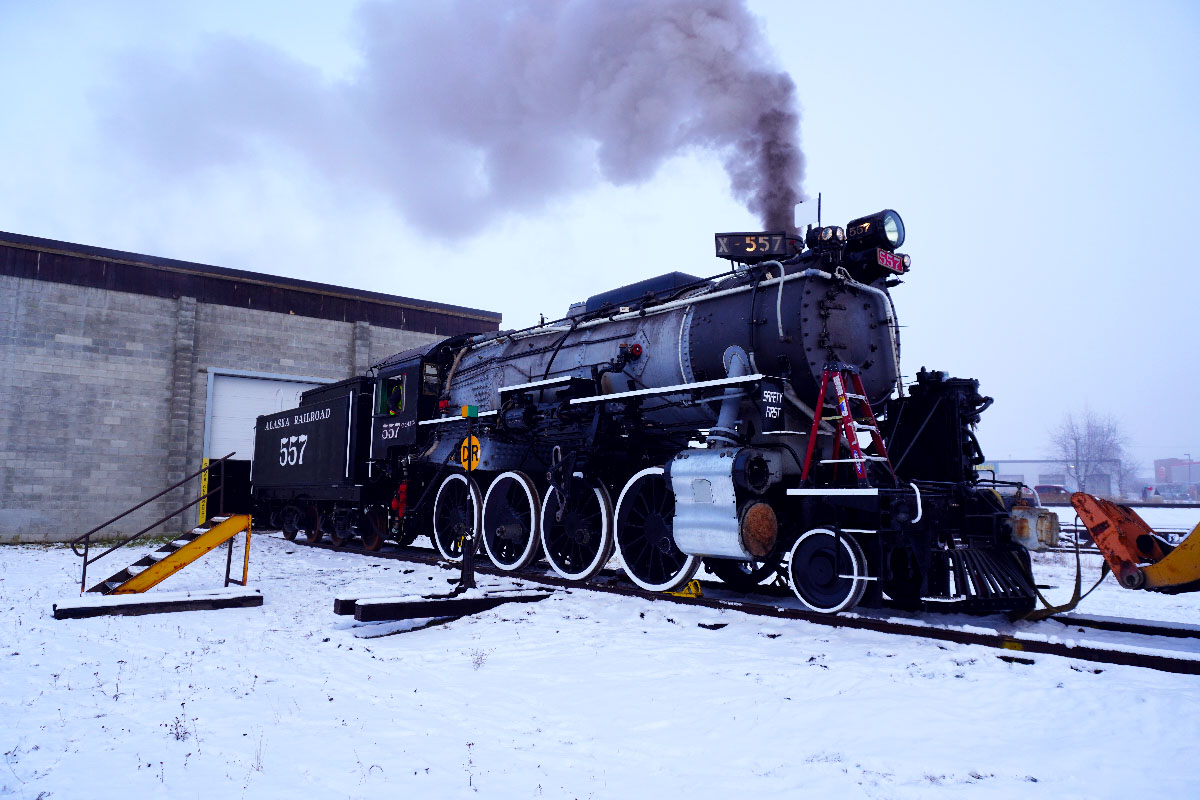
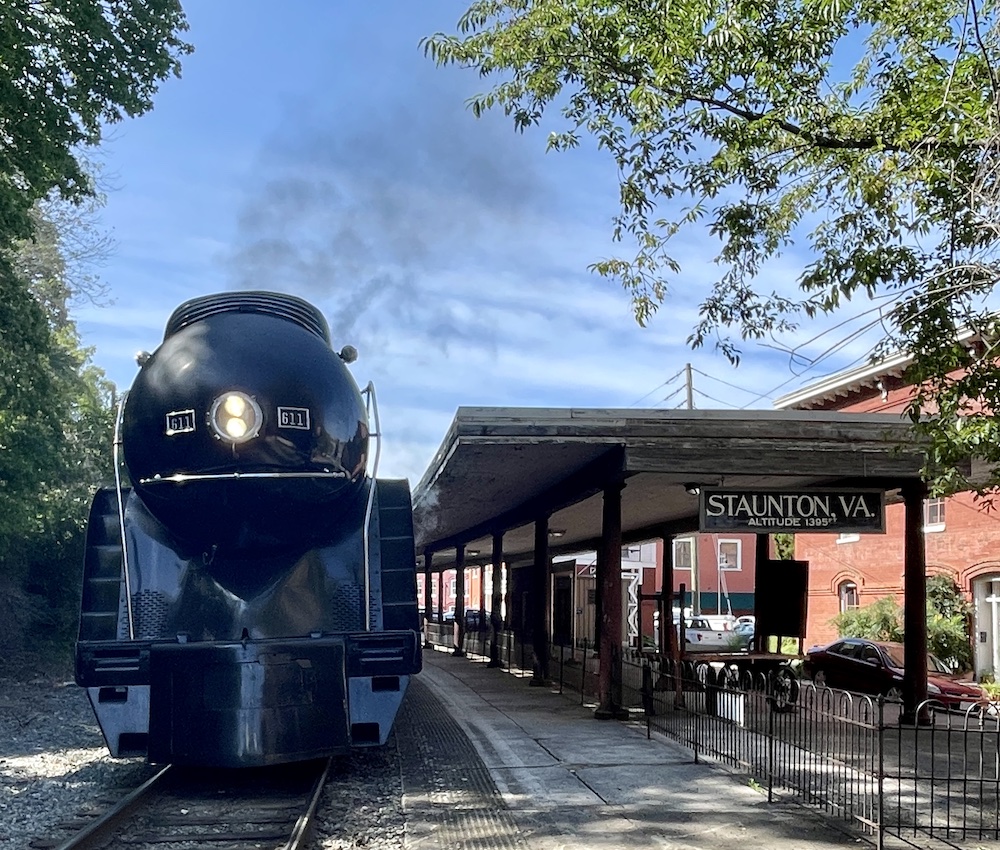
At the National Museum of Transportation in St. Louis, Aiden Drohr wears multiple hats. He serves as an exhibit tour guide and an operator of the 2-foot gauge railroad. The 42-acre facility also hosts the 21-year-old’s internship as he pursues his academics in history and museum studies.
How did you get involved in rail preservation?
Aiden Drohr: I’ve been visiting the Museum of Transportation since I was 3 years old, and made it a point to go out there two to four times a year, roughly.
When I was a junior in high school, I needed service hours, and one of the ways to obtain them was to do a job shadow. I reached out to the museum at that time, asked if I could shadow some of the people who work there, and they reached back out and said, “Absolutely.” So that day, I shadowed the executive director, the curator of collections, and the people who worked in the archives. That was an amazing experience altogether.
Fast forward to about a year or so later, I reached out to them again, asking if they had any open positions for a tour guide. I just so happened to be in the right place at the right time. And so I’ve been working at the museum since the summer of 2022.
As a young preservationist, what have you found to be the most challenging aspects in the industry?
Aiden Drohr: I say on a personal level, at least, and this is just my experience with the museum, I haven’t found anything to be super challenging. Everybody here is incredibly friendly and open. They always wanted to share information with you and how something is supposed to work. So, on a personal level, I’ve not experienced anything too challenging.
But on a grandiose scale, and this is also with the Museum of Transportation, funding is always a challenge. This is a thing across the board with rail museums and rail preservation in general is getting funding for projects, and also finding the people to do those projects. I know we have a few projects that have slowed down by a lack of people who can work on that kind of stuff. But it’s definitely the funding aspect of getting money and grants. I haven’t really dug into the weeds of this quite yet, but I’ve definitely touched on the learning aspects of how to obtain grants, how to go after donations, and how to get funding.
What’s been the most rewarding for you so far?
Aiden Drohr: I’d say probably one of the most rewarding things is just seeing people’s reactions to the collection, especially their positive reactions. At the museum, we have a series of special talks called Feature Fridays. They usually take place in early summer, about May, and all the tour guides are allowed to pick a certain artifact to do in-depth research and give a presentation. I’ve done a number of these talks, in addition to giving people a tour around the locomotives while highlighting the different mechanical aspects and history. Just seeing the way people react to stuff like that, I’d say is the most rewarding thing for me.
Where do you see rail preservation as it is today and what do you hope it’ll become for the future?
Aiden Drohr: I’d say today, rail preservation is in a pretty good spot. I try to keep up to date on all other kinds of rail museums and see what projects they’re doing, and almost every time I look at something, it’s like either someone’s announcing a new project or they’re giving an update on an ongoing project. From what I can see, things look pretty good.
As for the future, I hope that we can keep this momentum going, and maybe someday see Class Is get more friendly towards excursions again. But I think as long as we can keep this momentum right now going, I think rail preservation will be in a pretty good spot in the future.
What advice would you give for any young person looking to get involved in the industry?
Aiden Drohr: I’d say go to your local railroad museum and railroad club. Get involved in some way, shape, or form. Be like, “I’m here. Put me to work.” Then if anyone would want to pursue it for a career, I say get a plan and try to stick to it as best as possible.
But don’t go too fast. Weigh your options, because for me, originally my plan was to go to community college for two years, and then get a job with a Class I railroad. But after I started working at the museum, I really didn’t want to leave. So definitely don’t go too fast, and weigh out your options if it’s a good fit.