





KERSEY, Colo. — Two ordinary boxcars dating to around 1905 are being restored to tell a World War II-era story. The Rocky Mountain Railroad Heritage Society and the Kersey Historical Museum are collaborating on the project and interpreting the story of a Japanese American family who fashioned the cars into a home.
“Kersey is a typical farm town where everyone knows everyone and looks out for their neighbors,” says Ralph Gilcreest, director of north projects for the Railroad Heritage Society. It is located along what was a Union Pacific branch line about 11 miles east of Greeley, Colo. The branch line, now truncated to an industrial lead, at one time extended far into the Eastern Colorado prairie.
Old boxcars, new use

In the early 1900s, railroads would often sell outdated boxcars to local farmers for use as sheds or other out-buildings. This is how Victor Klein, a Kersey farmer, came to have two 40-foot wooden Union Pacific boxcars next to his barn. These particular cars were used in grain service, explains Gilcreest, noting that capacity markings for various grains can still be found on the interior walls.
Mounting fears
The story now shifts to Los Angeles before Dec. 7, 1941, the day the Empire of Japan launched a surprise attack on the U.S. Pacific Fleet at Pearl Harbor on Oahu, Hawaii. Before the raid, the Koga family were respected, hard-working members of the Los Angeles community. Kenchi and Tokiye Koga, father and mother, could not become U.S. citizens by law as they were considered issei — first generation Japanese in the U.S. The children — Lily, Kei, Roy, Pearl, and Kenneth — were citizens called nisei — second-generation Japanese born in the U.S.
With fear and suspicion growing around those of Japanese ancestry, especially on the West Coast, President Franklin D. Roosevelt issued Executive Order 9066 on Feb. 19, 1942. The order permitted the U.S. armed forces to exclude civilians from military areas for security reasons. The order’s language did not target any specific racial group. On the West Coast, the authority was used to detain more than 120,000 Japanese Americans, including the Koga family.
Citizens held
Detention for the Kogas began in 1942 with evacuation to the Santa Anita Race Track. They were transferred to a clearing location called the Fresno Assembly Center. From there, the family was moved to the internment camp in Jerome, Ark.
By 1944, nearing the war’s end, the U.S. government concluded the Japanese Americans were not a threat to national security. More than 33,000 had served in the military during the war. The internment camps were closed and the Koga family began making its way west with the intent of returning to California. They learned, however, that prejudice against Japanese Americans was still high in California, and decided to seek a new home. With relatives in Greeley, the Kogas headed to Colorado.
A humble new beginning
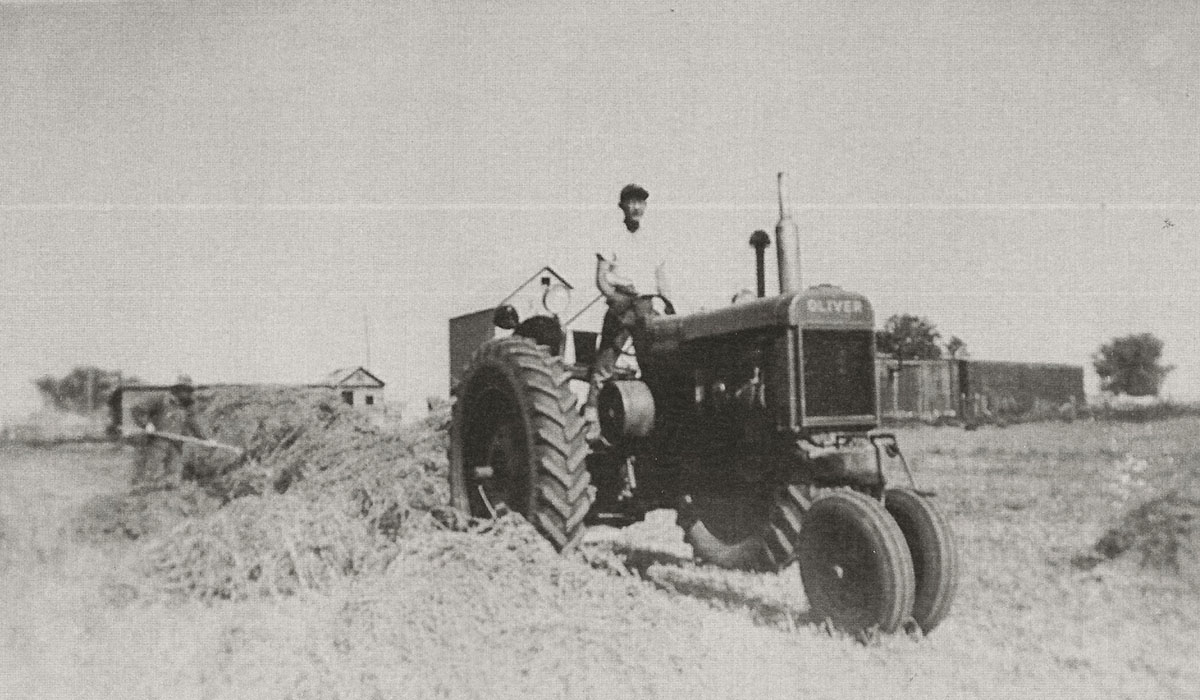
Along the way they stopped in Kersey and happened to encounter Victor Klein, who offered the family work on his farm. He did not have a house for the family, but offered two wooden boxcars next to his barn as shelter.
The boxcars weren’t much — cold in the winter with the wind finding every opening in the car siding, hot when the summer sun beat down on them. The Kogas made do, fashioning a kitchen at one end of a car and sleeping area at the other end.
“They added a wood-burning stove and using found materials built beds, a table, and chairs,” Gilcreest says. “Theirs was a very spartan life.”
There was no water piped to the boxcars and toilet facilities were a separate outhouse. The hole is still in the wall where the stovepipe exited.
After a few months of hard, but steady farm work, the Kogas could afford rent and moved to an apartment in Greeley.
Old boxcars, the next chapter
Today, a new chapter is beginning for the boxcars-turned-temporary-home. Plans call for the boxcars to be moved next to the Kersey Historical Museum. The cars will have siding repaired and be painted as they were in the early 1900s. One car will be fitted the way it was when the Koga family lived there. The other car will hold an interpretive exhibit detailing the family’s story.
The Railroad Heritage Society, Gilcreest says, is assisting the Kersey Historical Museum with project fundraising and will supply the materials and labor to rehabilitate the cars and coordinate moving of the cars. The museum is working with the town of Kersey to prepare the exhibit site. They are also conducting research on the boxcars and the Koga family, including obtaining stories and photos. None of the seven Koga family members who lived in the boxcars survive today, Gilcreest notes, but the museum has made contact with several members of the next generation.
Go for broke
Research into the Koga family is also being helped by the Go For Broke National Education Center of Los Angeles. The center takes its name from the rallying cry of Japanese American soldiers during World War II — go for broke — meaning they would give all in support of the United States. For the boxcar exhibit, the center is supplying photos and additional information about Japanese Americans during World War II.

The project budget is set at $15,000, Gilcreest says. It is estimated the first boxcar will require around $7,000 to complete. The goal is to have the home boxcar refurbished, moved, and the exhibit open by Aug. 1, 2026, in time for the annual Kersey Day celebration. Inflation, Gilcreest notes, has been creating challenges: “ … price increases for materials have been disconcerting.”
Ayako “Lily” (Koga) Furukawa, the family’s oldest daughter, has written a short book about the boxcar experience. Nearly a teenager when the family moved into the boxcars, Lily was a part-time resident. She found work as a housekeeper and cook for a family in Greeley. She resided with that family, attending school in Greeley and coming home during school breaks.
“We had splinters in the floor, water outside, and an outhouse,” Lily told a Greeley Tribune reporter during a 2010 visit to the boxcars. “You think I would live there?”
Her book is self-published through independent bookstore Lulu.
You can help
For more information on the Kersey Historical Museum or to make a contribution to the boxcar project, visit its website. Additional information on the Rocky Mountain Railroad Heritage Society can be found on its Facebook page.
Through the boxcar project, both the Museum and Heritage Society hope to educate about and keep alive the memory of this small, yet important, event that occurred within a larger global conflict. History that is forgotten is likely to be repeated.
— To report news or errors, contact trainsnewswire@firecrown.com.
Share this article

Game eBay listings