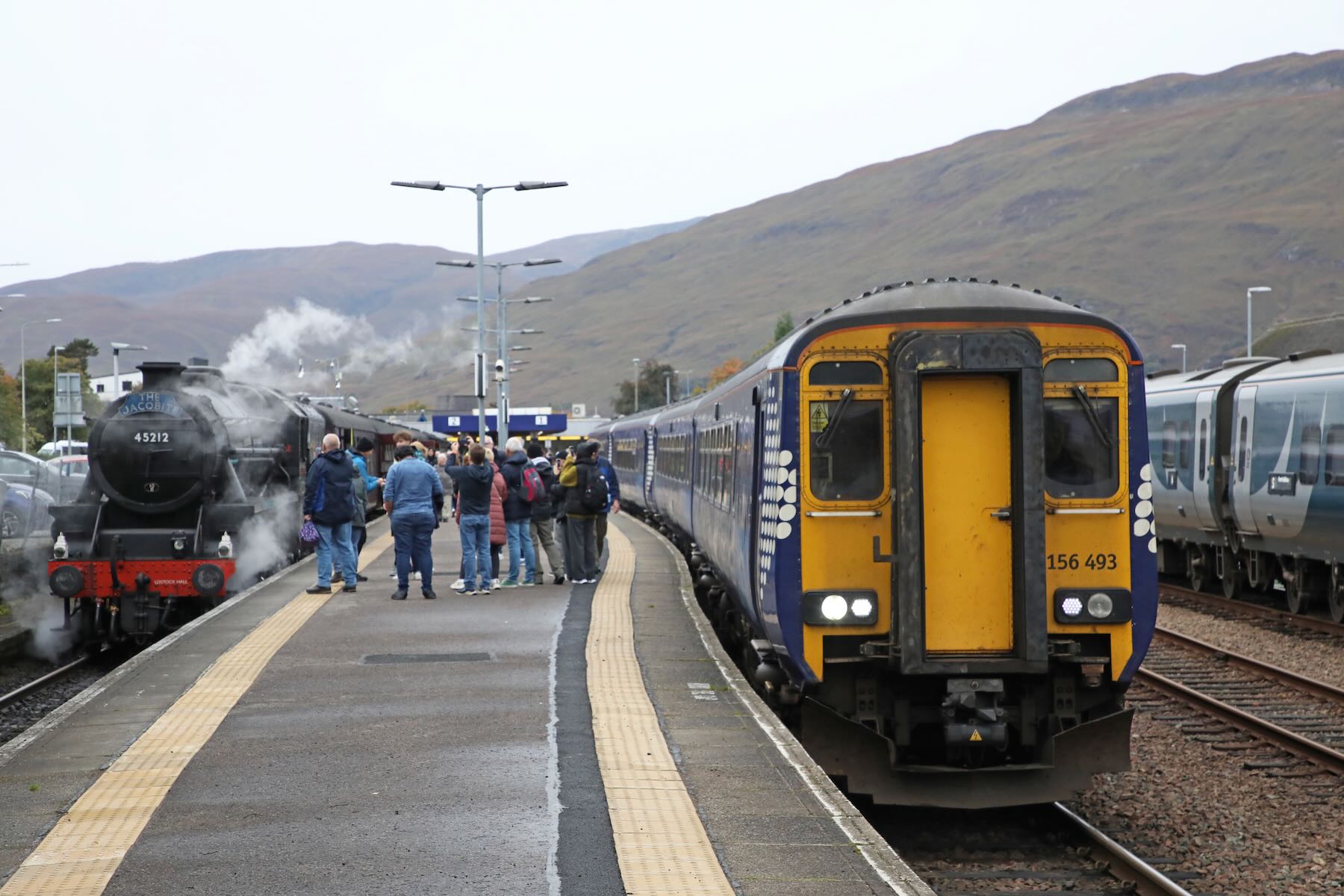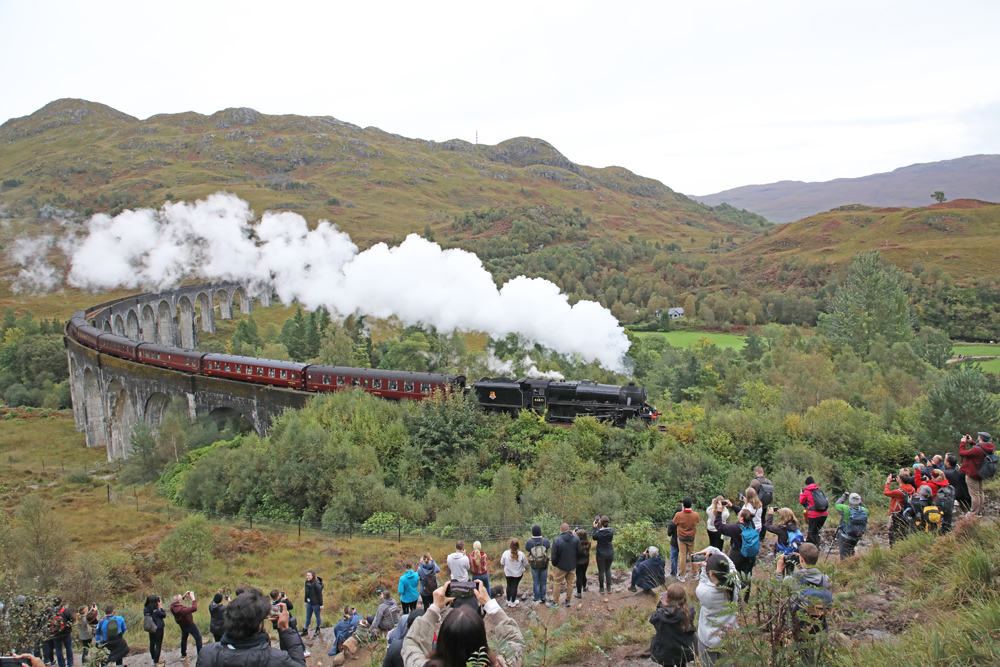
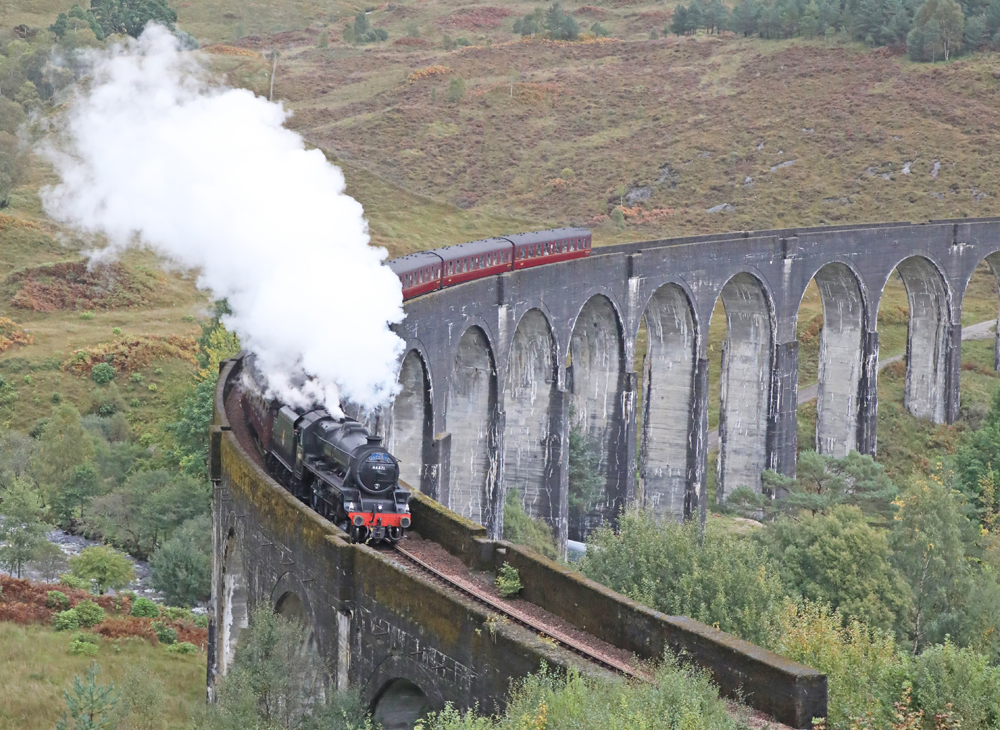
EDINBURGH, Scotland — The future operation of the internationally famous “Harry Potter” steam in the Scottish Highlands is once again threatened.
More correctly known as The Jacobite, the train, started by British Rail in the 1980s, has been run since rail privatization in the 1990s by West Coast Railways, based in northern England. The train runs twice a day on the 41-mile Fort William-to-Mallaig line that is part of the British mainline network, normally from April to October.
A long-running safety regulation dispute between British rail regulators and WCR worsened in 2024 when 1950s-60s British Rail Mark 1 passenger cars were banned on the main line network unless equipped with centralized door locking for cars not fitted with sliding doors. WCR previously had a time-limited exemption from the rules, but this was revoked in 2024.
WCR has not started selling tickets for the 2026 season, although publicly available British rail industry systems show the trains are due to start operation April 1. As of the end of February, a message on the WCR website reads, “Bookings for the Jacobite 2026 will open in the coming weeks. Please check back for more details.” The train often sells out months ahead, and many international visitors plan their visits to the west coast of Scotland around the train ride.
WCR has told local media that it will not run the train unless it receives a renewed exemption to the safety rules to allow it to use the Mark 1 cars without centralized door locking. For 2024 and 2025 trains, WCR mostly used modern (1970s) air-conditioned cars that did have the safety modification, albeit without functioning air conditioning ,as steam locomotives do not provide head end power. It appears it will not do that this year – and for some passengers expecting the older style train as featured in the Harry Potter movies, use of the more modern cars may have been disappointing.
Loss in court
As we reported previously, Britain’s rail safety organization, the Office of Rail and Road (ORR), has imposed more stringent rules on all charter train operators who use old BR equipment [see “Scotland’s famed Harry Poter steam train faces regulatory threat,” Trains.com, Dec. 4, 2023].
However, WCR had refused to undertake the modification work and instead embarked on legal action to overturn the regulators’ decisions. WCR appealed to the High Court in England in 2023, but its appeal was dismissed, with the judge describing the requirement imposed by the regulator for centralized door locking as “common sense.” [See “Operator of Scotland’s Harry Potter train loses …,” Dec. 24, 2023.] The failure of WCR to enforce other safety rules previously was also mentioned as the company’s ]case was dismissed.
In a formal notice issued by the regulator in 2024.the exemption given to WCR was removed, and as a result the company could not use its passenger cars on the British mainline network until they are modified. The judge that threw out WCR’s appeal in 2023 had made it clear in court that it was WCR’s choice not to comply with the rules and that, if it did, it could operate as before. The company briefly suspended the operation at the start of the 2024 season before resuming with newer equipment that April [see “Scotland’s Harry Potter train to restart operations,” April 12, 2024]
WCR has previously said it cannot afford to fit centralized locking systems as it will cost £7million ($8 million), which it says represents all the profit made from running the Jacobite previously. In recent media interviews the company has suggested it took a loss on the 2025 operation, despite many sold-out trains which carry around 70,000 passengers annually. Industry sources have previously suggested the Jacobite train is one of the most profitable passenger operations in the country, although WCR has been hiring the steam locomotives from a private owner. And it has been suggested that WCR may want to use the Mark 2 cars for more lucrative day excursion trains, mainly in England.
WCR has told media in Scotland that it will not run the Jacobite service unless it gets a renewed exemption from the safety rules, which given its previous legal defeat seems highly unlikely. WCR has suggested it is committed to make the changes at some point in the future, to which the ORR has publicly said when this happens, the cars can be used again.
Wider impact
WCR says the train adds around £21 million ($28 million) to the regional economy in terms of visitor spend and that this is at risk. It is estimated that around 600,000 people visit the region every year to see the steam train passing over the famous Glenfinnan Viaduct tfeatured in the Harry Potter movies. and some of these visitors might go elsewhere if the train no longer runs. However, WCR is not the only operator of mainline steam trains in the UK, so another company could take over the service.
Most of WCR’s competitors in the UK charter train market have already modified their cars to meet the safety rules or agreed to a plan to do so. It is likely — but not certain — that if WCR decide not to run the trains for which it has been allocated 2026 timetable slots, another operator may enter the market and run its own version of the service. There are other operators with the older Mark 1 cars fitted with the centralized door locking system who also have access to a variety of steam locomotives,, although whether they could organize operating a service in time for the 2026 summer season is unclear.
Travel on the very scenic Fort William-to-Mallaig line and over the famous Glenfinnan Viaduct is still possible without the steam service, as Scottish national passenger company ScotRail runs four trains a day with fares around £10/$13 one way. The only drawback: these trains are rather nondescript 1980s diesel multiple units, not a steam train.
— To report news or errors, contact trainsnewswire@firecrown.com.