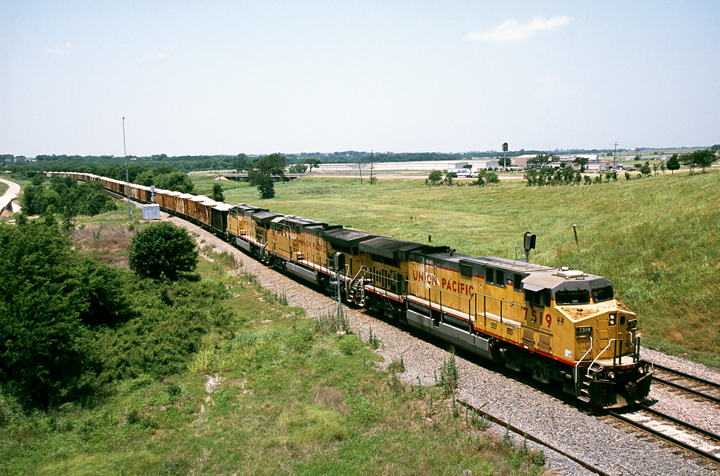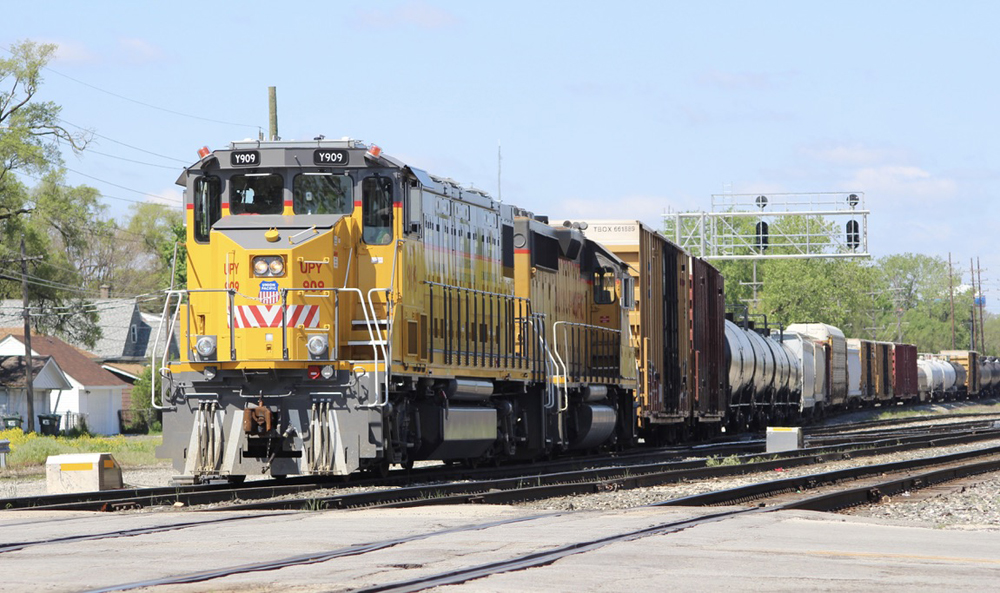
SALT LAKE CITY — Utah’s legislature is moving to pass a law that would require Union Pacific to use yard locomotives powered “wholly by a hydrogen fuel cell or electric power” in Salt Lake City no later than Jan. 1, 2028 — despite the railroad’s contention that the bill mandates an action not yet technologically possible.
The Deseret News reports the bill, HB405, passed out of committee on Tuesday and was passed by the full House with no dissenting votes just hours later. It now goes to the state Senate.
The newspaper says the bill specifically targets UP’s Roper Yard in Salt Lake City by setting its requirement for yards with four or more switch engines. A University of Utah scientist told lawmakers that the yard and its diesel locomotives are one of the most concentrated sources of pollution in Salt Lake County.
Nathan Anderson, UP’s senior director of public affairs, testified that UP supports the bill’s air-quality goals, and notes the railroad has agreed to test 20 battery-electric switchers in California and Nebraska [see “Union Pacific orders 20 battery-electric locomotives …,” Trains News Wire, Jan. 28, 2022]. But he said the railroad does not expect the battery technology to be “sufficient or available at scale for operations” until after 2030.
The bill’s sponsor, House Majority Leader Mike Schultz (R-Hooper, Utah) indicated concern that Utah wasn’t a site for the test of the zero-emission locomotives. “Utah isn’t on their list even though we have the worst air quality in the nation, and the world, at times,” Schultz said. Other legislators supporting the bill indicated other issues with the railroad, such as its opposition to a bill over widening of roads around railroad crossings and legislation on worker-safety issues.
Share this article