Urban rail
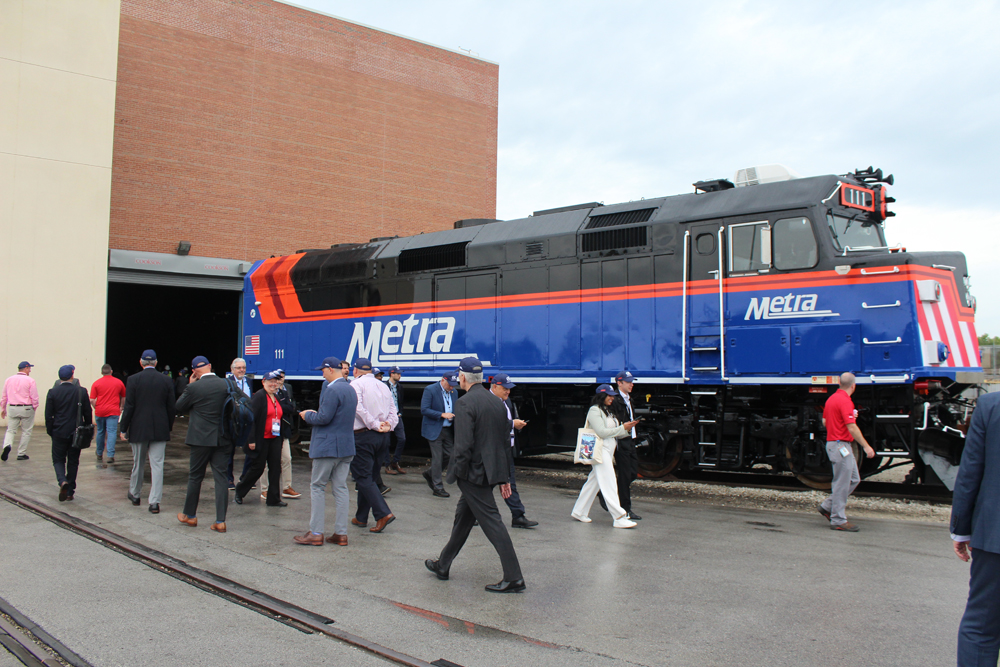
CHICAGO — Representatives from a wide range of U.S. rail operations gathered in the Windy City this week to compare ways in which systems are attempting to capture customers who may have shunned their trains prior to the Covid-19 pandemic.
Highlights of the three-day confab included a tour of South Shore Line projects hosted by Northern Indiana Commuter Transportation District General Manager Mike Noland and an extensive “behind the scenes” visit to Metra’s 47th Street car shop and 49th Street locomotive rebuild facility arranged by Metra CEO Jim Derwinski.
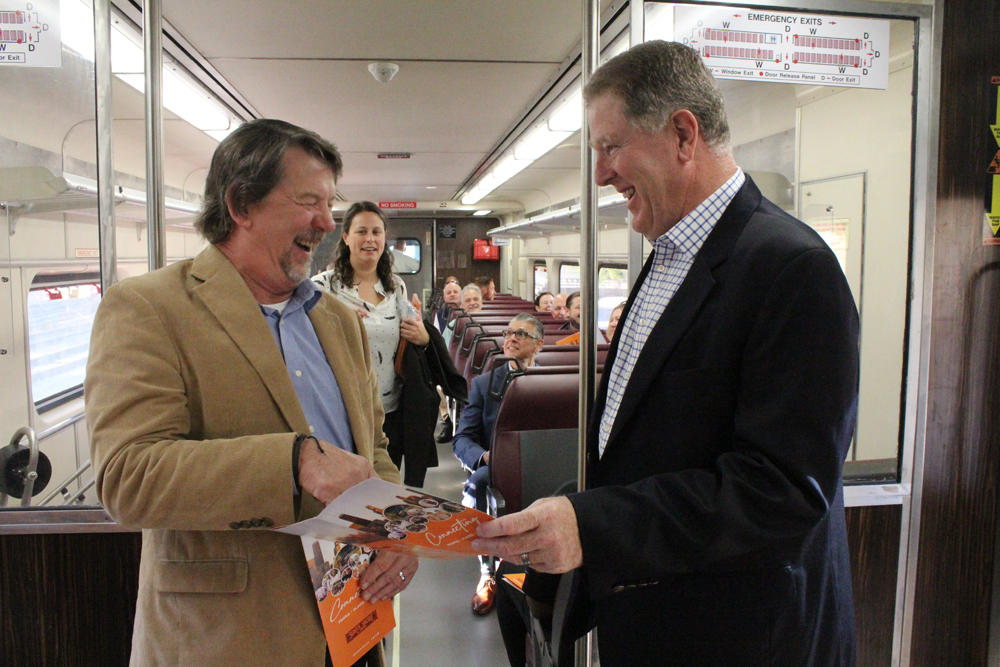
But the meeting’s main focus was to cross-pollinate ideas on how to grow ridership.
“We’ve reached a new baseline. Let’s understand who our new riders are going to be,” urged Caltrain Executive Director Michelle Bouchard. She led a panel of presenters on a session appropriately titled, “Becoming the transportation provider of choice in a changing landscape.” The stakes couldn’t be higher for the San Francisco-Silicon Valley system. It has been undergoing a massive conversion since 2017 to electric propulsion based on five-day per week ridership.
The consensus of Bouchard and panelists from Philadelpha’s SEPTA, San Diego’s North County Transit District, Washington D.C.’s Virginia Railway Express, and Los Angeles’ Metrolink is to embark on a customer acquisition strategy that involves consumer outreach and offering frequent off-peak service.
“The easy money — monthly pass riders — went away,” explained Metrolink CEO Darren Kettle, “but now we’re seeing that suburb-to-suburb trips comprise 51% of our ridership. The commuter peak still exists, though cross-line travel has increased.” Metrolink recently restored the number of trains it operated pre-pandemic to the far-flung Antelope Valley Line to Lancaster, Calif. “But we’re changing where we are putting those trains, including late-night,” Kettle added. His agency continues to plan for the 2028 Los Angeles Olympics, which the city wants to be car-less. “We will have to figure out how to handle the equivalent of 9 Super Bowls for 16 days,” he says.
Both NCTD’s Katie Persons and SEPTA’s Jody Holton stressed the need to develop what Persons characterizes as “trip planning inspiration,” a reason to travel, and experimentation with different fare plans coupled with promotion to entice new riders.
With Covid-19 supplemental grants ending within the next few years, Bouchard pointed out frequencies spread more evenly throughout the day are much more efficient to operate because crews are kept busy. “The ‘fiscal cliff’ and providing more frequent service aren’t at odds,” she said.
There were also discussions of solving the “first-mile/last-mile” seamless travel challenge and negative perceptions of safety and cleanliness that may keep customers in their cars.
As NICTD’s Mike Noland said, “We need to give people better options through increased frequency rather than having them drive and pay for parking.”
Share this article