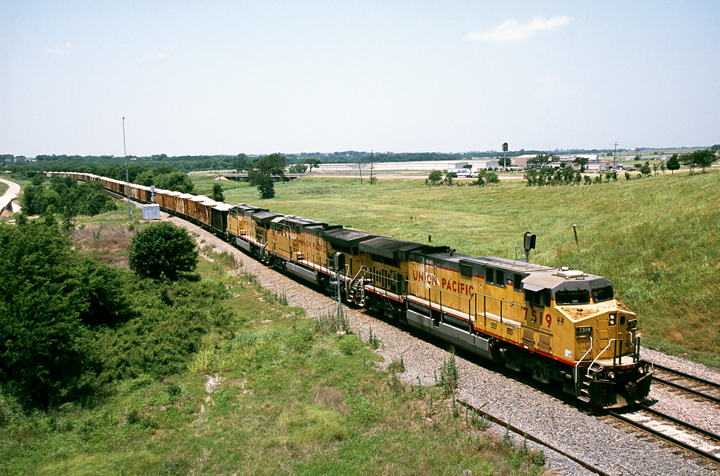
DUBAI, United Arab Emirates — The United States and Canada will work together to develop a common vision for reducing greenhouse gas emissions from locomotives, officials announced today at the United Nations COP28 conference.
The nations will create a Rail Decarbonization Task Force, U.S. Energy Secretary Jennifer M. Granholm, U.S. Transportation Secretary Pete Buttigieg, and Canada Minister of Transport Pablo Rodriguez said in a joint statement.
“Together, we intend to: establish a joint research agenda to test the safe integration of emerging technologies, including hydrogen-powered and battery-electric locomotives; coordinate strategies to accelerate the rail sector’s safe transition from diesel-powered locomotives to zero-emission technologies to ensure a net-zero rail sector by no later than 2050; and collaborate on the development of a U.S.-Canada rail sector net-zero climate model by 2025,” they said.
The announcement did not include specifics on how much the countries will spend on research and development or whether they will involve railroads and locomotive manufacturers. Also not mentioned: The potential for electrification of freight or passenger main lines.
“The United States and Canada recognize we need to work together to fight climate change and decarbonize our integrated rail networks,” the secretaries and minister said. “This joint announcement demonstrates our shared dedication to working together to build a more sustainable and equitable future for all. We intend to engage national partners, international organizations and other countries to promote safe and sustainable rail transportation. The decarbonization of the rail sector is a crucial component of our global efforts to reduce emissions and meet the goals of the Paris Agreement.”
Wabtec and ProgressRail are working on battery-electric and hydrogen-powered locomotives, while Canadian Pacific Kansas City and CSX have a partnership to produce low horsepower hydrogen fuel cell battery-electric locomotives.
U.S. freight railroads produce 1.7% of the transportation sector’s greenhouse gas emissions, according to the Environmental Protection Agency.
Share this article