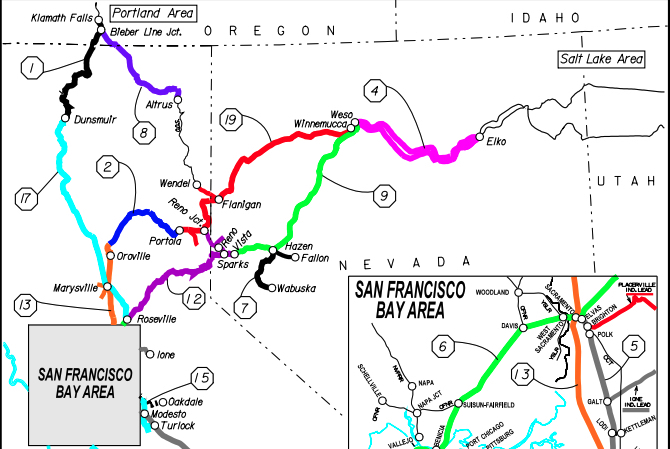
WASHINGTON – Union Pacific has asked the Federal Railroad Administration for permission to temporarily deactivate the centralized traffic control on a 13.4-mile section of its Winnemucca Subdivision in Nevada, saying that windblown sand and soil has made the signal system unreliable.
UP says it can’t make repairs until spring because the track structure is frozen due to a wave of heavy rainstorms that were followed by freezing temperatures and snow. The former Western Pacific main line carries an average of six trains per day — five of which typically require recrews due to signal problems related to the contaminated track structure.
And that’s been causing delays to train sets that deliver Midwestern corn to Foster Farms, the California poultry producer that twice last year sought Surface Transportation Board emergency service orders directing UP to prioritize its grain trains.
UP told the FRA last week that the signal problems are jeopardizing its ability to expeditiously serve Foster Farms, as required under a December order from the STB. UP wants to operate the troubled section of the Winnemucca Subdivision under track warrant control for up to six months once the CTC and block signals are deactivated.
Unions representing signal and maintenance of way workers say that UP itself — not bad weather — is to blame for the track and signal problems.
“UP acts as if the service problems are something that happened to it. In actuality, these problems are a direct result of deliberate decisions by UP to cut staffing and inspection, maintenance and repair of its infrastructure in order to reduce its Operating Ratio,” Randy Quinn Norman, vice president of the Brotherhood of Railroad Signalmen, told the STB last week.
The unions claim that a combination of underinvestment in track maintenance and a reduction in the signal and maintenance-of-way workforces are responsible for the conditions on UP lines linking Ogden, Utah, with central California.
Overall since 2017, UP has reduced its signal maintainer workforce by 31% and its maintenance of way ranks by 16%, according to the unions. But on the Winnemucca Subdivision there’s been a 30% reduction of maintenance-of-way forces, the unions say.
The unions also say UP has not properly undercut the ballast in years and has failed to maintain sand fences designed to keep sand from fouling the tracks.
UP told the FRA that it has taken numerous preventative measures, including undercutting, performing surface work in August, and removing sand and dirt with a jet blower.
The railroad took issue with the claims made by the unions.
“We do not agree with the BRS’ assessment and welcome the opportunity to share our inspection and maintenance practices with the STB. Union Pacific is committed to safe and efficient operations over the Winnemucca Subdivision,” railroad spokeswoman Kristen South says.
The FRA’s safety board meets monthly to evaluate waiver requests, but it was unclear when the agency might act on UP’s petition. Railroads regularly submit waiver petitions to the FRA, including for permanent or temporary deactivation of signal systems, an agency spokesman says.
Historically the FRA has denied requests to deactivate signal systems for maintenance-related reasons, according to people familiar with the matter.
The unions, in a separate filing with the STB regarding UP’s use of embargoes, say the condition of the track in Nevada is an indication of broader maintenance issues at the railroad. “The Winnemucca Subdivision is just the leading edge of the impact of starving the track, right-of-way, and signal system,” Richard Edelman, the unions’ lawyer, told the STB.
Share this article