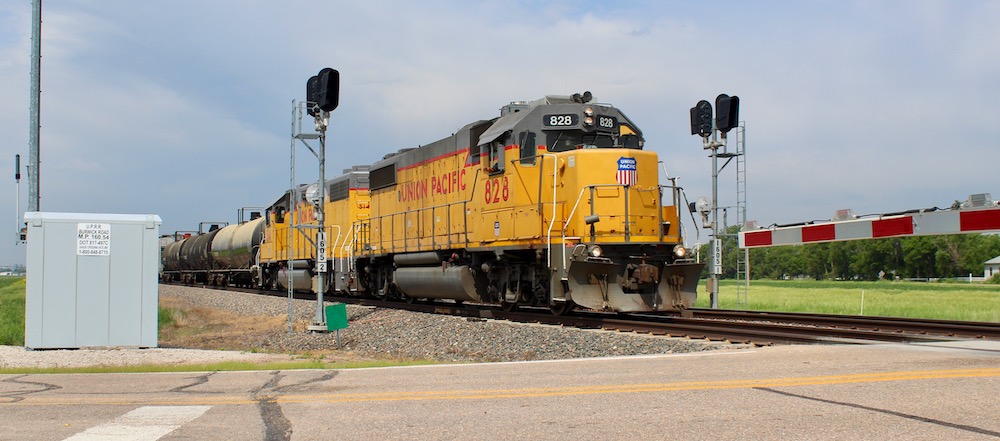
WASHINGTON — Union Pacific’s increasing reliance on embargoes to clear congestion came under fire on Tuesday from shippers, labor unions, and members of the Surface Transportation Board during a daylong hearing.
Regulators last month ordered UP to explain why it has significantly increased its use of embargoes. With UP running short of train crews, the railroad has issued more than 1,000 embargoes so far this year in response to congestion, compared with just 27 in 2017 — the year before it adopted a lean Precision Scheduled Railroading operating model.
In April and November, with congestion rising in some of its local service yards, UP asked some of its carload customers to reduce their inventory of private cars or face the prospect of an embargo that would limit the flow of inbound empties. About 6% of carload shippers have been affected by embargoes.
Before issuing an embargo, UP considers a number of factors, including the number of cars in the yard and how many cars are expected to arrive over the next four days. When a customer’s inventory exceeds its consumption rate, and it will take more than three days to whittle down the excess cars, UP notifies the customer and requests that it adjust inventory within seven days.
If the customer doesn’t meet the target or has not submitted a plan of how it will reduce operating car inventory, then UP issues a congestion embargo with permits that will allow the customer to ship at half their normal level. Exceptions are made for certain sensitive commodities.
Shippers said the embargoes increased their costs — either for shifting to truck or moving freight in UP system cars rather than their own private fleets — and in some instances forced them to curtail production.
Cargill was able to work with UP to reduce 130 cars from its fleet at five of its plants, but said UP refused to move its export grain trains to the Pacific Northwest for two weeks, yet did not issue an embargo. In one case, Cargill decided to transload grain from UP hoppers into BNSF Railway cars for the trip to the coast. Cargill had to foot the bill.
All five shippers on the morning’s panel said that UP was not meeting its common-carrier obligations to provide service upon reasonable request due to the frequency, duration, and short notice of embargoes. “I’ve never seen embargoes used to this extent,” says Gregory Twist, who has 40 years in the logistics industry and currently is senior vice president of transportation at Ag Processing Inc., which ships grain and soybean oil.
Twist says UP didn’t hold itself accountable for poor service that creates congestion. UP misses switches, he says, then delivers cars in bunches and also fails to provide the requested number of empties.
But Bradley Moore, UP’s vice president of customer care and support, says the railroad won’t issue an embargo if its local service falls below the 80% performance level or if transit time is extended.
UP CEO Lance Fritz says the railroad is doing all it can to hire crews and restore service. “We fully understand that imposing embargoes can result in challenges for our customers,” he says. “I again emphasize we only reach for this option as a last resort. Union Pacific is committed to restoring the fluidity of our network completely, and with that the consistency and reliability of our service to all of our customers.”
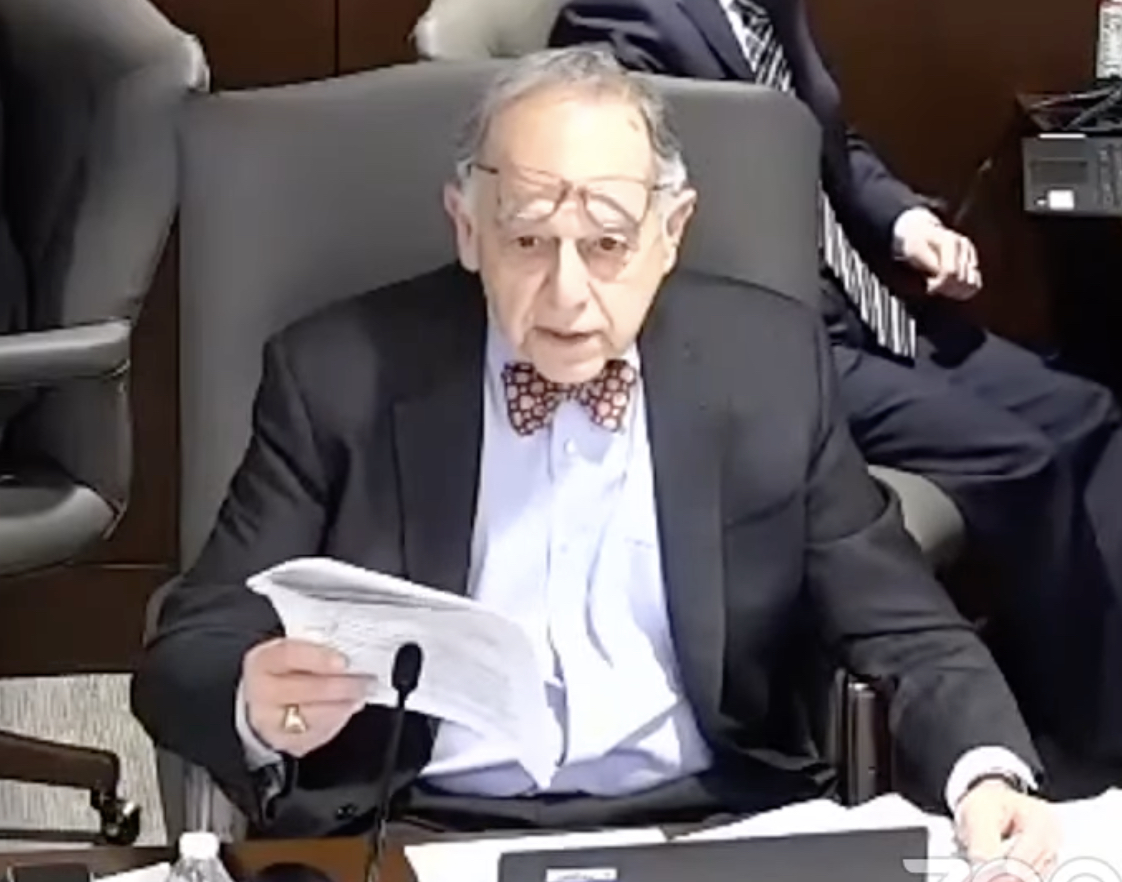
STB Chairman Martin J. Oberman sought to link UP’s job cuts under PSR to the railroad’s current service problems.
He noted that UP’s embargoes increased as the number of train and engine employees fell from more than 18,000 in 2017 to 13,173 currently. “As I see it, there’s a direct relationship between the reduction of employees and increase in embargoes even as operating inventory is going down,” Oberman says.
UP has fewer employees because of operational changes under PSR, including moving its tonnage on far fewer trains, Fritz says. The average daily train count in 2018 was up to 900, Fritz says, compared to between 600 and 650 today. “There’s a ton of work that came out of the network,” he says, so UP doesn’t need as many employees.
Shippers and board members, however, said it was clear UP doesn’t have the resources it needs to handle current traffic levels.
One of the reasons embargo use has risen, Moore says, is that prior to 2018 UP issued an alert only after a local serving yard was clogged. Since then, UP has used a proactive car inventory system to identify excess cars before yards are affected, he says.
Kenny Rocker, UP’s executive vice president of marketing and sales, says it was only natural for customers to increase their car inventory as the railroad becomes congested and slows down.
Fritz said that although service is not yet where UP or its customers want it, the railroad is more productive and its customer service is better today than before it made operational changes under PSR. The best measure of UP’s service, he says, is the number of miles cars travel in a day.
But board member Patrick Fuchs challenged that, noting that UP’s car miles per day is currently 5% below pre-PSR levels.
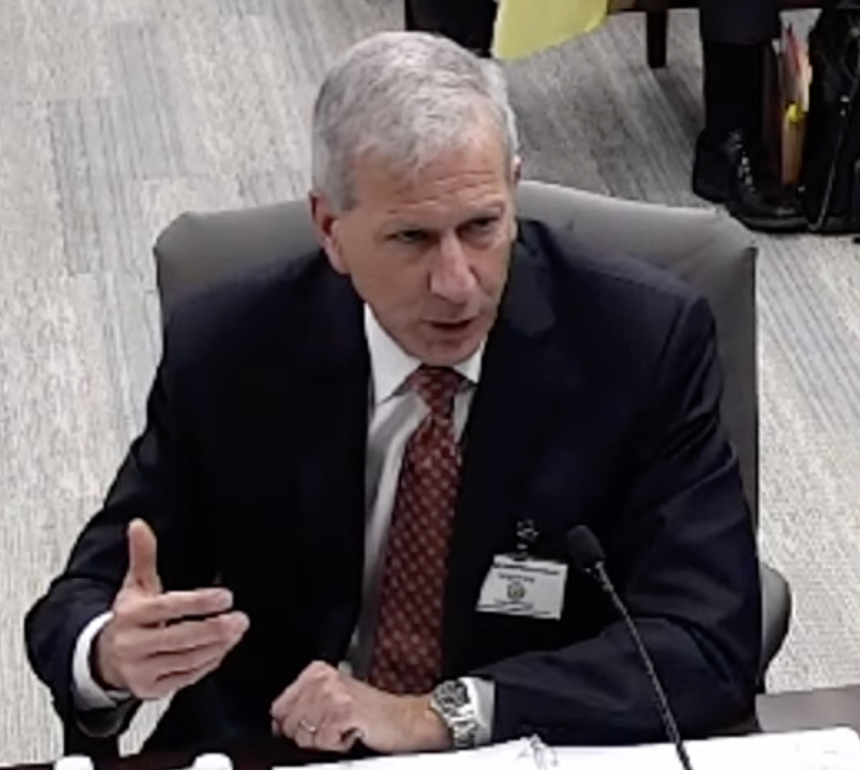
“Our productivity is lousy this year and our service is not good this year,” Fritz says. “There’s no hiding that fact. We own that.”
Board member Robert Primus said there was a disconnect between what UP says — that embargoes are a tool of last resort — and what customers feel. “It’s been at least two to three years of last resorts,” he says.
Board member Michelle Schultz asked where UP’s embargo trend will go. UP has issued the vast majority of Class I railroad congestion-related embargoes this year, and a sharp increase in November prompted the board to schedule the hearing.
“Nothing would please me more than we don’t have any embargoes issued next year because there’s no need,” Fritz says.
UP executives said they would consider providing shippers with more notice when they were approaching critical car inventory levels, give them more time to respond, and project when an embargo might expire.
Oberman noted that when BNSF Railway embargoed certain carload shipments to California over the summer, it included an anticipated end date that it shared with shippers and regulators. “There was an end date. Your embargoes have no end date,” Oberman says. “None.”
Shippers said that gaining access to a competing railroad via a reciprocal switch would help ease congestion on UP as well as allow them to continue to ship at normal levels.
Fritz says UP would consider reciprocal switching requests as part of a broader look at potential embargo solutions. “If that’s the best solution, we would do it,” he says, emphasizing that broad reciprocal switching would have a negative impact on service.
Oberman said the board would order UP to produce documents related to decisions on embargoes as well as train and engine employee levels, including hiring plans.
The hearing will continue on Wednesday with shipper trade associations and rail labor representatives scheduled to appear.
Share this article