WASHINGTON — Members of the Senate Committee on Commerce, Science, and Transportation struck two disparate themes during a hearing today (Wednesday, June 21) for three nominees for Amtrak’s board of directors.
One, they remain concerned that President Joe Biden’s board nominees board do not meet a geographic-balance requirement.
Two, the desire remains strong on the part of a number of senators to protect and expand the Amtrak long-distance network.
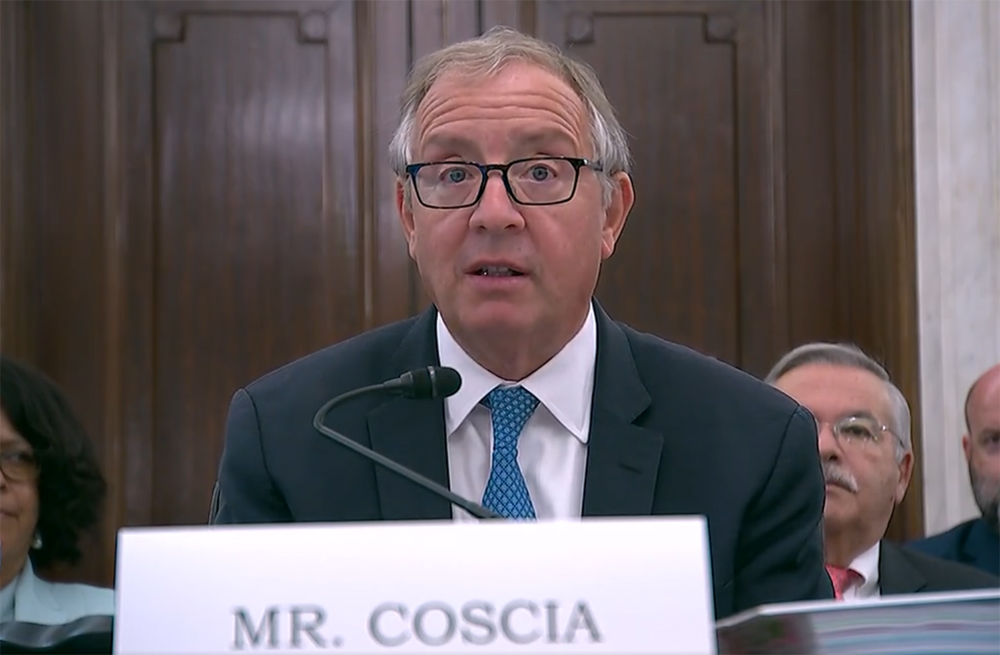
Two of the nominees — current Amtrak board chairman Anthony Coscia and Normal, Ill., mayor Christopher Koos — were making their third appearance before the committee, having yet to be confirmed by the full Senate. The third, Joel Szabat, was appearing for the first time as an Amtrak board nominee, although he has previously been before the committee when nominated to the Department of Transportation as Assistant Secretary for Aviation and International Affairs in 2018 and Under Secretary of Transportation for Policy in 2020.
Also part of the hearing was National Transportation Safety Board nominee Alvin Brown, former mayor of Jacksonville, Fla. But the committee’s focus was clearly on the Amtrak board nominees.
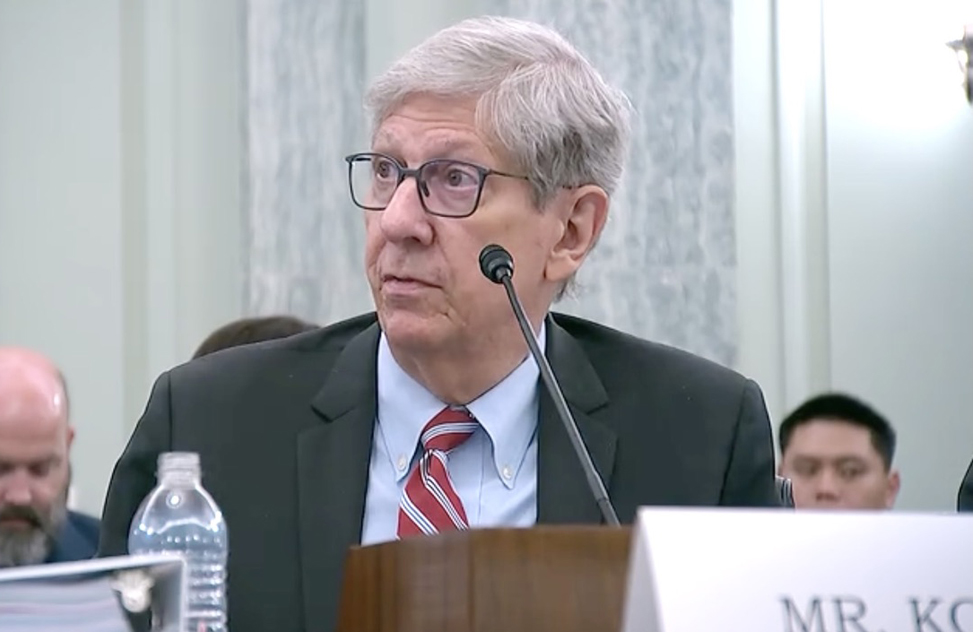
Three of the eight senators who participated called on the Biden Administration to bring nominations for the board into compliance with a section of 2021’s Infrastructure investment and Jobs Act. That allows no more than four of the eight Senate-confirmed board members to reside in the Northeast Corridor region. All three — Sens. Ted Cruz (R-Texas), Jerry Moran (R-Kan.), and Jon Tester (D-Mont.) — have previously written Biden to say his current slate of six nominees need to be brought into line with that requirement; of that group, only Koos comes from outside the Corridor states [see “Senators challenge Northeast Corridor tilt …,” Trains News Wire, April 26, 2023].
Cruz, as part of his opening statement, said “Americans who reside outside the Northeast Corridor … must have their interests fairly represented on Amtrak’s board.
“The President needs to fix this legal defect by withdrawing one of the Democratic nominees from the Northeast Corridor. It’s the President’s decision which nominee to withdraw, but this slate needs to comply with the statute.”
The other three board nominees, who were not part of Wednesday’s hearing, are Samuel Lathem, retired president of the Delaware AFL-CIO; David Capozzi of the Washington, D.C., area, former national advocacy director for Paralyzed Veterans of America; and Robin Wiessmann, executive director of the Pennsylvania Housing Finance Agency and former Pennsylvania state treasurer.
Tester indicated he would not support any nominee until the geographic balance issue is addressed.
“The administration put forward a list of incredibly good nominees, but they did not comply with the geographic requirements,” he said. “… There is still work to be done to get resolution on this, but I am confident that the administration will do what it needs to do, and based on the progress so far, I believe this hearing is a good thing to have.”
Moran said “there’s a philosophical issue here” — compliance with the law — “and there’s a practical issue here as I try to make certain that the Southwest Chief and the potential increasing role of the Heartland Flyer is protected.” He also asked Coscia if he had any comment.
“I totally understand and recognize your very appropriate concerns about that issue,” Coscia said, adding that he feels he has a full understanding of the importance of the national network, even though he does live in New Jersey.
Moran also asked Szabat about his support for long-distance service, a question the senator said he had previously asked Coscia and Koos. Szabat, in response, referenced a 2019 report by the Amtrak Inspector General on the financial costs of poor on-time performance.
“(It) said that in order for Amtrak trains to be consistently profitable in the future, what was required was a more frequent, on-time long distance network,” Szabat said. “I believe that today, and if confirmed, that would be one of the torches I would carry on the board, is for an improved national network and long-distance service.”
Sen. Jacky Rosen (D-Nev.) also made long-distance service her focus, asking Coscia about efforts to add a California Zephyr stop in West Wendover, Nev., and questioning Koos about adding more service on the Zephyr route.
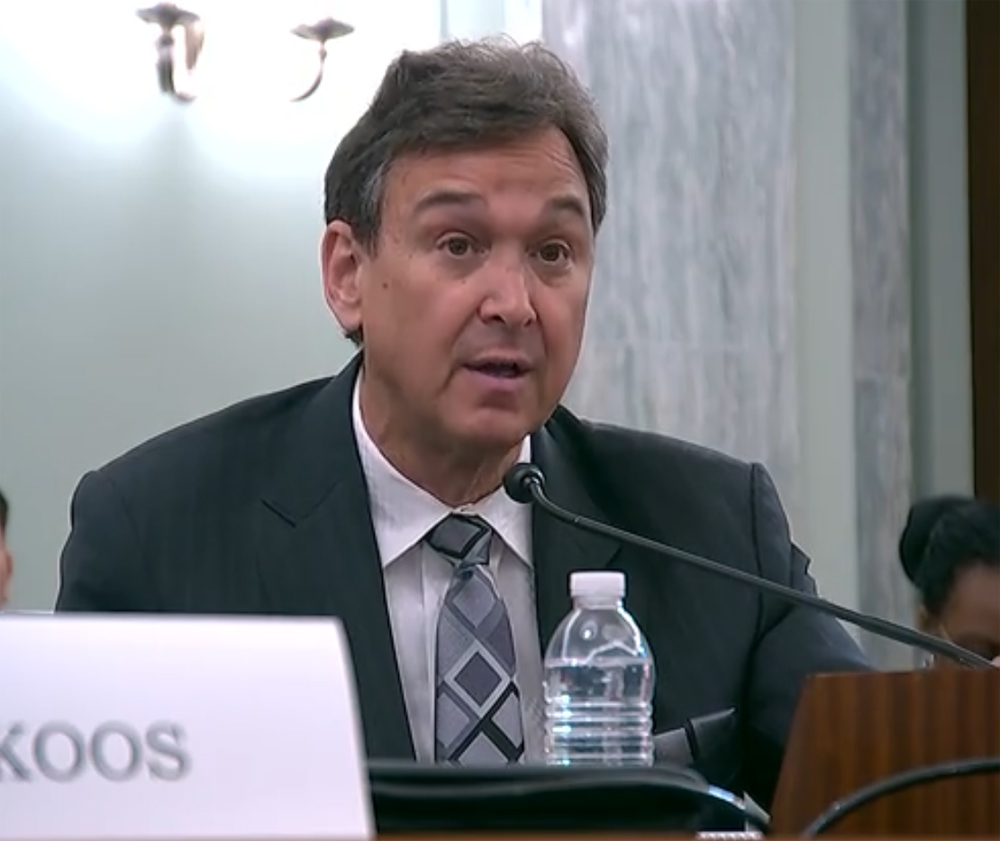
“I think a lot of people overlook the fact that those long-distance routes help support shorter trips to a great extend,” Koos said, referring to his experience riding the Texas Eagle, the long-distance train that serves Normal. “So it’s very important to me … that those long-distance systems are vital and grow. I understand some of the challenges that faced in growing those systems, but look forward to working on that if I’m appointed.”
Koos later added, in response to a question from Sen. Peter Welch (D-Vt.) about service to rural areas, that in his time with the U.S. Conference of Mayors, he saw “there are two types of mayors: Those that have Amtrak service and want more of it, and those that don’t and want to have it.
“The demand is huge, and it’s going to be a challenge for Amtrak to step up and answer those issues,” Koos said. “Fortunately, there’s robust funding to address those issues, and I would work on that, if appointed to the board, as a high priority. I understand how that form of passenger service is vital to smaller communities throughout the United States, and the ability to maintain it and improve it is going to be a high priority.”
A recording of the full hearing, along with written opening statements from each of the nominees, is available at the committee website. The actual hearing begins about 19 minutes into the recording.
Szabat’s statement helps outline his qualifications for the board, including serving as the Amtrak board representative for Transportation Secretary Elaine Chao from 2019 to 2021; overseeing rail capital projects under the American Reinvestment and Recovery Act for three years beginning in 2009; and serving as a transportation consultant for the California Legislature from 1992 to 2001, which included reviewing all legislation regarding passenger rail.
Share this article