RICHMOND HILL, Ontario — A complex series of factors led to a string-line derailment that killed a Canadian National crew member in an August 15, 2019, derailment at MacMillan Yard in Vaughan, Ontario, the Transportation Safety Board of Canada said in an accident report released this week.
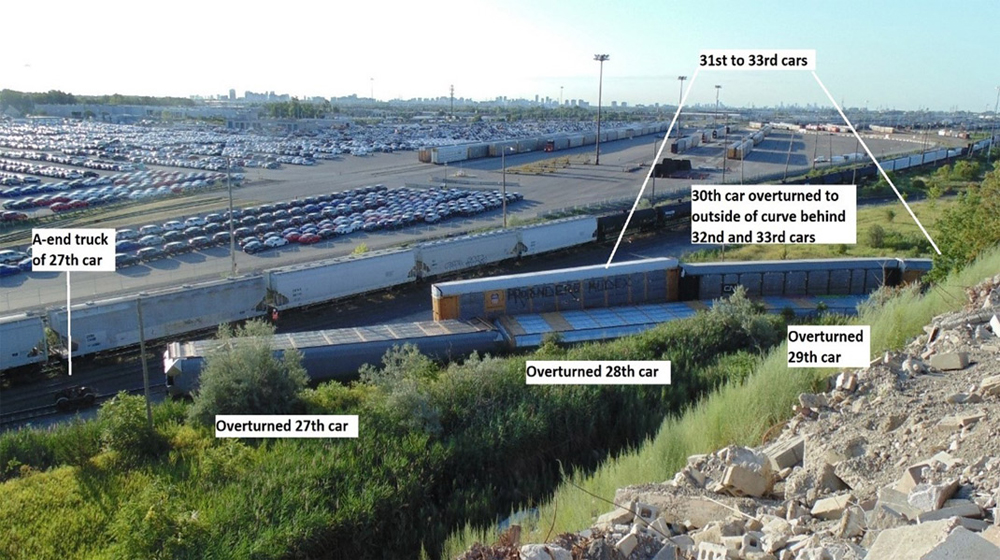
The worker, who was operating a remote-control locomotive using a beltpack, was operating the train on a track with a 15-degree curve from a location next the 27th car in an cut of 82 cars being switched. The derailment involved the 26th through 34th cars, all empty auto racks; when the 27th car overturned, it pinned the employee, who suffered fatal injuries.
The TSB’s report lists a total of nine factors, including a rapid run-out of train slack when the locomotive throttle was advanced to notch 8; the aggressive throttle response of the remote-control system, which led to rapid acceleration; heavy trailing tonnage that made the auto racks vulnerable to string-lining; and air brakes that apparently did not release on the 63rd, which created the conditions for string-lining.
Canadian National subsequently instituted a series of rule changes for handling cars on the track involved, reconfigured the track to reduce the curvature from 15 degrees to 12 degress, and updated training materials. The railroad also addressed two directives issued by Transport Canada; the government agency found the railroad’s corrective moves to be satisfactory.
The full report is available here.
Share this article