WASHINGTON – The Surface Transportation Board, in a 3-2 decision today, rejected BNSF Railway’s request for a partial stay of the board’s order requiring the railroad to haul Navajo Transitional Energy Co. coal from Montana to export at tidewater in British Columbia.
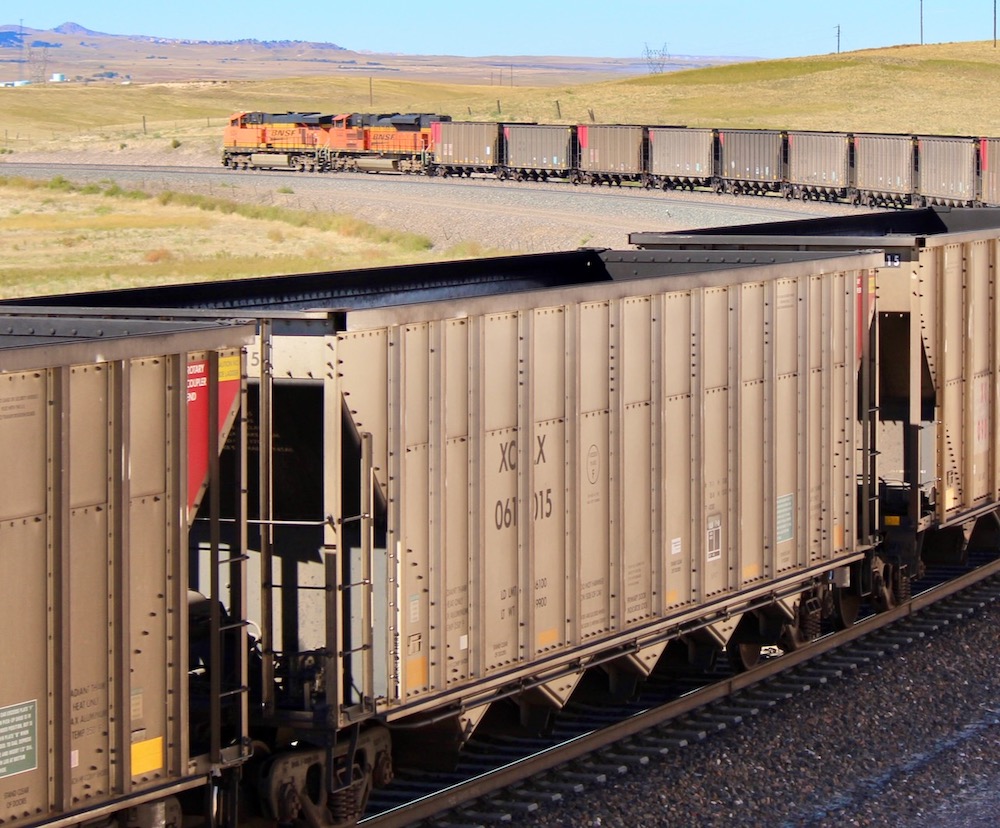
In a 3-2 decision in June, the STB ordered BNSF to handle 23 trains per month from NTEC’s Spring Creek Mine to the Westshore Terminal — and an additional six trains per month once there is sufficient crew and train set capacity.
Last month BNSF challenged in federal court some elements of the STB’s decision and also asked the board for a partial stay of the order while a judicial review is under way. The railroad said it did not object to the 23 trains per month or 4.2 million annual tons quota, but it did take issue with the requirement to handle an additional six NTEC trains per month. And so the railroad asked the STB to put a stay on the requirement to handle an additional million tons this year.
In rejecting BNSF’s request for a partial stay, the board’s majority said BNSF did not prove it would suffer irreparable harm from being required to haul NTEC’s coal.
“The nature of the relief ordered by the Board — that BNSF must transport the additional tonnage if capacity to do so becomes available — negates the possibility of imminent or certain harm to BNSF,” the board said in its decision today.
The board’s majority – Democrats Martin J. Oberman, Robert Primus, and Karen Hedlund – also addressed the dissents filed by its Republican members, Patrick Fuchs and Michelle Schultz.
“The Board had intended to focus this decision on whether BNSF had shown sufficient irreparable harm to warrant a stay. The dissents, however, level a broadside at not only the Board’s decision to deny BNSF’s stay motion but at the underlying decision as well. In doing so, they raise a number of ‘strawmen’ arguments, and mischaracterize both the record and the Board’s preliminary injunction order,” the majority wrote.
Fuchs and Schultz argue that the board’s vague preliminary injunction should be set aside. The decision, they said, prioritizes NTEC above other shippers.
“Not only must additional crews be allocated to NTEC first, NTEC is entitled to those crews without any commitment that it will use them,” Schultz wrote. “Unlike NTEC’s competitors that ship by contract and may be subject to minimum tonnage or other requirements, NTEC is under no obligation to ship the 4.2 to 5.2 million tons that the Board has ordered BNSF to transport. So, for the remainder of this year, and likely next year, BNSF is in the unfortunate position that they must hold that capacity for NTEC, because the Board has found that ‘the common carrier obligation . . . require[s] this additional service to NTEC.’”
NTEC in April filed two separate complaints with the STB: One claiming that BNSF violated its common carrier obligations and another seeking an emergency service order requiring the railroad to haul more coal this year.
The STB has set a procedural schedule for the common carrier case, which will begin this fall with NTEC’s opening comments due by Nov. 6.
Share this article