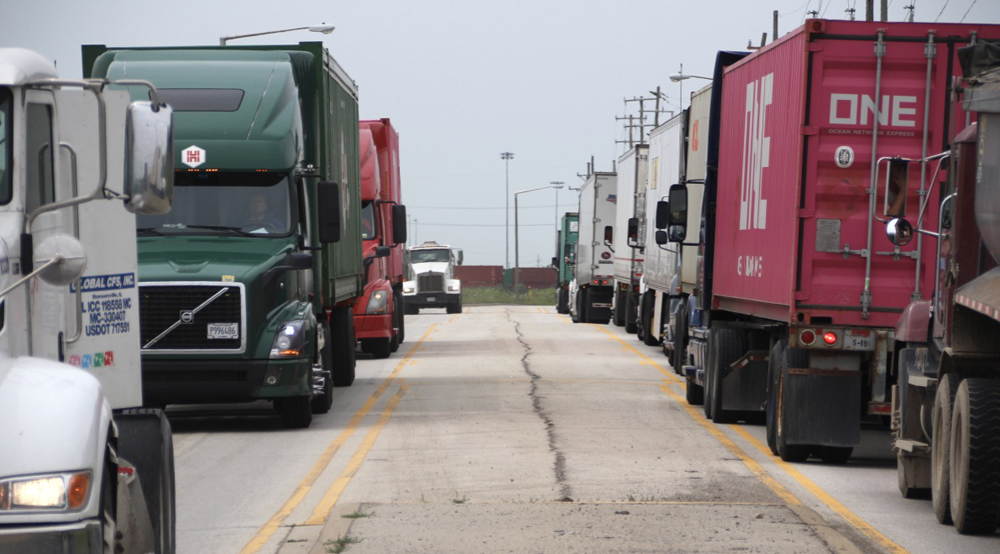
WASHINGTON – Any attempt to regulate intermodal traffic would not fix current congestion issues and would clash with congressional intent to keep railroads largely deregulated, the Association of American Railroads has told the Surface Transportation Board.
Last month STB Chairman Martin J. Oberman expressed concern about the impact of congestion on intermodal shippers, some of whom have had to pay hefty railroad storage and demurrage fees for containers stuck at intermodal terminals.
Some shippers have asked the board to regulate intermodal traffic in some fashion, and Oberman in July asked the Class I railroads for updates on intermodal service and storage charges [see “STB chairman wades into intermodal terminal congestion issues,” Trains News Wire, July 22, 2021].
All of the Class I systems have said the congestion issues are beyond their control, as shippers have been slow to pick up containers due to a shortage of labor at warehouses.
“The global supply chain faces unprecedented challenges in its recovery from the global pandemic, caused by factors beyond the Board’s regulatory regime,” AAR Counsel Timothy Strafford wrote in an Aug. 10 letter to Oberman.
“The Interstate Commerce Commission, and later the Board, broadly exempted from regulation trailer-on-flatcar/container-on-flatcar (TOFC/COFC) services … due to the fiercely competitive nature of intermodal traffic,” Strafford pointed out. “Any action to limit those exemptions would face a high bar in meeting the revocation standard.”
Railroads lack market dominance over intermodal shipments and therefore storage charges should not trigger STB regulation, the AAR argues.
“More importantly, even partial revocation in this instance would not mitigate the problem and would have unintended consequences,” Strafford wrote.
If railroads’ storage and demurrage fees were limited through regulation, shippers would have no incentive to promptly remove containers from intermodal terminals. And that would force railroads to further meter inbound container shipments — or even halt them altogether until congestion can be cleared, the AAR says.
“That is not to say that the Class I freight railroads have no role to play in working through the challenges currently facing the global supply chain,” Strafford wrote. “AAR’s freight members have made clear in their own responses how they are collaborating with all stakeholders to keep intermodal terminals and the entire national rail network fluid. The Board should refrain from any regulatory action that would undermine those efforts.”
Share this article