

Throughout their history, railroads have been under the spell of the Not Invented Here Syndrome. If a rival railroad — or, worse still, an industry outsider — found a better way to do something, railroads would heap scorn on the idea. “Why, fill-in-the-blank would never work on our railroad!”
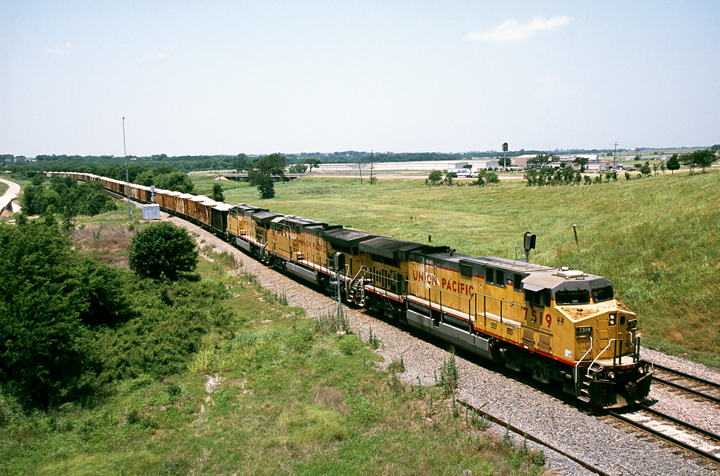
Actually, it probably would. And examples abound. Norfolk & Western and Nickel Plate Road clung to steam long after other big railroads had converted to diesel. Most railroads were initially skeptical of the double-stack well car, which eventually became an intermodal game-changer. And Canadian National and Norfolk Southern were late to the AC traction party, despite years of proof that the locomotives were superior to their DC brethren.
One idea that should not suffer delayed widespread adoption is Norfolk Southern’s Short Line Performance Project. In fact, the other Class I systems should shamelessly copy the NS program that has produced outsized growth in carload traffic.
Unpredictable interchange between short lines and Class I railroads has been an intractable problem. The Class I might skip a scheduled interchange entirely, show up late after the short line’s crews have gone home for the day, or deliver the wrong cars. It doesn’t happen everywhere, and it doesn’t happen all the time. But talk to any shortline leader and they’ll tell you that interchange problems are a headache that occurs all too often. And they’re a carload killer.
Stefan Loeb, NS vice president of business development and first and final mile markets, knows about this from firsthand experience. Before joining NS last year, he was the chief commercial officer at shortline holding company Watco.
One of the things he brought with him to Atlanta — besides the can-do attitude that’s part of every shortline railroader’s DNA — was a simple idea about how to smooth interchange with Norfolk Southern’s short line connections. “If you can put visibility and data and communication around interchanges to improve their effectiveness and performance, you’re going to grow with your shortline partners,” Loeb says.
First, NS and 40 participating short lines use a spreadsheet to track interchange performance. Both give their views on prior day’s interchange. If the views don’t match, it gets flagged for attention. Second, the NS First and Final Mile Markets group and shortline partners chat through Microsoft Teams to quickly resolve and prevent service issues.

The results have been impressive so far. While NS’s overall shortline interchange volume was up 4.3% from March through June, volume for railroads participating in the Short Line Performance Project grew 6.5%. You could conclude that this is a low-cost way for a Class I railroad to produce carload volume growth – all while letting the short line do the hard work of courting customers and providing local service.
Short line executives from Genesee & Wyoming, OmniTRAX, and Watco praise the NS program, which they say is unique among the Class I systems.
It would be easy for any other Class I railroad to steal this idea and make it their own. There’s no patent, no proprietary technology, no artificial intelligence wizardry. It just takes three ingredients: The will to improve interchange, people to monitor shortline handoffs, and Microsoft Office (or an equivalent). Oh, and a fourth: The ability to forget it was Not Invented Here.
You can reach Bill Stephens at bybillstephens@gmail.com and follow him on LinkedIn and X @bybillstephens
Share this article