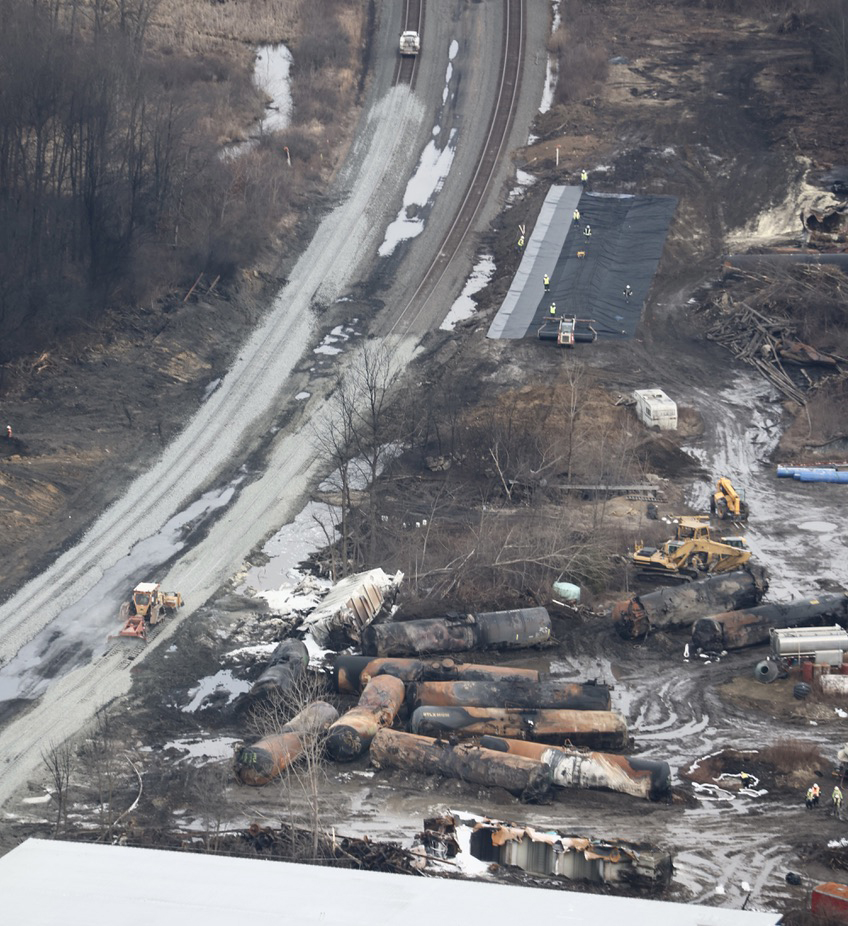
Regulators should not impose new safety regulations until the National Transportation Safety Board determines what caused the fiery derailment of a Norfolk Southern train that was carrying hazardous materials through East Palestine, Ohio, rail industry leaders said today.
Their remarks came just hours after Transportation Secretary Pete Buttigieg said the Department of Transportation would adopt several new regulations covering hazardous materials shipments as part of a broader push to improve rail safety [see “Department of Transportation to urge railroads and Congress to improve rail safety,” Trains News Wire, Feb. 20, 2023].
Canadian National CEO Tracy Robinson told an investor conference that all of the railroads want to be as safe as possible. But she said that regulators shouldn’t impose solutions that don’t relate to the underlying problem.

“You run the risk of not only not fixing what the core problem is, but you could have these inadvertent, unintended consequences of applying the wrong solution to a not well-understood problem,” she says.
“There is no shortage of desire in this industry to be safer and safer,” she says.
Canadian Pacific CEO Keith Creel told the same investor conference that it’s important for the industry to understand and then address the cause of the East Palestine derailment. Once the railroads take corrective action, there should be no need for additional regulations, Creel says.
“Zero accidents is the objective,” Creel says. “But getting there is a journey.”
Should railroads work with regulators now on new safety regulations?
“As soon as they understand what the cause is, they will be as aggressive and eager as we are to make it better, to make it safer,” Creel responded.
“This is not a case of people don’t care,” he adds.
Creel pushed back against criticism of the Precision Scheduled Railroading operating model in the wake of the East Palestine accident.
Unions have claimed that widespread job reductions at the U.S. Class I railroads have reduced the margin of safety over the past six years despite the industry’s increasing profitability. Critics have sought to blame the East Palestine wreck on the operation of longer trains and less rigorous train inspections.
CP has spent 50% more on its infrastructure in the decade since adopting PSR than in the previous decade, Creel says. “Only because of PSR could we do that,” he says.
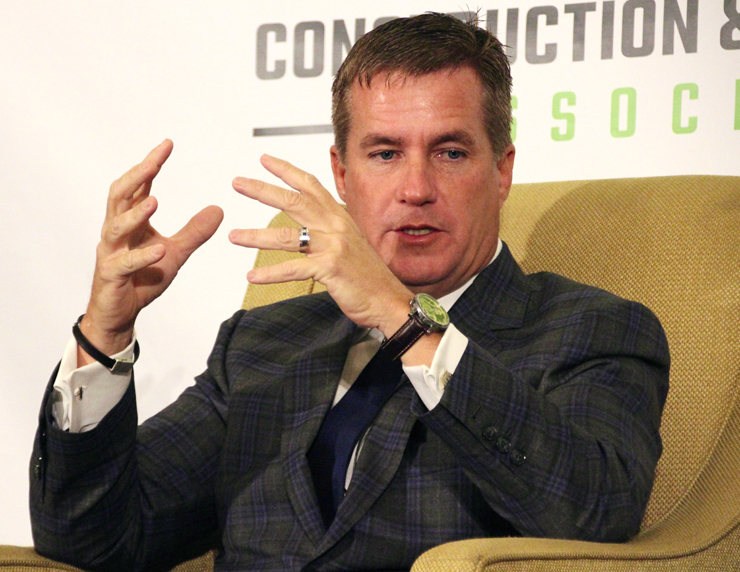
CP just marked its 17th straight year with the industry’s lowest train accident rate, Creel noted, despite being a PSR railroad that runs long trains.
Ian Jefferies, CEO of the Association of American Railroads, said the industry is committed to taking steps that directly address the cause of the East Palestine derailment so that similar accidents could be prevented elsewhere.
“The NTSB’s independent investigators continue their work to identify the accident’s root cause and contributing factors,” Jefferies says. “That investigation must continue unimpeded by politics and speculation so NTSB’s findings can guide what additional measures may have prevented this accident.”
Buttigieg, in an interview today with ABC News, said there was no need to wait for the investigation to conclude before addressing broader safety concerns in the rail industry. He also was critical of railroads’ historical resistance to new safety regulations.
In a series of tweets on Thursday, NTSB Chair Jennifer Homendy urged people to stop spreading misinformation about the wreck, its potential cause, and ways railroads might have prevented the disaster that forced the evacuation of the town.
“Urgent safety recommendations may be issued at any time; meaning, we don’t wait until the end of our investigation if immediate safety action is warranted,” she wrote.
The use of electronically controlled pneumatic, or ECP, brakes would not have prevented the derailment, she noted. And she said that the ECP brake rule proposed in 2015 would not have applied to the NS train 32N that derailed on Feb. 3 because it did not meet the standards for a high-hazard flammable train.
“I urge you: let the NTSB lead the safety analysis. Anything else is harmful — and adding pain to a community that’s been through enough,” Homendy wrote.
The Environmental Protection Agency today ordered NS to pay for a full cleanup at the derailment site where toxic chemicals were spilled. NS CEO Alan Shaw has said the railroad will pick up the tab and “make things right” for the community.
NS on Monday announced that an employee who lives in East Palestine has accepted a one-year assignment as a dedicated community liaison. He will report directly to Shaw’s chief of staff, work directly with top leadership, and have a $1 million budget to fund community needs and improvements.
Share this article