The proxy battle that activist investor Ancora Holdings is waging against Norfolk Southern isn’t just about the direction NS should take and who should run the company. It’s a fight for the future of the railroad industry.
The Cleveland-based activist investor seems to be taking the position that railroads shouldn’t grow. They argue that intermodal, the only business segment that’s gaining volume, isn’t profitable enough to make up for the delays it inflicts on lucrative merchandise and bulk traffic. So Ancora says NS should forgo intermodal growth and instead maximize the efficiency and profitability of its carload and bulk business, all while slashing costs and boosting productivity.
This is a fine strategy if you’re a short-term investor. The stock price will rise and you’ll pocket a handsome return well before the cash cow is milked dry.
But if you’re thinking long term, the fatal flaw with this approach should be obvious to anyone who follows railroading. Carload business is in long-term decline, and you can’t forever earn more and more money on less and less business.
Every year the Class I railroads tout how their industrial development teams attract new rail-served facilities. What they don’t say — but traffic data show — is that merchandise business is a leaky bucket. Carloads are draining out the bottom of the bucket faster than new business is trickling in. Overall carload volume has been sinking for decades, a trend that has been most pronounced in the East. And there’s no sign that will change.
In Norfolk Southern’s case, carload traffic has fallen 9% over the past five years and 7% over the past 10. Meanwhile, coal volume is down roughly 50% in both periods.
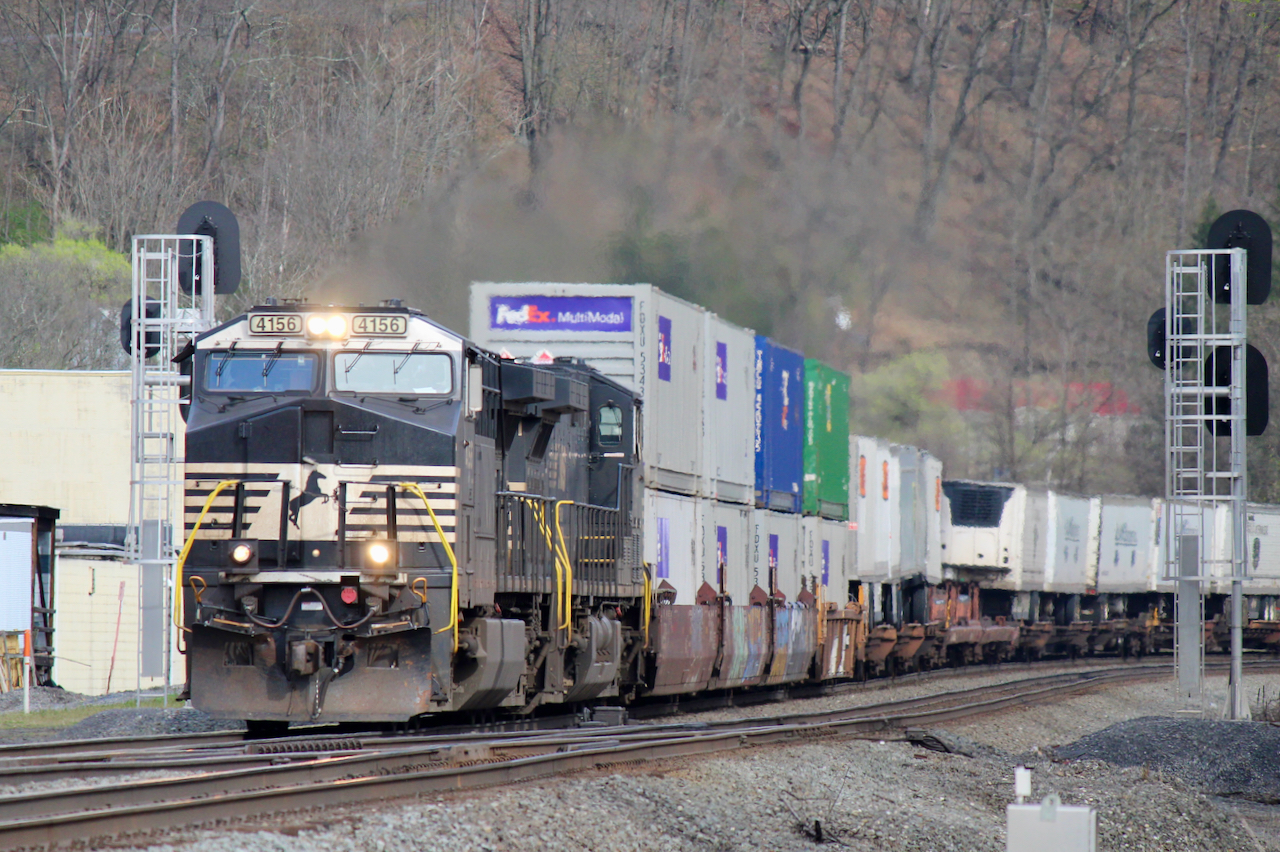
The railroad’s intermodal traffic, on the other hand, surged 9% over the last five years and posted an identical gain in the last 10 years. But since hauling containers comes with an operating ratio above 60%, the Ancoras of the world say more intermodal traffic shouldn’t be on the railroad.
Ancora also wants NS to shed loose carload traffic that requires multiple handlings en route. Jacking up rates so that freight hits the road always has unintended consequences. Will it prompt some facilities to abandon rail altogether? Are carloads that “don’t fit the network” the keys to keeping a short line or branch line viable?
NS CEO Alan Shaw has sought to stem the decline of carload business while at the same time gaining new intermodal traffic. Both goals require providing consistent and reliable service year in and year out. Shaw’s “better way forward” strategy, outlined at the railroad’s investor day in December 2022, aims to do just that.
The idea is that by not furloughing train crews during a downturn, the railroad will have the resources at the ready to respond to the eventual upswing in traffic. In the short term, carrying surplus crews raises the operating ratio. But Shaw says it will pay off in the long term. First, it avoids service recovery costs and lost volume. Second, maintaining service levels through thick and thin will allow shippers to build more of their supply chains around the railroad, which in turn will bring NS new traffic, higher revenue, and bigger profits.
“Leadership’s operating plan has resulted in higher costs, shrinking margins, and a worse operating ratio,” Ancora notes with a firm grasp of the obvious. This is a feature of the NS strategy — not a bug — and it’s exactly what Shaw said would happen in a low-demand environment.

Ancora says Shaw’s service and resiliency theory is untested and unproven. But we know the results of not keeping a sufficient buffer of train crews: Lost freight volume. The periodic bouts with crew shortages have plagued the industry for more than a decade. The culprit for most of them? Wall Street’s focus on the operating ratio, which has prompted railroads to run leaner than they should.
Ancora’s call for cost-cutting and crew furloughs is tone deaf. The railroad industry has just come out of the mother of all crew shortages, which prompted a backlash from shippers and regulators while diverting freight to trucks.
The pandemic-related crew shortages further damaged relationships with rail shippers who were already weary of disruption from the implementation of Precision Scheduled Railroading operating models at the publicly traded U.S. railroads. That does not bode well for the intermodal traffic that has been railroads’ growth engine, or for the carload traffic that generates two-thirds of the industry’s revenue.
A major carload shipper, for example, shifted more than 40% of its rail traffic to trucks during the widespread service problems on the big four U.S. railroads in 2022. A quarter of the company’s normal rail volume remains on the highway – and it may never return. Railroads cannot get caught short of crews again and must break the cycle of staffing-related service failures.
Across the industry, rail executives are concerned about Ancora’s proxy battle at NS. The message it sends: Short-term activists will take aim at any railroad that reduces the emphasis on the operating ratio while trying to create an upward spiral of service, growth, profits, and investment. And that, they say, will have a chilling impact on rail volume and the long-term prospects of railroads, their employees, customers, and shareholders.
You can reach Bill Stephens at bybillstephens@gmail.com and follow him on LinkedIn and X @bybillstephens
Share this article