EAST PALESTINE, Ohio — Concerns about firefighter training, communication between responding agencies, and the ability of first responders to receive information on hazardous materials were a focus of the morning session as National Transportation Safety Board began its hearing into the Feb. 3 derailment of Norfolk Southern train 32N, and the subsequent fire and chemical release.
The first of two days of the hearing at East Palestine High School was continuing this afternoon with an examination of the decision to vent and burn vinyl chloride tank cars involved in the derailment. Friday’s second day will address wheel bearings and wayside defect detectors during the morning session, and tank car safety in the afternoon.
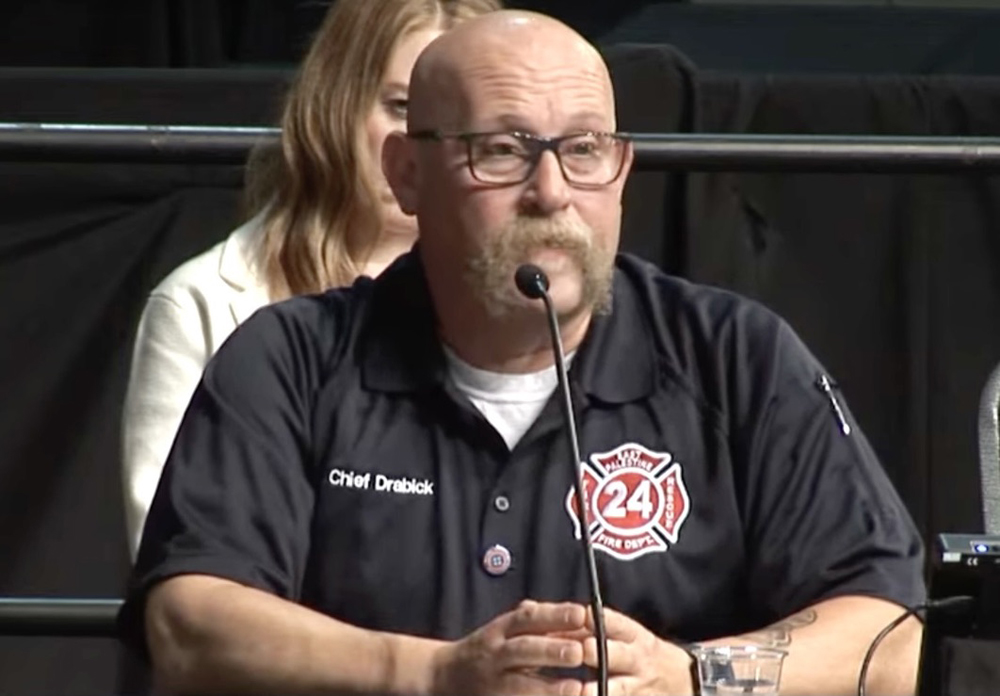
East Palestine Fire Chief Keith Drabick — the only full-time employee of an otherwise all-volunteer department — provided some of the session’s most compelling testimony with his call for greater support for fire agencies, as well as description of communication issues the night of Feb. 3. He said there was “no way” for his department to be prepared for an incident like the derailment.
“It is very difficult, in the volunteer fire service as a whole, to get people trained to adequate levels,” Drabick said. “There should be no segregation between career and volunteer training. It should be standard training across the board. It’s very hard to accomplish that. … But there needs to be more availability of training, more training facilities that are easier to access from rural areas.
“Staffing is always an issue, and that comes down to training as well as finances.”
Asked later how to make sure departments have adequate resources, Drabick was succinct.
“Adequate federal and state funding,” he said. “It all comes down to the almighty dollar. We spend trillions, billions, millions of dollars on all kinds of things, but yet send little bits to the fire service, to the police, to the EMS.”
Drabick also discussed what he said were the “ginormous” problems of communication the night of the derailment. Not all of the responding agencies had the ability to communicate with each other because of differing radio frequencies, he said, and the Columbiana County, where the derailment= occurred, has no single 911 or dispatching center.
“Our dispatch center, for example, has one dispatcher on at any given time; that’s it,” he said. “So an incident like this, they were being overwhelmed with radio traffic, phone calls, trying to make phone calls, receive phone calls, get other assets in place.
“Our dispatch center dispatches three fire departments and two police departments, so something of this magnitude is overwhelming to them. … A centralized 911 center would be a great step forward to solving the communication problem.”
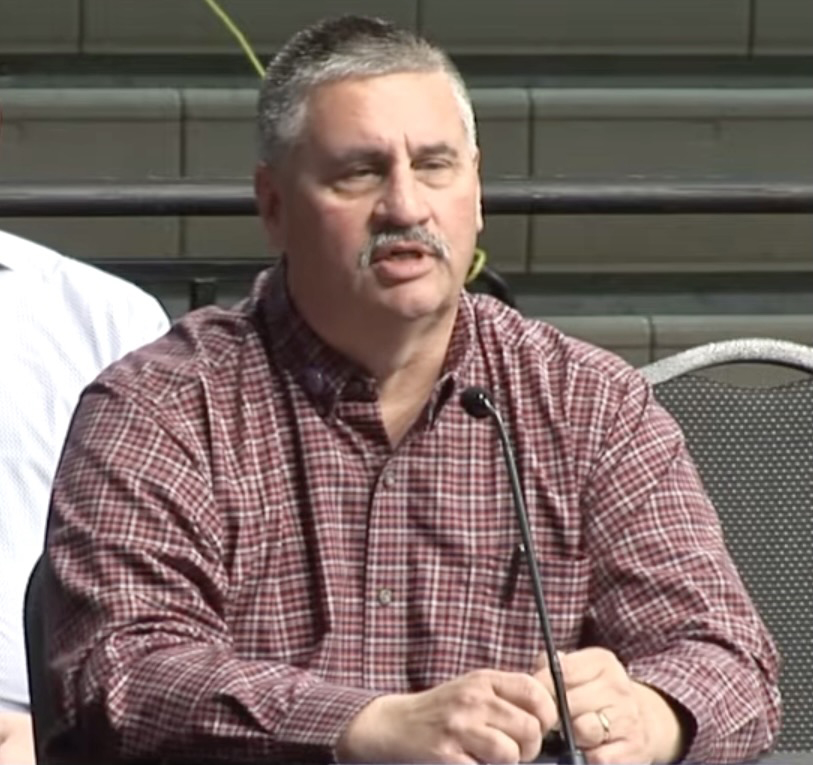
The most pointed questioning regarding first responders’ access to hazardous-material information came from NTSB Chair Jennifer Homendy.
The derailment occurred about 8:54 p.m. She laid out a timeline in which East Palestine’s dispatch center called Norfolk Southern for information at 9:04 p.m. and 9:30 p.m. The consist information was first received by East Palestine’s deputy chief at 9:45, and by the Columbiana County Emergency Management Agency by email from NS at 9:56 p.m. William Jones, chief of the East Liverpool, Ohio, Fire Department — whose hazmat team was part of the mutual-aid response — received the consist information at 10:23 p.m.; the East Palestine police received it at 1:30 a.m., and East Palestine’s fire chief obtained a hard copy at the event command center at 2:30 a.m.
Homendy asked Scott Deutsch, NS’ regional hazardous materials manager, why it had taken so long to get the consist information to first responders.
Deutsch said he was unaware of the dispatch calls, but emailed the consist to the Emergency Management Agency as soon as he was contacted. “I sent the consist I received while I was in route to the scene,” he said.
Homendy then displayed an email showing that NS had sent consist information to a contractor involved in emergency response at 9:08 p.m.
“How is it that Norfolk Southern could provide the contractors responsible for cleanup to the information within 12 minutes of the derailment, and took an hour to several hours before providing it to emergency responders?” Homendy asked.
“I can’t explain the timeframe,” Deutsch said.
But Deutsch — whose background includes time with a county emergency services agency and in the chemical injury — played an important role shortly after arriving on the scene. He estimated that occurred about 11:30 p.m.; shortly thereafter, he called for firefighters to be pulled back by a mile from the burning railcars.
Part of his concern was for firefighters spraying water from platforms above the derailment.
“It was about 7 degrees at that time,” he said. “I had concerns about getting them out of those platforms” because of the possibility those platforms could freeze in place. “I’ve operated aerial platforms that have done that,” he said.
He was also concerned because he could see that the fires only involved spilled fluids, not pressure release from the tank cars.
“Those cars were heating up … Any thermal protection on those cars is rated for 100 minutes, so we were getting past that time frame. With the large pool fire, the ditch fire I saw, I wanted everyone out of there. My concern was the pressure relief valves on any of the tank cars opening up and spraying those firefighters. Especially the ones in the aerials, because they couldn’t get away.”
The first such release occurred about 30 minutes after firefighters pulled back, he said.
Drabick’s concern about firefighter preparedness was understandable in light of testimony from Dan Swords, chief of education and testing for the Ohio Department of Public Safety, Division of Emergency Medical Services. Swords testified that by Ohio statute, volunteer firefighters are limited to a maximum of 36 hours of training, with no hazmat training and no live-fire training. Training requirements beyond that are determined at the local level. For professional firefighter, the state requirement includes at least 132 hours of firefighter training and 24 hours of hazmat training.
Both days of the hearing are being streamed on the NTSB’s YouTube channel, where recordings will also be available afterward. The board also released a massive amount of information as part of the hearing docket on its website. The hearing agenda is also available on the website.
Share this article