NEW YORK — The Metropolitan Transportation Authority on Wednesday released a 20-year assessment of the transit system’s needs over the next 20 years, calling it an “unconstrainted view of the MTA’s needs, rather than constraining it to meet an arbitrary budget target.”
The resulting document, entitled “The Future Rides With Us,” is available here. (A detailed appendix, including a full accounting of the agency’s assets, is available here.) The report, developed over a two-year period, will be used to help form the agency’s 2025-29 capital spending plan, as well as assessing potential long-term expansion projects.
The report details assets including 8,747 railcars, 1,907 miles of track, 704 passenger stations, 101 maintenance shops, and 68 rail yards. Among the projects it calls for are:
— For New York City Transit, replacement of aging electrical substations and installation of Communications Based Train Control for 90% of trips by 2045;
— For Metro-North Railroad, reconstruction of the Grand Central Train Shed, Park Avenue Tunnel and Park Avenue Viaduct; additional measures to address flooding from sea-level rise and heavy rain on the Hudson Line; and the need to replace platforms at 19 stations on the Harlem Line because of deteriorating conditions;
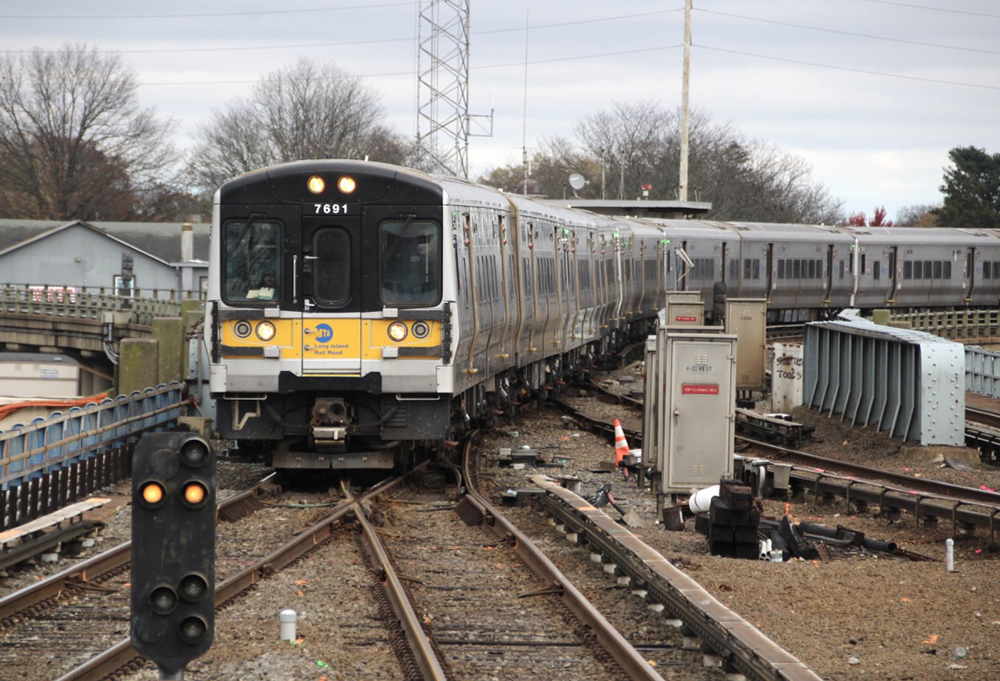
— For the Long Island Rail Road, structural rehabilitation and improvement of the Atlantic Avenue Tunnel; replacement or rehabilitation of 60 to 100 bridges and 11 to 23 viaducts; upgrading of 50 miles of signal systems, particularly on five branch lines; and completion of Centralized Train Control.
“The MTA has never undertaken a 20-Year Needs Assessment fed by this level of comprehensive data and analysis,” MTA CEO Janno Lieber said at a Wednesday press conference. “… This detailed evaluation tells the whole story, laying bare the urgent need for renewal and improvement of the system’s existing infrastructure and to prepare for climate change.” MTA Construction and Development President Jamie Torres Springer said the agency “is a $1.5 trillion asset and keeping it running is critical to the New York region,” adding that the assessment “will serve as a blueprint for how we can tackle the challenges we face and deliver the future our riders deserve.”
Share this article