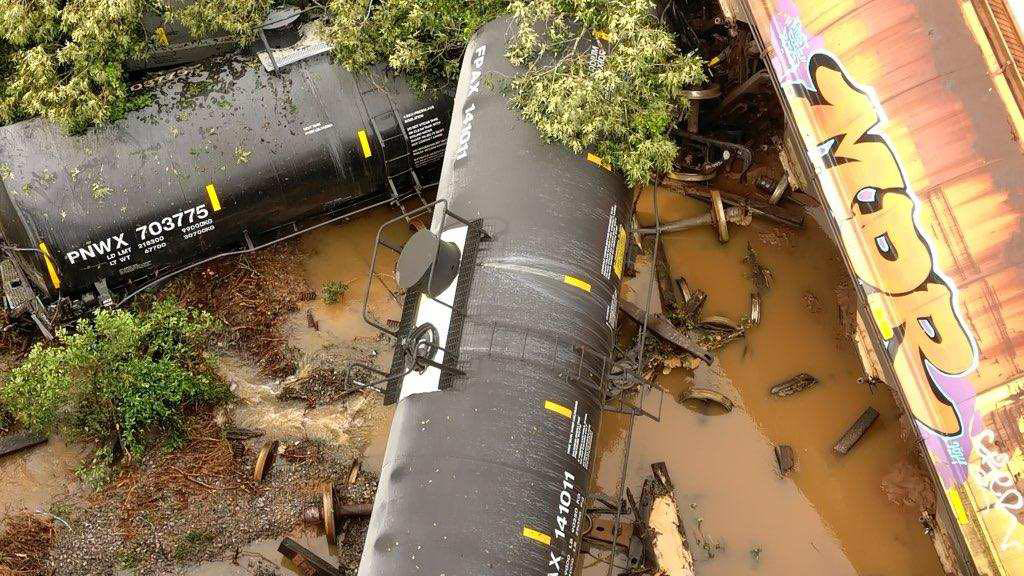
DES MOINES, Iowa — Iowa legislators are considering a bill requiring defect detectors on the state’s branch line, the latest example of state actions to regulate railroads in the wake of last year’s derailment and toxic-chemical release in East Palestine, Ohio.
Senate File 512, introduced by state Sen. Tom Shipley (R-Corning, Iowa) requires defect detectors on every branch line at least 15 miles in length, and one every 15 miles on longer lines. It includes penalties of $500 to $5,000 for each time a train passes a detector and is not notified of a defect, with subsequent penalties of up to $10,000.
A subcommittee of the Senate Transportation Committee headed by Shipley recommended the bill for passage at a Thursday meeting, advancing it to the full Transportation Committee for consideration.
The Quad Cities Times reports legislators advanced the bill despite concerns that it does not apply to main lines, as well as reservations whether it really addresses underlying safety issues. Railroad representatives oppose the bill, citing their company’s voluntary work in deploying detectors and improving derailment rates, while union representatives argue oversight is needed. Not addressed was whether such a bill would withstand scrutiny because of the federal role in regulating interstate commerce.
This legislation comes after a bill to limit train lengths to 8,500 feet was introduced in the Iowa House last year [see “Iowa legislation to limit train length …,” Trains News Wire, Jan. 27, 2023]. That bill also was recommended by a subcommittee but failed to advance further.
Share this article