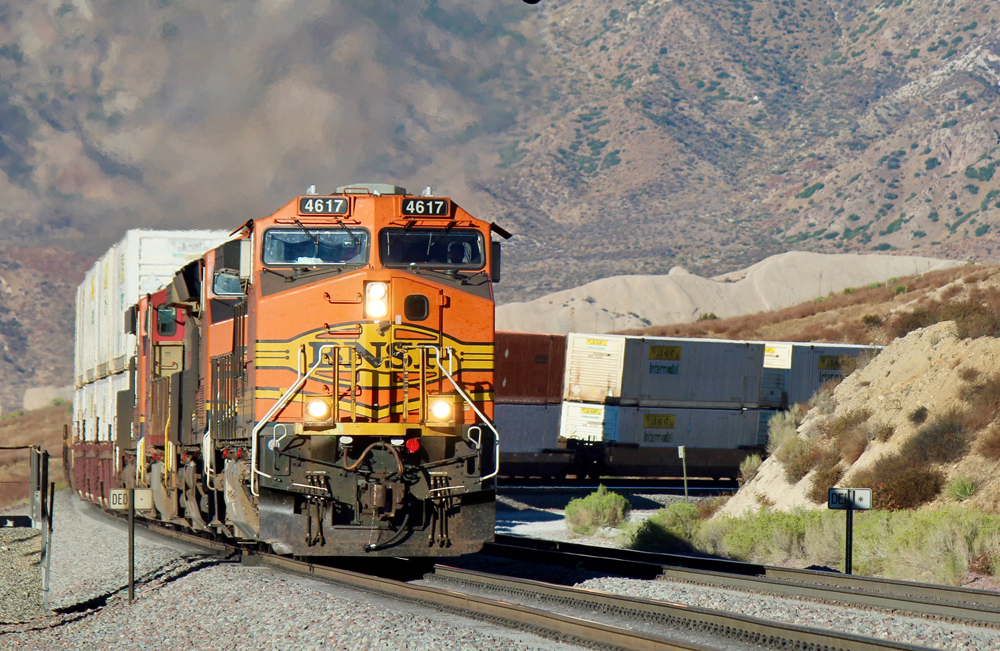
Sometimes big stories hide in plain sight. One of them is the jaw-dropping way BNSF Railway has outgrown the other three big U.S. Class I railroads.
Over the past two decades, BNSF has owned all of the tonnage growth on the big four U.S. systems. Its gross ton-miles are up 71% since 1996, BNSF’s first full year after the merger of Burlington Northern and Santa Fe. CSX Transportation, Norfolk Southern, and Union Pacific’s GTMs have declined since their mergers of the late 1990s, according to Surface Transportation Board data.
If your preferred yardstick is carloads and intermodal units, BNSF still comes out way ahead. From 2000 to 2019, BNSF’s volume is up 25%, NS’s is up 10%, and CSX and UP are both down, according to data the railroads report to the Association of American Railroads.
This feat from Fort Worth raises three big questions: How did BNSF do it? Can it keep it up? And are there any lessons here for the rest of the industry?
The answer to the first question is simple. BNSF has always had a focus on running a low-cost, efficient railroad with a bias for growth. The goal is a virtuous circle: Provide efficient and reliable service and you earn returns that allow you to invest for growth, which brings on more business, more returns, and more investment for growth.
Sift through the traffic data and you’ll find that BNSF was propelled by three things: Intermodal, grain, and, oddly enough, coal.
BNSF has doubled its intermodal volume, thanks in no small part to its unique revenue-sharing partnership with J.B. Hunt, which began in 1989 with the famous handshake between Hunt and Santa Fe President Mike Haverty. It’s hands down the premier intermodal railroad.
BNSF’s grain business is up 39% since 1996 due to its shuttle train capacity auction program, flexible rates, and investments in an industry-largest 30,000-car grain hopper fleet. Rates reflect the total delivered price of grain, including ocean freight costs, commodity prices, geopolitics, and global supply and demand. This allows origin elevators, many of which invested in 110-car loop tracks for shuttle trains, to remain competitive and ship more via BNSF.
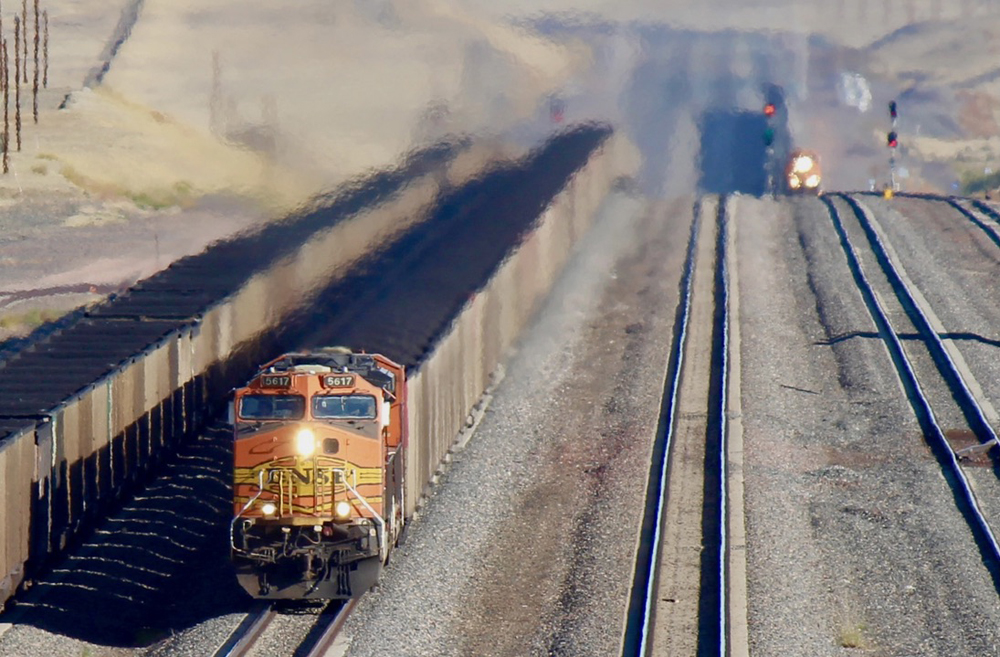
In coal, BNSF has won by not losing. It has stubbornly hung on to Powder River Basin thermal coal, with coal carloads down just 3% since 1996. And since the PRB peak of 2008, BNSF’s coal volume has fallen 28% vs. Union Pacific’s 59% slide.
Why the difference? BNSF wants power plants it serves to be able to compete with natural gas. “The choice was to allow the coal plant to convert to gas — or to reduce the transportation rate to remain competitive in the dispatch curve on the grid,” former BNSF CEO Matt Rose says. “We chose the latter because we didn’t care about only one measure, i.e. price going negative. It was overall whether or not it would be positive cash generation with a set of assets that have been used tremendously and were not going to be repurposed.”
Can BNSF keep this up? Well, that’s unclear. Coal will be a drag as coal-fired power plants are retired through 2030. Yet BNSF and J.B. Hunt have tightened their relationship and see tremendous growth ahead. The bet is that, on a volume basis, containers can replace coal.
A wildcard is BNSF itself. CEO Katie Farmer says BNSF is sticking with its tried-and-true strategy. But some fear BNSF will have to close its operating ratio gap with a resurgent UP, which could stifle growth on BNSF.
As for lessons from BNSF: You wonder what would happen if the other railroads ripped a page or two out of the BNSF playbook.

You’ll hear CSX, NS, and UP executives talk about taking on business that “fits the network,” meaning it meets a profit margin target. “We don’t think you choose the traffic that fits your railroad,” BNSF Chief Marketing Officer Steve Bobb says. The railroad doesn’t prune traffic to improve its operating ratio, either. “If there is a profitable growth opportunity, we’re going to focus on that, not on that business’s inherent operating ratio,” Bobb says.
Rose, who retired as BNSF’s executive chairman in 2019 and has been a critic of Precision Scheduled Railroading, thinks the other railroads are penny-wise and pound-foolish. “The rest of the industry really focused on cost reduction solely, which I think has hurt their ability to market their services to customers,” he said in an email.
He adds: “It really gets down to what rail CEOs and their executives are incentivized to do. Cutting crew starts, reducing daily local service, increasing train lengths are very tangible, very measurable, and very actionable. Growing your business is very hard.”
A railroad’s destiny has always been tied to its geography. In other words, you can go only as far as your map will take you. But BNSF’s outperformance says otherwise — and that how you use your railroad matters, too.
You can reach Bill Stephens at bybillstephens@gmail.com and follow him on LinkedIn and Twitter @bybillstephens
Note: Updated on Oct. 17, 2022, to correct and clarify traffic growth data. On a carload and intermodal unit basis, BNSF was not the only railroad to show growth. Norfolk Southern’s volume also has grown.
Share this article