WASHINGTON — The Federal Railroad Administration issued a safety advisory today (Thursday, April 27) that encourages railroads to take steps to address the complexities of operating long trains.
The non-binding advisory — the second FRA has issued this month — comes in the wake of three recent derailments involving trains with more than 200 cars, a length of 12,250 feet or more, and a weight over 17,000 tons.
“Freight train length has increased in recent years, and while research is ongoing related to operational aspects of long trains, including brake system performance, it is known that the in-train forces longer trains experience are generally stronger and more complex than those in shorter train consists,” the FRA said. But the agency’s advisory did not recommend a cap on train length or tonnage.
The train length advisory, which builds on an April 6 train makeup advisory, makes eight recommendations that railroads should follow. They include:
-
- Review and update air brake and train handling rules to ensure they address the operation of long trains.
- Make changes to ensure that two-way end of train devices maintain communication with the head end.
- Adopt technology or procedures for maintaining radio voice communications between engineers and conductors.
- Identify changes to crew training, train handling procedures, train makeup, distributed power requirements, limitations on length or tonnage, speed restrictions, and inspection and maintenance requirements to ensure safe operation of longer trains.
- Review and update the locomotive engineer certification program to address operation of long trains.
- Review and evaluate existing operational testing data relevant to long trains.
- Take steps to minimize blocked grade crossings.
- Conduct post-accident simulations to assign primary and secondary factors for reportable accidents.
The use of long trains has come under scrutiny in recent years due to a combination of factors. Rail labor contends that long trains are inherently unsafe. Communities are reporting a rising number of blocked crossings. And elected officials have been critical of long trains after a string of high-profile derailments, including the Feb. 3 Norfolk Southern derailment in East Palestine, Ohio.
When issuing the train makeup advisory, safety officials said they had noticed a trend of train makeup problems contributing to six derailments of trains that had more than 125 cars.
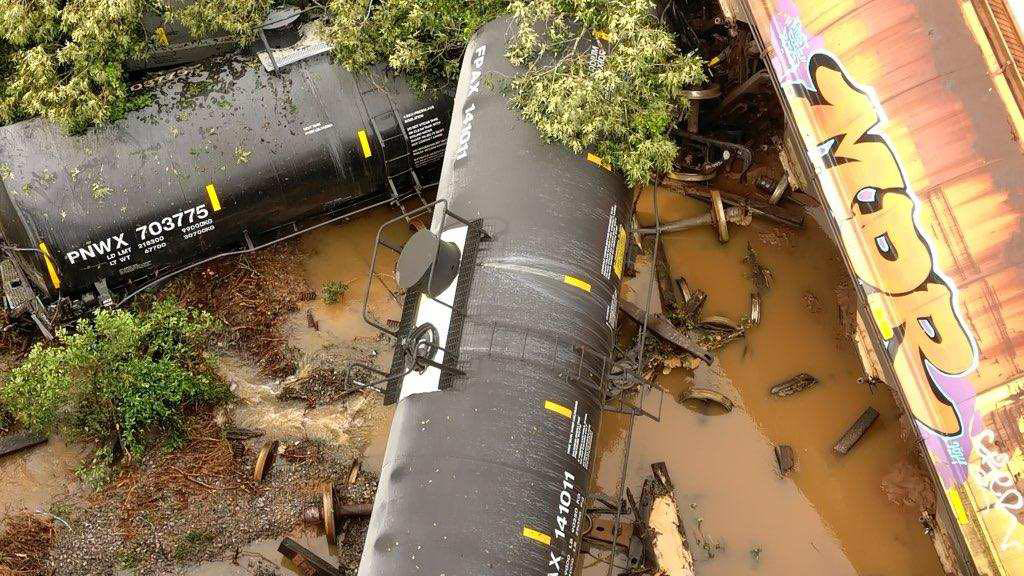
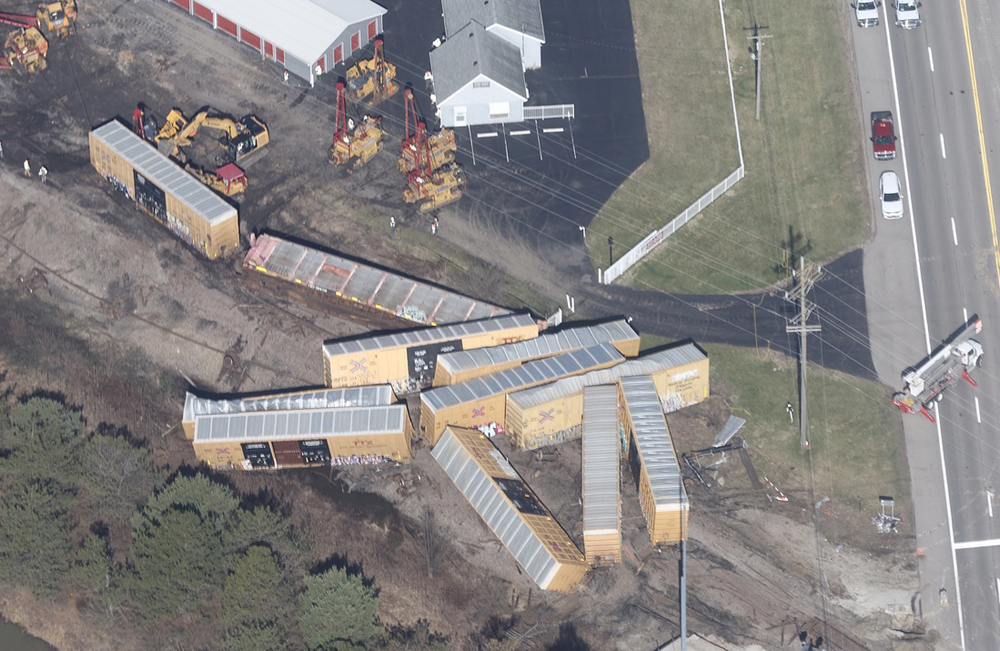
The train length advisory cites three of those derailments — the March 4 Norfolk Southern derailment in Springfield, Ohio; the Nov. 1, 2022 NS derailment in Ravenna, Ohio; and the March 24, 2022 derailment of a Union Pacific train in Rockwell, Iowa — where train handling is believed to have caused or contributed to the wrecks.
The FRA noted that before certifying locomotive engineers, regulations require railroads to determine that an engineer “has demonstrated the skills necessary to safely operate trains in the most demanding class or type of service that the person will be permitted to perform. In the context of longer trains, the engineer must be adequately trained in their operation and demonstrate an ability to safely do so prior to being called for such operation.”
The safety advisory says it’s one thing to operate a 100-car train and quite another to operate one with 200 cars.
“An engineer who has safely operated a 100-car consist over a particular territory for the past five years, but has never been trained and qualified on a longer consist, should not be called to operate a 200-car train without additional training on the operational complexities involved,” the advisory says. “A locomotive engineer cannot be expected to safely operate in a more demanding service without proper additional training that covers the unique challenges and complexities those trains present.”
Rail labor leaders have long said that engineers need more training given the demands of operating long trains, including monitoring distributed power that may have locomotives placed in the middle and rear of trains.
Although the safety advisory lacks the teeth of regulations, industry observers expected railroads to follow the train length guidelines given the current focus on railroad safety in Washington and state legislatures. The Rail Safety Act proposed in the U.S. Senate would require the Department of Transportation to place a cap on train length and weight.
It was not immediately clear whether the 14-page advisory would lead to operational changes or curtailed train lengths.
The industry has maintained that long trains have operated safely for decades and that railroads’ safety records have improved significantly over the same period of time.
“All stakeholders – the FRA, railroads, and elected officials – share the same goal of continuously enhancing rail safety, minimizing adverse impacts to surrounding communities and keeping the goods that power our economy flowing,” an Association of American Railroads spokeswoman says. “The recommendations within this advisory align closely with the prudent steps railroads already take to do just that. The industry is committed to reviewing existing practices to see if there are areas for even greater safety improvement.”
Union Pacific noted that as train length has gone up, its mainline derailment rate has gone down.
“Union Pacific shares the same goals as our regulators, customers and the communities we serve – to safely deliver every carload. Even as train length has grown, mainline and siding derailments are down 13% since 2013 and 26% since 2019. We constantly evaluate our processes and continue to work with government agencies and industry partners to further improve safety,” spokesman Mike Jaixen says.
“Technology is playing a pivotal role in helping us continue to improve operational safety,” he adds. “One example is an advanced software tool that calculates a train’s forces in real time and allows a 24/7 expert operating team to monitor and make changes to train makeup or train handling instructions prior to departure. This technology-driven approach has further reduced mainline derailments throughout 2022 and thus far in 2023. Additionally, we are enhancing training programs and strengthening our safety culture through a joint effort with our union partners. We are also conducting root-cause analysis of incidents and engaging employees to help us identify action items to reduce the risk of injury or incident.”
The train makeup advisory was signed by the FRA’s top safety official, Karl Alexy. The train length advisory was signed by the FRA Administrator, Amit Bose.
“The advisory certainly goes beyond the earlier advisory’s focus on train make-up and that expanded scope may explain why the administrator wanted to be the signatory,” says Allan Rutter, who served as FRA administrator from 2001 through 2004. “How he and his safety team go about working with each of the Class I railroads to follow through on all the issues raised will be worth watching — implementing the advisory could have a bigger impact than issuing it.”
–Updated at 1:12 p.m. Central Time with AAR comment and at 5:22 Central Time with Union Pacific comment.
Share this article