





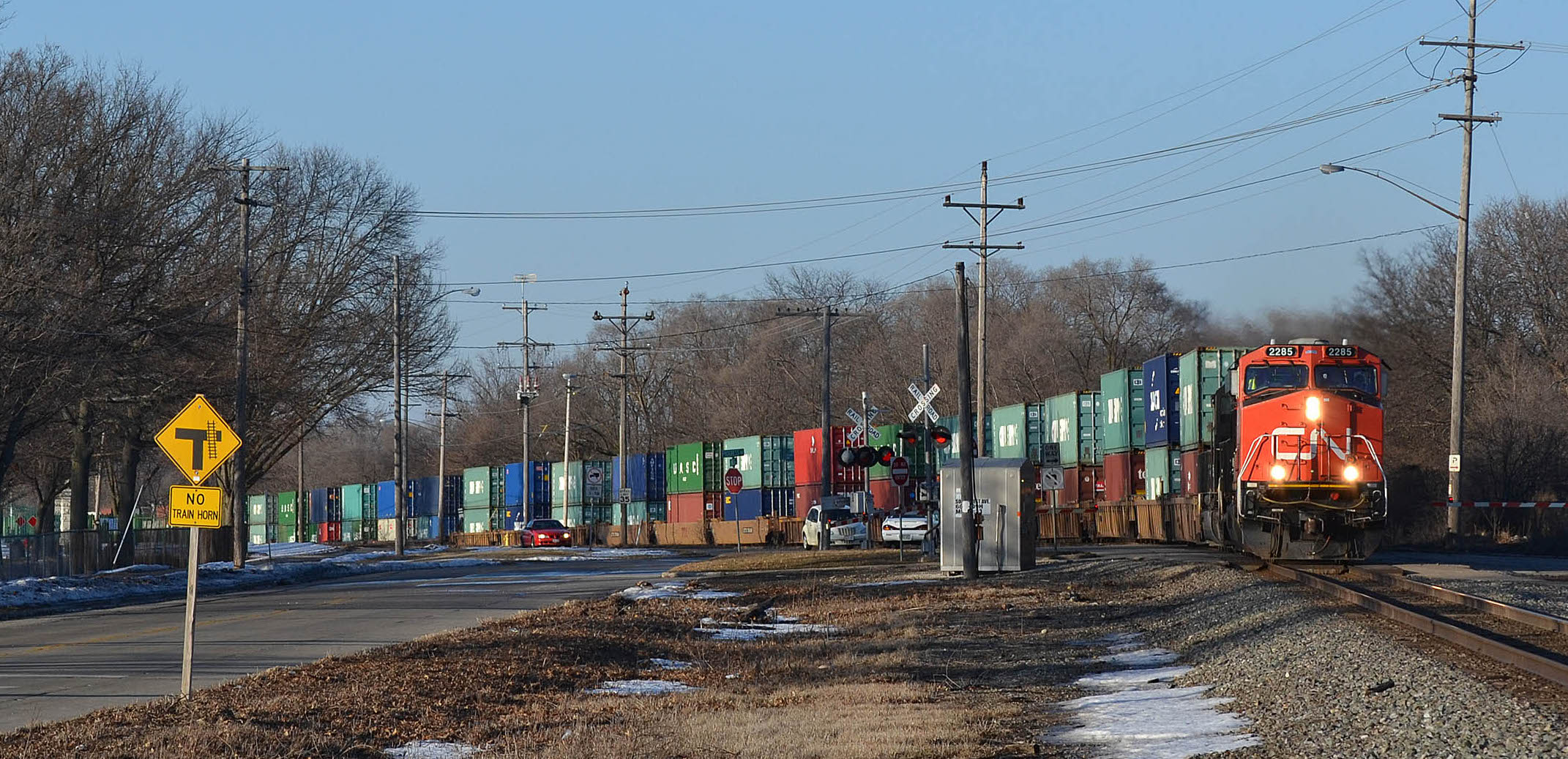
For more than a decade, British Columbia ports have won market share from U.S. West Coast ports for containers bound to Chicago and the Midwest — but that long-term trend has reversed in a matter of months due to the two-week dockworkers strike at Vancouver and Prince Rupert.
The July strike prompted U.S. importers to divert their freight to ports on the U.S. West Coast, particularly in the Pacific Northwest.
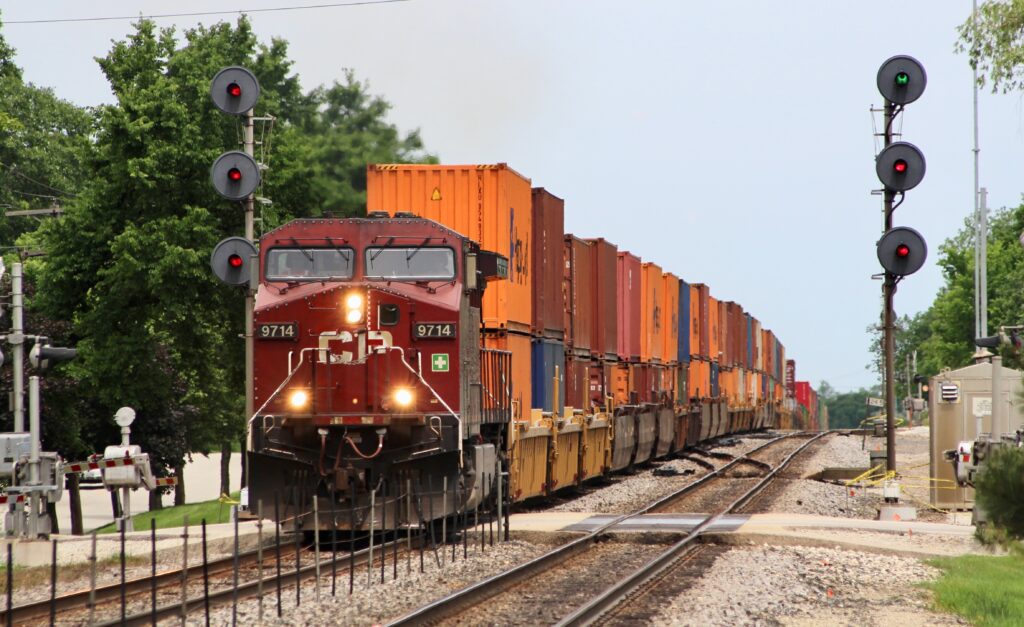
And that freight has not shifted back to the Canadian ports, which has hurt U.S.-bound international intermodal traffic handled by Canadian National and Canadian Pacific Kansas City, executives said this week. CN’s third-quarter intermodal volume was down 23%, while CPKC’s was off by 10%, due to a combination of a slowdown in imports as well as the port strike.
“We continue to see a hangover effect from cargo diversions to U.S. gateways,” CN Chief Marketing Officer Doug MacDonald said on the railway’s earnings call on Tuesday.
The big winner was the Northwest Seaport Alliance, which includes the ports of Seattle and Tacoma, Wash. Import container volume there surged by 62% from August to September, measured by TEUs, or 20-foot equivalent units, the common measure of international containers. BNSF Railway and Union Pacific serve the Pacific Northwest ports.
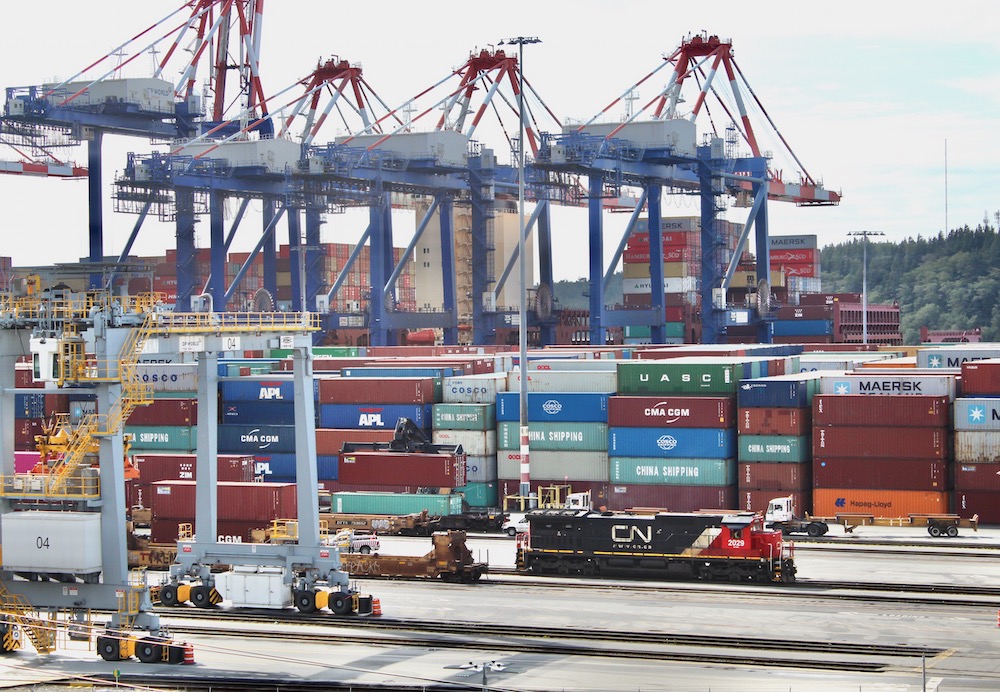
Prince Rupert’s September import TEU volume, meanwhile, fell 12% in September compared to August. Vancouver import TEU volume was up 2.8% from August to September, but that lagged the 10.8% TEU gain at U.S. West Coast ports over the same span.
“Clearly there has recently been a big disconnect between what has been happening in the U.S. PNW and Western Canada,” intermodal analyst Larry Gross says. “The recovery from the port strike in July has been slow and incomplete.”
Canada-U.S. cross-border international container volume was down 14% in September compared to August, Gross says, noting that the August volume was nearly down to July levels, which had suffered from the two-week port strike.
“Was this weakness just a hangover from the port strike? It seems unlikely,” Gross says. “It appears that something fundamental has changed in this market.”
RailState, a company that tracks North American rail movements using a network of sensors near main lines, noted the change in CN and CPKC international intermodal traffic.
“International intermodal volume (20-foot and 40-foot containers) decreased in September. The total average daily volume headed eastbound from the Western Canada ports was down 15.6% in September compared to August,” RailState said in a blog post. “It is important to note that August had somewhat inflated intermodal volume as the railways worked to clear the backlog at the western ports from the dockworkers’ strike in July. CPKC saw a steeper decline in volume, dropping 21% in September compared to a 16% drop for CN.”
“I do believe structurally there’s been somewhat of a change on the West Coast ports,” CPKC Chief Marketing Officer John Brooks said on the railway’s earnings call on Wednesday. “Just look at our train lengths and where our import volume is going. It’s all domestic Canada and very little volume going into the U.S.”
Brooks doesn’t expect a quick rebound in overall import volume anytime soon, based on conversations CPKC salespeople have had with steamship customers in Asia and Europe. It may take congestion at Los Angeles and Long Beach, Calif., to drive volume back to Vancouver, he suggested.
“Certainly there’s a reason why Vancouver and Prince Rupert have had success,” Brooks says. “We have port fluidity, we have some economic advantages.”
CN executives say those advantages — which include lower port container fees, faster turn times for container ships, and favorable exchange rates for the Canadian dollar — ultimately will lure traffic back to Vancouver and Prince Rupert.
“We think this is a temporary issue. There are some real structural advantages, to Rupert in particular, both … economic and service,” CN CEO Tracy Robinson said on the earnings call. “We have set Rupert up with a premium container service into U.S. markets, and that kind of strategy has been working. And … when the strike occurred it’s that business that started to move to U.S. ports. But that structural advantage continues. And we’re two days faster from China to Chicago than other alternatives.”
CN’s customers say the U.S.-bound international traffic will gradually shift back to Vancouver and Prince Rupert over the next year or so, MacDonald says.
“We think that business is going to come back. We’re working with our customers on it. Our call is that it will come back gradually,” Robinson says. “We’ve lost a little confidence in the West Coast ports.”
Between 2010 and 2019, container volume at Vancouver and Prince Rupert was up a combined 57% as they became gateways to the U.S., while U.S. West Coast volume was up only 9%.
U.S. Pacific Northwest ports were the hardest hit by the shift of volume to British Columbia ports. Intermodal volume from the Pacific Northwest to the Midwest lost half its share between 2006 and 2019.
One of the factors behind the shift of traffic to Vancouver and Rupert was labor strife at the ports of Los Angeles and Long Beach, including an eight-day dockworkers strike that began as a lockout in November 2012.


There is some who believe that the traffic went to the western Canada ports because of the logjam at the US ports due to COVID as well as the large surge that prevented ships from being able top quickly dock and unload. Combined with the self afflicted gunshot wound to their heads by the US Class Ones to try to put Op Ratio issues ahead of service to customers through the failure to hire crews to man the necessary trains needed to move containers and suddenly the BC ports became advantageous to those needing unfettered access to their cargo from the Far East. Now that the backups have been effectively erased, the direct route for containers through the superior US system for US Markets has once again become dominant. Unfortunately for everyone, imports from China have been greatly reduced due to the eco/political relationship currently festering between China and the US and many do not see that changing anytime in the near future which affects both Canadian and US Ports of Entry.
Oh great. I just bought $7,500 in CP stock.
And yeh, I know it’s CPKCS. I just have trouble saying it or writing it.
What would Pierre Berton say? (Canadians know who he is)
I believe he was an author but I don’t know what that has to do with saying or writing CPkc. Enlighten us please.
If people don’t want to work and don’t have to work, they won’t work. The U.S. lost the business to the Canadians. Then, the Canadians lost the business to the U.S. Next, the shippers will flip the bird to both and go to Mexico.
Great seeing the CPKC train photo taken from the station where i became a railfan in my hometown. Wonderful to see a photo from there used for a second day in a row. Thanks David
Canadian port workers go on strike for better wages and benefits. Shipping companies divert to other US ports. Much or the traffic stayed at these ports. Strike settled. Problem, much of the traffic hasn’t returned. With less traffic, ports will probably cut overtime, cut regular hours, then lay off personal. Union got what it wanted in short haul but in the long run they probably got less.
Shippers feel happy FOR NOW, but next time they’ll shift to Mexico or long haul it thru the Panama Canal to east coast ports.
How did the Port of Prince Rupert do?
Eventually, the end result of the union vs. port brinkmanship will be the steamship companies grounding containers in Mexico to be trucked into the US.
Don’t tell that to Keith Creel. He made a huge investment on the idea that it would go by rail, not by truck.