CHARLESTON, W.Va. — Dry weather in South America is negatively affecting global soybean supply, driving up prices and putting more pressure on U.S. farmers. This could be an opportunity for soybean-hauling railroads to seem carload gains months from now as farmers plant more soybeans this spring. These circumstances are building on momentum from an already record-setting U.S. harvest in 2021.
The U.S. Department of Agriculture recently slashed its South American soybean forecast by 8.7 million tons due to extended dry weather in Argentina, Paraguay, and the southern states of Brazil. U.S. soybean prices are now up 14% from a year ago at $15.70 per bushel. It is the second consecutive year soybean prices have risen to numbers largely unseen since 2014.
The record year for U.S. soybean production in 2021 saw farmers harvesting 4.44 billion bushels. This helped U.S. railroads achieve the highest number of grain carloads since 2008, according to the Association of American Railroads — more than 1.2 million carloads, or 3% more than 2020. These gains also allowed the U.S. agricultural industry to hit a new milestone, exporting grains valued at $177 billion last year, an 18% increase from 2020 and eclipsing the previous record set in 2014 by 14%.
With South America’s outlook deteriorating, U.S. farmers will likely plant more soybeans to help meet global demand. Soybeans serve as a base ingredient in a number of food products and animal feed. It is used domestically and internationally. China is, by far, the greatest importer, having received nearly 100 million tons of soybeans in 2021. The European Union, Mexico, and Thailand are also top importers.
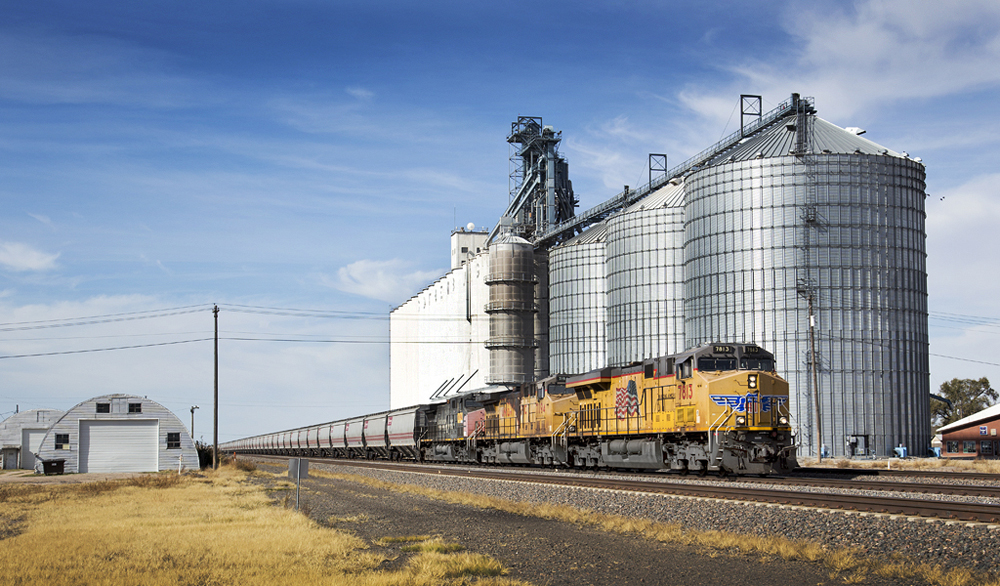
Further growth in soybean production and its subsequent fall harvest will present the greatest opportunities to railroads in the grain-rich states of Illinois, Iowa, Minnesota, Indiana, and Nebraska; these five states account for half of the country’s production. Railroads and routes hauling the grain to export facilities on the West Coast, the Gulf, and to a lesser extent, the East Coast, may also benefit if 2022 yields a promising harvest.
And since all of the country’s Class I railroads interlace throughout the Midwest, no single railroad exclusively benefits from a rise in soybeans. Most railroads could potentially see modest increases in carloads, barring an unforeseen downturn in another type of grain that adversely affects total carloads.
Such was the case in Canada last year when a persistent drought affected crops in the Canadian prairies, dragging down carloads and revenue on Canadian National and Canadian Pacific that was only partially offset by each railroad’s U.S. business.
On the heels of a less-than-stellar harvest in Canada, and the second consecutive La Nina-induced drought in South America, a lot of attention has again turned to the U.S. and demand is at an all-time high. Railroads can benefit by hauling more of this seasonal business and they have several months to prepare and allocate resources accordingly.
Class I railroads are now hiring and training new workers in an effort to meet post-pandemic demand. And the second phase of Precision Scheduled Railroading, after slashing operating costs and improving efficiencies, focuses the concept of a “Pivot to Growth,” in which a punctual railroad touts its reliable service to capture new business. These initiatives, linked with a robust harvest, present an opportunity for incremental carload growth.
It’s still premature to judge how much of a global soybean deficit the U.S. will attempt to fill, or what demand could mean for carloads or new business. But the momentum is there, demand is high, and railroads have plenty of time to prepare. For those reasons, I am keeping an eye on soybeans in 2022.
— Chase Gunnoe works in marketing & sales for the freight rail industry and is the author of Carload Considerations, a monthly commentary series at Trains News Wire. It will discuss the freight rail industry, commodities, and economic trends. Its views are the sole opinion of its author with no particular emphasis on a specific railroad or shipper.
Share this article