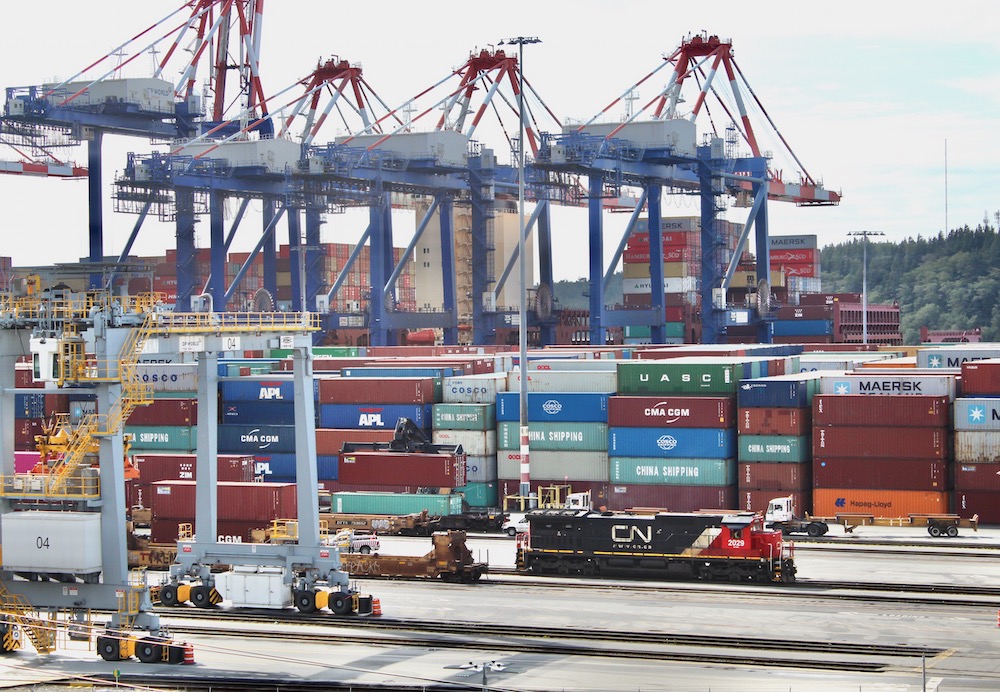
VANCOUVER, British Columbia — The Canadian government is prepared to impose a settlement in the labor dispute at British Columbia ports after dock workers again rejected a tentative deal on Friday night.
Labor Minister Seamus O’Regan wrote in a statement today (July 29) that he has directed the Canada Industrial Relations Board to determine whether the decision by members of the International Longshore and Warehouse Union Canada means there can no longer be a negotiated settlement. “If the Board determines that to be the case,” O’Regan wrote, “I have directed them to either impose a new collective agreement on the parties or impose final binding arbitration to resolve outstanding terms” of an agreement.
“Our economy cannot face further disruption from this dispute,” O’Regan wrote.
The union, in a brief statement Friday announcing its no vote on the tentative agreement with the BC Maritime Maritime Employers Association, called on employers “to come to the table and negotiate something that works for our members and the industry.”
A statement from the employers’ group said the union’s “inability to ratify a fair and balanced recommended tentative agreement has left Canadians, businesses, and the entire supply chain in a perilous state that has cost billions and will further hurt affordability and increase costs for Canadians.” It said the four-year agreement would have provided a compounded wage increase of 19.2%, a signing bonus of C$1.48 per hour (about C$3,000 for full-time employees) and an 18.5% increase in a retirement lump-sum payment. The union had previously said it did not believe the agreement did enough to protect jobs.
Dock workers walked out on July 1, returning after 13 days when federal mediators helped reach a tentative settlement. That tentative deal — the same one that was turned down Friday — was rejected once before, briefly sending ILWU members back to the picket lines before the government ruled that walkout was illegal because of the lack of a 72-hour notice required by Canadian law.
The loss of intermodal traffic resulting from the strike has been bruising for Canadian railroads. CPKC estimates the strike cost it about $80 million in revenue in the short term; CN said it was a factor in a 11% drop in volume for July as of its quarterly earnings call on July 25 [see “CN’s outlook dims …,” Trains News Wire, July 25, 2023].
Share this article