SACRAMENTO, Calif. — The California High Speed Rail Authority has applied for $450 million in federal grants to continue construction of the project in the state’s Central Valley. Some $446 million of that would come from the Federal Railroad Administration Consolidated Rail Infrastructure and Safety Improvements (CRISI) program.
The Authority has also released the final environmental document for the Southern California segment between Palmdale and Burbank, the last environmental document needed for the full San Francisco-Los Angeles route.
“These federal funds would help construct the first part of the project’s Merced extension and support jobs and small businesses while enhancing economic development and improving mobility,” Brian Kelly, the authority’s CEO, said in a press release.
Specifically, the funds would help pay for construction of 8 miles of the extension from Madera to Merced, Calif., as well as utility relocation and advancing other elements of the project to connect to the 119-mile Central Valley segment already under construction. It is part of the authority’s work to extend to 119 miles currently under construction to 171 miles, running from Merced to Bakersfield.
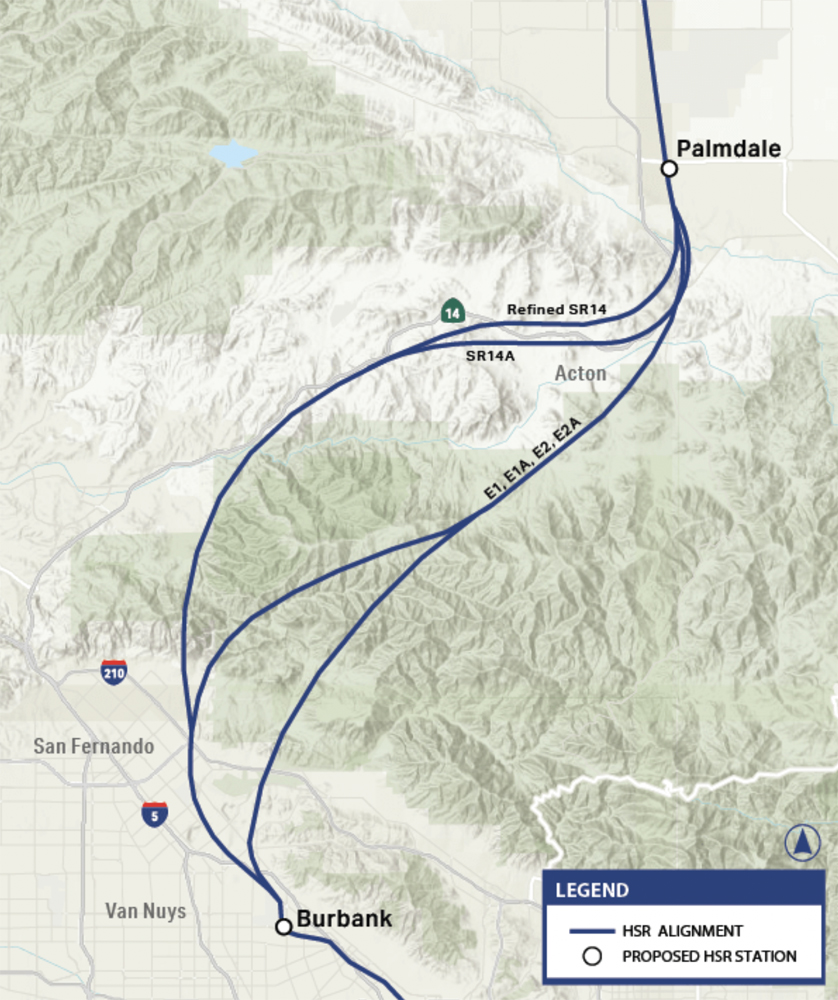
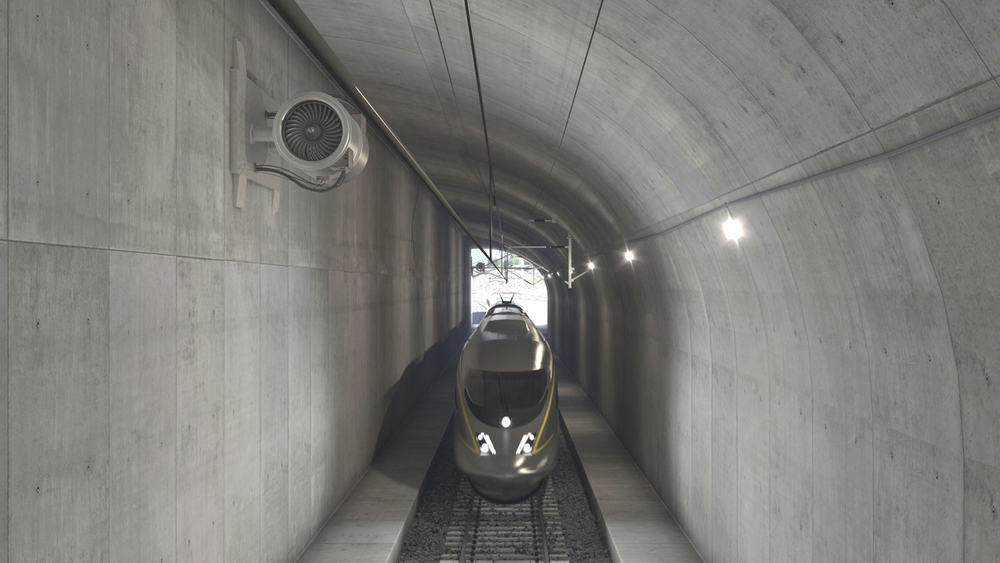
The environmental document for the approximately Palmdale-Burbank segment will be presented to the authority’s board of directors for consideration at a meeting June 26-27. The segment will include approximately 30 miles of tunneling, including some 28 miles through the mountains between the San Fernando and Antelope valleys. The final document includes analysis of six potential routes as well as the no-build alternative; the preferred alternative is an approximately 38-mile route mostly following State Route 14. It would be underground through the community of Acton and much of the Angeles National Forest and San Gabriel Mountains National Monument. The full document is available here.
“This is a huge milestone for the project and it represents the culmination of years of analysis and stakeholder engagement to connect high-speed rail between two of the state’s major metropolitan centers, San Francisco and Los Angeles,” Kelly said in a press release. “With board approval, the project will have environmental clearance for 463 miles of the Phase 1 system between downtown San Francisco and downtown Los Angeles.”