LAS VEGAS, Nev. — The moment for Brightline West has arrived.
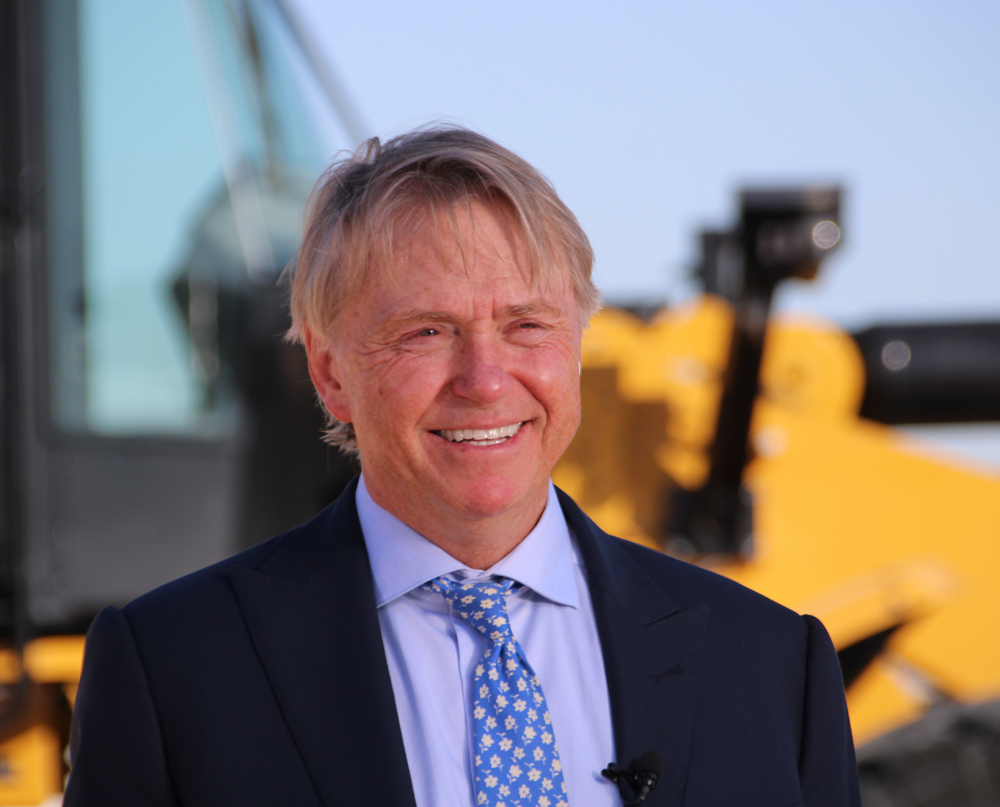
But to Brightline founder Wes Edens — as well as Transportation Secretary Pete Buttigieg and others — a groundbreaking ceremony today on a lot a short distance south of the Las Vegas Strip marked more than just the official start of construction on the 218-mile project to link Las Vegas and Southern California by high-speed train. It was the start of an entire high-speed rail industry in the United States.
“We have an automobile industry,” Edens said. “We have an airplane industry. There’s no reason the United States of America should not be the leader in the world for the high-speed rail industry.”
Edens sees the route between Las Vegas and Rancho Cucamonga as proof of concept for high-speed rail between city pairs that are “too short to fly, too long to drive.
“Our vision is this blueprint is can be repeated all over this country,” he said. “Houston-Dallas, Portland-Seattle, Atlanta-Charlotte — there are many trains that we need to build and will be built as a result of what we’re doing out here right now.”
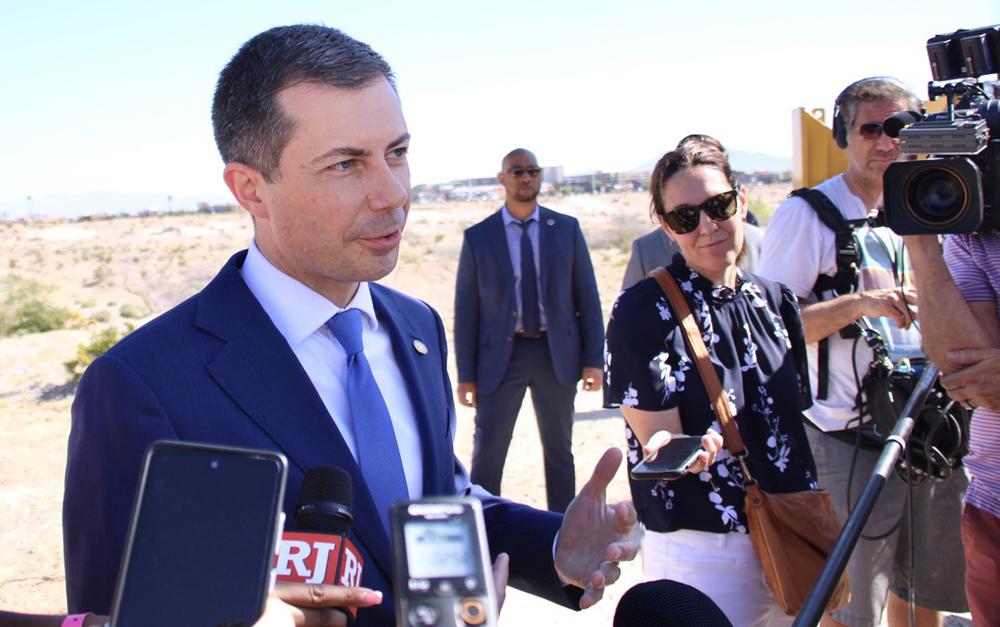
Said Buttigieg, “A few weeks ago, a journalist asked me, ‘Why can’t we have high-speed rail? We want high-speed rail.’ I said, ‘You sound like my boss.’
“But my real answer was we can if we choose to. And now America has decided.”
They were just two of a parade of speakers — also including Nevada Gov. Joe Lombardo, the state’s two U.S. Senators, and five members of the House of Representatives (three from Nevada, two from California) — who heralded the long-awaited start of the project that has, as one said, been discussed in some form since the 1980s.
They saw it not just as a transportation project, though they certainly welcome that aspect (“I have never heard of a stretch of Interstate described as a parking lot more often than I-15,” Buttigieg said), they also pointed to its economic and environmental aspects. Construction is supposed to create 35,000 jobs, the completed line will support 1,000 permanent positions; U.S. Sen. Jacky Rosen said the project is projected to have $10 billion in economic impact in the state. The environmental impact will come from an electrified rail line that takes cars of the road — 800 million pounds of carbon emissions annually, Buttigieg said.
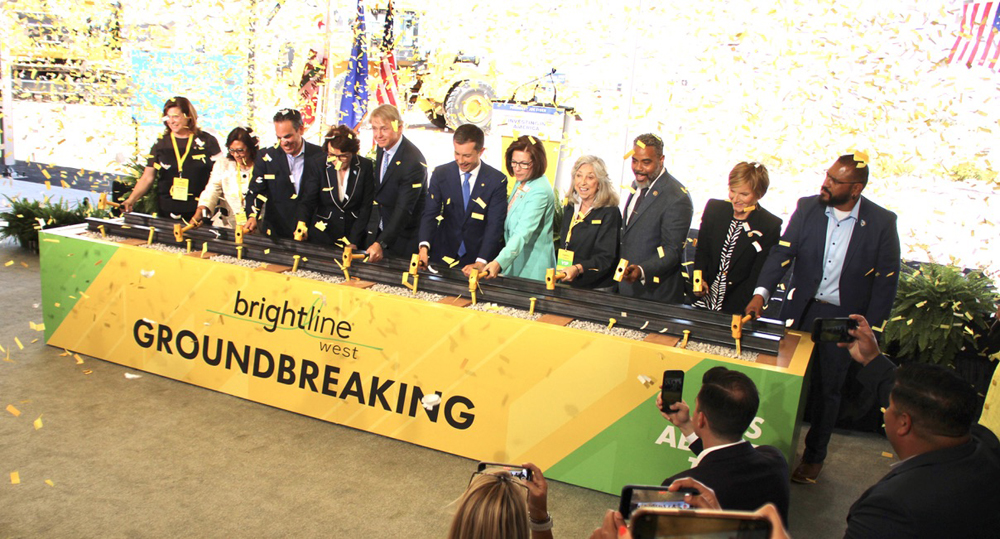
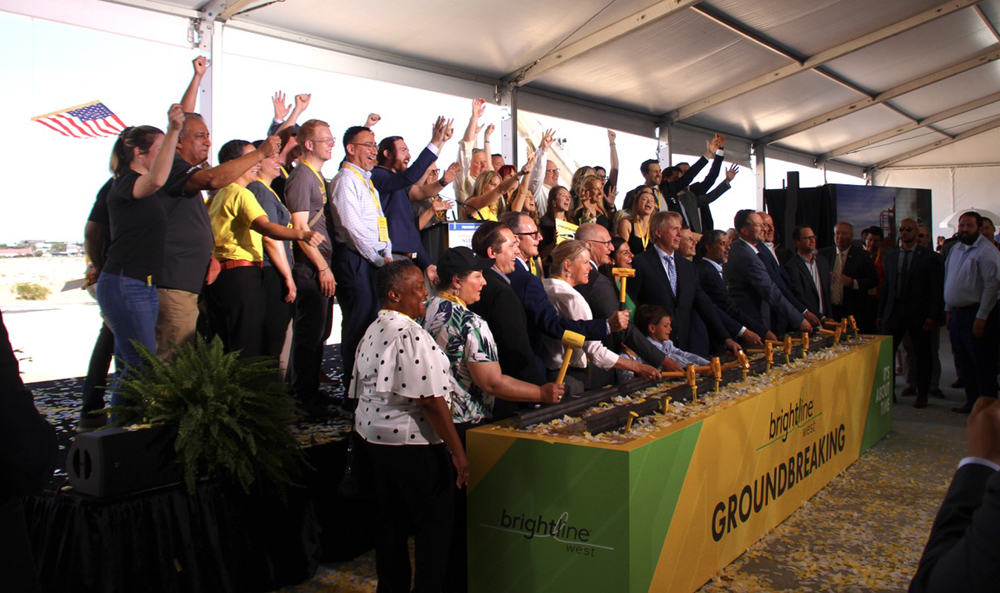
The Monday morning event, on an increasingly scorching day, was both undeniably Vegas in flavor — where else would a groundbreaking include college and professional cheerleaders? — and typically Brightline in both its thorough branding and attention to detail. A vacant lot had been transformed in next to no time (“You should have seen it a week ago,” one person said) with a sturdy tent-like structure, open on one side to provide the Las Vegas skyline as a backdrop for speakers (and TV remote shots). This was not some backyard wedding tent, either, but one big enough to handle the 600 invited guests and media who showed up.
Given the role real estate has played in the original Brightline project in Florida, Edens couldn’t help but comment on the large, barren plot of land adjacent to Las Vegas Boulevard that will be the site of the Las Vegas station.
“I encourage everyone to take lots of photos out there because it’ll be unrecognizable,” he said. “I can pretty much guarantee that everything will be built on. There will be all kinds of communities, private apartments, offices, casinos, a lot of different things.”
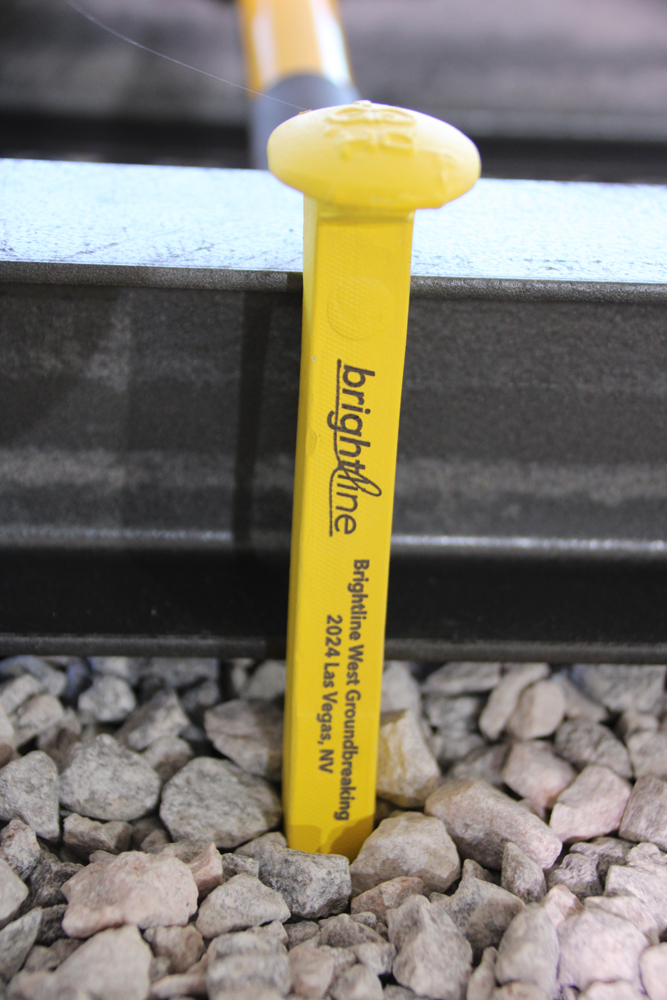
First, of course, there will be a rail line. The company has laid down the ambitious goal of having it running in time for the 2028 Olympic Games in Los Angeles, which are set to open that July 14. When the officials hammered those Brightline yellow spikes into the gravel to mark groundbreaking, the countdown clock for the Games was at 1,550 days.
California has a reputation as being a notoriously difficult place to build major projects, but Edens told Trains News Wire he’s confident about that process.
“We’ve gotten massive cooperation from both Nevada and California on the right-of-way,” he said. We have construction permits in the right of way. We expect it to be no different in California than here, not at all. Actually, the heavy lift has already been done in terms of all the environmental and the permitting and all those processes. That stuff has taken years. We feel like that’s behind us now. It’s just a matter of literally putting shovels in the ground and building it.”
Among the many tasks that will need to be addressed soon to meet that four-year deadline: ordering of equipment. The initial Brightline West operating model, as laid out in the environmental report for the Victor Valley-Rancho Cucamonga segment, calls for 23 trains a day each way, operating on 45-minute headways. Tom Rutkowski, Brightline vice president and chief mechanical officer, says the company estimates it will need 10 trainsets to begin operations. Given the lead time for construction, that would indicate that the need to order equipment to have it ready in time would be fast approaching; Rutkowski said he could not speak to specifics but that “we are literally in the final stages of the decision … we are close.”
— Updated April 24 at 10 a.m. to correct carbon emissions figure to 800 million pounds.
Share this article