WASHINGTON — Class I railroads, short lines, and rail labor staked out familiar positions during the Federal Railroad Administration’s public hearing on its proposed two-person crew rule on Wednesday.
The Association of American Railroads said there’s no safety data to back a rule that would require two people to be in the cab of a locomotive.
“The record is clear. There is no evidence that two person crews are safer than one person crews,” Michael Rush, the AAR’s senior vice president of safety and operations, told the FRA. Passenger and commuter trains throughout the U.S. operate safely with one person in the cab, he notes, as do freight and passenger trains in Europe.
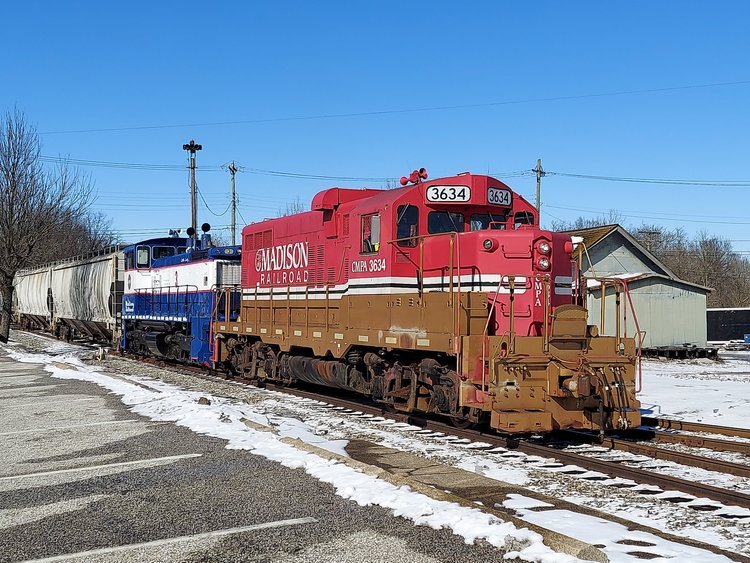
The American Short Line and Regional Railroad Association said the rule would devastate the 420 small railroads that currently operate safely with one person in the cab of the locomotive, including 195 that would not be eligible to apply for special approval of their legacy operations.
“This new prescriptive crew size rulemaking … would threaten the ability of short lines to survive and thrive in the future by adding major new costs and regulatory burdens for no attendant safety benefit,” ASLRRA President Chuck Baker says, noting that FRA’s estimate that only seven short lines would be affected by the rule was way off the mark.
And rail labor leaders told the FRA that engineer-only operations are inherently dangerous and that technology such as positive train control and advanced cruise control systems cannot replace another set of eyes in the cab.
Vince Verna, vice president and national legislative representative for the Brotherhood of Locomotive Engineers and Trainmen, cited disastrous wrecks, including the collision of a Metrolink and Union Pacific trains at Chatsworth, Calif.; overspeed derailments in the Bronx, N.Y., and Philadelphia; and the Lac Megantic, Quebec, oil train disaster, that he says could have been prevented by having a conductor in the cab.
Jeremy Ferguson, president of the SMART-TD union that represents conductors, recounted a harrowing tale of an engineer who was operating a 16,000-ton CSX coal train downgrade when his conductor shouted across the cab that there was a young boy on the tracks.
The boy, who was around 3 years old, didn’t budge when the engineer sounded the horn and bell. It was only when the conductor exited the cab and ran out to the nose of the engine and waved his arms that the boy moved off the tracks at the last second. “If my conductor had not been there, I am convinced I would have killed that poor child,” the engineer recalled.
The FRA first proposed a two-person crew rule for Class I railroads in 2016. The agency shelved the proposal during the Trump administration, however, arguing that there was no safety data to support the regulation. But a federal court struck down the FRA’s decision and Joe Biden made a two-person crew mandate a campaign promise while running for the White House in 2020.
The current proposal, unveiled in July, would impose a minimum train crew size.
Although it would allow railroads to apply for permission to use one-person crews, the AAR says it sets the bar impossibly high — so high, in fact, that current two-person operations wouldn’t even clear the hurdle.
Railroad officials also questioned why the FRA would set out to stymie technological advancements at railroads while other Department of Transportation agencies are backing the development of autonomous trucks.
“If the proposed rule is implemented, it will hobble our entire industry’s ability to compete with truck and limit our growth potential,” says Tom Schnautz, vice president of advanced train control at Norfolk Southern.
With more than 12,000 written comments about the rule in its files, FRA officials at the hearing asked only a few questions. And FRA Administrator Amit Bose did not attend.
The FRA has extended the comment period until Dec. 21, 2022.
Share this article