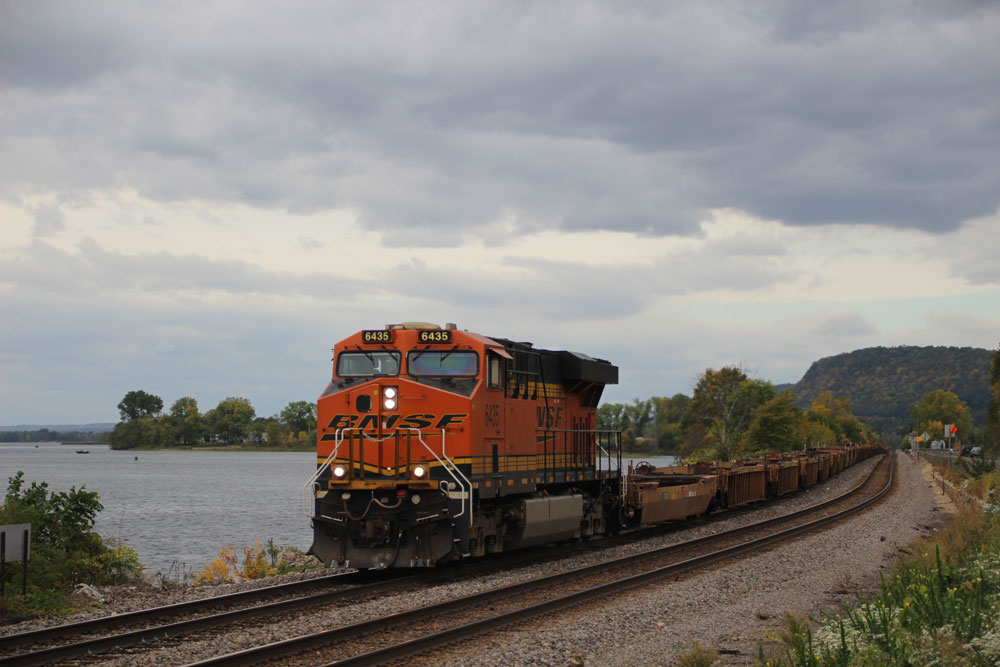
Intermodal is having a moment in the sun thanks to the impact of the pandemic. Consumers are buying goods faster than retailers can refill their shelves and warehouses, so imports are surging and ports are clogged. Parcel shipments are soaring as a decade’s worth of e-commerce growth was crammed into the past year. U.S. intermodal volume set a record for January through May, and railroads have struggled to handle the onslaught of containers and trailers.
This is a good problem to have. But sooner or later things will settle into a new normal. What then? Intermodal growth was slowing before volume peaked in 2018. The U.S. Class I systems have pruned interline service since then, dropping steel-wheel connections between hundreds of city pairs in the name of simplicity.
Today’s North American intermodal network is all spine and no ribs, as intermodal analyst Larry Gross likes to say. In fact, three-quarters of all intermodal traffic moves in just 10 lanes, with Los Angeles and New Jersey to Chicago by far the busiest. So, where can railroads turn to put meat on the bones of the intermodal network?
Intermodal veteran Ted Prince — who is equal parts intermodal visionary, champion, and critic — is brimming with ideas. The easy business has already migrated to the railroads, he says, but intermodal’s potential is far greater than what moves on rails today.
One new market to tap, Prince says, is connecting cities that are within roughly 500 miles of the Mississippi River. This so-called watershed traffic sits in an intermodal no man’s land between the big Eastern and Western railroads. Aside from Norfolk Southern service here and there — Detroit-Kansas City RoadRailers, Dallas-Atlanta via the Meridian Speedway, and Kansas City to Louisville, Ky., and Atlanta — intermodal doesn’t link cities within the watershed.
Separated by roughly 875 miles, “tweener” points like Minneapolis and Pittsburgh are a decent length of haul for one railroad, but not for two. And then there’s the problem of getting loads through Chicago, where steel-wheel interchange is limited and crosstown rubber-tire moves are an expensive complication.
Prince’s solution is to build small intermodal sorting hubs outside key gateways like Chicago and Memphis. These terminals would build traffic density through efficient steel-wheel interchange and lift containers between trains to create blocks bound for common destinations. “One or two of those could just astronomically catapult volume into new lanes,” Prince says. “To grow the business we’re going to have to be in new lanes. And new lanes require a new way of looking at the network and much more cooperation and coordination.”
CSX Transportation thought it had built a better mousetrap with the intermodal sorting center it opened in North Baltimore, Ohio, a decade ago. The terminal put the hub in CSX’s hub-and-spoke intermodal network, which allowed the railroad to serve smaller markets. But under new CEO E. Hunter Harrison, CSX in 2017 scuttled hub-and-spoke in favor of a lower cost, more profitable, and more reliable point-to-point intermodal network connecting big markets.
The problem with North Baltimore was not necessarily the sorting hub concept but the way CSX ran it. Boxes might be handled five times, rather than simply lifted from one train to another. And how long each container spent in the terminal was a mystery because it was not tracked.
Intermodal sorting hubs do work in Europe. I always hesitate to bring up European examples since the railroad economics are so different. But just north of Milan, Hupac’s Terminal Busto Arsizio-Gallarate handles dozens of intermodal train pairs per day and sorts traffic moving between points in Italy and a half-dozen countries. Substitute Dallas-Detroit, Omaha-Columbus, or Houston-Jacksonville for Rome-Rotterdam and you get the idea.

Building a sorting hub or two – whether financed by an infrastructure fund, Chicago’s CREATE, or the railroads themselves – does not get you past the short-haul issue. And Prince admits there’s no obvious catalyst for railroads to suddenly cooperate, share revenue, and embrace an intermodal mentality based on something other than the 12,000-foot stack train.
But if growth is a goal what’s the alternative? Coal is dying. Most carload commodities are declining. So that leaves intermodal as the industry’s growth engine. There’s plenty of potential domestic intermodal business in the watershed, Prince says, and the critical mass to make it work. “There’s nothing holding railroads back but fear,” Prince says. “And I would say that there’s a lot of fear of Wall Street.”
You can reach Bill Stephens at bybillstephens@gmail.com and follow him on Twitter @bybillstephens
Share this article