WASHINGTON — Amtrak lacks an overall strategy to improve service to passengers with disabilities, leading to disjointed efforts that are not well coordinated between departments, the Amtrak Office of Inspector General said in a report issued Tuesday (July 15, 2025).
The report credits Amtrak with increased engagement with disability advocacy groups over the last six years, with several of those groups saying they have good working relationships with the company. But italso found that the lack of a strategy setting goals and priorities informed by data, Amtrak may not focusing on actions with the highest potential to aid customers. As a result, it could be exposed to avoidable financial, legal, and reputational risks.
The report identifies three key areas where Amtrak can improve:
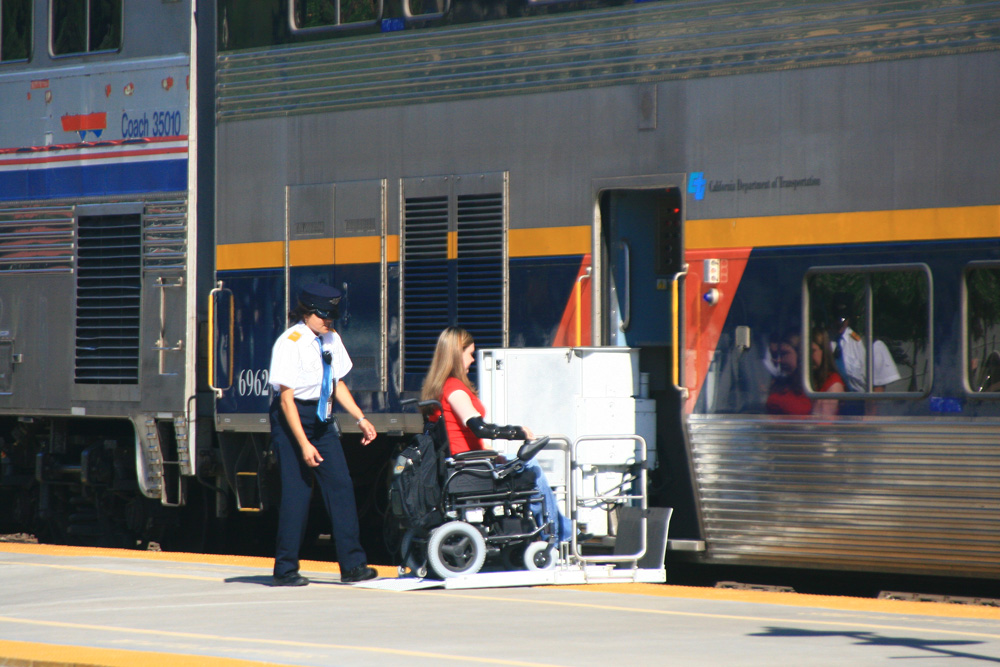
— Interactions with employees who deal with the public. The OIG found that 39% of complaints in its sample related to poor assistance at stations and with getting on and off trains, and 22% dealt with insensitive staff interactions. OIG auditors also found onboard policies were not being consistently enforced, seeing such things as space for passengers with disabilities being used for storage.
— Communication. The audit found that passengers cannot always request in-station assistance, that station-specific information is limited, and that accessibility information can be limited in on-line booking systems.
— Access to onboard amenities is not always available. This is particularly true of food service, with access to café and dining cars not always available for those in mobility devices, and employees not always meeting the requirement to offer at-seat food service.
The report offers several recommendations to address this issues, which Amtrak agreed with in its response and described how it would address them.
The full report is available here.
Share this article