REED POINT, Mont. — As derailment cleanup continues at the site of the Montana Rail Link Yellowstone River bridge collapse, the Brotherhood of Locomotive Engineers and Trainmen has reached an agreement that will allow MRL crews to operate detour trains over BNSF Railway.
“Montana Rail Link continues to coordinate on alternative routes for train traffic to minimize impacts of the derailment on customers and the nation’s supply chain,” unified command said in a July 1 update. “The Brotherhood of Locomotive Engineers and Trainmen and MRL signed an agreement that will allow MRL train crews to run trains from Laurel to Great Falls and Great Falls to Shelby. This will begin as soon as possible.”
The reroutes allow BNSF overhead traffic normally routed over MRL to reach the former Great Northern Hi-Line across Montana’s northern tier.
BNSF, in a June 30 update to the Surface Transportation Board, said it’s rerouting about 20 trains per day over its Northern Transcon. The bridge collapse has complicated BNSF’s efforts to meet STB-mandated volume quotas for moving Navajo Transitional Energy Co. export coal from its Spring Creek Mine in Montana to the Westshore Terminal in British Columbia.
“BNSF previously advised the Board that we projected shipping a total of twenty-two (22) trains for NTEC in June 2023. Due to the MRL bridge outage, BNSF anticipates that it will end the month of June having shipped approximately seventeen (17) trains for NTEC,” BNSF told the board. “July volumes may also be impacted until the MRL bridge is back in service. BNSF has communicated this directly to NTEC and will continue to update both the Board and NTEC as this situation evolves.”
NTEC’s loaded and empty coal trains normally use the MRL. Because of capacity constraints on detour routes, BNSF is sending loads via Laurel, Great Falls, and Shelby, Mont., and empties on a circuitous route on the Hi-Line via Snowden, Mont., and the former Northern Pacific main from there to Laurel.
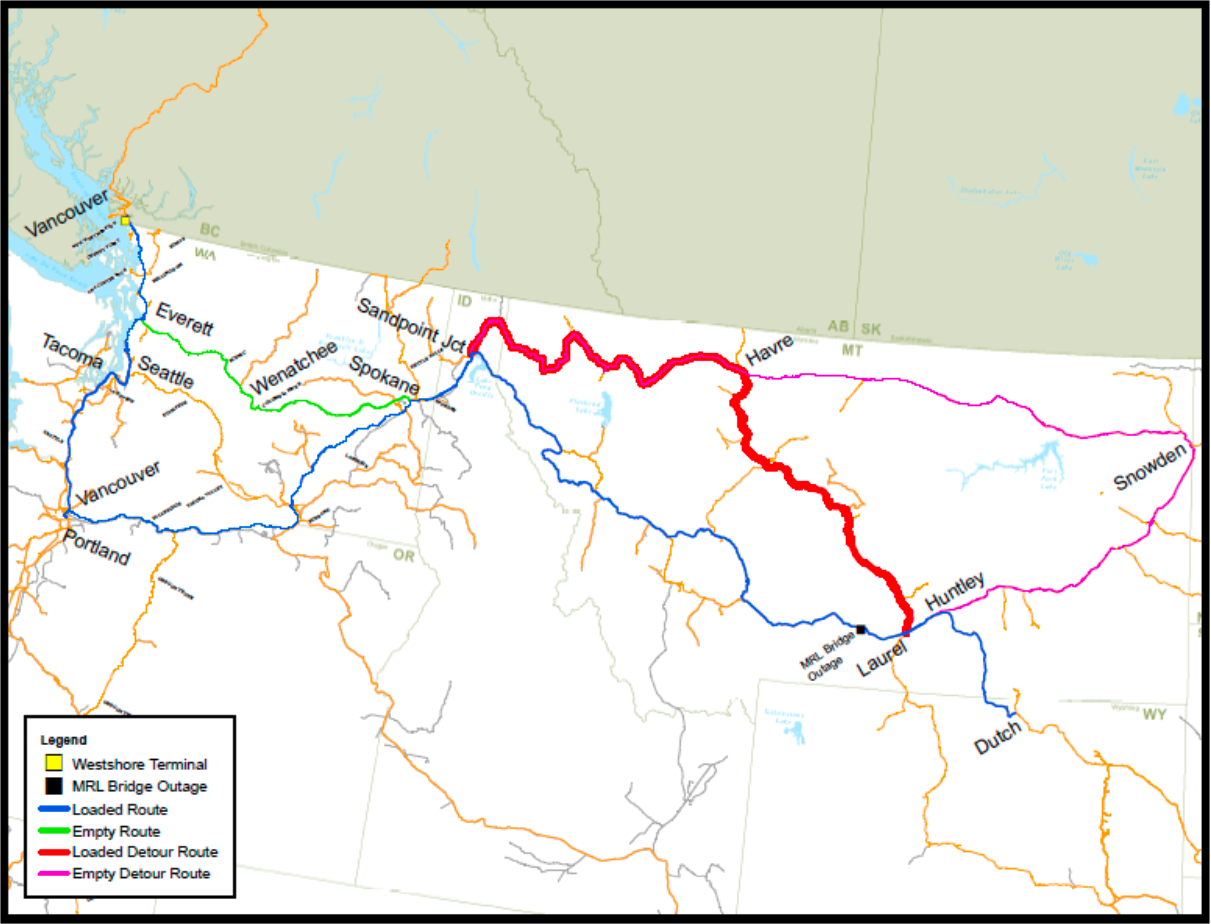
“MRL is BNSF’s primary route for coal trains moving to and from the Pacific Northwest. Due to
this outage, BNSF has to re-route export coal trains, along with other BNSF traffic moving along on the MRL route (approximately 20 trains per day), via BNSF’s Northern Transcon route,” BNSF told the STB. “BNSF must slot the re-routed traffic in with existing traffic moving on this line, creating congestion. BNSF also is re-routing empty export coal trains sets approximately 500 miles out of route, impacting cycle times and BNSF’s ability to provide empty trains to the mines.”
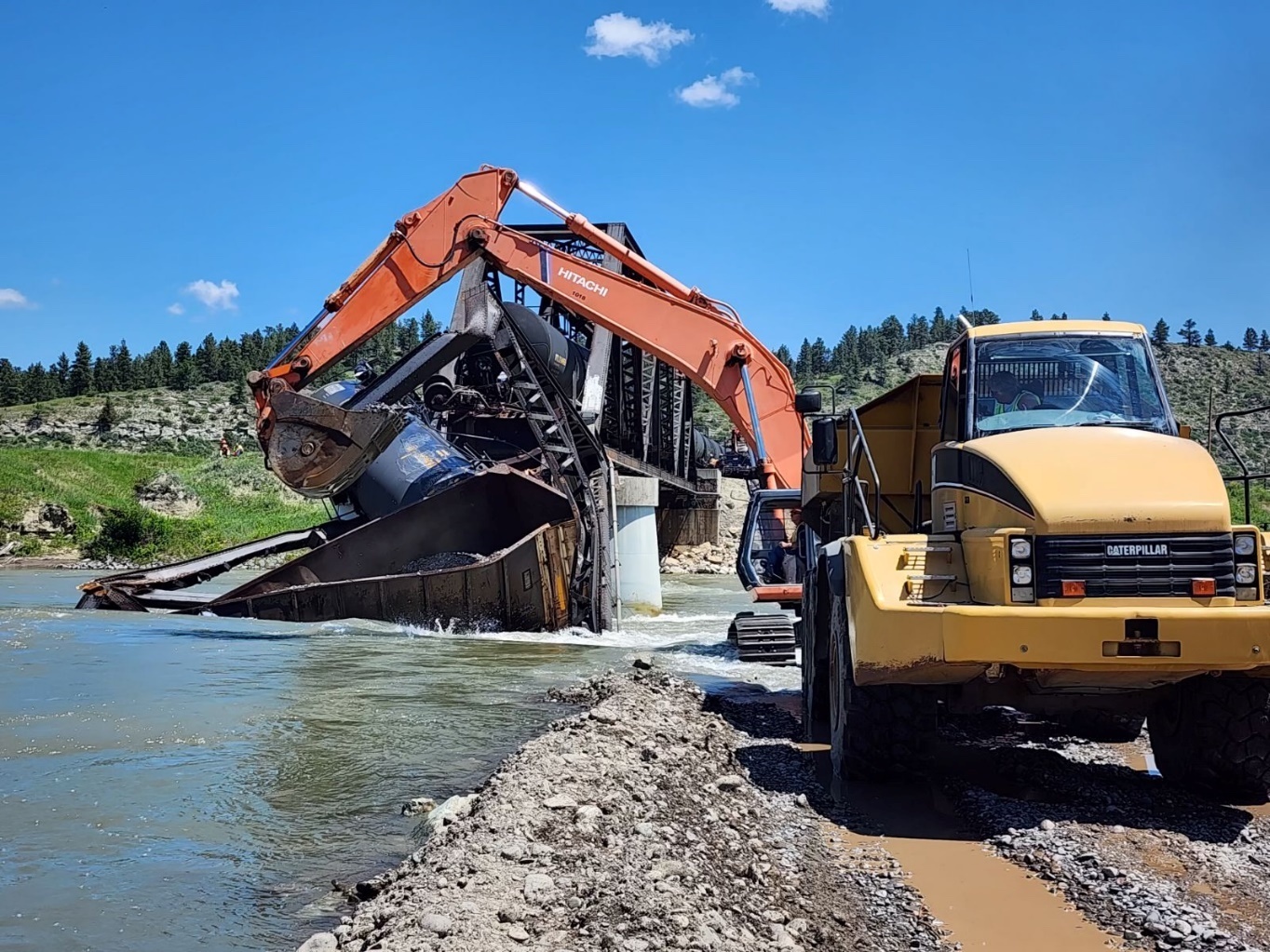
On Sunday the last of the 10 cars that wound up in the Yellowstone River as a result of the June 24 derailment — a tank car carrying sulfur — was removed, unified command said. The loads were also removed from the three remaining cars carrying asphalt that were on the bridge’s eastern span into stable railcars; work was continuing on Monday to remove the now empty cars. Crews also were removing bridge steel from the river and monitoring riverbanks for asphalt that leaked from tank cars that derailed.
A bird was found dead with an oily substance on it, unified command said. Teams from the Oiled Bird Network continue to monitor for any other impacts on wildlife.
“Our team remains concerned and diligent to find any impacts to wildlife. We have been actively assessing the river and began removing the asphalt materials to help mitigate impacts to wildlife,” Chad Anderson, incident commander for the Montana Department of Environmental Quality, said in Sunday’s update.
— Updated at 9:25 p.m. with news that all railcars have been removed from the Yellowstone River.
Share this article