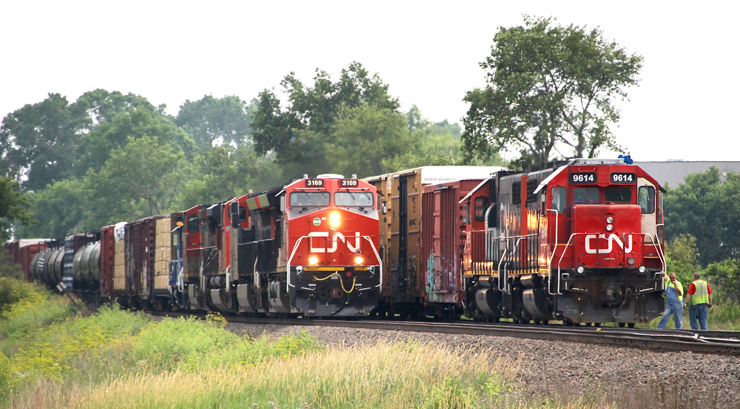
MONTREAL — Canadian National will cut costs as carload volume falls amid the coronavirus pandemic, but the railway expects bulk and domestic intermodal traffic to remain strong for at least the next two months.
The railway is currently handling more revenue ton-miles than it did last year at this point, thanks to grain, coal, potash, and domestic intermodal volume, CEO JJ Ruest told an investor webcast on Thursday. But overall carloads were down 7% last week, and are off by 6% for the year.
International intermodal is down due to the pandemic, and crude oil and frac sand traffic is declining due to the collapse of global oil prices. Crude oil traffic is likely to fall by at least half due to an oil price war the Saudis and Russians began earlier this month, Ruest says.
Automotive traffic will decline, as well, as North American assembly plants shut down for weeks and consumers pull back on spending, Ruest says, noting that North American auto sales could slump 15% or more this year.
CN has furloughed 1,400 operations employees, or about 7% of the people who work in the field in the U.S. and Canada. The railway will use the furloughed people as a reserve force in the event more workers are quarantined or are ill and cannot report to work, Ruest says.
The railway may idle some small yards if carload traffic continues to decline, and officials have drawn up plans to store locomotives and freight cars to reduce costs if volume declines further, Ruest says.
Most headquarters and office employees are now working from home. CN has stepped up cleaning and disinfecting efforts in locomotives, intermodal terminal cranes, shops, and offices where people need to work.
CN wants to protect the health and safety of its workforce, Ruest says, and ensure that they feel safe coming to work. “We need them to keep moving the economy,” he says.
Like other Class I systems, CN has separated its rail traffic controllers to reduce the likelihood of the spread of coronavirus. The railway is now dispatching its Canadian operations from three locations, up from just Edmonton, Alberta, and Montreal, and from two locations in the U.S. instead of just one dispatching center in Chicago. At the beginning of each shift, medical staff check the temperature of each dispatcher and ask health questions as part of an effort to ensure workers are healthy.
Chief Financial Officer Ghislain Houle says CN is well-positioned to weather a downturn due to its strong cash position and flexible credit arrangements.
The railway will reduce its capital budget by a yet to be specified amount as it scales back the number of capacity expansion projects it had planned for this year, Houle says.
CN does not want to get caught short of track capacity, however, if traffic rebounds sharply after the pandemic passes, social distancing restrictions are lifted, and people return to work, the executives said.
CN continues to buy back its shares at a set amount every day, Houle says.
Ruest and Houle spoke with BMO Capital Markets analyst Fadi Chamoun during a webcast on Thursday afternoon.