

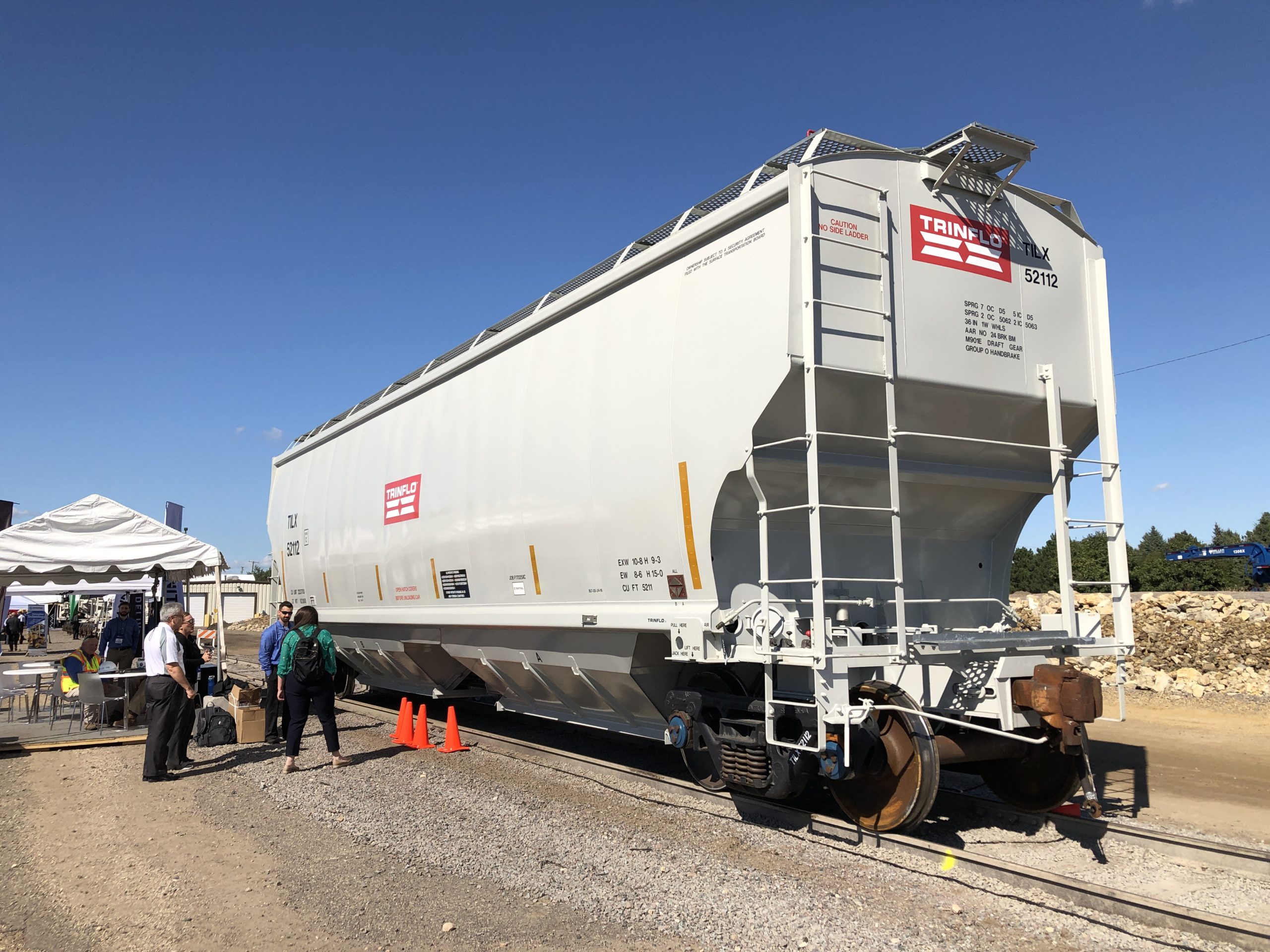
Dallas-based Trinity Rail’s new Trinflow 5,211 cubic foot capacity hopper is based on industry feedback to shorten railcars and make the most of capacity. The car is shorter compared with similar capacity cars, according to Senior Vice President Harry Zander.
“We used a design for the longitudinal outlets that was a proven design that we had used in the coal industry for thousands of builds, used in the aggregate business for thousands of cars, so we have a long history of this longitudinal door design,” he says. “It’s proven to be a great solution for unloading grain.”
Gate doors are operated by air, and the new design enables the car to empty faster than traditional covered hopper designs. It can even, as Zander notes, evacuate faster than many grain facilities can handle, leading to possible efficiency increases in that industry.
The cars are available for lease as the company continues to prove the concept, and the company expects to offer them for sale in the future.
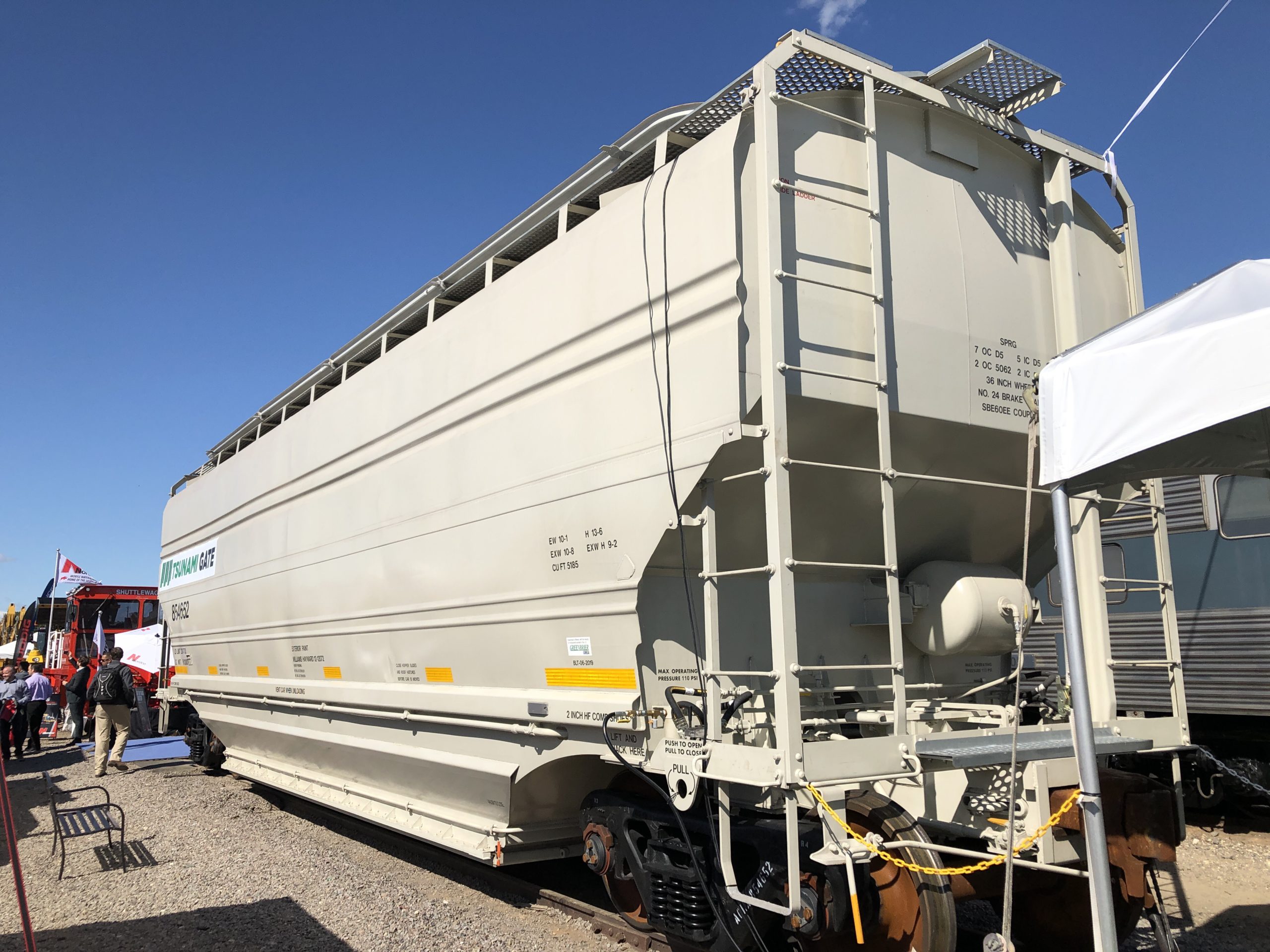
Meanwhile, Greenbrier has introduced its 5,185 cubic foot capacity Tsunami Gate covered hopper, displayed for the first time at Railway Interchange. The car, one of two prototypes in testing, features adjustable discharge gates that can empty the car in 30 seconds.
“Nothing has really changed in grain car unloading since the 1960s,” says Vice President International Product Development Peter Jones.
According to Jones, the new design enables the car to be be shorter, in this case about 5 feet, 6 inches shorter than previous offerings for comparable capacity. The the new design comes with a 53% reduction in drag, which will save railroads fuel and a lower center of gravity to provide better handling.
Greenbrier is also working with the Federal Railroad Administration to “clean the roof” and install automated hatches on the car. “To get there, we have to get some waivers from the FRA to remove some of the running boards,” he says. “Our vision for the car is not putting a guy or gal on the roof is a much better option, it’s a lot safer.”
Jones says the two cars will go into testing with Union Pacific before regular production starts. There is specific date available for the start or production or sale, noting that the company wants to work with UP and other railroads to refine the car before it is available for sale.