





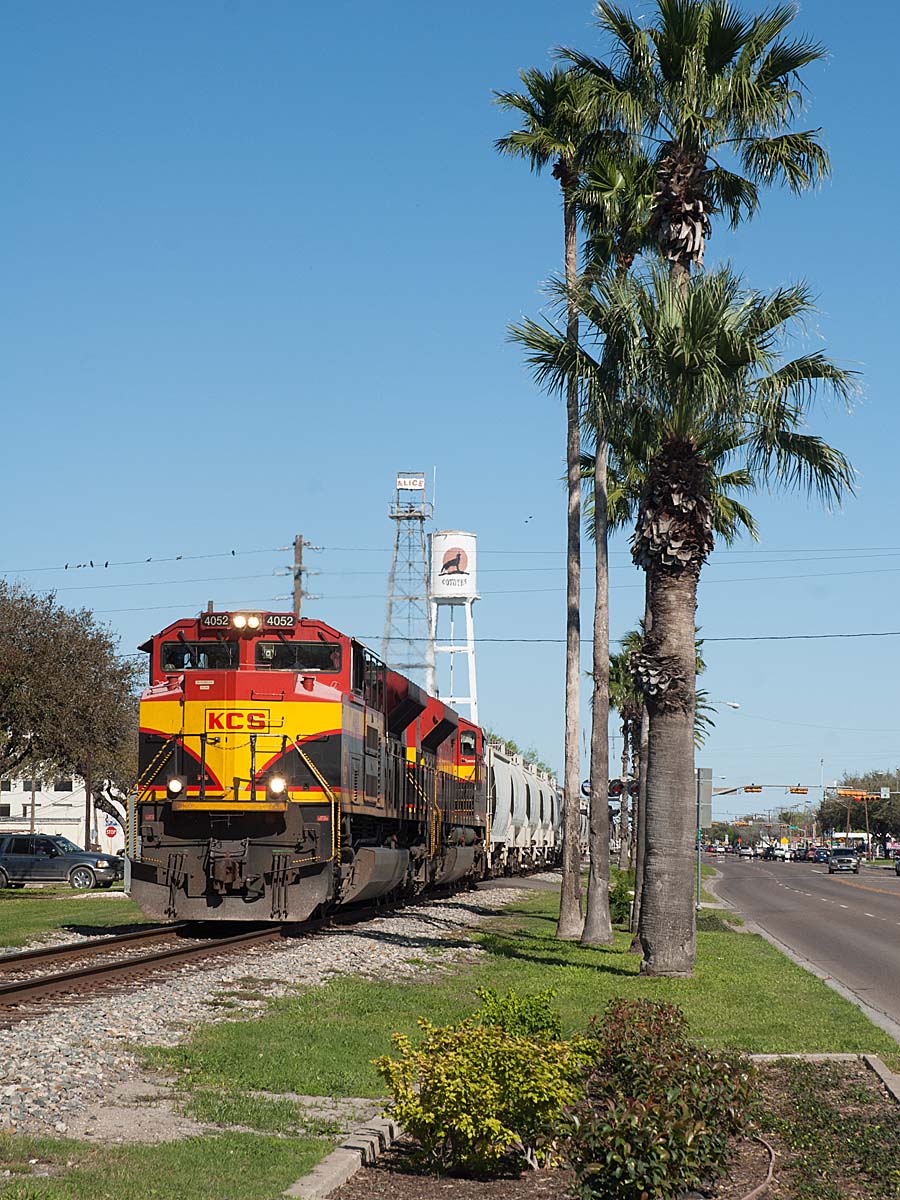
“For us, PSR is all about improving the consistency, reliability, and resiliency of our network and it’s really focused on service and growth,” CEO Patrick Ottensmeyer said on the railroad’s earnings call Wednesday.
“Our service has greatly improved,” he said. That will enable KCS to get back to more rapid growth – unlike 2018 when KCS simply could not put more traffic on its congested cross-border network.
Ottensmeyer said if KCS is going to err in its rollout of PSR, it’s going to be on the side of moving too slowly rather than too quickly.
“I never want to have to come back on an earnings call and say there was more business than we could handle but we couldn’t take any and we couldn’t move it because of a lack of power or crews or other assets,” he said.
The goal of PSR is to ensure that KCS has the capacity to handle what Ottensmeyer called the railroad’s “four oversized growth areas:” refined products, plastics, automotive, and intermodal.
KCS service metrics, outlined by Chief Operating Officer Jeff Songer, tell the story of the pace of operational improvements from the fourth quarter to the first quarter: average train speed is up 13%, terminal dwell is down 16%, and the number of cars online has dropped even as cross-border traffic surged 13%.
One of the main drivers of the turnaround was cleaning out the yard in Monterrey, which handles carload traffic for 600 nearby customers, 150 of which are high-volume locations.
Sameh Fahmy, a Canadian National veteran who is KCS’s new executive vice president of Precision Scheduled Railroading, said that on his first visit to Monterrey in December the yard was so full he could not see the tracks.
A full yard can indicate good business, Fahmy said, but congestion also means you can’t switch efficiently. So KCS worked with customers to pre-block traffic at their facilities and also collaborated with them to minimize the number of switches required to handle their traffic.
The result? Car inventory in the yard is a manageable 1,500 cars, which is 40% below the peak levels of last year, Songer said.
KCS does not envision pruning its yard network as part of PSR, Fahmy said. Rather, it will use the existing yards more efficiently.
By reducing terminal dwell, KCS will be able to provide more reliable service while absorbing more business, he said.
A key to KCS’s operational improvements, Fahmy says, is an intense focus on operational discipline and closely monitoring train delays to identify causes and fix problems. “We have a lot of room to go,” he said.
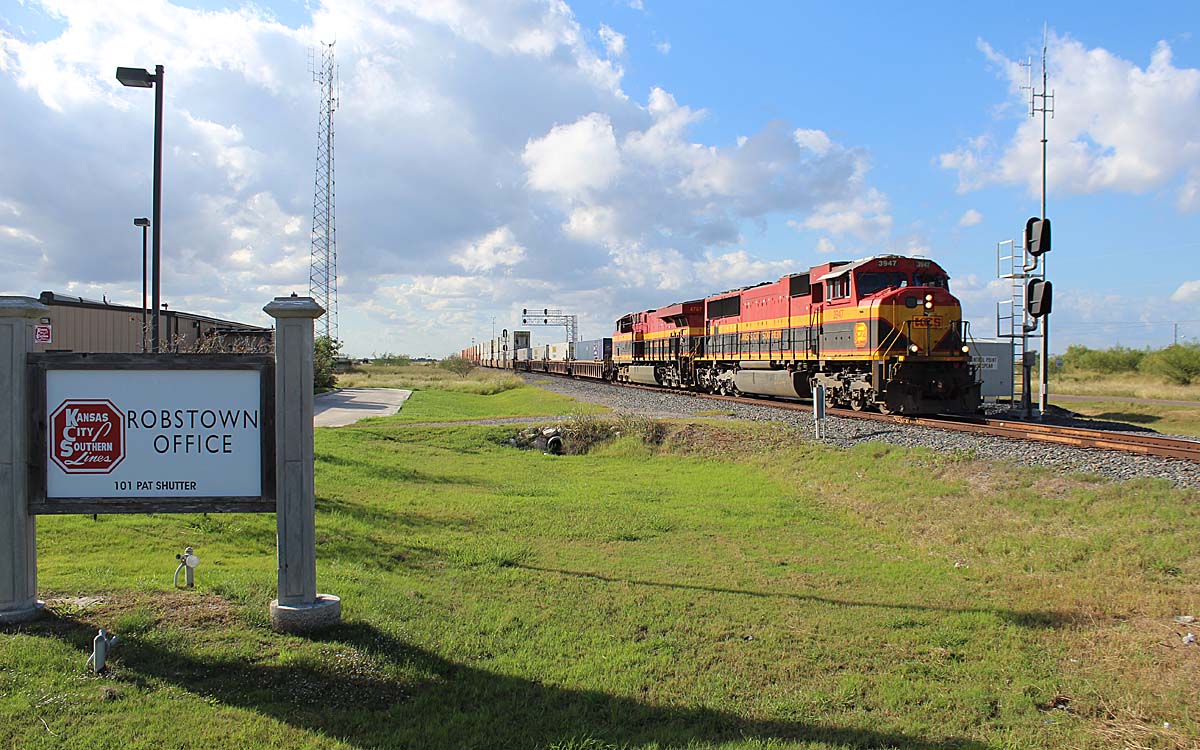
“Houston is becoming a bit like Chicago and improving the velocity in that area can significantly improve the velocity on our whole network,” Fahmy says.
The railroad is working closely with UP, another railroad adopting PSR, to address pinch points in Houston so that its cross-border trains can more easily thread the needle.
KCS is combining trains to make the most of the available slots through the terminal, Fahmy says. It’s also exploring the possibility of using shorter, faster UP routes through Houston.
“Houston is a very complex terminal complex,” UP CEO Lance Fritz said on the railroad’s earnings call on Thursday. “It’s got a number of different Class Is operating and a ton of industry with a lot of local service attached.”
This has historically made Houston a challenging place to provide reliable service, Fritz said. UP’s new operating plan is providing more frequent local service in and around Houston, which is helping, he said.
“We’re a big footprint in the area but we’re not the only one and we have to rely on smooth coordination with the other railroads in the area, which we work on every day and we’re getting a little bit better at every day,” UP Chief Operating Officer Jim Vena said.
UP is continuing to work on ways to make Houston more fluid as traffic grows in the area. “I want us all to be successful,” Vena said.
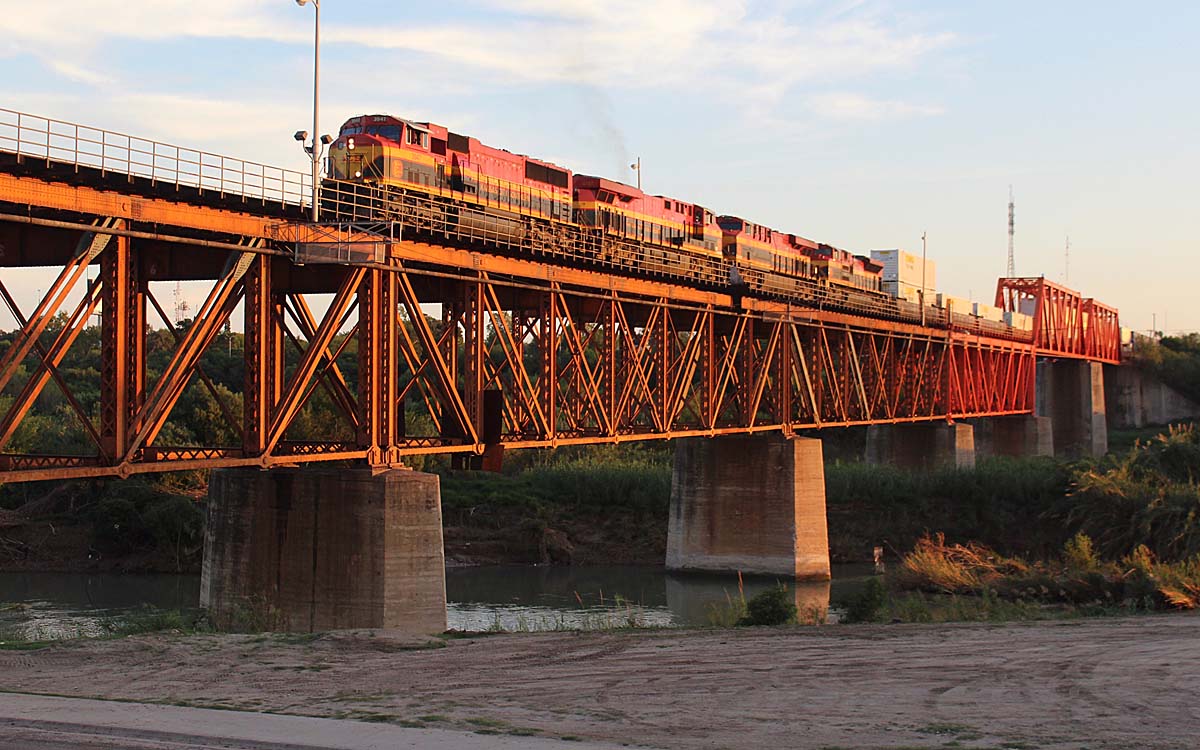
UP is KCS’s most important interchange partner – particularly for cross-border traffic exchanged at the Laredo, Texas, gateway – and the railroads have begun joint operational changes, Fahmy said.
Among them: Pre-blocking traffic for destinations in Mexico and the U.S., as well as combining intermodal and manifest traffic into longer trains.
“We are definitely in this game together,” Fahmy said.






How costly is it to go door to door to railroad customers in the Houston area and talk to them and ask how the railroad service is for them? Gather all this intelligence and put together a report so we can all read what rail customers are saying? These are the people that matter the most, right? I live in Philadelphia and it’s easy to see where rail cars are being delivered. Knock on some doors people.
You can blame the MBA schools for the use of “metrics” as a measure of performance. I don’t know how many folks have said:” I don’t have to know what they are doing, I just have to know how to manage them.” This is the idea of modern management as taught by the business schools. Thus the manager thinks that if the metric is changing an edict from above can improve performance. You all know that the broad metric is of little value until you go down to the level where the work is being done and improve things. That is some of the strength of PSR which takes action at the lowest level.
Customers are individual and not a summary metric. Someone has to be right down in the trenches.
I see where Angela Pasternack makes a comment about riding the streetcars around Milwaukee(I think that’s where she said she was),someone needs to tell her about the streetcars in Yakima, Wa., they run all over the lower, flatter parts of the city and one route even parallels the BNSF route up north over the White river that flows down from the Mt. Rainer park area. Commuters even use them to get to and from work when they don’t feel like driving or riding a bus. I believe most of them are electrically powered, all of them run on rails and are a real kick to ride. The citizens of the city are very prideful of their “trolleys” as they call them and love to show them off to visitors. They do not run during the winter as most of our winters are very cold and snowy, especially recently. I think she would enjoy the experience a great deal. She better hurry up though, because you can never tell when on of our volcanoes,(St. Helens comes to mind), Mt. Rainier also could roar to life most anytime, and bury us all in ash or lava.
Curt, you’ll get no argument from me. The metrics are not particularly helpful from a customer point of view. And since they are averages, it’s like what Mark Twain said about the guy with his head in the oven and feet in the icebox: On average, he’s room temperature.
What’s interesting is that a shipper coalition has asked the STB to direct railroads to provide more data regarding chemical and other shipments through Chicago. Missing from their request is the only figure that really matters: On-time performance. Go figure.
Bill; after seeing the reports from UP and CSX and now this one from KCS; my comments insofar as service metric improvements is “metrics – schmetrics”.
The ONLY service metric important to a rail shipper is what he or she sees with regard to their own traffic. Frankly; I am of the opinion the STB should discontinue having the railroads report these metrics as they are such a “gamed” number as to be useless to anyone other than a Wall Street analyst or government bureaucrats.