Saturday morning rail news:
— New York’s Metropolitan Transportation Authority is seeking another $3.9 billion in federal aid to offset losses caused by the coronavirus pandemic. The MTA received $4 billion as part of the coronavirus relief act passed in March, but Newsday reports that MTA chairman Patrick Foye says the agency’s original estimates of virus losses were “conservative, given the information we had at the time. … In the weeks since our first request, the virus has dramatically worsened in New York, dwarfing our original estimates of revenue loss.” MTA rail ridership is down about 95%.
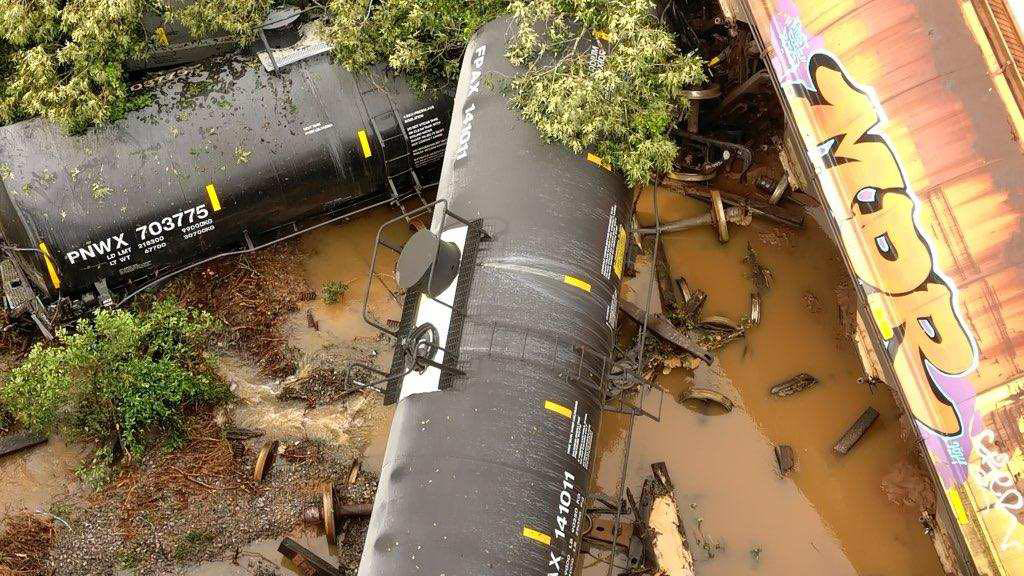
— Canada’s Transportation Safety Board has indicated that broken rails may have been the cause of two Canadian Pacific derailments about 6 miles apart near Guernsey, Saskatchewan in December 2019 and February 2020. In a pair of letters to Transport Canada, Globalnews reports, the TSB noted that track safety requirements have not been updated since May 2012, and that the February derailment, which spilled more than 400,000 gallons of crude oil, indicated that recent design improvements in tank cars are insufficient to prevent adverse consequences from derailments. The letters were sent in March; earlier this month, Transport Minister Marc Garneau issued new orders restricting speeds of trains with hazardous materials and calling for new track rules [see “Canada issues new rules on hazardous material trains, track safety,” Trains News Wire, April 5, 2020].
— A union representing Miami-Dade County transit workers have filed a lawsuit against the county’s transportation and public works director, asking a judge to order the transit agency to provide adequate protective equipment and cleaning materials for bus and rail operators. The suit also asks the county to require proper cleaning and sanitizing of transit equipment. The Miami Herald reports that the local chapter of the Transportation Workers Union field the suit because it says workers remain too vulnerable to exposure to the COVID-19 virus. The county continues to ration disinfectant wipes and does not provide the medical-grade masks police and paramedics receive.
— Facing a sharp decline in traffic and revenue, the Pennsylvania Turnpike may seek to cut its $450 million in annual payments for public transit in the state and is reviewing its 10-year, $5.9 billion capital spending plan. For the week ending April 4, turnpike volume was down 63% and revenue was down 50% from a year earlier, the Pittsburgh Post-Gazette reports. The turnpike makes quarterly payments to the state Department of Transportation, required by law, to help pay the state’s subsidies for public transit.